






České korunovační klenoty Crown jewels
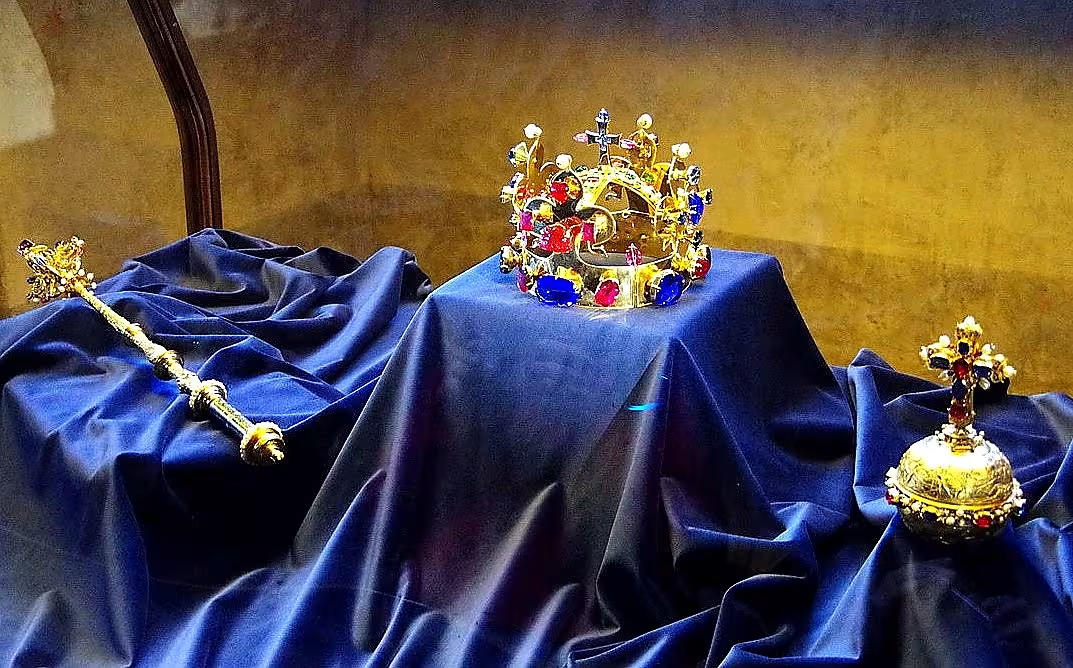
The České korunovační klenoty, or Czech Crown Jewels, are regalia symbolizing the authority and heritage of the Bohemian monarchy. Located in Prague Castle's Chapel of St. Wenceslas, these jewels include the renowned Crown of Saint Wenceslas, royal orb, sceptre, coronation vestments, gold reliquary cross, and St. Wenceslas' sword. Their significance lies not only in their historical use during coronations but also as enduring symbols of Czech national identity.
The origin of the České korunovační klenoty dates back to the 14th century, with key pieces crafted under Charles IV's reign. The Crown of Saint Wenceslas was created between 1345 and 1346 for his coronation as King of Bohemia, making it one of Europe's oldest crowns. This period marked Bohemia's rise in cultural and political prominence during Charles IV’s rule. In the early 16th century, additional regalia were crafted by notable goldsmiths such as Hans Haller for Emperor Ferdinand I Habsburg, including the royal sceptre in 1533 and the royal orb in 1527.
The artistic form of these jewels is characterized by intricate design and precious materials. The Crown of Saint Wenceslas features vertical fleurs-de-lis and a cross adorned with a thorn believed to be from Christ's crown, donated by French King John II. It is crafted from 22-carat gold and embellished with sapphires, emeralds, spinels, pearls, a ruby, rubellite, and an aquamarine. The royal sceptre, made of 18-carat gold, boasts a large spinel at its top, while the orb is decorated with scenes from the Old Testament and Genesis. These elements highlight the regalia's blend of religious symbolism and opulence.
Throughout history, the České korunovační klenoty have been closely guarded and moved for safety during turbulent times. Initially stored in Prague and Karlštejn Castle, they were relocated to Vienna during the Thirty Years' War but returned to Prague by 1791. The jewels ceased their original function after 1918 with the establishment of Czechoslovakia, yet remained potent symbols of national independence.
Today, the České korunovační klenoty are preserved in St. Vitus Cathedral at Prague Castle and are accessible only during special exhibitions. Their display is a rare event, governed by tradition and presidential discretion, underscoring their status as cultural treasures. Visitors to Prague can appreciate these jewels not just for their historical significance but also as embodiments of Czech heritage.
The České korunovační klenoty stand as a testament to the rich history and enduring legacy of the Bohemian monarchy. Their intricate craftsmanship and storied past make them a must-see for anyone exploring Prague's cultural landmarks, offering a glimpse into the grandeur and tradition that have shaped Czech identity over centuries.
Historical milestones
- 1345
- Creation of the Saint Wenceslas Crown by Charles IV.
- 1533
- Crafting of the royal scepter by Hans Haller for Ferdinand I Habsburg.
- 1527
- Creation of the royal orb for Ferdinand I Habsburg.
Historical events
The Saint Wenceslas Crown was created by Charles IV between 1345 and 1346 for his coronation as King of Bohemia, making it the fourth oldest crown in Europe.
In 1533, the royal scepter was crafted by Augsburg goldsmith Hans Haller for Emperor Ferdinand I Habsburg.
The royal orb was created in 1527 for Emperor Ferdinand I Habsburg.
Points of interest
- The Crown of Saint Wenceslas is believed to contain a thorn from Christ's crown, which was purportedly donated by French King John II, adding a layer of religious significance and mystique.
- During the Thirty Years' War, the České korunovační klenoty were moved to Vienna for safekeeping, highlighting their importance as symbols of national identity during tumultuous times.
- The royal sceptre features a large spinel at its top, which is one of the largest in Europe and adds to the regalia's opulence and historical allure.
- Although originally used in coronations until 1918, the České korunovační klenoty are now displayed only during special exhibitions, making them rare sights that underscore their revered status in Czech culture.
Guide
This guide is narrated by a synthetic voice generated by artificial intelligence.
Show guide text
This text was created by artificial intelligence and has not been editorially reviewed. It may contain inaccuracies.
Welcome to the heart of Prague, where history and splendor converge before your eyes. You stand at a site steeped in tradition, surrounded by the aura of centuries past—the home of the České korunovační klenoty, or Czech Coronation Regalia. As you delve into this auditory journey, imagine yourself enveloped by the grandeur and mystique that these treasured artifacts have inspired over generations.
The regalia before us today were crafted primarily in the 14th and 16th centuries, a testament to the rich history of the Bohemian crown. At the center of their creation is Charles IV, who commissioned the Saint Wenceslas Crown in 1345. This iconic piece, adorned with precious stones and intricate craftsmanship, symbolizes the divine right and authority bestowed upon Czech kings.
Now, turn your attention to the royal scepter, crafted in 1533 by Hans Haller for Ferdinand I Habsburg. Notice its detailed workmanship, a reflection of the power and prestige it represented during coronations. Nearby stands the royal orb, created in 1527 for the same monarch, embodying the celestial authority of kingship.
These regalia were not merely symbols; they bore witness to pivotal moments in history. During the tumultuous Thirty Years' War, these treasures were moved to Vienna for safekeeping—a move that underscores their significance and vulnerability during times of conflict.
Among the most captivating aspects of this collection is the Crown of Saint Wenceslas itself. Enshrouded in legend, it is said to contain a thorn from Christ’s crown, purportedly donated by French King John II. This element adds an extraordinary layer of religious mystique and reverence to its already profound significance.
As you continue your exploration, let these stories and artifacts ignite your imagination. They are not just relics of the past but vibrant narratives that speak of power, faith, and resilience. We invite you to delve deeper into their history, discovering more about the figures who shaped them and the eras they represent.
Thank you for joining us on this journey through time. May it inspire a lasting curiosity and appreciation for the rich tapestry of our shared heritage.
Tips for visitors
The best time to visit the České korunovační klenoty is during the late spring or early autumn months, when the weather is pleasant for exploring Prague and its historical sites. These seasons offer a comfortable climate that enhances your experience of viewing the regalia in their authentic setting without the crowds typical of peak tourist seasons like summer.
Parking near the České korunovační klenoty can be challenging due to its central location in Prague, so it is advisable to use public transportation. The site is accessible by metro and bus lines that connect well with other parts of the city. For those driving, consider parking at a nearby garage or lot and using public transit for the final leg of your journey.
When visiting the České korunovační klenoty, it's recommended to bring comfortable walking shoes as you may explore additional areas around Prague Castle. A camera is also essential since photography is allowed in most parts of the exhibit; however, flash photography might be restricted. Check for specific guidelines on photography at the entrance.
For families with children, the visit can be both educational and enjoyable. The historical significance of the coronation regalia provides a unique storytelling opportunity about Czech history and monarchy. Nearby attractions within 30 minutes include Prague Castle itself, which offers various family-friendly activities such as exploring the gardens or visiting the St. Vitus Cathedral.
Frequently asked questions
Can the monument be visited?
Yes. We verified the opening hours or admission on the official website (9. 10. 2026); you will find them in the visitor information on this page. Please double-check with the operator before you travel.
What are the opening hours and admission?
Details verified on the official website (9. 10. 2026) are listed in the visitor information on this page. Official website: http://www.hrad.cz/en/prague-castle/the-bohemian-crown-jewels/index.shtml
Where is the monument?
Location: Hradčany, Praha, Hlavní město Praha. The map on this page shows the exact spot.
Why is the monument protected?
It is listed in the Central List of Cultural Monuments of the Czech Republic as a national cultural monument (register no. 102).
Businesses nearby
Do you run a restaurant, accommodation, shop, museum, rental, wellness or other visitor service near this monument? Show yourself directly to the people heading to it — this is how they will see you in the app and on the web:
Accommodation nearby
Themed route
Tematická výletní trasa: České korunovační klenoty a jejich okolí
1. České korunovační klenoty
Typ: Historická expozice
Proč stojí za návštěvu: Tato expozice je součástí Národní galerie v Praze a nabízí jedinečný pohled na historii české koruny. Zde si můžete podívat na prestižní klenoty jako St. Václavskou korunu, Český orloj a další dědictví, které symbolizují bohatou historii českých králů.
2. Nádvoří Národní galerie
Typ: Veřejný prostor
Proč stojí za návštěvu: Po prohlídce klenotů si můžete uvolnit na klidném a krásně zahraděném nádvoří Národní galerie. Je to ideální místo, kde můžete absorbovat výstavbu a architekturu samotné budovy, která je domovem těchto historických pokladů.
3. Věž Národní galerie
Typ: Historická věž
Proč stojí za návštěvu: Vystoupit do věže Národní galerie nabízí impozantní pohled na Prahu. Je to skvělý způsob, jak si odpočinout po prohlídce klenotů a zároveň se podívat na panoramatické výhledy na historickou část města.
4. Expozice Národní galerie
Typ: Umělecká expozice
Proč stojí za návštěvu: Po prohlídce klenotů a výhledu z věže se můžete vrátit do interiéru Národní galerie, aby jste si prohlédli současné umělecké expozice. Tato část nabízí širokou škálu děl od klasických až po moderní umění, což dokončuje vaši kulturní zkušenost v Praze.
Tato trasa vám umožní prozkoumat nejen samotné České korunovační klenoty, ale i jejich okolí a další atrakce Národní galerie.
Seasonal recommendations
Spring: Visiting the Czech Coronation Regalia during spring offers a unique experience as the city of Prague awakens with vibrant blooms and mild weather, creating an enchanting atmosphere around this historic site. The soft natural light enhances the intricate details of the regalia, making it ideal for photography enthusiasts. Visitors can enjoy outdoor spaces without the intense summer crowds, allowing for a more intimate exploration of the museum's collections. It is advisable to wear layers, as temperatures can vary throughout the day. Early mornings or late afternoons are perfect times to visit when the site is less crowded.
Summer: Summer in Prague brings an energetic atmosphere with longer daylight hours and warm weather, making it a popular time for tourists. The Czech Coronation Regalia becomes even more captivating under the bright sunlight that highlights its exquisite craftsmanship. However, this season also attracts larger crowds, so planning ahead is crucial. Arriving early in the morning can help avoid long lines and ensure a more relaxed visit. Comfortable walking shoes and light clothing are recommended to navigate the city comfortably during the warmer months.
Autumn: Autumn offers a magical setting for visiting the Czech Coronation Regalia as Prague’s historic streets transform with colorful foliage, creating a picturesque backdrop. The cooler temperatures provide a comfortable environment for exploring indoor exhibits without the summer heat. This season is ideal for those who prefer fewer crowds and a more serene atmosphere. Visitors should dress in layers to accommodate varying weather conditions throughout the day. Late mornings or early afternoons are optimal times to visit when the site experiences moderate visitor numbers.
Winter: Winter in Prague presents a unique charm as the city is adorned with festive decorations, adding an enchanting touch to the experience of visiting the Czech Coronation Regalia. The cooler temperatures and shorter days mean fewer visitors, allowing for a more intimate exploration of the museum's treasures. However, it’s important to dress warmly, as indoor heating may not always be sufficient against the chilly outdoor air. Early visits are advisable due to potentially limited opening hours during this season. Enjoying hot beverages after your visit can provide warmth and comfort in the crisp winter air.
Visualizations and artistic views


The visualisations are generated by artificial intelligence and serve as inspiration.
Tips from visitors
No tips yet. Be the first!
Log in and add your tip.
Sources and literature
Photos: Balou46 / CC BY-SA 3.0 — Wikimedia Commons. The author and licence also appear when you hover over the image.
Faktickým podkladem tohoto textu byl článek na Wikipedii, jehož autory jsou přispěvatelé Wikipedie. Článek je dostupný pod licencí CC BY-SA 4.0.



Příběhy a pověsti
Legendy, pověsti a příběhy spjaté s touto památkou

Fotografie návštěvníků
Zatím žádné fotografie. Buďte první, kdo přidá fotografii z návštěvy!
Log in a přidejte svou fotografii nebo hodnoťte.
Za ověřenou návštěvu v aplikaci získáte víc bodů — poznáme podle GPS, že jste na místě.
Reviews and comments