






Český dům Theatre building
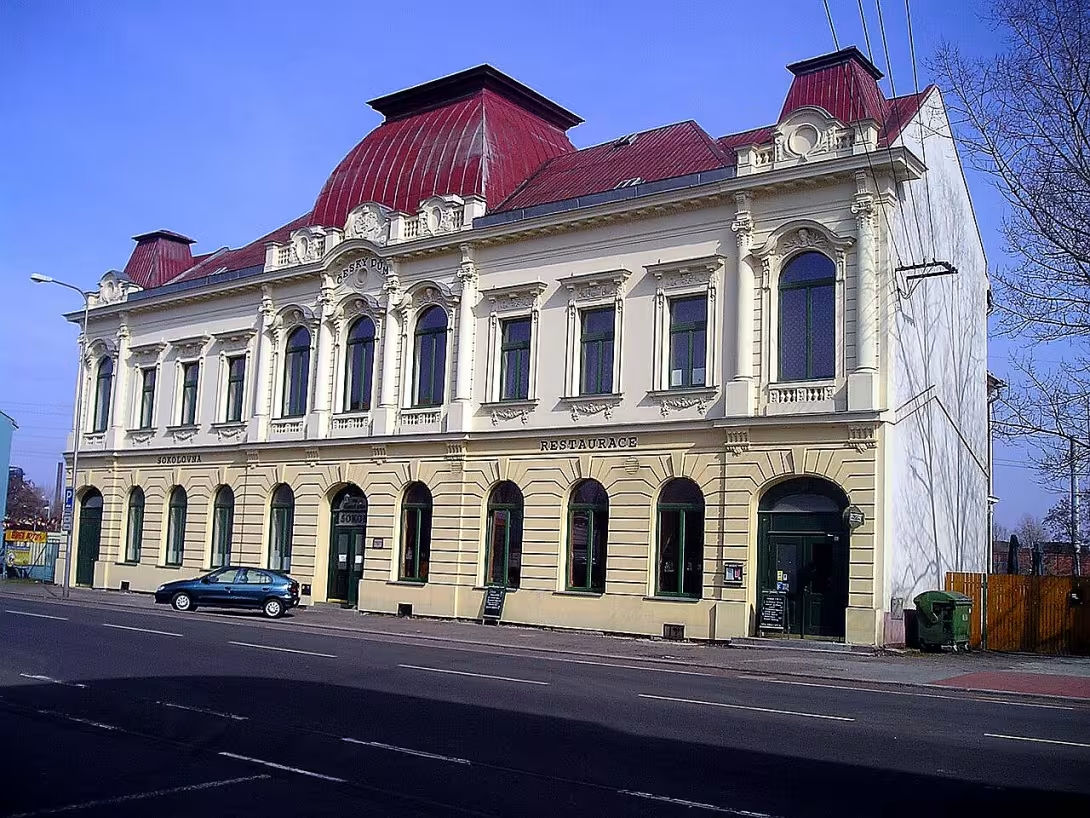
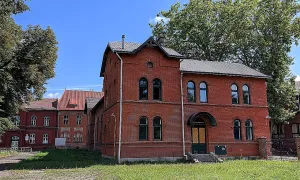
Český dům in Ostrava's Vítkovice district is a monument-protected Neo-Renaissance building completed in 1899. The building was created as a centre of Czech social life, culture and education in the then strongly germanised village. To this day it serves as a seat of local gym unity Falcon.
At the end of the 19th century, at the time of national renewal, Czech patriots initiated the establishment of the Czech House Cooperative. The aim was to create a background for the Czech community in an industrial area with significant German influence. The original plans were so generous that after completion of the construction in 1899 there was a threat of sale to the indebted building. The members of the team contributed to his rescue with an active collection and the inhabitants of Moravian Ostrava who donated proceeds from theatre performances to the operation.
Architecturally, it is a single-storey building oriented parallel to Exhibition Street. The construction was designed for the needs of social life and it became part of a representative hall with a stage which belonged to the most important spaces of its kind in Moravia. On the ground floor were situated hotel services, restaurants and a room designed for federal meetings.
Since 1899 the building was owned by the Cooperative of the Czech House. In 1991 the property was returned to Gymnasium Unity Sokol Vítkovice. In the 1990s, the roof and interiors were renovated, with the participation of the Czech Town of Sokolská, the City of Ostrava, the local landmarks and the city district office.
The building became the centre of Czech culture and sport. The club of velocipedists was the first to operate here since 1899 and in the same year the performance of the falcons took place. The theatre club Tyl was very active; His first performance was attended by so many spectators that a third of them had to watch the game standing up. Honorary members of the association included prominent personalities such as Alois Jirásek, Jaroslav Kvapil or Svatopluk Machar. One of the largest libraries in Ostrava was also located in the house, which has a rich fund of Czech literature.
Currently, the object continues to benefit from the Gymnasium Unity Falcon Vítkovice. The falcons are planning further modifications, namely the first floor window exchange and wall insulation. The beauty of the building should stand out even more after the reconstruction of the adjacent Exhibition Street.
Český dům is an important piece of evidence of efforts to preserve Czech culture in the industrial environment of the end of the 19th century. Visiting this monument offers insight into the history of federal life and architecture, which, even after more than a hundred years, performs its original social function.
Then and now
Drag the slider to compare how the landmark may have looked when it was built with the view today.
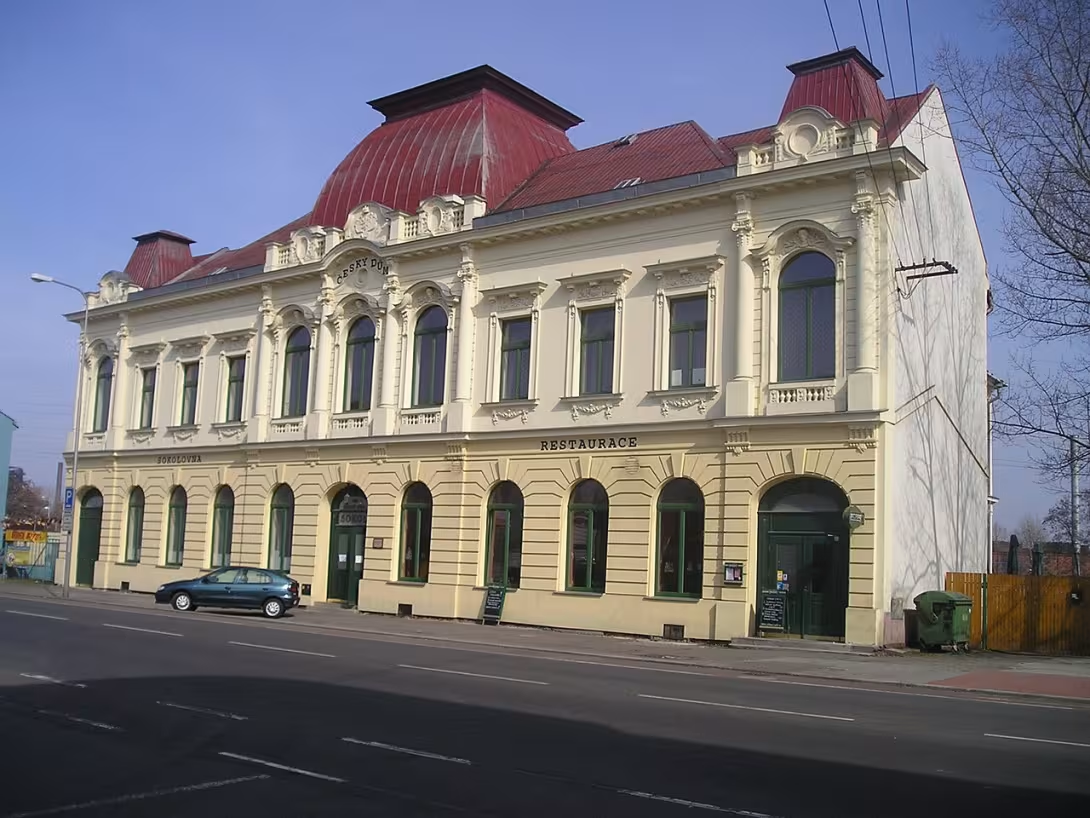
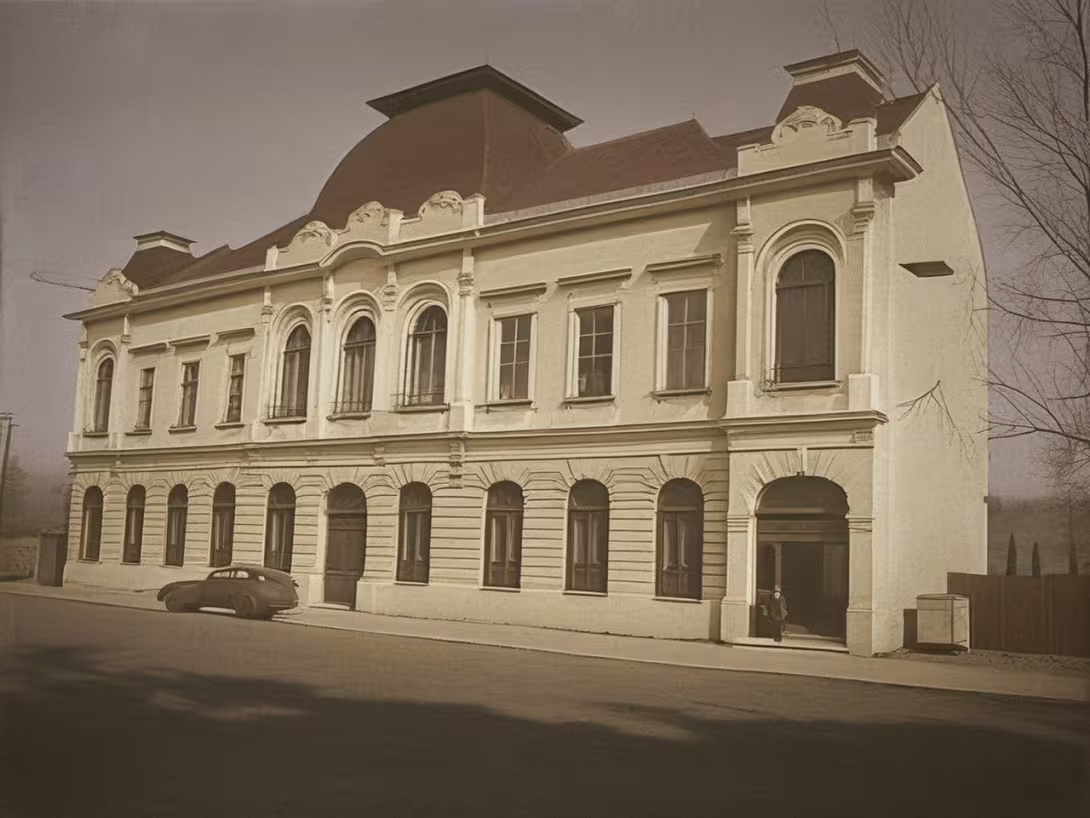
The historical appearance on the left is an AI-generated visualisation and serves as inspiration only.
Historical milestones
- 1899
- Reconcentration of the building and start of the activity of the association and the Falcon
- 1991
- Returned property to the property property of the Theoretical Unity of the Falcon Vitkovice
- 1990- 1999
- Reconstruction of roof and interior building
Architectural development
The one-story Neo-Renaissance building is facing the Exhibition Street. Architectural features a representative hall with a stage and rooms for social and hotel purposes. The roof and interiors were renovated in the 1990s.
Historical events
1899: Completion of construction and start-up of associations. 1991: Building returned to the property of Gymnasium Unity Falcon Vítkovice.
Owners
Cooperative of the Czech House (from 1899), Gym unity Sokol Vítkovice (from 1991).
Points of interest
- The building was built as a centre of Czech life in the village where German influence prevailed. - After completion of the construction in eighteen hundred ninety-nine, the building was threatened by a sale due to debts, but it was saved by a collection of cooperative members and proceeds from theatre performances. - Representative hall with stage was one of the most important spaces of its kind in Moravia. - On the first performance of the theatre club Tyl had so many spectators in the hall that a third of them had to watch the game standing up. - One of the largest libraries in Ostrava was located in the house, offering a rich selection of Czech literature.
Guide
Show guide text
This text was created by artificial intelligence and has not been editorially reviewed. It may contain inaccuracies.
Welcome. You are standing right in front of a building that is not just a cluster of stones, mortar and roofs, but a living witness to history that has been watching over the soul of this place for decades. In front of your eyes, Český dům stands in Vitkovice. Do you feel the weight and dignity that radiates from this object? Although it may seem to be just a historical monument, you are actually facing a symbol of struggle, endurance and the deep need for human connection. Look at this Neo-Renaissance building. Her face, her line and her overall resemblance tell you immediately about the time she was born. It's an architecture that carries order, stability and grandeur, which was very important at the time. Feel the atmosphere surrounding you, and try to imagine how it must have been when the first door opened for the first time in 18 hundred and ninety-nine.
Now let's go deeper into time and understand why this house was created. We must return to the end of the nineteenth century. Vítkovice was a place where different worlds clashed, but there was a very strong influence of German language and culture in the area where this house was built. This meant a great challenge for the Czech people. They sought a way to retain their own identity, to keep their language, their traditions and their values in an environment that was strongly germanized. It is from this deep need and the desire for cultural flourishing that the Cooperative of the Czech House has emerged. It was not just an initiative of several individuals, but an effort by the entire community to create its own centre. The goal was to have a place where people can learn, where they can sport and where their own culture can develop. This house became a fixed point around which new Czech life began to form in this village.
Now pay attention to the architecture itself that you are currently observing. This Neo-Renaissance style was not chosen by chance. At that time he represented a connection with classical ideals of beauty and harmony. When you look at the facade and the overall structure of the building, feel the effort for representativeness. Although the building has undergone an important renewal in recent years, especially in the years of the 1990s, when the roof and interior spaces were carefully reconstructed, its original spirit remained intact. The reconstruction was necessary so that this historical treasure could continue to walk and serve future generations. Thanks to these works, today you can see the building in its present form, which is proof that we still care about our history.
Imagine now the kind of ruckus that once moved in these areas. This house wasn't just an empty shell, it was a throbbing organism. Notice how wide the range of activities that were taking place here was. It was a home for different groups of people who met under the same roof. There were athletes from the Sokol association who believed in the strength of the body and spirit and who were a key part of Czech national enlargement. People came here who had a passion for movement and speed, then called velocipedists, who devoted themselves to their passion for cycling. And then there was the theater. The Chotnic Theater Association Tyl here brought back stories, brought emotion and art directly to people. Imagine the presentable hall with the stage filling up with people, the lights going out in it and the voices of actors and the tones of music going out. It all formed an inseparable part of the life that this house offered.
At this time when Czech culture was formed, big names are associated with these spaces and with this idea. Even if you can't see them directly, their spirit is present in this place. Names like Alois Jirásek, Jaroslav Kvapil or Svatopluk Machar are names that define Czech literature and culture of that time. Even if they do not have to move around every day, their benefits and the intellectual current that was flowing back then are part of the same world that wanted to protect and develop this house. This house was a space for people who wanted to be part of something bigger than their everyday work.
But the way of this house wasn't always the path of triumph. There's a story here that will show you how much this building was valuable to people and how much it was vulnerable. Shortly after the construction was completed in eighteen hundred ninety-nine, everything seemed to end. The building faced a huge danger. Due to the high debts, the object was threatened to be sold to someone else and the Czech spirit would disappear in this place. It was a critical moment. But this is where the incredible power of the community proved to be. The members of the squad weren't broken. They joined together, made huge efforts, and thanks to their collections and the proceeds of the theatre performance, the house was saved. It's not just history about money, it's a story about human courage and how much people can fight for their own values.
After many years, history turned again. In ninety-one, the property was returned to the gym unity of the Sokol Vítkovice, which meant a return to its original roots and that the house was again used for those for which it was originally intended. The resemblance you see today is the result of a long effort to preserve this heritage.
So now I urge you to move on and continue your research. Feel the surroundings, look at the details, and remember the people who built their home here over a century ago. Český dům is not just a building, it is a reminder of what we can achieve when we unite in one common goal. Thank you for spending this moment with me and for being interested in the story of this place. I wish you the beautiful rest of your trip.
Tips for visitors
The best time to visit is during the morning, when the sun illuminates the facade of the building and allows you to excel at the Neo-Renaissance architectural details. At this time it is also calmer in the surroundings, which you will appreciate when you search the exterior.
You can easily reach the monument by public transport or by car. We recommend that the exact connection and parking possibilities near the property be checked in the current search routes and map materials.
For a visit, wear comfortable shoes suitable for movement in the urban environment. If you are planning to photograph, the best light to capture the details of the building is in the morning when the building is lit evenly.
In the immediate vicinity there is a large industrial area Dolní Vítkovice and the urban monument zone Vítkovice which offer a unique view of the historical architecture and technical heritage of the region.
For families with children, the location is suitable thanks to the flat terrain and proximity of the monument zone, where it is possible to take a light walk and bring the history of Czech social life closer to the children.
Businesses nearby
Do you run a restaurant, accommodation, shop, museum, rental, wellness or other visitor service near this monument? Show yourself directly to the people heading to it — this is how they will see you in the app and on the web:
Events nearby
Zdroj akcí: otevřená data měst a obcí ČR (Národní katalog otevřených dat) a kalendář akcí Národního památkového ústavu.
Nearby
Průmyslová oblast Dolní Vítkovice, městská památková zóna Vítkovice.
Accommodation nearby
Themed route
1. Industrial area Dolní Vítkovice, industrial area: A unique set of historical buildings of heavy industry that shows technical development. 2. City Monument Zone Vítkovice, urban space: An area with protected architecture where the original character of the village can be observed. 3. Český dům, building: The main destination of the visit, which represents an important part of the local heritage.
Seasonal recommendations
Spring: In the spring period Vítkovice is oddly dazzling due to the sunlight, which is reflected in all corners of the historical monument. Green nature is beginning to take on life and trees are covered with young leaves, making the environment even more charming. At this time there may be more people who want to explore this beauty after a long winter period, so it is recommended to come in the morning or in the late afternoon to avoid larger crowds. Good day is suitable for visiting when the sun illuminates architectural details and nature is in full bloom.
Summer: Vítkovice summer offers ideal conditions for visiting thanks to warm days and bright skies. The atmosphere is revived by sunlight, which increases the colour of architecture and surrounding nature. A larger number of visitors may appear this season, especially in the main summer season, so it is advisable to visit the memory of the previous afternoon. A short coat or sweater can be useful to protect against the sun and wind, which sometimes appears in Vítkovice.
Autumn: Autumn season in Vítkovice offers a unique atmosphere with a changing color spectrum of trees that go from green to yellow and red. The sun is starting to set, which creates a romantic atmosphere, especially in the evening. Less people may appear at this time, so it is advisable to visit the memory at this time for a more peaceful experience. Good day is ideal for a tour in order to be able to see the color changes in sunlight and capture beautiful nature in late afternoon.
Winter: Winter in Vítkovice offers an extraordinary view when architecture is covered with snow and the whole environment turns into snow-covered beauty. The sun sets early, which limits visiting time, but the sun's rays at noon can dazzle the snow areas and highlight the historic house. At this time it is advisable to come up with warm clothes and protection against cold such as fur coats or hats. Visiting a memorial at noon may be the best choice to maximize time in the sunlight and enjoy the snowy environment.
Visualizations and artistic views


The visualisations are generated by artificial intelligence and serve as inspiration.
Photos from the area
Real photos taken near the monument

Zdroj a licence jsou uvedeny u každého snímku.
Tips from visitors
No tips yet. Be the first!
Log in and add your tip.
Sources and literature
Photos: Josef Novák3 / Public domain — Wikimedia Commons. The author and licence also appear when you hover over the image.
Faktickým podkladem tohoto textu byl článek na Wikipedii, jehož autory jsou přispěvatelé Wikipedie. Článek je dostupný pod licencí CC BY-SA 4.0.
Location on the map
Příběhy a pověsti
Legendy, pověsti a příběhy spjaté s touto památkou
Fotografie návštěvníků
Zatím žádné fotografie. Buďte první, kdo přidá fotografii z návštěvy!
Log in a přidejte svou fotografii nebo hodnoťte.
Za ověřenou návštěvu v aplikaci získáte víc bodů — poznáme podle GPS, že jste na místě.
Reviews and comments