






Chlum (hrad, okres Kroměříž) Castle
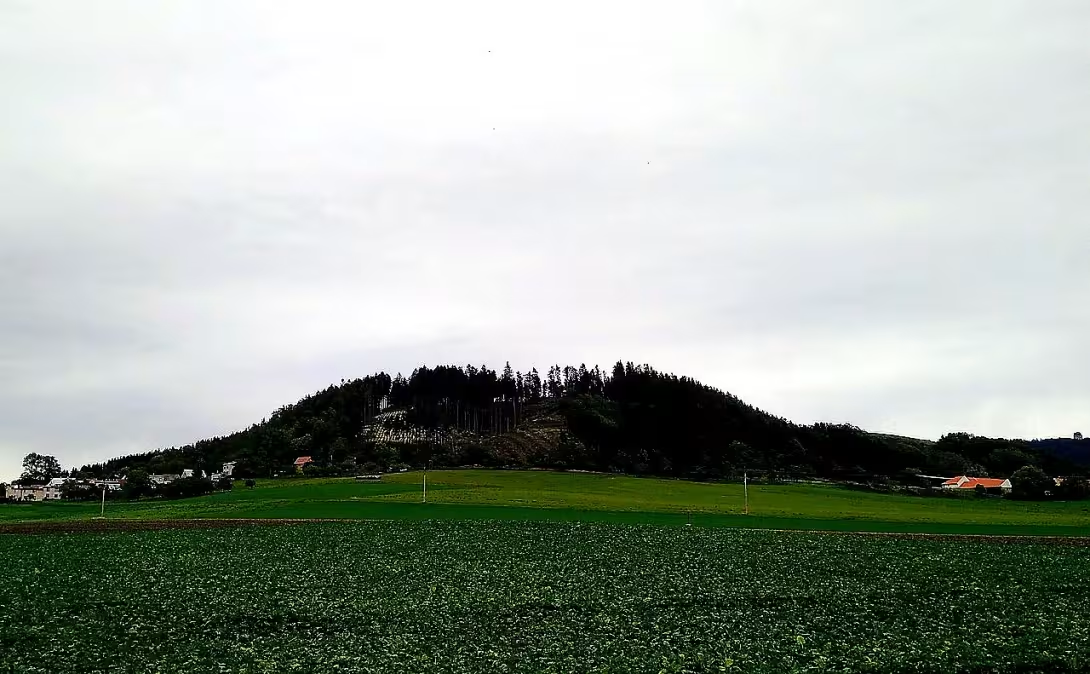
Objekt se nedochoval — na místě dnes nestojí. Následující text popisuje jeho historii, ne současnou návštěvu.
Chlum, also known as Bílavsko, is a vanished medieval castle near the village of Bílavsko in Bystřice pod Hostýnem, within the Kroměříž District of the Zlín Region. Recognized as a cultural monument since 1973, it provides insights into medieval architecture and history in this part of Czechia. Its significance is enhanced by its association with notable figures such as Heralt Puška and Smil z Loučan, despite limited early written records.
The origins of Chlum trace back to a prehistoric fortification that evolved into a medieval castle by the late 13th century. Although specific construction details are undocumented, it is known to have existed during this period. The lack of surviving records leaves much of its early history mysterious. However, historical context suggests it was established when Bohemia experienced significant political and social changes under King Wenceslaus II's reign, marked by feudal conflicts and the rise of powerful noble families.
Architecturally, Chlum began as an ancient fortification before transitioning into a medieval castle. The absence of detailed records makes tracing specific architectural phases or styles beyond its initial construction challenging. Nevertheless, its evolution from a prehistoric site to a medieval stronghold reflects broader regional development trends during the late 13th century.
Ownership and administration saw notable figures such as Heralt Puška by 1408, who is mentioned in connection with the castle. By 1415, Smil z Loučan became its owner after Markrabě Jošt Moravský pawned it to him. The exact details of ownership post-1415 remain undocumented, leaving a gap in the historical narrative.
Key events associated with Chlum include its likely destruction during the Hussite Wars, a period of religious and social upheaval in Bohemia that led to widespread devastation. By 1555, the castle was referred to as abandoned, marking the end of its active history. This event underscores the broader impact of the Hussite Wars on regional architecture and society.
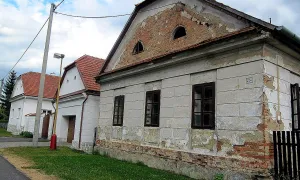
Today, Chlum stands as a cultural monument near Bílavsko village, part of Bystřice pod Hostýnem. Although much of the castle has vanished, the site remains accessible to visitors interested in exploring its historical remnants. Its recognition as a protected cultural site highlights its importance in understanding medieval history and architecture in this region.
Chlum offers a unique glimpse into the past, inviting visitors to reflect on the layers of history embedded within its landscape. Despite the absence of detailed records, its association with significant historical figures and events makes it a worthwhile destination for those interested in exploring the rich tapestry of Czech medieval heritage.
Then and now
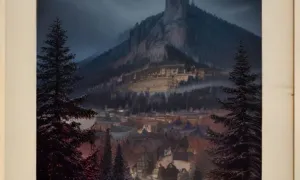
Drag the slider to compare how the landmark may have looked when it was built with the view today.
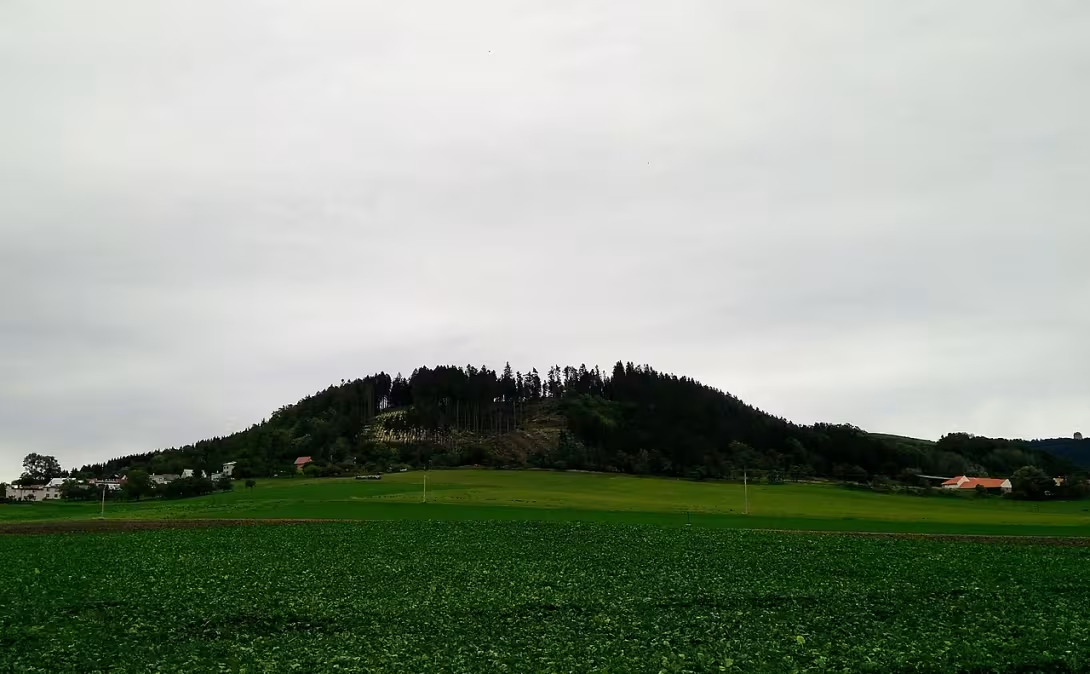
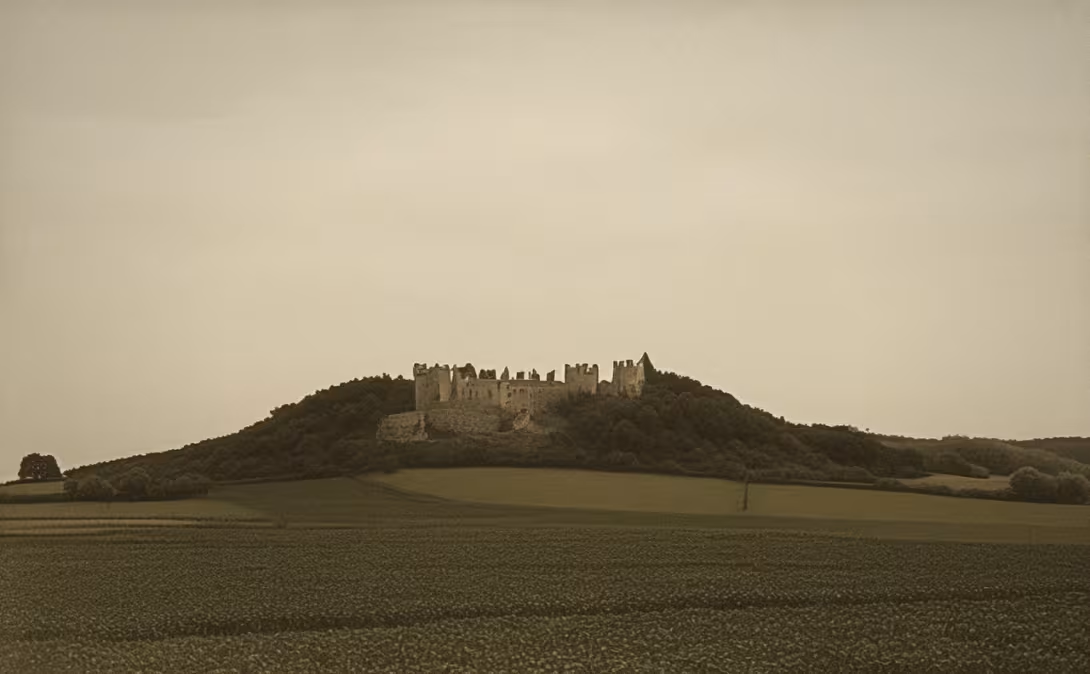
The historical appearance on the left is an AI-generated visualisation and serves as inspiration only.
Historical milestones
- end of the 13th century
- Chlum developed from a prehistoric stronghold into a medieval castle.
- 1408
- Heralt Puška is mentioned as the owner of Chlum.
- 1415
- Smil z Loučan becomes the owner after Markrabě Jošt Moravský pawned it to him.
- during the Hussite Wars
- Chlum was probably destroyed during the religious and social upheaval.
- 1555
- The castle is described as abandoned, marking the end of its active history.
- 1973
- Chlum is recognized as a cultural monument.
Architectural development
Chlum's architectural development began with a prehistoric fortification. By the late 13th century, it had evolved into a medieval castle. The lack of detailed records makes it difficult to trace specific architectural phases or styles beyond its initial construction.
Historical events
By the end of the 13th century, Chlum existed as a castle, though no written records from that time survive.
In 1408, Heralt Puška is mentioned in connection with the castle.
The castle was likely destroyed during the Hussite Wars and was referred to as abandoned by 1555.
Owners
In 1408, the castle was associated with Heralt Puška. By 1415, Smil z Loučan became the owner after Markrabě Jošt Moravský pawned it to him. The exact ownership details post-1415 are not documented.
Guide
This guide is narrated by a synthetic voice generated by artificial intelligence.
Show guide text
This text was created by artificial intelligence and has not been editorially reviewed. It may contain inaccuracies.
Welcome! You are standing before the historical site of Chlum, located near the village of Bílavsko in Bystřice pod Hostýnem. Chlum is mentioned as early as in historical sources as a medieval castle that developed from a prehistoric stronghold in the 13th century. It's a fascinating place offering insight into medieval architecture and history in this part of Moravia.
Let's step back into the past. Chlum was first mentioned in 1408 as the property of Heralt Puška. A few years later, in 1415, it became the possession of Smil z Loučan, who acquired it from Margrave Jošt of Moravia. During the Hussite Wars, Chlum likely suffered significant damage and became a deserted castle. By 1555, Chlum was described as abandoned, marking the end of its active history. It wasn't until 1973 that Chlum was recognized as a cultural monument.
Notice that Chlum is clearly visible, even though it lies in ruins. Take a look at the façade, which remains from medieval architecture. Observe how the royal castle transformed into a ruin now lying quietly in the forest. The atmosphere around is calm and soothing, interestingly enough, as Chlum has gone through many turbulent periods.
A key figure in Chlum's history is Heralt Puška. He was the owner of the castle in the 15th century, but very little is known about him. Look at his name on the list of Chlum's owners and try to imagine what his reign looked like in this castle.
An interesting aspect of Chlum is that its architecture remains unknown. Despite being recognized as a cultural monument in 1973, much about its design and construction remains a mystery. We can only speculate on how it originally appeared and how it transformed over the centuries.
Today, Chlum is a place where you can immerse yourself in history and medieval atmosphere. You stand before the ruins of a castle that has gone through many turbulent periods. Chlum is a symbol of resistance against time and the endurance of human structures. It's a place where you can try to imagine what medieval Moravia looked like and how it transformed over the centuries.
Come take a closer look and try to envision what Chlum was like in its golden age. Whether you enjoy it or not, leave Chlum with a sense of respect for history and a desire to learn more about this fascinating monument.
Businesses nearby
Do you run a restaurant, accommodation, shop, museum, rental, wellness or other visitor service near this monument? Show yourself directly to the people heading to it — this is how they will see you in the app and on the web:
Nearby
The site is located near Bílavsko village, part of Bystřice pod Hostýnem. The surrounding landscape includes typical Central European countryside features, though specific nearby monuments or natural landmarks are not documented.
Visualizations and artistic views


The visualisations are generated by artificial intelligence and serve as inspiration.
Tips from visitors
No tips yet. Be the first!
Log in and add your tip.
Sources and literature
Photos: Patka / CC BY-SA 4.0 — Wikimedia Commons. The author and licence also appear when you hover over the image.
Faktickým podkladem tohoto textu byl článek na Wikipedii, jehož autory jsou přispěvatelé Wikipedie. Článek je dostupný pod licencí CC BY-SA 4.0.
Location on the map
Příběhy a pověsti
Legendy, pověsti a příběhy spjaté s touto památkou
Fotografie návštěvníků
Zatím žádné fotografie. Buďte první, kdo přidá fotografii z návštěvy!
Log in a přidejte svou fotografii nebo hodnoťte.
Za ověřenou návštěvu v aplikaci získáte víc bodů — poznáme podle GPS, že jste na místě.
Reviews and comments