



Kostel svatého Jiljí (Bystřice pod Hostýnem) Church
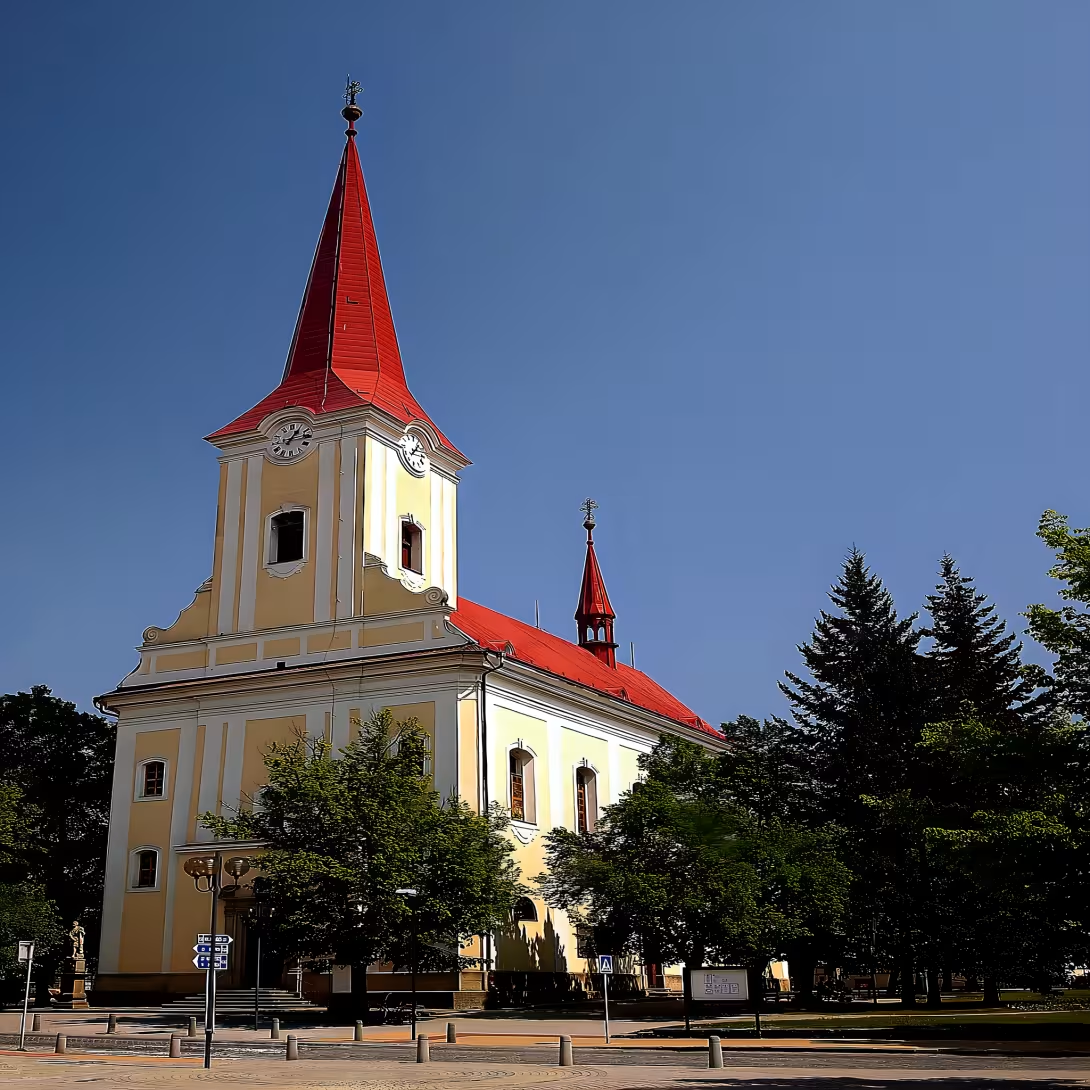
Holy Church Jilji is a single-boat temple on the Masaryk Square in Bystřice under the Hostín. Protected as a cultural monument, it represents an important part of the region's religious and architectural heritage.
In the place of today's church, according to records, there was a temple with a cemetery since 1368. In 1545, the new cemetery was moved outside the city, but the old one continued to be used including a church with a crypt. Around 1584, the remnants of Prusinovsky of Víckov, the Knight of the Order of God's Grave, were placed in this crypt.
The Baroque church we know today had the last male offspring built by a significant Rottal family, Count František Antonín z Rottalu (1717-1767). The construction was commissioned by the Holeshov builder and sculptor Tomáš Štturm. The temple reaches remarkable dimensions: the length is 41.5 metres, the width is 16.8 metres, the total height with the tower and the cross is 56 metres. The inner vault space prepares the experience to a height of 24 meters. The church has eight glazed windows, the walls are over three feet thick. Originally, the chapel of the Holy Cross came to him from the outside; The roof was covered with shingles.
The inner furnishings of the church tell him about his importance and the care he was given. The marble baptismal at the priesthood dates back to 1758, and there is also a very old stone baptismal at the entrance - both are protected as monuments. The main altar carries in its present form the picture of Madonna, which is a copy of the last work of Dr František Ondrúšek. Behind him is a great painting of St. Gilji from the desire of painter Jan Hofer (1786-1864). Above it is the family coat of arms of John James Leonard della Rovery, Count of Monte l'Abbate, who married Mary Amalia, daughter of František Antonín of Rottal. At their initiative, the church was a church. Jilji gradually repaired and supplemented. The creation of five by-altars can be dated to the second half of the 18th century: the altar of St. Tekla (1751), St. Florian (1768), St. Barbara (1778), and then St. John Nepomuk with the altar of St. Joseph (both 1781).
The spiritual interior of the church was enriched by a painting designed by Jano Köhler (1873- 1941) in the 1920s and 1930s, a famous author of the mosaic paintings of the cross road with chapel at the Holy Guesthouse. From his fresco preserved the ceiling painting of Christ the King on the victorious central arch and other figures - St. Wenceslas at the baptism, St. John Sarkander, Cyril and Methodius, Klement Hoffbauer in the priesthood, and St. Francis of Assisi, St. Elizabeth Durynská and St. Anežka Czech. The original painting was carried out by Byster painter Jan Ježek (1879- 1960), from which the fresco of St. Ludmila originated on the right above the side entrance. All the carving works, including wooden benches, were created by the master workshop of the Byštík carver Josef Jahoda (1881- 1960).
The organ with Baroque decoration was installed on the bark in 1756. It is completely rebuilt in 1840 under the Loudons. The latest modifications were made by Rieger-Kloss of Krnov at the time of World War II and were finally completed in 1945.
The history of church bells speaks of his destiny in the 20th century. Originally there were four bells in Bystřice: St. Jilje (1094 kg), St. John Nepomucký (429 kg), the bell on the Mount of Olivet (692 kg) and the small St. Michal (31 kg), the cemetery bell in the chapel of St. Lawrence. In 1917, they were all seized for war purposes. In 1921, thanks to the public collection of the shell were two new bells: Arnešt (large, tuned to Gis, named after the benefactor Count Arnešt Loudon) and Václav (smaller, H, named after the benefactor Václav Zbořil). The third bell of Vladimir was made in 1936, but the Czechs had to hand it over to the Germans. In 1942, it broke and broke.
Then and now
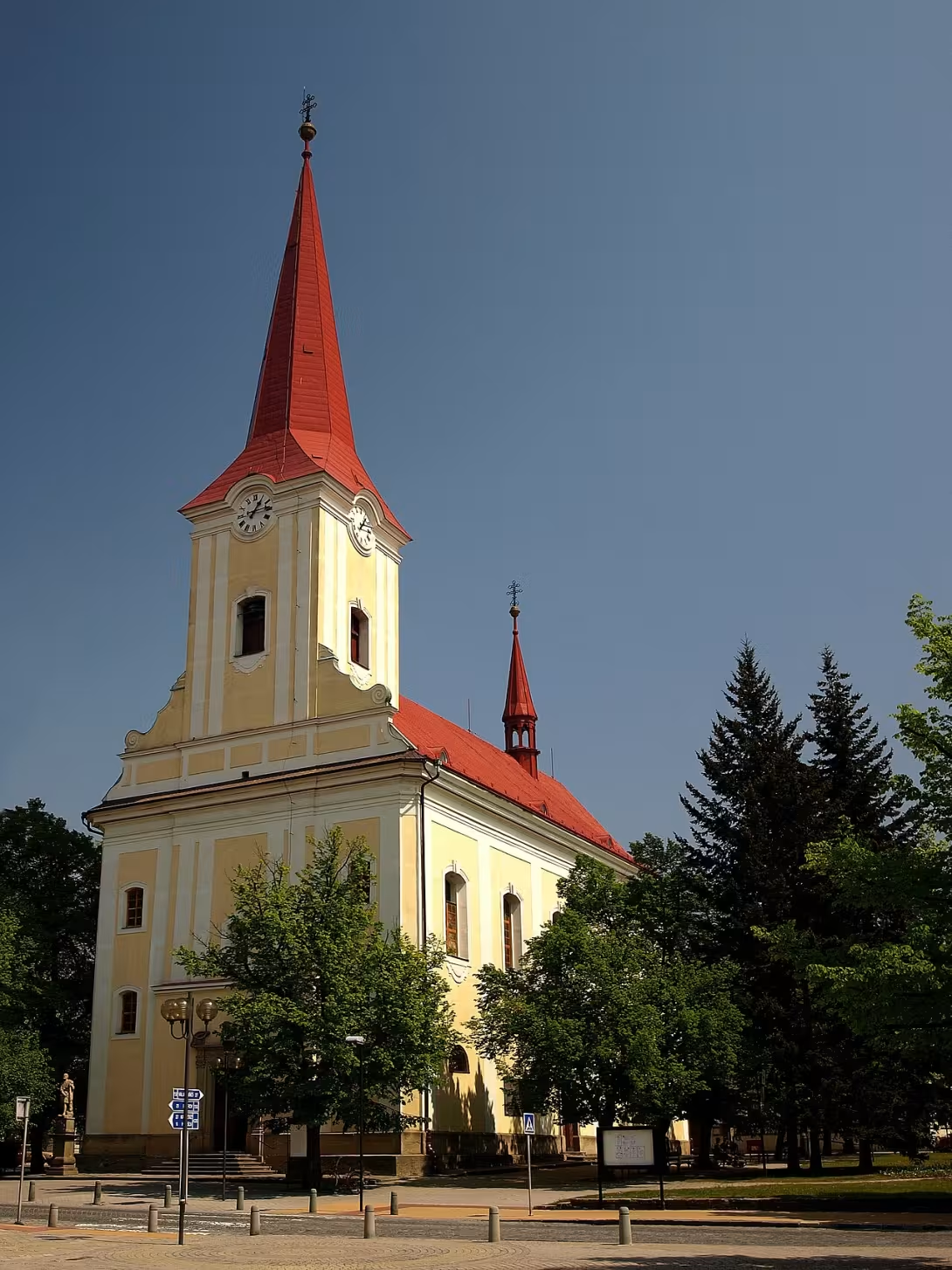
Drag the slider to compare how the landmark may have looked when it was built with the view today.
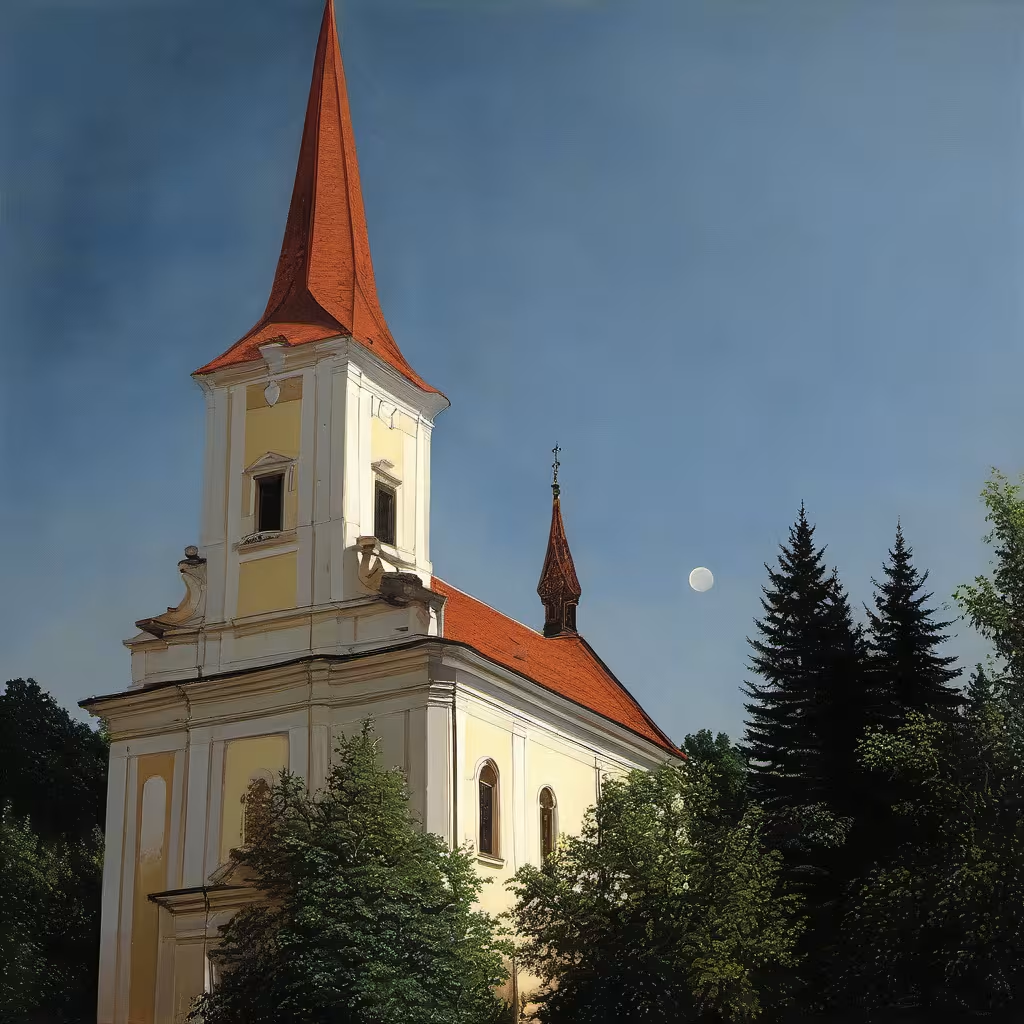
The historical appearance on the left is an AI-generated visualisation and serves as inspiration only.
Historical milestones
- 1751
- The status of St. Tekla's altar.
- 1768
- The status of St. Florian's altar.
- 1778
- The position of St. Barbara's altar.
- 1781
- The position of the altars of St. John Nepomuk and St. Joseph.
Architectural development
Holy Church Jilji was built in late Baroque, its interior is richly decorated. The inner vault is 24 metres high and the church is 41.5 metres long and 16.8 metres wide. The church was gradually equipped with five altars during the second half of the 18th century.
Historical events
- 1368
- The founding of the original church.
- 1584
- Saving the remains of Pruninovsky's Pruninovsky from Víkov to the crypt in the church.
- 1756
- Installation of an organ with Baroque decoration.
Owners
Farnost Bystřice pod Hostýnem, municipality Bystřice pod Hostýnem
Points of interest
- The church of St. Jilja has been in the place of the temple and cemetery since 1368. - In 1545 the new cemetery was moved outside the city, but the old one continued to be used with the church and the crypt. - The Baroque church was built by the last male descendant of the Rottal family, Count František Antonín z Rottalu (1717-1767), under the supervision of construction master Tomáš Štturm. - The inner furnishings of the church include a marble baptiser from 1758 and an old stone baptiser at the entrance, both protected as monuments. - The spiritual interior has enriched the painting of Jano Köhler, which includes the characters of St. Wenceslas, St. John Sarkander and other saints.
Guide
This guide is narrated by a synthetic voice generated by artificial intelligence.
Show guide text
This text was created by artificial intelligence and has not been editorially reviewed. It may contain inaccuracies.
The parish Church of Saint Egidius stands on Masaryk Square in Bystřice pod Hostýnem. According to records from 1368, an older church with a cemetery already stood here. It was used even after the town established a new cemetery outside the town in 1545. The remains of Přemek Prusinovský z Víckova, a Knight of the Holy Sepulcher, were placed in the church crypt in 1584.
The present Baroque church was built by Count František Antonín z Rottalu, the last male heir of his family line. He entrusted the work to the Holešov builder and sculptor Tomáš Šturm. The single-nave church is 41 and a half meters long and nearly 17 meters wide. The vault reaches a height of 24 meters and the walls are over a meter thick. The tower with its cross reaches 56 meters. Originally, a chapel of the Holy Cross adjoined the church and the roof was covered with shingles.
In the second half of the 18th century, five altars were gradually added: Saint Thekla in 1751, Saint Florian in 1768, Saint Barbara in 1778, and in 1781 the altars of Saint John of Nepomuk and Saint Joseph. The marble baptismal font near the chancel dates from 1758, and the stone baptismal font near the entrance is also very old. The organ with Baroque decoration was installed in the choir in 1756. In 1840 it underwent a complete renovation, and the firm Rieger-Kloss from Krnov completed the latest renovation in 1945.
The current image of the Madonna on the altar is a copy of František Ondrúšek's last work. Behind this altar is a large painting of Saint Egidius by the painter Jan Hofer. Above it is the coat of arms of Count Jan Jakub Leonard della Rovere, husband of Rottal's daughter Marie Amálie. At the initiative of this couple, the church was renovated.
The interior decoration in the 1920s and 1930s was designed by Jano Köhler, the author of the Stations of the Cross mosaics on Saint Hostýn. It was executed by the Bystřice painter Jan Ježek. The ceiling painting of Christ the King on the triumphal arch and Saint Wenceslas near the baptismal font have been preserved. In the chancel are depicted, among others, Cyril and Methodius, Jan Sarkander, Francis of Assisi, and Agnes of Bohemia. The woodcarving work, including the pews, comes from the workshop of the Bystřice woodcarver Josef Jahoda.
The original four bells were confiscated for war purposes in 1917. In 1921, thanks to a public collection, two new bells were cast, Ernest and Wenceslas. They were named after their patrons, Count Arnošt Loudon and manufacturer Václav Zbořil. The largest bell, Vladimir, was added in 1936, but it too had to be handed over to the Germans. When they lowered it from the tower in 1942, the rope snapped and it broke.
Tips for visitors
The best time to visit the church of St. Jilje in Bystřice under the Guesthouse is the early spring or late autumn. In these months you will avoid extreme temperatures and the traffic is often lower, allowing you to enjoy a quiet tour. In addition, the sun illuminates the church in a special way, which is ideal for photography.
The location is also well accessible by public transport; You can verify the current connection in the route search.
When visiting the church, make sure you bring suitable clothes and shoes. Especially in the winter months, the terrain around the church is often wet or snow. In addition, you should not forget to take the camera with you because the church offers beautiful places for photography especially in the noon hours when the light is the best.
Around the Holy Church Jilji is located the national park Podyjí, which can be visited in 30 minutes. The park offers beautiful walks and is ideal for families with children, where children can enjoy nature and possibly some pets. In addition, in Bystřice pod Hostinen you will also find a museum that focuses on the history and traditions of the region.
Frequently asked questions
Can the monument be visited?
Religious buildings are usually open mainly during services; at other times a visit is normally arranged with the parish or the operator. We have not verified specific times.
Where is the monument?
Location: Bystřice pod Hostýnem, Zlínský kraj. The map on this page shows the exact spot.
Why is the monument protected?
It is listed in the Central List of Cultural Monuments of the Czech Republic as a cultural monument (register no. 34506/7-5900).
For kids
Imagine going back to a time when our country was called Moravian Marcrabism and Bystřice pod Hostýnem was a small village at the foot of the Highlands. Where the church of St. Gilji was today, there was only a small wooden church, which often belonged to the surrounding forest.
Who lived here? They were people who lived from the ground and worked in fields and forests. They were artisans who made furniture and clothing for their family and people from neighbouring villages. Sometimes passengers were stopped by buyers with wagons full of goods.
Businesses nearby
Do you run a restaurant, accommodation, shop, museum, rental, wellness or other visitor service near this monument? Show yourself directly to the people heading to it — this is how they will see you in the app and on the web:
Nearby
Ambient landscape, natural elements.
Accommodation nearby
Trips and activities nearby
Guided tours, tickets and activities nearby from GetYourGuide
Affiliate link: if you buy from the partner, we may receive a commission. The price for you does not change.
Search tours and activities →Themed route
1. Church of St. Gilji (sacral monument) - Explore the inner space of the temple and its spiritual atmosphere. 2. Church courtyard (area) - Take a walk in a quiet space right by the temple. 3. Church tower (tower) - Go to the tower so you can see the surrounding landscape from above.
Seasonal recommendations
Spring: In the spring period, the Church of St. Jilje in Bystřice under Hostín is transformed into a great settlement for nature lovers. The sun illuminates the church interior with a newly growing light, which amplifies the colour of the stained glass and decoration. Nature is awakening from its winter sleep, creating a lively atmosphere full of new impressions. We recommend visiting the church at the beginning of spring, when there are not so many crowds and you can enjoy a quiet walk around the surrounding green. Due to the variable weather, it is advisable to bring clothes to several layers to prepare for both sunny day and cold spring winds.
Summer: In summer, the Church of St. Jilje becomes a popular destination for visitors in the main summer season. The sunny weather illuminates the church interior and increases its colour, providing a unique view of historical architecture. Surrounded nature is in full bloom, thus increasing the attractiveness of the surrounding environment. Visitors should take into account the possibility of large crowds and we recommend coming earlier on the day to enjoy the church without undue expectations. Due to the warm weather it is advisable to wear light clothes and not forget the sun protection.
Autumn: The autumn visit of the Church of St. Jilji offers a unique atmosphere where the colour of the leaves turns into live varieties and the lighting of the church interior amplifies its historical appearance. This season is ideal for those who love a calm atmosphere without large crowds, allowing you to calm down and explore the church interior more closely. We recommend visiting in early autumn when the weather is still favourable. Due to rising temperatures, you should choose clothes suitable for variable climate and not forget to protect against moisture.
Winter: The winter visit of the Church of St. Jilje offers a quiet atmosphere where the church interior is illuminated with fine lights and creates a quiet space for meditation. Nature around it is covered with snow or light freezing rain, which adds a romantic character to the church. Visitors should be aware of limited opening times and recommended warm clothes for protection against cold. The best time to visit is usually noon, when sunlight is the strongest, which can help reduce the perception of cold.
Visualizations and artistic views


The visualisations are generated by artificial intelligence and serve as inspiration.
Photos from the area
Real photos taken near the monument


Zdroj a licence jsou uvedeny u každého snímku.
Atmosphere of the place
This atmospheric visualisation of the place and period was generated by artificial intelligence. It is not real footage of the location.
Tips from visitors
No tips yet. Be the first!
Log in and add your tip.
Sources and literature
Photos: Milos Pospa / CC BY-SA 3.0, rozlišení zvýšeno umělou inteligencí — Wikimedia Commons. The author and licence also appear when you hover over the image.
Faktickým podkladem tohoto textu byl článek na Wikipedii, jehož autory jsou přispěvatelé Wikipedie. Článek je dostupný pod licencí CC BY-SA 4.0.
Location on the map
Příběhy a pověsti
Legendy, pověsti a příběhy spjaté s touto památkou
Fotografie návštěvníků
Zatím žádné fotografie. Buďte první, kdo přidá fotografii z návštěvy!
Log in a přidejte svou fotografii nebo hodnoťte.
Za ověřenou návštěvu v aplikaci získáte víc bodů — poznáme podle GPS, že jste na místě.
Reviews and comments