



Choceň Chateau
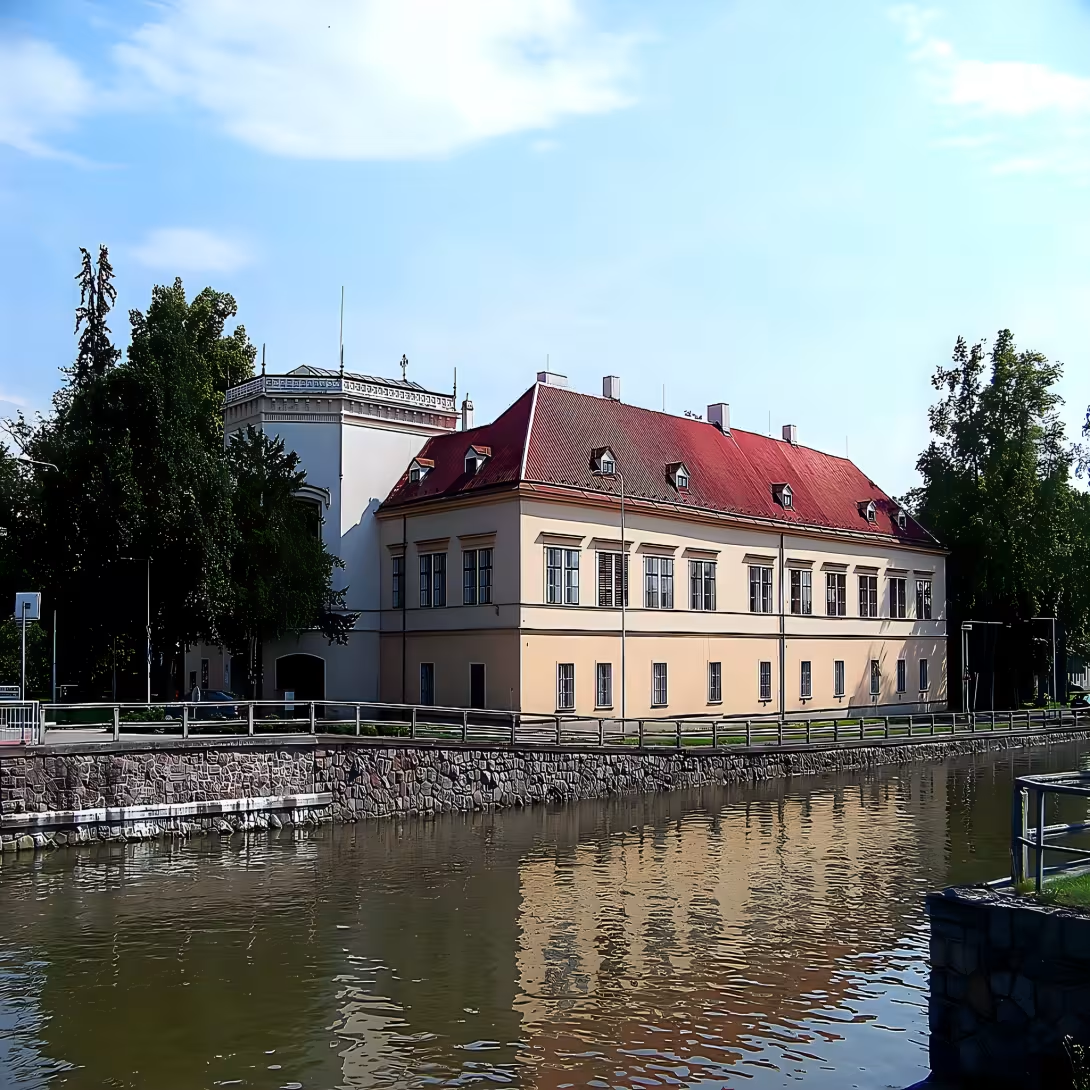
The chateau Choceň is situated in the centre of the city on the right bank of the river Silvé Orlice in the district of Ústí nad Orlicí Pardubice region. His existence is closely linked to the creation of the Chocín estate in 1555, when Jaroslav of Pernštejn sold the property to Zikmund of Šelmberk and to Kosti. The official record entry was only followed in 1559.
Zikmund built his first chateau on the left bank of the river. Since the construction lasted a long time, its owner lived in the sailing yard in Vrchovina. The original building had one wing and was completed in 1562. Since 1574 Zikmund began extensive expansion which was to convert the chateau to a quadruple object, however the work was not over when the estate in 1581 bequeathed Wroclaw from Pernštejn. Neither he nor his sons John and Maximilian, whose estate belonged to him in 1587, continued the construction because of debts. Construction work continued only under the new owner Hertvik Zejdice of Šenfeld, who owned the estate from 1587 to 1603. The four-wing form formed gradually, the construction was completely completed between 1587 and 1599. In 1610 the chateau is characterized as a "comfortable and cheerful building from the stone well built.".
Hertvik's son Rudolf was involved in a state uprising against the Habsburgs, and his lands were therefore confiscated. In 1622 Rudolf died in Chocni Chateau, supposedly poisoned. In 1623 Albrecht z Valdštejna bought the chateau from the Royal Chamber, but immediately transferred it to Vincent Muschinger from Gumpendorf. After 1628, Ferdinand Zikmund owned the Senftenau Course, the husband of Muschinger's daughter. In 1646 he was affected by the Swedish War. In 1683 Jan Bedřich of Trauttmansdorff bought the chateau, his son František Antonín Adam sold it in 1709 to Václav Norbert Octavian Kinski. Род Kinski remained owner until the end of World War II.
During the 18th century, the chateau went through Baroque modifications, first in 1710-1720 for Václav Norbert Oktavián Kinský, later in the middle of the century there were further modifications of the interior. In 1829 he was struck by a devastating fire, after which he was completely rebuilt in the spirit of neoclassicism and gained today's form. In 1849-1850 a pseudogotic chapel of the Assumption of the Virgin Mary was added to the chateau with an altar of Carrarian white marble.
During World War II, the Nazi organization Hitler Youth was based here, later interned by French prisoners, and at the end of the war served as a hostel for the staff of the Hermann Goering-Werke Group. In 1945, the chateau was confiscated and nationalized on the basis of the Beneš Decrees. At present, there is a basic art school in the south wing, in the north wing of the Orlická Museum. The complex included a brewery and an economic building currently operated by the forests of the Czech Republic. Chateau horticulture, founded by the Kinski family, has been a private enterprise since 1992.
Then and now
Drag the slider to compare how the landmark may have looked when it was built with the view today.
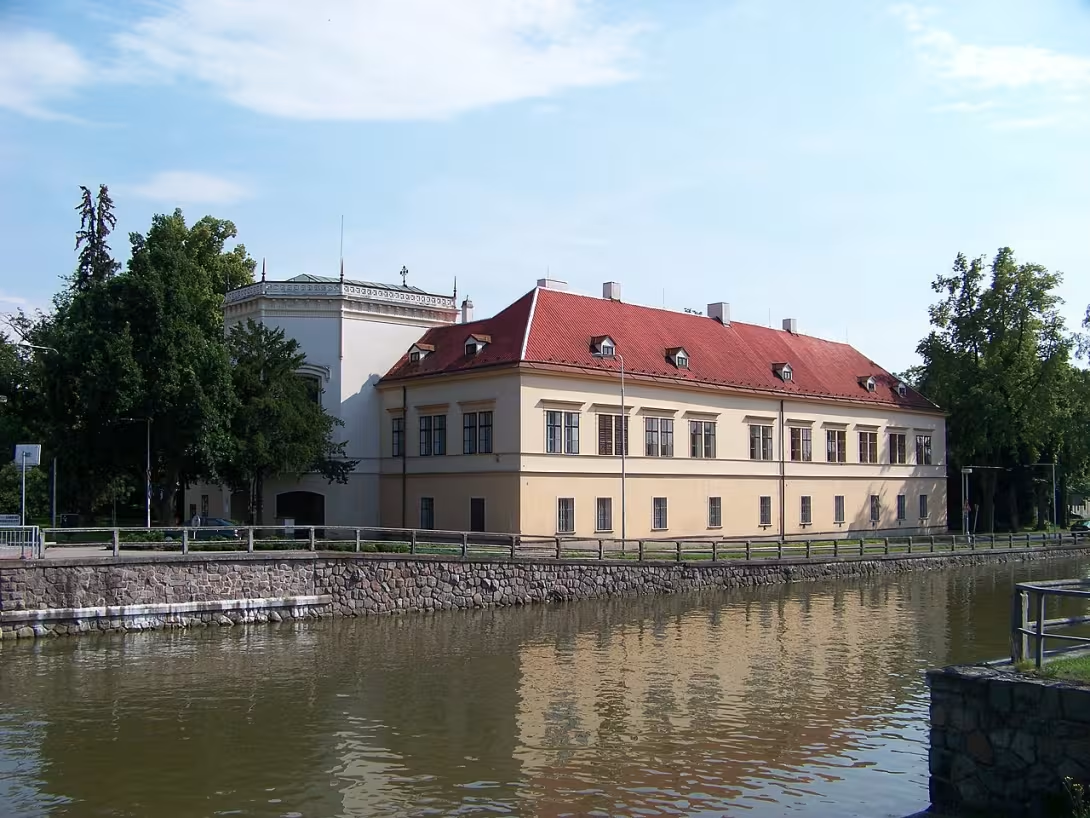

The historical appearance on the left is an AI-generated visualisation and serves as inspiration only.
Historical milestones
- 1562
- The completion of the construction of the first mansion.
- 1574-1599
- Extension of the building to a four-wing lock.
- 1829
- Fire and subsequent reconstruction into neoclassical form.
- 1849-1850
- Added pseudo-gothic chapel of the Assumption of the Virgin Mary.
Architectural development
The original one-wing manor house from 1562 was extended between 1574 and 1599 to a four-wing building. In 1710-1720, the Baroque treatment took place and in 1829 the chateau was rebuilt after the fire in the spirit of neoclassicism. In 1849-1850, the pseudo-gothic chapel of the Assumption of the Virgin Mary was added.
Historical events
1646 (pillaging by Swedish troops), 1829 (fire and subsequent classical reconstruction), 1945 (confiscation and nationalization based on Benes' decrees).
Owners
Zikmund ze Šelmberka (up to 1581), Vratislav z Pernštejna and sons (1582-1587), Hertvík Zejdlic ze Šenfeldu (1587-1603), Rudolf Zejdlic (up to confiscation), Albrecht z Valdštejna (1623), Vincent Muschinger from Gumpendorf (1623), Ferdinand Zikmund Kurz from Senftenau (after 1628), Jan Bedřich from Trauttmansdorff (1683), rod Kinských (1709-1945).
Points of interest
- The first chateau was completed in 1562 and had one wing available. - In 1610 the chateau was described as a "comfortable and cheerful building from the stone well built." Rudolf, son of Hertvik, died in the chateau in 1622, supposedly poisoned. - After a devastating fire in 1829, the chateau was completely rebuilt in the spirit of neoclassicism. - During World War II there was a Hitler Youth organization and later served as a hostel for employees of the Hermann Goering-Werke Group.
Guide
This guide is narrated by a synthetic voice generated by artificial intelligence.
Show guide text
This text was created by artificial intelligence and has not been editorially reviewed. It may contain inaccuracies.
The castle in Chocni stands in the center of the city by the Tichá Orlice river and is a cultural monument. Its origin is connected with the establishment of the Chocni estate in fifteen fifty-five. At that time, the heavily indebted Jaroslav from Pernštejn sold Chocni with the surrounding villages to Zikmund from Šelmberka and Kost.
Zikmund had a manor house built with an extensive farmyard. Before it was finished, he lived on a nearby farm at Vrchovina. The single-winged building was completed in fifteen sixty-two. From fifteen seventy-four, Zikmund expanded it into a four-winged structure, but did not finish the work. In fifteen eighty-one, he bequeathed the estate to his relative Vratislav from Pernštejn. He and his sons Jan and Maxmilián did not continue the construction due to debts. It was finally completed by Hertvík Zejdlic from Šenfeld, who acquired the estate in fifteen eighty-seven, finishing by fifteen ninety-nine. In sixteen ten, the castle was described as a comfortable and cheerful building of stone well constructed.
Hertvík's son Rudolf took part in the Estates Revolt against the Habsburgs and the estate was confiscated from him. He did not live to see it. He died at the Chocni castle in sixteen twenty-two, reportedly poisoned. A year later, Albrecht from Valdštejn purchased Chocni from the royal chamber, but immediately transferred it to Vincent Muschinger from Gumpendorf. After him, the castle passed to his son-in-law Ferdinand Zikmund Kurz from Senftenau. In sixteen forty-six, the castle was plundered by Swedish troops. In sixteen eighty-three, it was purchased by Count Jan Bedřich from Trautmannsdorff. His son sold it in seventeen nine to Václav Norbert Oktavián Kinský.
The Kinský family held the castle until the end of the Second World War. Between seventeen ten and seventeen twenty, they had it modified in the Baroque style and in the middle of the eighteenth century interior modifications followed. After a fire in eighteen twenty-nine, it was completely reconstructed in the spirit of neoclassicism and acquired its present appearance. In eighteen forty-nine to eighteen fifty, Princess widow Vilemína Kinská had a pseudo-Gothic chapel of the Assumption of the Virgin Mary built on with an altar of white Carrara marble. The Kinský family then used the castle as a summer residence.
During the war, the Nazi organization Hitler Youth was headquartered here, later French prisoners of war were interned there, and finally the castle served as accommodation for employees of the Hermann Göring concern. In nineteen forty-five, it was confiscated from the Kinský family on the basis of the Beneš decrees.
Today there is an art school in the southern wing and the Orlické museum in the northern wing. The former brewery and farm building are owned by the Forests of the Czech Republic. The nursery garden founded by the Kinský family has been a family business called Panská zahrada since nineteen ninety-two.
Tips for visitors
For the best experience we recommend a visit in spring or summer months. During this period, the Baroque park is in full bloom and a walk by the river is most suitable for consideration of the history of the chateau thanks to natural shade and temperature.
If you are planning photography, the best places and light can be found in the English style of the modified park, especially during the golden hour before sunset, when the light beautifully highlights vegetation. For nature lovers are ideal shots near the banks of the River Silent Eagle.
For families with children, the ideal choice is a walk in the extensive Baroque park, which offers sufficient space for free movement and discovery of nature. Don't forget to bring with you comfortable shoes suitable for walking along garden trails and around the river.
Frequently asked questions
Can the monument be visited?
Some buildings of this kind are open for guided tours, others serve another purpose or are privately owned. We have not verified whether and when this monument is open – please ask the operator.
What are the opening hours and admission?
We have not verified the opening hours or admission. Current information is published by the operator.
Where is the monument?
Location: Pernerova 1, Choceň, Pardubický kraj. The map on this page shows the exact spot.
Why is the monument protected?
It is listed in the Central List of Cultural Monuments of the Czech Republic as a cultural monument (register no. 25579/6-3907).
For kids
Imagine going back 464 years to the city of Choceň and seeing a beautiful chateau standing in front of you like a royal mansion on the right bank of the River Silent Eagle. It's like a game where every house is full of secrets and stories waiting to be discovered.
Businesses nearby
Do you run a restaurant, accommodation, shop, museum, rental, wellness or other visitor service near this monument? Show yourself directly to the people heading to it — this is how they will see you in the app and on the web:
Events nearby
Zdroj akcí: otevřená data měst a obcí ČR (Národní katalog otevřených dat) a kalendář akcí Národního památkového ústavu.
Nearby
The River Silent Eagle and the adjacent Baroque park, which after 1829 was modified in English style.
Accommodation nearby
Themed route
Thematic cruise route chateau Choceň
1. Chateau Choceň * Type: * Historical landmark Chateau Choceň is one of the most important representatives of Baroque architecture in the Czech Republic. Its richly decorated interiors and beautiful parks are a real pearl for lovers of history and art. The chateau is known for its origins from the 13th century, but the greatest boom experienced in the first half of the 18th century.
2. Baroque Park * Type: * Historical park The adjacent to the Baroque park chateau was rebuilt into an English style after 1829, which gave it a unique atmosphere. The park is ideal for relaxation and walks overlooking beautiful chateau buildings and the River Silent Orlici. Its surface area offers many unusual plant cultures and architectural elements.
3. River Silent Eagle * Type: * Natural water flow The River Silent Orlice is a key part of the region around the chateau Choceň. It is suitable for various leisure activities such as picnics or camping. The natural environment of the river and its surroundings create a quiet and comfortable place to relax.
This route offers a combination of historical and natural attractions that are ideal for a day's visit.
Seasonal recommendations
Spring: In spring the chateau in Choceňi will turn into a living flower paradise when the surrounding gardens and seedlings begin to bloom. The sunny days bring warm light which emphasizes architectural details of the monument in the most beautiful colours. This time of year is ideal for visiting because the crowds are usually less intense and nature offers comfortable conditions to walk around the chateau. It is recommended to wear light clothes with the possibility to add a layer because temperatures may be medium and the morning cold wind may appear.
Summer: Summer in Choceňi offers long sunny days and ideal conditions for visiting the chateau. In the main summer season there may be more visitors, so it is advisable to come in the early hours of the morning or later in the evening to avoid peak times. Sunlight increases the attractiveness of historical facades, but it can also be intense, therefore we recommend protective clothing and sunflowers. Don't forget the drinking water, especially if you plan to walk around the gardens.
Autumn: Autumn brings a magical view of the chateau in Choceňi with its colored leaves and mild atmosphere. This time of year is ideal for photography lovers because sunny days highlight the pastel colors of nature around the chateau. Visitors are advised to wear layered clothes because temperatures can be variable and in the morning and evening can be colder. Autumn visits are often mildly visited than during the summer period, which means a more comfortable walk around the monument.
Winter: In winter it offers a chateau in Choceňi unique view under cover of snow and soft lights. The atmosphere is calm, which allows you to enjoy historical interiors without a violent crowd. If you visit in the advent or Christmas period, you can look forward to the atmospheric light effects that add to the magic of winter.
Visualizations and artistic views


The visualisations are generated by artificial intelligence and serve as inspiration.
Photos from the area
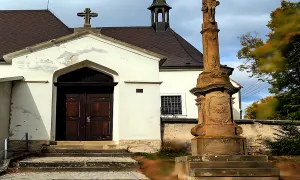
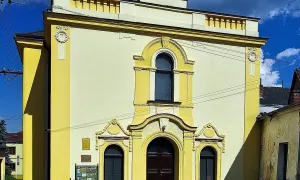
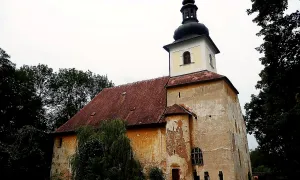
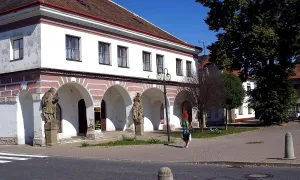
Real photos taken near the monument


Zdroj a licence jsou uvedeny u každého snímku.
Atmosphere of the place
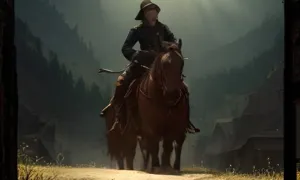
This atmospheric visualisation of the place and period was generated by artificial intelligence. It is not real footage of the location.
Tips from visitors
No tips yet. Be the first!
Log in and add your tip.
Sources and literature
Photos: ŠJů (cs:ŠJů) / CC BY-SA 3.0, rozlišení zvýšeno umělou inteligencí — Wikimedia Commons. The author and licence also appear when you hover over the image.
Faktickým podkladem tohoto textu byl článek na Wikipedii, jehož autory jsou přispěvatelé Wikipedie. Článek je dostupný pod licencí CC BY-SA 4.0.
Location on the map

Příběhy a pověsti
Legendy, pověsti a příběhy spjaté s touto památkou
Fotografie návštěvníků
Zatím žádné fotografie. Buďte první, kdo přidá fotografii z návštěvy!
Log in a přidejte svou fotografii nebo hodnoťte.
Za ověřenou návštěvu v aplikaci získáte víc bodů — poznáme podle GPS, že jste na místě.
Reviews and comments