



Chorvatská 7 Villa
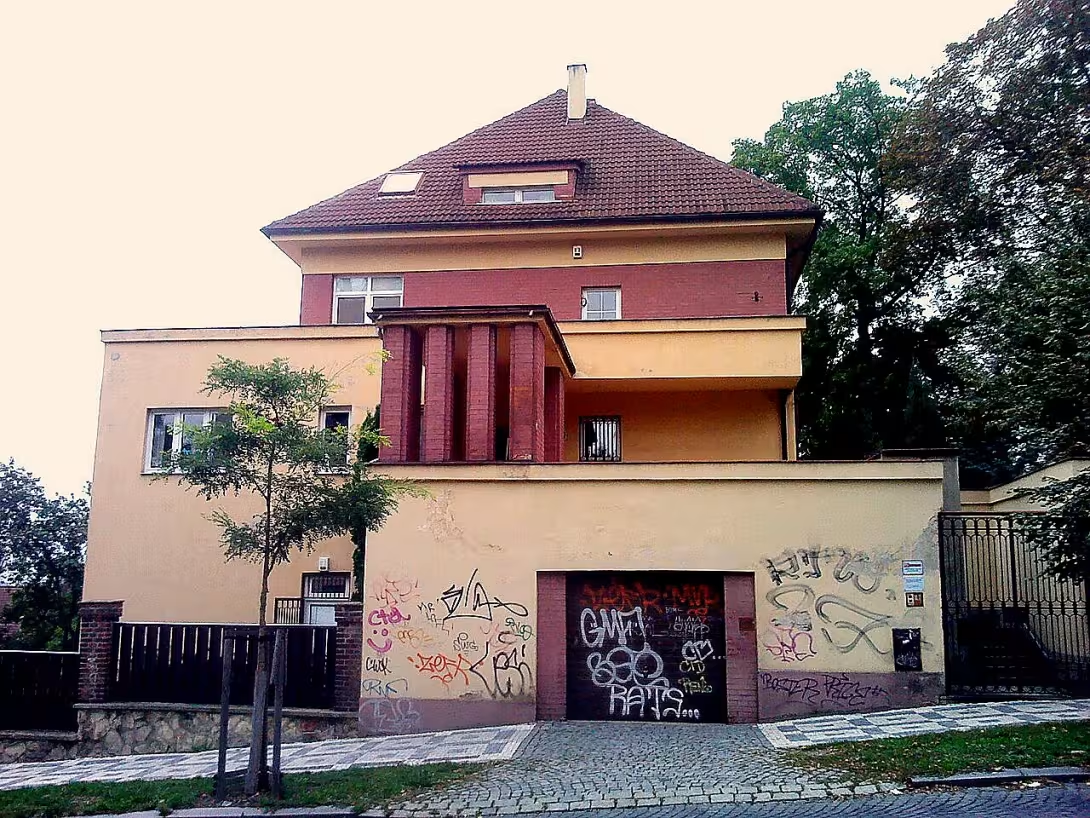
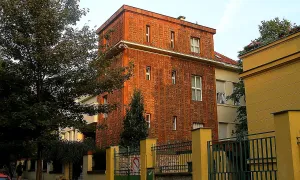
Villa Radana Grégr's, located at Chorvatská 7 in Prague's Vinohrady district, is a significant cultural monument of Czech modern architecture. Designed by architect Kamil Roškota and constructed by František Šípek for Radana Grégr, this villa exemplifies the early Czech secessionist style with its purist design elements. Built in 1924, it was designated as a protected cultural monument on August 6, 1990, highlighting its importance within the architectural heritage of the Czech Republic.
The villa's origins trace back to the early 1920s, a period marked by national consolidation for Czechoslovakia following its establishment as an independent state after World War I. This era was characterized by significant developments in modernist architecture and design across Europe. Kamil Roškota, a prominent figure in this movement, designed Villa Radana Grégr's, contributing to the evolving architectural landscape of Prague during this transformative time.
Architecturally, the villa is noted for its purist elements typical of early Czech secessionism. The two-story structure rests on an oblong base and features cubic volumes that are rhythmically enhanced by horizontal bands created through balconies and a combination of rendered and brickwork facades. Notably, in 1925, the villa underwent modifications including the addition of a garage, raising of the roof to accommodate attic space, and enhancement of the facade with brick bands—changes reflecting both functional adaptations and stylistic enhancements typical of early modernist architecture.
The design includes innovative spatial elements such as a semi-elliptical staircase at the entrance, a basement housing offices, and a terrace extending from the first floor. The ground level comprises a square hall flanked by dining room, kitchen, and workroom, while the first floor accommodates a three-room apartment and an attic garret. The garden, partially situated on a raised terrace to counteract the slope of the terrain, is enclosed with brick pillars, stone or brick underpinning, and wooden infillings.
Today, Villa Radana Grégr's remains a testament to early 20th-century architectural innovation in Prague's Vinohrady district. Its designation as a protected cultural monument underscores its historical and aesthetic significance. Visitors are invited to explore this remarkable example of Czech modern architecture, appreciating both its design intricacies and the broader historical context that shaped its creation.
Then and now
Drag the slider to compare how the landmark may have looked when it was built with the view today.
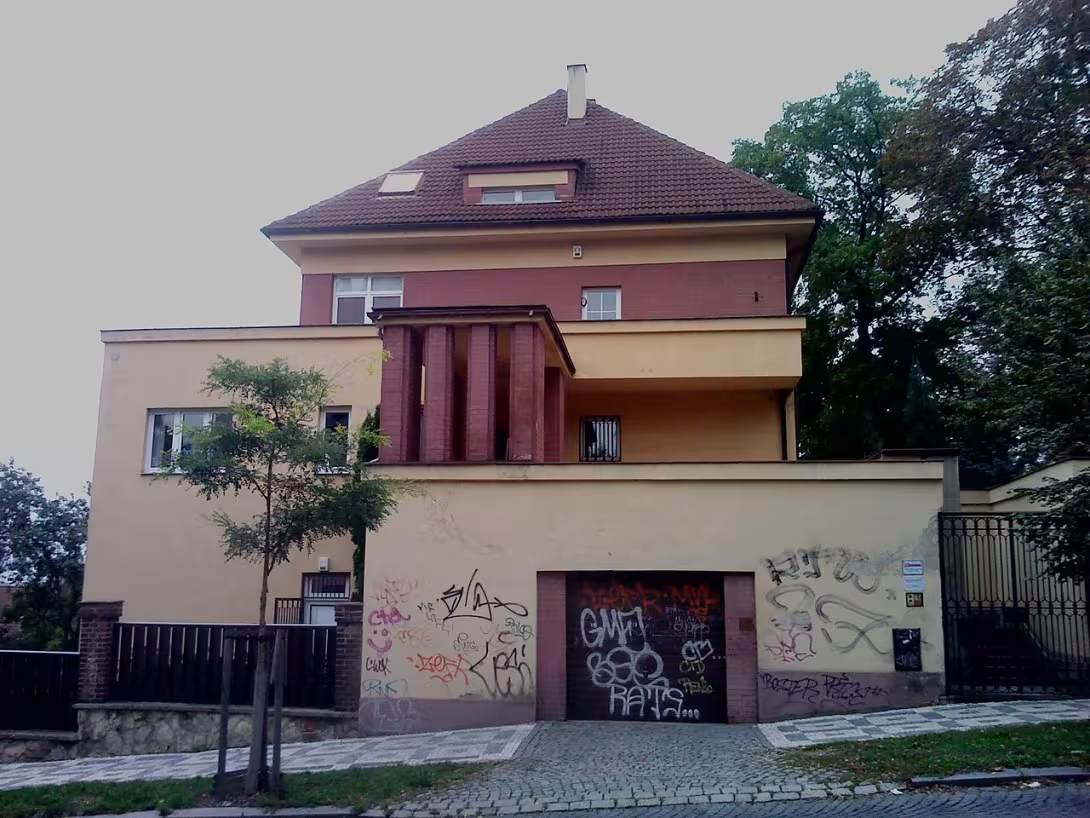

The historical appearance on the left is an AI-generated visualisation and serves as inspiration only.
Historical milestones
- 1924
- Villa Radana Grégr's was built.
- 1925
- The villa was renovated, including the addition of a garage and raising the roof.
- 1990
- It was declared a protected cultural monument.
Architectural development
The villa was initially constructed in 1924 following Kamil Roškota's design. In 1925, it underwent significant modifications including the addition of a garage, raising of the roof to accommodate an attic space, and the incorporation of brick bands into its facade. These changes reflect both functional adaptations and stylistic enhancements typical of early modernist architecture.
Historical events
In 1925, modifications were made to the original structure, including the addition of a garage, raising of the roof for an attic space, and enhancement of the facade with brick bands.
Points of interest
- The villa was originally commissioned by Radana Grégr, a notable figure in Czech cultural circles, whose support for modernist architecture helped elevate the prominence of such designs in Prague during the 1920s.
- In its early years, Villa Radana Grégr's served as more than just a private residence; it hosted gatherings that brought together influential artists and architects from across Europe, fostering discussions on modernism and secessionism.
- A unique feature of the villa is its semi-elliptical staircase at the entrance, which was an innovative design choice by Kamil Roškota, intended to create a sense of movement and flow within the limited space of urban villas.
- During World War II, the villa underwent several changes as it temporarily housed different occupants. These alterations included modifications to its interior layout that were later reversed post-war to restore its original architectural integrity.
- The garden's design incorporates elements aimed at harmonizing with the natural slope of the terrain, using brick pillars and stone underpinning—a technique showcasing early 20th-century landscape architecture trends in Prague.
Guide
This guide is narrated by a synthetic voice generated by artificial intelligence.
Show guide text
This text was created by artificial intelligence and has not been editorially reviewed. It may contain inaccuracies.
The villa on Chorvatská Street in Prague's Vinohrady district bears the name of its first owner. It is the villa of Radany Grégrová, which was built in nineteen twenty-four according to a design by architect Kamil Roškot. The construction was carried out by builder František Strnad. For Roškot, one of the leading architects of Czech modernism, this was an early work. Since August sixth, nineteen ninety, the villa has been protected as a cultural monument.
The house belongs to purism, that is to say a movement which built upon clean forms without ornaments. However, the appearance of the house was soon changed by modifications. Already in nineteen twenty-five a garage was added to the villa, the roof was raised so that an attic could be built in, and the originally smooth façade was supplemented with bands of exposed brick.
The villa is two-storied and has a rectangular floor plan. On its southern and eastern façades, cubic volumes project from it, which gradually step back. The façade is divided horizontally by balconies and an alternation of rendered and exposed masonry. Projecting into the street is a cubic pavilion with an entrance and garages. The house also has a residential attic and partly a basement.
Right by the entrance is a staircase whose floor plan has the shape of half of a compressed ellipse. In the basement there are offices. The ground floor is organized around a square hall, to which a dining room, kitchen and study adjoin on the sides. The flat roof above the study serves on the first floor as a terrace. The first floor accommodates a three-room apartment, and in the attic there is a studio apartment.
The garden lies partly on a raised terrace, which levels out the sloping terrain. It is enclosed by a fence with pillars made of exposed brick. The foundation wall is stone or built from grey bricks and the fence infills are wooden.
Frequently asked questions
Can the monument be visited?
This is a residential or farm building, not a museum with opening hours. Please view it from public space and respect the owners' privacy. We have no information about access to the interior.
Where is the monument?
Location: Chorvatská 1969/7, Vinohrady, Praha, Hlavní město Praha. The map on this page shows the exact spot.
Why is the monument protected?
It is listed in the Central List of Cultural Monuments of the Czech Republic as a cultural monument (register no. 41471/1-2125).
Businesses nearby
Do you run a restaurant, accommodation, shop, museum, rental, wellness or other visitor service near this monument? Show yourself directly to the people heading to it — this is how they will see you in the app and on the web:
Events nearby

Zdroj akcí: otevřená data měst a obcí ČR (Národní katalog otevřených dat) a kalendář akcí Národního památkového ústavu.
Nearby
Situated in Prague's Vinohrady district, Vila Radany Grégrové is surrounded by urban residential areas. The neighborhood features several other architectural landmarks and cultural sites typical of early 20th-century Prague.
Accommodation nearby
Trips and activities nearby
Guided tours, tickets and activities nearby from GetYourGuide
Affiliate link: if you buy from the partner, we may receive a commission. The price for you does not change.
Search tours and activities →Themed route
Thematic Walking Tour: Chorvatská 7 (Vila) and Surrounding Attractions
1. Chorvatská 7 (Vila Radany Grégrové)
Type: Architectural Landmark
Why Visit: This villa, located in the Vinohrady district of Prague, is a prime example of early 20th-century architecture with its elegant design and historical significance. It offers insight into the residential styles that characterized this era in Prague.
2. Vinohradské Nádraží
Type: Architectural Landmark
Why Visit: Just a short walk from Vila Radany Grégrové, Vinohradské Nádraží is an architectural gem designed by the renowned architect Josef Fanta. Its unique Art Nouveau style and historical importance as one of Prague's oldest railway stations make it a must-see.
3. Vinohrady District
Type: Urban Residential Area
Why Visit: Explore the charming streets of Vinohrady, known for their blend of historic buildings and vibrant community life. The area reflects the architectural evolution from the late 19th to early 20th century, offering a picturesque backdrop for leisurely strolls.
4. Vinohradské náměstí
Type: Public Square
Why Visit: This central square in Vinohrady is surrounded by notable buildings and serves as a cultural hub with cafes and shops. It provides a perfect spot to relax and soak in the local atmosphere after exploring nearby architectural sites.
5. U Václava Church
Type: Cultural Site
Why Visit: Located near Chorvatská 7, this church is an important cultural site with its distinctive Baroque architecture. It offers a glimpse into Prague's religious history and serves as a serene spot for reflection amidst the urban landscape.
This tour provides a comprehensive look at the architectural and cultural richness of the Vinohrady district, centered around the charming Vila Radany Grégrové.
Seasonal recommendations
Spring: Visiting Chorvatská 7 during spring offers a unique experience as the city of Prague awakens with vibrant colors and blossoming flowers, creating an enchanting atmosphere around this historic villa. The soft light of spring enhances the architectural details, making it an ideal time for photography enthusiasts. With milder temperatures, visitors can comfortably explore the area in layers that accommodate occasional cool breezes. Although crowds are generally moderate, arriving early is advisable to fully enjoy the serene environment before more tourists arrive.
Summer: Summer at Chorvatská 7 brings long daylight hours and warm weather, perfect for leisurely strolls through Prague's historic streets. The villa's surroundings come alive with lush greenery, providing a picturesque backdrop for visitors. However, this is also the peak tourist season, so expect larger crowds and consider visiting early in the morning to avoid the midday heat and congestion. Lightweight clothing and comfortable shoes are recommended, along with staying hydrated throughout your visit.
Autumn: Autumn offers a particularly beautiful time to explore Chorvatská 7, as Prague is bathed in warm hues of red, orange, and gold. The cooler temperatures make for a pleasant walking experience, and the reduced number of tourists compared to summer allows for a more relaxed visit. The soft autumn light adds an atmospheric quality to the villa's historic architecture. Dressing in layers will ensure comfort as temperatures can vary throughout the day.
Winter: Winter transforms Chorvatská 7 into a magical setting with Prague's iconic snow-covered rooftops and festive decorations, especially during the holiday season. The shorter days mean earlier closing times for attractions, so plan your visit accordingly. While the villa itself may not be heated, its architectural beauty is accentuated by the winter lighting. Dress warmly in layers to enjoy the outdoor experience comfortably, and consider bringing a scarf or hat to shield against the cold.
Visualizations and artistic views


The visualisations are generated by artificial intelligence and serve as inspiration.
Photos from the area
Real photos taken near the monument


Zdroj a licence jsou uvedeny u každého snímku.
Tips from visitors
No tips yet. Be the first!
Log in and add your tip.
Sources and literature
Photos: limojoe / CC BY-SA 3.0 — Wikimedia Commons. The author and licence also appear when you hover over the image.
Faktickým podkladem tohoto textu byl článek na Wikipedii, jehož autory jsou přispěvatelé Wikipedie. Článek je dostupný pod licencí CC BY-SA 4.0.
Location on the map
More monuments – Vinohrady
Show all in the municipality
Příběhy a pověsti
Legendy, pověsti a příběhy spjaté s touto památkou

Fotografie návštěvníků
Zatím žádné fotografie. Buďte první, kdo přidá fotografii z návštěvy!
Log in a přidejte svou fotografii nebo hodnoťte.
Za ověřenou návštěvu v aplikaci získáte víc bodů — poznáme podle GPS, že jste na místě.
Reviews and comments