



Čížkovice Chateau
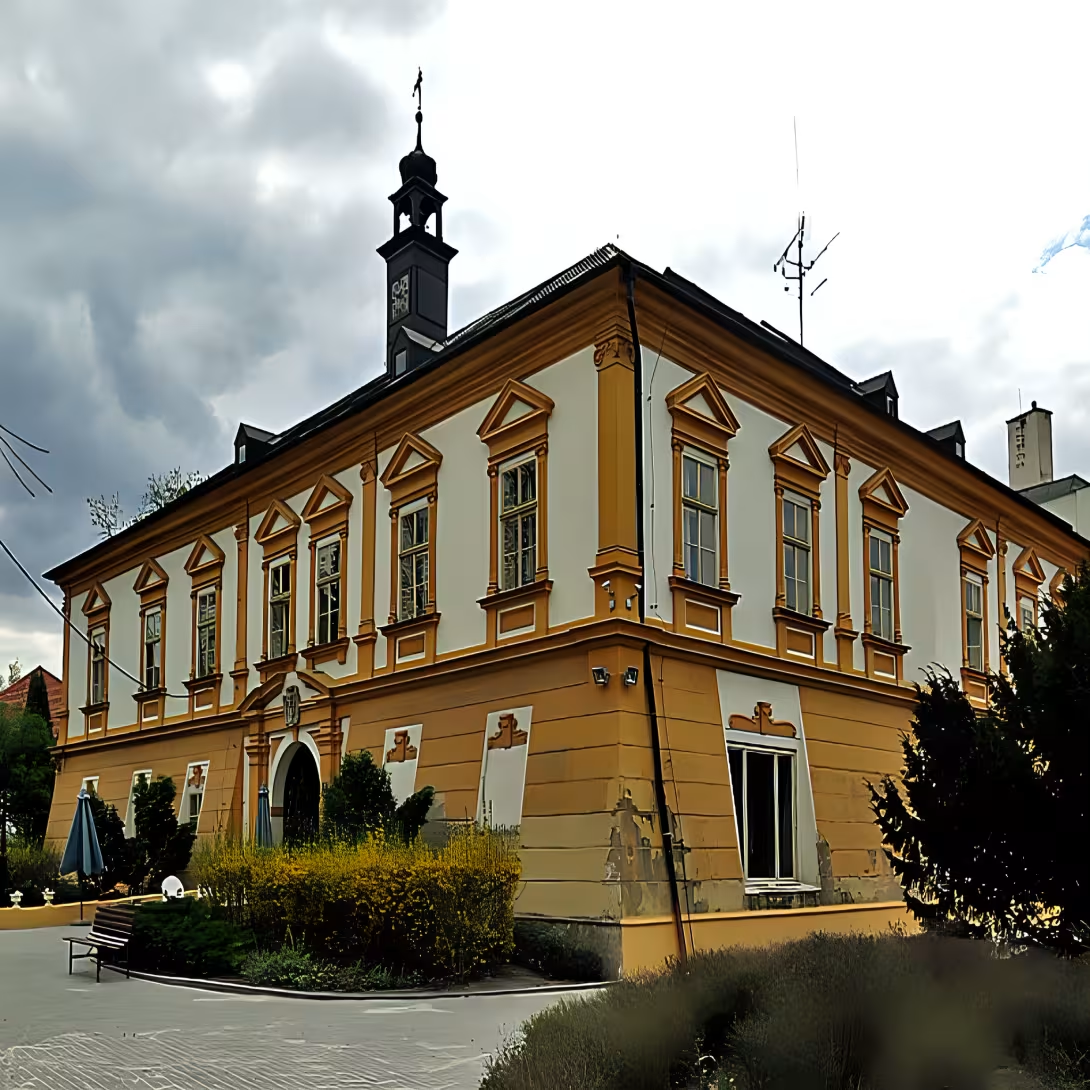
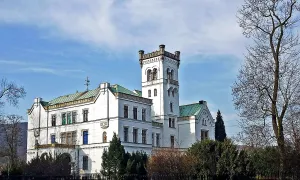
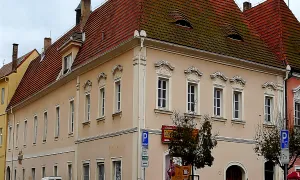
The Čížkovice is a Baroque chateau in a small village of the same name in the Litoměřice district. The monumental structure grew in latach 1658-1665 from the remains of an older fortress which was rebuilt by Gustav Adolf z Varrensbachu. The construction was led by Italian architect Giulio Broggio and its project is rightly considered its first independent implementation. The chateau is today protected as a cultural monument.
The fate of Chezkovic has been complex for centuries. Since the 13th century the village belonged in two parts to different owners - the smaller upper fort was owned by Kaplířová from Sulevic, while the larger part belonged to the Prague Svatojiří monastery. The complex division and gradual unification of the parcel between the generations of Kaplíří lasted until the beginning of the 17th century. In 1638 Anežka, born of Eberstejn, bought the village together with the nearby estates of Boreč and Koštálov. But a year later, a major disaster hit the village - Swedish soldiers burned it down. After Anezka's death, her son took the village and the chateau from Gustav Adolf z Varrensbachu's first marriage.
Broggio's project preserved a one-story lock with three wings and a rising risalite. There is a portal in the Pilaster edition with a broken ledge and there is a free cartouche with a sign in the shield. The interior of the chateau keeps rolled vaults with volutes on the ground floor and stucco decoration of the ceiling in the main hall from the 1930s. The building was originally surrounded by a moat which was partially buried and bridged after 1819. The windows in the facade have pilaster frames with triangular shields. Both early Baroque stucco and 19th century stucco were preserved in the hall and other rooms.
After the death of Gustav Adolf, the chateau returned to the St. George's monastery in 1692 and became its summer residence. In its surroundings, a park bordered by a wall decorated with rococo vases was gradually established. When the monastery was abolished in 1782, the chateau went to a religious fund. In 1819 he bought it at public auction Josef Glaserfeld for 20,000 gold. Since then, more owners have been replaced in possession of the farm - since 1886 the chateau was owned by the industrialist Franz Preidl from Česká Kamenice. In the twentieth century, the chateau was first served as a health facility for the victims of the Teresian concentration camp and subsequently became a retirement home.
Čížkovice represents a rare example of the Italian Baroque style asserting itself in the Czech landscape of the 17th century and remains an eloquent witness to the artistic and architectural development of the time.
Then and now
Drag the slider to compare how the landmark may have looked when it was built with the view today.
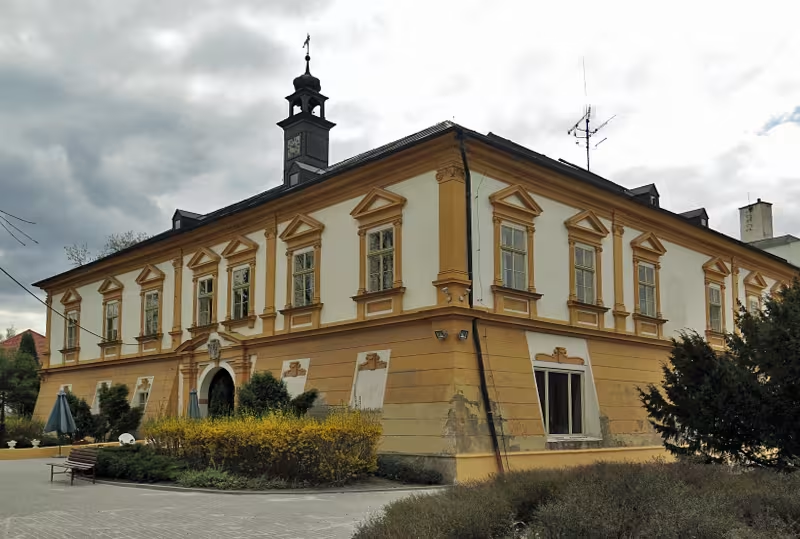

The historical appearance on the left is an AI-generated visualisation and serves as inspiration only.
Historical milestones
- 1658
- The beginning of the reconstruction of the fortress to the Baroque chateau
- 1665
- Completion of the chateau reconstruction according to the Giulia Broggia project
- 1692
- Acquisition of the chateau by the St. George's Monastery as summer residence of the Abatiš
- 1782
- Cancellation of the monastery and taking over the chateau by religious fund
Architectural development
The original Baroque chateau had three wings with a rising risalite and pilaster editorial above the portal. After 1819 it was partially buried around the building and bridged by a former moat, with two side wings attached. The interior was preserved by early Baroque stucco, rolled vaults and stove from the 1930s.
Historical events
1638 Anežka z Eberštejna bought a chateau and nearby estate; 1639 Swedish troops burned the village; 1658-1665 Rebuilding the fort to the Baroque chateau according to the Giulia Broggia project; 1782 Cancellation of the monastery and taking over the chateau with a religious fund.
Owners
1436 Jan Kaplíř of Sulevic; 1623 Volf Ilburk z Vřesovic; Marie Magdalena of Lobkovic; Adam z Valdštejna; 1638 Anežka z Eberštejna; Gustav Adolf z Varrensbachu; 1692 St. John's Monastery; 1782 religious fund; 1819 Josef Glaserfeld; 1886 Franz Preidl
Points of interest
- Čížkovice are a Baroque chateau built in 1658-1665 on the remains of an older fortress. - The construction was led by Italian architect Giulio Broggio, who considers it his first independent implementation. - The chateau has a single-storey structure with three wings and a rising risalite with a portal in Pilaster edition and a volute cartouche in the shield. - The interior of the chateau keeps rolled vaults with volutes and stucco decoration of the ceiling from the 1930s. - Čížkovice represents a rare example of the Italian Baroque style asserting itself in the Czech landscape of the 17th century.
Guide
This guide is narrated by a synthetic voice generated by artificial intelligence.
Show guide text
This text was created by artificial intelligence and has not been editorially reviewed. It may contain inaccuracies.
The castle in Čížkovice in the Litoměřice region was created between sixteen fifty-eight and sixteen sixty-five through the reconstruction of an older fortress. The architect Giulio Broggio designed the project and the reconstruction is considered to be his first independent work. The castle is today protected as a cultural monument.
The village had been divided into two parts since the thirteenth century and each had its own fortress, an upper and lower one. The smaller part belonged to the Kaplicrs of Sulevice. The larger section was held by the Prague Saint George monastery, but in fourteen thirty-six Emperor Sigismund pawned it to Jan Kaplíř of Sulevice at Košťálov. From fourteen eighty-six the sons of Buška Kaplíř shared Čížkovice and both fortresses then passed between members of the family. It was only Jaroslav Kaplíř who united the entire village in one hand. After fifteen ninety-eight he bought his brother Jan's share for four thousand eight hundred Meissen groschen and also joined the indebted part after his uncle Albrecht.
Adam Kaplíř had half of his property confiscated, including Čížkovice, for his participation in the Estates Revolt. In sixteen twenty-three it was bought by Volf Ilburk of Vřesovice. He converted the upper fortress into a tavern, after which perhaps only filled-in cellars remained under one of the houses in the village. In sixteen thirty-eight Čížkovice together with the estates Boreč and Košťálov were acquired by Anežka of Eberstein. A year later Swedish soldiers burned the village. Anežka's son Gustav Adolf of Varrensbach then had the abandoned lower fortress rebuilt as a Baroque castle.
In sixteen ninety-two the village returned to the Saint George monastery and the castle became the summer residence of the abbess. Around it a park developed enclosed by a wall decorated with Rococo vases. After the monastery was dissolved in seventeen eighty-two the castle passed to the religious fund. In eighteen nineteen Josef Glaserfeld bought it at a public auction and from eighteen eighty-six it belonged to industrialist Franz Preidl of Česká Kamenice. After nineteen forty-five it served as a temporary sanatorium for political prisoners from the Theresienstadt concentration camp and later as a retirement home.
Broggio's building was single-storied and had three wings. In the protruding risalit is a portal framed by pilasters with a split cornice. In the pediment above it is a cartouche with a coat of arms. A moat surrounded the building until the beginning of the nineteenth century. After eighteen nineteen they partially filled it in and bridged it and the castle acquired two side wings. Inside, barrel vaults are preserved, early Baroque stuccos and stuccos from the nineteenth century. In the main hall remained stucco ceiling decoration and a fireplace from the nineteen-thirties of the eighteenth century.
Tips for visitors
The best time to visit the chateau Čížkovice is in summer, especially in May to October. At this time the park areas are full of blooming rococo vases and surrounding nature offers an unforgettable view. Moreover, cultural events often take place at this time, which highlight the historical value of the monument.
You can reach Čežkovice by car and public transport. For the most recent information about routes and connections, it is advisable to use online search engines or contact the local tourist institute.
When visiting the chateau, remember handbags, shoes suitable for walking on the lawn and sun protection. If you plan to take photos or take a long walk, it is good to have water and breakfast with you.
Photographing the Čížkovice Chateau is the most beautiful in sunny weather, when the light is ideal for capturing architectural details. The best places for photos are especially gardens and terrace overlooking the park surrounded by walls.
In the vicinity of Čežkovice you can visit the Koštělovská manor, castle Koštál and picturesque area Boreč. These places offer interesting walks and other historical monuments to complement your experience.
For families with children, the Čížkovice Chateau is a suitable place to enjoy the countryside. Children will be looking forward to walking around the park and playing on the natural background. In addition, it may be interesting to explore the historical interior if the guided tour is available.
Frequently asked questions
Can the monument be visited?
Some buildings of this kind are open for guided tours, others serve another purpose or are privately owned. We have not verified whether and when this monument is open – please ask the operator.
What are the opening hours and admission?
We have not verified the opening hours or admission. Current information is published by the operator.
Where is the monument?
Location: Jiráskova 1, Čížkovice, Ústecký kraj. The map on this page shows the exact spot.
Why is the monument protected?
It is listed in the Central List of Cultural Monuments of the Czech Republic as a cultural monument (register no. 46525/5-1983).
For kids
Imagine going back to when our ancestors built the first houses and cities. Now that you're here, stop by the picturesque town of Čížkovice.
It was like a game! The chateau that stands in the middle of the city today was originally an older fortress that was located in this place. But in 1658 the construction of the new chateau began, and five years later, in 1665, it was finished. The architect Giulio Broggia was the one who drew up the plan of this Baroque chateau.
Businesses nearby
Do you run a restaurant, accommodation, shop, museum, rental, wellness or other visitor service near this monument? Show yourself directly to the people heading to it — this is how they will see you in the app and on the web:
Events nearby
Zdroj akcí: otevřená data měst a obcí ČR (Národní katalog otevřených dat) a kalendář akcí Národního památkového ústavu.
Nearby
Park surrounded by a wall with rococo vases, Koštělovská manor, castle Koštálov, Boreč.
Accommodation nearby
Trips and activities nearby
Guided tours, tickets and activities nearby from GetYourGuide
Affiliate link: if you buy from the partner, we may receive a commission. The price for you does not change.
Search tours and activities →Themed route
Thematic cruise route from Čežkovice
1. Chateau Čížkovice - * Type: * Historical chateau - Why is it worth a visit: Chateau Čížkovice is a beautiful example of Baroque architecture with rich history. Its inner spaces and park offer a view of the past, which is reflected into the present.
2. Park surrounded by wall - * Type: * Park The park is surrounded by walls and decorated with rococo vases, which adds peace and elegance to its atmosphere. It is an ideal place to relax and walk around the chateau.
3. Broomstick Manor - * Type: * Historical area - Why is it worth a visit: The Broomstick estate is an important part of the history of the region. Its original buildings and land resemble a rich past that affected the entire territory.
4. Castle Koštálov - * Type: * Historical chateau - Why is it worth visiting: Castle Koštálov is an important historical monument with a rich heritage. Its strength structures and panoramic views offer unique experiences.
5. Boreč - * Type: * Local interest - Why is it worth visiting: Boreč, as part of the surroundings of Čežkovice, represents local culture and tradition. It's a place that proves the living history of the area and its people.
This route offers visitors the opportunity to explore the rich historical landscape of Čežkovice and surrounding areas, from the Baroque chateau to the quiet park to the historically important manor and chateau.
Seasonal recommendations
In the spring, the chateau will be surrounded by awakening nature and fresh greenery. The soft spring light highlights the details of the facade and the blooming garden corners, creating a sense of renewal. It is recommended to dress in layers because weather is usually variable at this time. Ideal is a visit in the morning when the air is the cleanest and the surrounding area the most fresh.
The summer season brings rich colors and full leaves of trees that provide a pleasant shade. The atmosphere is playful and the sun lights the area up to late hours, which is ideal for outdoor tours. Due to the high season and larger groups of visitors, you better come early in the morning to avoid crowds. Don't forget light, breathable clothes and plenty of fluids.
In autumn, the surroundings of the chateau turn into golden and red tones, creating a melancholy and romantic mood. The morning fog gives the memory a mysterious look and silence in the park creates a calm atmosphere. Waterproof shoes are suitable for walking on wet leaves. The best time to visit is late afternoon, when warm light best excels in the landscape.
In winter, the area is quiet and grisly, especially if snow covers the landscape. The contrast of white color with the architecture of the chateau is very elegant and minimalist. It is necessary to have warm and functional clothes with emphasis on quality shoes. Pay attention to shorter opening times and plan your arrival sufficiently before dark.
Visualizations and artistic views


The visualisations are generated by artificial intelligence and serve as inspiration.
Photos from the area
Real photos taken near the monument

Zdroj a licence jsou uvedeny u každého snímku.
Atmosphere of the place
This atmospheric visualisation of the place and period was generated by artificial intelligence. It is not real footage of the location.
Tips from visitors
No tips yet. Be the first!
Log in and add your tip.
Sources and literature
Photos: Sovicka169 / CC BY-SA 4.0, rozlišení zvýšeno umělou inteligencí — Wikimedia Commons. The author and licence also appear when you hover over the image.
Faktickým podkladem tohoto textu byl článek na Wikipedii, jehož autory jsou přispěvatelé Wikipedie. Článek je dostupný pod licencí CC BY-SA 4.0.
Location on the map

Příběhy a pověsti
Legendy, pověsti a příběhy spjaté s touto památkou
Fotografie návštěvníků
Zatím žádné fotografie. Buďte první, kdo přidá fotografii z návštěvy!
Log in a přidejte svou fotografii nebo hodnoťte.
Za ověřenou návštěvu v aplikaci získáte víc bodů — poznáme podle GPS, že jste na místě.
Reviews and comments