



dědičná štola Kašpara Pluha Other
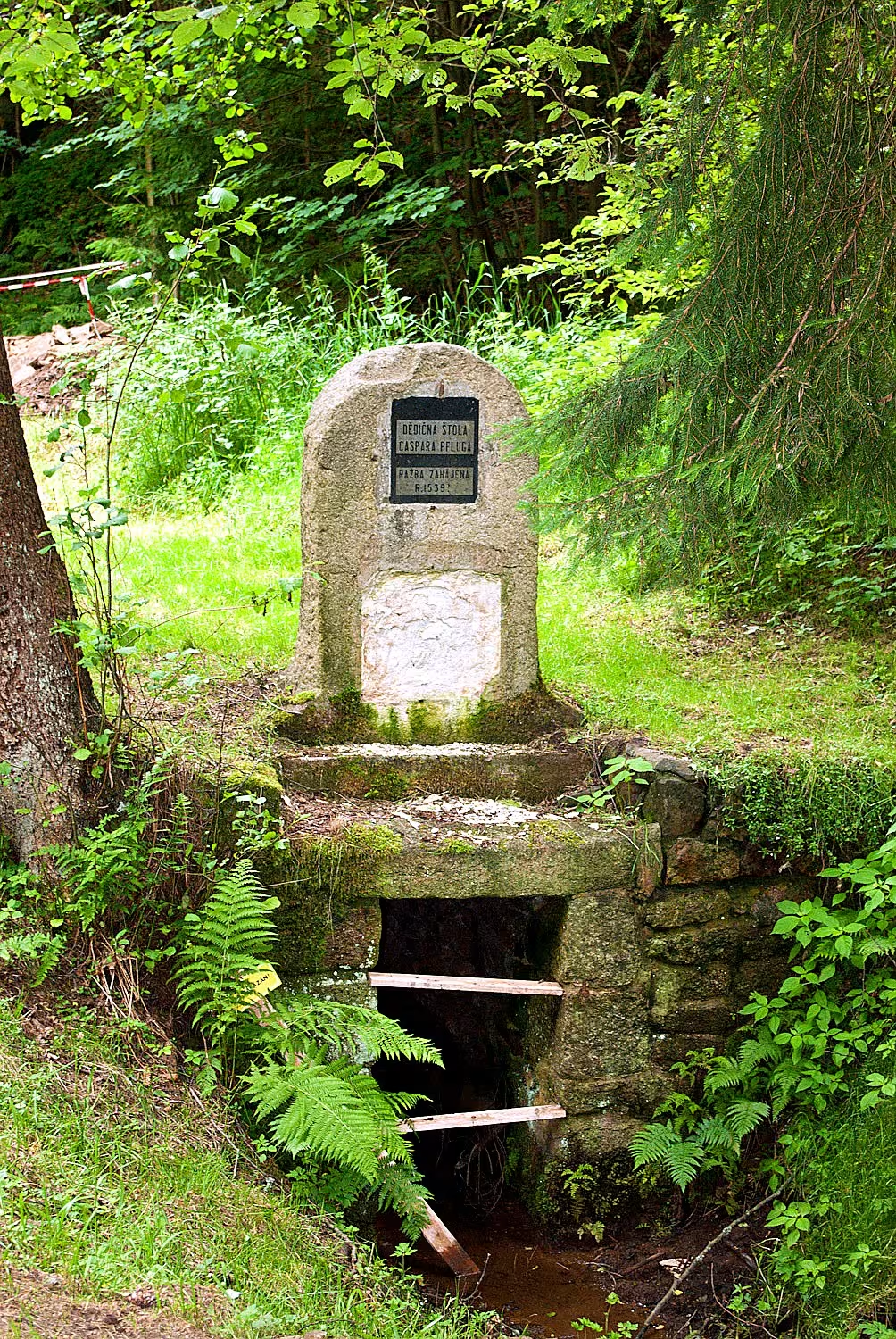
Kaspar Pluha is a historic drainage mine in Upper Slavkov, Sokolov district. This renaissance technical monument, which began in 1539, served for centuries to drain important tin mines in Slavkov Forest. With a length exceeding five kilometres, it is one of the most important buildings of its kind in Europe.
The need to build a new mound arose in the 1930s. Deep ore mining in the vicinity of Mt. Slavkov and Krasna came across limits of existing systems. With the capital participation of Hans Schnöd, Kaspar Pluh and other investors, the Nuremberg mining industry decided to emit the main tin deposits, especially the Hub Pon, at a depth of about 110 metres. In order to speed up work, the stol from Czech monarchs received many privileges and tax breaks. Even after the confiscation of Kaspar Pluh's property after the construction uprising, the object retained its original name.
The mining work was embossed in the roule by the use of smashes and handcuffs. The resulting profile is oval or trapezoidal with a brightness of 0.8 times 3 meters. The technically challenging solution included a translation of wooden boards located one metre above the number of water streams. The main face reached the Hub Peak on 22 August 1587 after 48 years of continuous work. In 1655, the total length, including turnovers and walkways, reached 5920 metres. The estuary of the estuary today strengthens the 19th century stone portal, which in 1998 was renovated and fitted with a copy of the original Renaissance marble plate from 1539.
Over the centuries, the stalls have been fulfilling the role of the main regional work, which has been regularly controlled and maintained by the exchange of wood. In the 18th century, the centre of gravity of the work moved to the venous band, which led to the embossing of the connection to the Wilhem Pit. In the 20th century, the object was used to drain part of the uranium region. In the 1960s, however, the mantelpiece was abandoned, leading to a gradual spontaneous outflow. Since 1990 it has been protected as a technical cultural monument of the Czech Republic.
The mine itself is currently inaccessible. However, interested parties can view the history of mining. It is located approximately 1.5 km below Upper Slavkov by road towards Loket, where there is a small parking lot and information board. The original commemorative plate from 1539 is stored in the exhibition museum in Horní Slavkov.
Kaspar Pluh's hereditary chain represents a unique proof of the maturity of Renaissance mining engineering and endurance of generations of miners. They were able to build a work of European importance in difficult geological conditions. Visiting the portal offers an opportunity to reflect on the technical heritage that has fundamentally affected the development of the Slavkov region.
Historical milestones
- 1539
- Starting work on the stol.
- 1587
- The face of the diaphragm reached the Hub breast after 48 years of work.
- 1592
- Connecting with the older Schnöd Hall.
- 1990
- Declaration for the technical cultural monument of the Czech Republic.
Architectural development
The hill was embossed in the roule and gradually expanded with turnovers and follow-up corridors. Its design included a demanding technical solution for drainage of mines at depths exceeding 100 metres. Over the centuries, it has been regularly inspected, and it has been replaced to ensure stability.
Historical events
1539: Opening of the mine. 1587: The face of the diaphragm reached the Hub's breast. 1655: The total length of the bridge reached 5920 metres.
Points of interest
- This Renaissance technical monument has served for centuries to drain significant tin mines in Slavkovsky Forest. With a length exceeding five kilometres, it is one of the most important buildings of its kind in Europe. - The main forehead reached the target bearing after 48 years of continuous work. The total length of the work, including turns and corridors, reached nearly six kilometres in 1655. - Hole was embossed in a rock called roula using hand tools. The technically challenging solution included a wooden translation under which water flowed. - The estuary of the estuary strengthens a stone portal from the nineteenth century, which was renovated in 1998. There is a copy of the original Renaissance marble plate from 1539 on the portal. - In the 20th century, the object was used to drain part of the uranium region. Since 1990 it has been protected as a technical cultural monument of the Czech Republic.
Guide
Show guide text
This text was created by artificial intelligence and has not been editorially reviewed. It may contain inaccuracies.
Welcome to this important place of history and technology, the hereditary crest of Kaspar Plough, which is located before you in the valley of Upper Slavkov. You are now standing at the pioneering work, which witnessed the rich past of mining traditions in this area.
Let's dive into the beginning of this fascinating story. In 1539 the construction of this mine valley started, which was intended to subside the deep-sea deposits of tin ores in Upper Slavkov and surrounding areas. The beginning of the work on the stol was the initiative of Kaspar Pluha, whose name is indelibly linked to this monument. The aim was to drain tin mines in Slavkov Forest, which was a necessary step for more efficient mining.
Take a look around and see how the stol occupies its place in the center of this historic area. Its structure with high walls and carefully placed doors is a testament to the technical capabilities of the past. Even though there are no visible architectural elements such as towers or dome, the atmosphere of this place speaks for itself and transmits the feeling of the time when this dike was at the center of mining activities.
Now pay attention to the key figures associated with this monument. Kašpar Pluh is the most important character that laid the foundations for this mining work. His work and efforts led to the stiletto reaching its main goal in 1587, when the Hub bearing was subdued after forty-eight years of tireless work. Another important figure is Hans Schnöd, which contributed to the connection of the stol with the older Schnöd stol in 1592.
The interesting thing about this place is its length. For centuries, it has been maintained in operation and has reached over five kilometres, making it one of the longest mining buildings in Europe. This fact suggests extraordinary success and the technical ability of the miners of the time.
Let us look at another aspect that makes this monument unique: its declaration for the technical cultural monument of the Czech Republic in 1990. This status reflects not only the historical but also the technical importance of Kaspar Plough.
When you explore this place, you can realize how much this area has changed over the years. From when the mantelpiece was the main mining department to the present time, where it represents a monument for the following generations.
Let me offer you an invitation to explore this historic place again. A walk around the gallows can reveal other attractions and bring a deeper understanding of this fascinating part of mining history. I hope you will remember this visit as an inspiring experience with the rich past of Upper Slavkov.
Thank you for your attention and I wish you a pleasant walk.
Tips for visitors
The best time to visit the area is late spring or early autumn, when the terrain in the Slavkovsky Forest is well viable and vegetation does not prevent a view of the historical remains of mining. Due to the nature of the monument we recommend fixed footwear in the field and suitable clothes to protect you from moisture and cold if you move near mine works. It is ideal for photographers to have soft lights during the morning or late afternoon that highlight the structure of stone portals and surrounding mining landscape. In the vicinity you can visit the city of Horní Slavkov, the city of Krasno or explore an interesting geological department known as the Hub Pon. For families with children, the area is suitable for light walks in nature, where traces of ancient tin mining can be observed, while it is necessary to ensure safety and only move along marked paths.
Frequently asked questions
Can the monument be visited?
We have not verified whether this monument is accessible. Please ask the owner or operator, or the local municipal office.
Where is the monument?
Location: Horní Slavkov. The map on this page shows the exact spot.
Why is the monument protected?
It is listed in the Central List of Cultural Monuments of the Czech Republic as a cultural monument (register no. 1000156688).
Businesses nearby
Do you run a restaurant, accommodation, shop, museum, rental, wellness or other visitor service near this monument? Show yourself directly to the people heading to it — this is how they will see you in the app and on the web:
Events nearby

Zdroj akcí: otevřená data měst a obcí ČR (Národní katalog otevřených dat) a kalendář akcí Národního památkového ústavu.
Nearby
Slavkovský les, město Horní Slavkov, město Krásno, Hubský peň.
Accommodation nearby
Trips and activities nearby
Guided tours, tickets and activities nearby from GetYourGuide
Affiliate link: if you buy from the partner, we may receive a commission. The price for you does not change.
Search tours and activities →Themed route
Thematic cruise route from the village Horní Slavkov
1. Kaspar Plough Hereditary Stole
Type: Historical monument
It is worth visiting for its history and architecture, which resemble the mining period in this area. It's local importance with a rich past.
2. City of Horní Slavkov
Type: Urban location
Visit the city centre, where there are historical buildings and streets that commemorate the past prosperity of the woodworking industry. It is a beautiful place for a moment of relaxation and tours of local shops.
3. Slavkovsky Forest
Type: Forest area
Explore this natural location that offers beautiful views and is ideal for a picnic or short walks. It's a place of peace in the middle of the green.
4. The City of Beauty
Type: Urban location
Visit this city with its historic buildings and picturesque center, which offers a view of the surrounding mountain. It's an ideal place for shopping or eating.
5. The Hubs
Type: Horologic location
This height is known for its panoramic view, which includes a view of the surrounding mountains and cities. It is an ideal place for a photo or just for a beautiful view.
This route offers a combination of historical, cultural and natural experiences in Central Bohemia.
Seasonal recommendations
Spring: In the spring period, the historical landmark of Kaspar Plough is characterized by the return of green nature and mild temperatures that make the walk comfortable. Weather changes can be quick, so it is advisable to carry multiple layers of clothing or coat. At this time, vegetables grow and the first spring flowers bloom, adding to the atmosphere colour and freshness. Visitors should be prepared for possible rain or the occurrence of clouds that may suddenly overshadow the sunny day.
Summer: In summer, Kaspar Pluha's stol is surrounded by dense and full of life vegetation. The sun shines long into the evening, allowing you to explore the memory even in the late afternoon. In addition, it is advisable to carry protective sunglasses and enough drinking connection for warm temperatures today. In this season, animals such as birds or insects can also be seen around the mound, which makes it interesting to walk.
Autumn: Autumn season brings beautiful colours to the atmosphere of Kaspar Plough - from yellow and orange leaves to red. The temperatures are milder compared to summer warming, which means the walk can be comfortable even without too warm clothing. However, it is advisable to carry a cloak or umbrella because of possible autumn storms. Nature around the hill offers beautiful views and peace, which is ideal for relaxing and exploring historical monuments.
Winter: In winter, the surroundings of Kaspar Pluha's hereditary stones can be covered by snow, adding magic and peace to the visit. The temperatures are colder, so it is necessary to equip yourself with warm clothes, including fur or duvet pants, and protective legs for snow conditions. The sunlight is shorter, so it is advisable to visit the mast at noon, when daylight is the most intense. Winter visit offers a unique atmosphere and tranquility that can be attractive to those looking for rest from winter noise in cities.
Visualizations and artistic views

The visualisations are generated by artificial intelligence and serve as inspiration.
Photos from the area
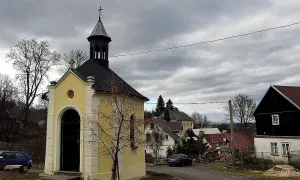
Real photos taken near the monument

Zdroj a licence jsou uvedeny u každého snímku.
Tips from visitors
No tips yet. Be the first!
Log in and add your tip.
Sources and literature
Photos: Lubor Ferenc / CC BY-SA 3.0 — Wikimedia Commons. The author and licence also appear when you hover over the image.
Faktickým podkladem tohoto textu byl článek na Wikipedii, jehož autory jsou přispěvatelé Wikipedie. Článek je dostupný pod licencí CC BY-SA 4.0.
Location on the map
Příběhy a pověsti
Legendy, pověsti a příběhy spjaté s touto památkou
Fotografie návštěvníků
Zatím žádné fotografie. Buďte první, kdo přidá fotografii z návštěvy!
Log in a přidejte svou fotografii nebo hodnoťte.
Za ověřenou návštěvu v aplikaci získáte víc bodů — poznáme podle GPS, že jste na místě.
Reviews and comments