






děkanství v Prachaticích Deanery
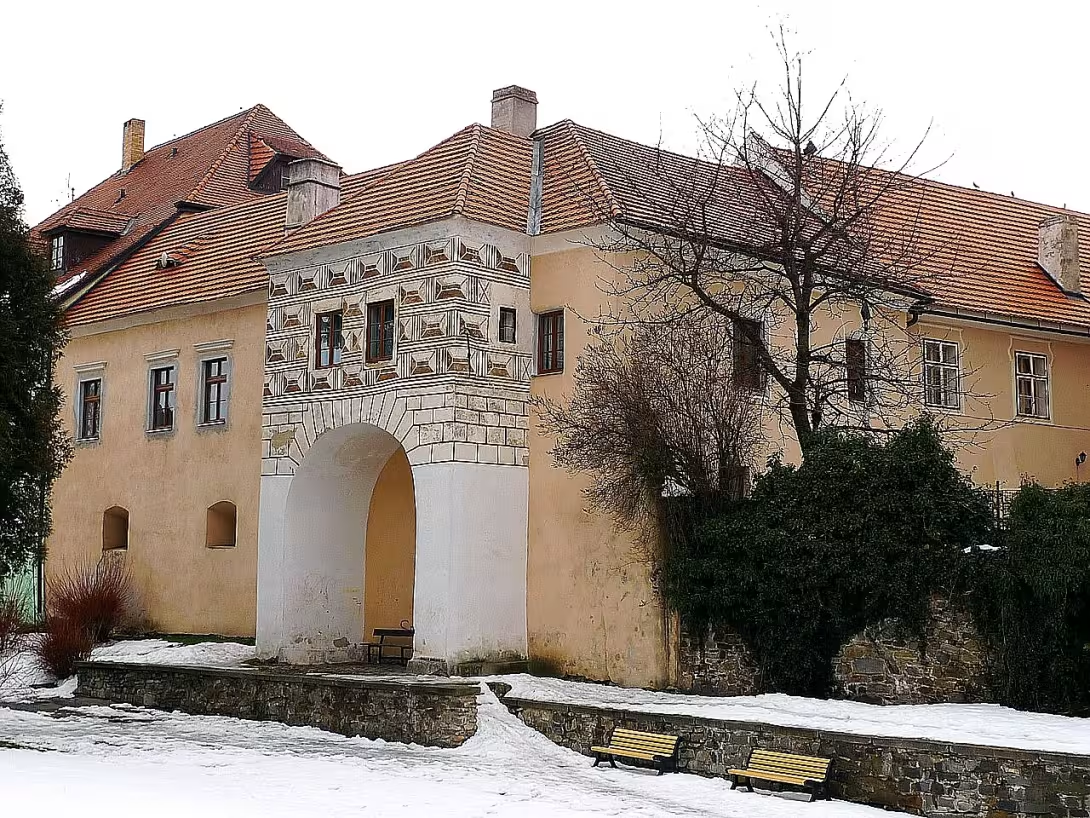
Děkanice in Prachátice is a historical monument at the address of Dekanská no. 31 in the village Prachatice I. This unique object represents Gothic architecture, already later modified Renaissance and Baroque elements. The house is a part of the town heritage reserve Prachatice and has been protected by the status of cultural monument since 3 May 1958. The Roman Catholic parish of Prachatice is currently based here.
The ceremony was probably created at the turn of the 13th and 14th centuries as a rectory at St. Jacob's Church. The oldest part of the current building is the northeast corner facing the park, which represents the remains of the original tower building of the town fortification from the 14th century. This historical context shows the importance of the rectory as a centre of religious and community activity already in the early Middle Ages.
The architecture of the deanery consists of a single-storey "L "-shaped floor plan, which stands southeast of St. Jacob's Church. The facade leading to the park is decorated with a massive risalite with a graphic rustic, which gives the building a distinctive and historical value. The house covers several saddle roofs with bobbies, while the roof of risality is valbic. The inner spaces on the ground floor are mainly kneeling flat vaults and Fabonic ceilings are located on the floor.
The history of the dean is rich in changes reflecting architectural trends from late Gothic to Renaissance to Baroque. The first mention of the penal parish dates back to 1352, but the house was probably built at the turn of the 13th and 14th centuries. In 1532 the rectory underwent reconstruction with a new diorite portal, as demonstrated by the year on this construction. Adjustments in the middle of the 16th century brought renaissance elements and sgraffiti decoration of the facade. The end of the 18th century brought baroque interventions that gave the object today's form.
The Dean has long served as a rectory and seat of the spiritual administrator. It was owned by the Roman Catholic parish of Prachatice, which provided religious needs and other community functions. The house was an important part of urban life and its architecture reflected developments in the church administration and the whole society.
Today, děkanství v Prachaticích operates not only as a cultural monument, but as an active centre of the Roman Catholic parish. Its historical importance and architectural beauty make it an important destination for tourists and locals. Visiting this building offers an opportunity to become acquainted with the rich history of Prachatic and appreciate the artistic details that create a unique heritage. Thus, the heritage in Prachatice is not only a monument to the past, but also to the living space of the present, which is worth exploring.
Historical milestones
- 1352
- First mention of the parish in Prachatice.
- 1532
- Construction of a new rectory, supported by a contract with priest Matej and carved portal.
- 1579
- The promotion of the parish to dean.
- 1958
- Official declaration of the building as a protected cultural monument.
Architectural development
The building started as a Gothic rectory, in 1532 a new rectory was built with a diorite portal. In the middle of the 16th century, the Renaissance reconstruction took place with graphite decoration and construction of the east wing. The end of the 18th century brought baroque modifications to the facade and ceilings, followed by classical modifications to the windows around 1846.
Historical events
1352: first mention of the parish; 1579: promotion of the parish to the dean; 1958: declaration for a protected cultural monument.
Owners
Roman Catholic parish Prachatice
Points of interest
- The object is a Gothic architecture, it was later modified by Renaissance and Baroque elements, and since 1958 it has been protected by the status of cultural monument. - The oldest part of the current building is the northeast corner facing the park, which represents the remains of the original tower building of the town fortification from the 14th century. - The architecture of the deanery consists of a single-storey object on the L-shaped floor plan, which stands southeast of St. Jacob's Church. - In 1532 the rectory underwent reconstruction with a new diorite portal, as demonstrated by the year on this construction. - Currently, the Roman Catholic parish of Prachatice is based in this house and the object acts as an active centre.
Guide
Show guide text
This text was created by artificial intelligence and has not been editorially reviewed. It may contain inaccuracies.
Welcome to the picturesque Prachatics. You are standing in front of the building of the local deanery, an extensive and at first sight respectable object. In front of you, there is a building on one floor whose floor plan resembles the shape of an L. You are in close proximity to the church of St. Jacob the Greater, right in the heart of the city monument reservation, where history breathes upon you from every corner. Look at this place, see the atmosphere of ancient times, and let yourself be carried away by the story of what this monument has experienced.
Let's move forward in time and look at how this building came into being and what makes up its historical context. The first written mention of the parish in Prachatice dates back to 135,552. Originally, there was a Gothic building in this place, which was probably created at the turn of the 13th and 14th centuries. The time went by and new building modifications came with it, which transformed the building. A significant landmark in history came in the year 1532, when the construction of the new rectory began. This event is still documented by the contract with the priest Matìj and also a beautiful carved portal. Decades later, namely in 15 hundred and seventy-nine, this parish was promoted to dean. The building deserved professional care even in modern history, when in nineteen hundred pede sat eight was officially declared a protected cultural monument, confirming its unsatiable value for our entire country.
Now pay attention to the architecture itself and the details you have right in front of you. The object has traces of several building styles, since the Gothic basis has been modified over the centuries by Renaissance and Baroque elements. Look at the overall formation of the building, its extensive facade and the distinctive element of the so-called risalite. If you look at the building in more detail, you'll find that the oldest part of it is the northeast corner headed for the park. This interesting corner represents an ancient remnant of the original tower building, which once served as part of the city fortification. We can see in front of us the connection of spiritual administration and the defence system of the medieval city.
When we talk about the key stories and personalities associated with this place, we must mention the already appointed priest Matìj. In the 15th century and the beginning of the 16th century, a new chapter of the local spiritual life and building development was written during his work. Personalities like kněz Matěj breathed a soul into this place and ensured that the parish became an important centre of the region. The entries in the historical treaties remind us that the construction of a new rectory was a great achievement, which required not only funds but also firm will and faith in the development of the village.
Let's stop at one of the great attractions and mysteries this place is hiding. The object as a whole represents an example of how building styles can intersect. We found that the Gothic basis was later supplemented by Renaissance and Baroque elements. But the biggest secret is the northeast corner, which is the rest of the former defensive tower. Imagine how this tower once stood in the line of fortifications, protecting the people from the danger from the outside, while today it is a peaceful part of the building where the spiritual administrator housed. This contrast between military defense and spiritual peace is fascinating.
At the end of our meeting with this monument, I would like to invite you to explore the surroundings further. After you've thoroughly examined the Dean's building, don't rush away. Take a walk around, visit the nearby church of St. James the Greater and perceive the beauty of the rich historical centre. Thank you for your attention, I hope you enjoyed the tour, and I wish you a wonderful rest of the day to discover other corners of our history. Goodbye.
Tips for visitors
The best time to visit the historic děkanství v Prachaticích is in the morning, when the sunlight lights up the Gothic foundations and surrounding urban buildings beautifully. You can use your own car or public transport for transport, and check the current connection in the respective connection search engine. Bring comfortable shoes for walking on historic tiles and a camera. For the photography of the L-shaped building, the area near the neighboring church is best suited, where you can capture the entire mass of the building in the best natural light. In the immediate vicinity, within 30 minutes' walk, visit the precious Church of St. Jacob the Greater, the entire town monument reservation of Prachatice full of picturesque Renaissance houses and adjacent parks. For families with children, walking through the historical centre is easy and instructive, children will enjoy discovering ancient details on buildings.
Businesses nearby
Do you run a restaurant, accommodation, shop, museum, rental, wellness or other visitor service near this monument? Show yourself directly to the people heading to it — this is how they will see you in the app and on the web:
Nearby
Kostel sv. Jakuba Většího, městská památková rezervace Prachatice, parkán.
Accommodation nearby
Themed route
I propose a thematic tour of the historic center of Prachatice.
1. City Monument Reserve Prachatice Type: Historical core Why is it worth a visit: This whole protected area offers a unique atmosphere of ancient streets, Renaissance houses with rich decoration and preserved historical plan. Walk through this space will carry you to the time of the city's bloom.
2. Church of St. Jacob the Greater Type: Sacral construction Why is worth a visit: This important main city temple represents a magnificent work of late Gothic architecture with valuable interiors and a massive tower. It's the spiritual and building dominance of the whole neighborhood.
3. Parcan Type: Historical fortification Why is it worth a visit: The area along the city walls allows you to admire the defensive system of the old mansion and quiet zone in close proximity to the centre. It provides an interesting view of historical fortifications.
4. Decoration in Prachatice Type: Church and historical building Why it is worth a visit: This extraordinary monument directly links to the sacral district and forms an integral part of the spiritual life of the city. The construction will take up its architecture and important position in local history.
Seasonal recommendations
In spring there is a pleasant freshness and the surrounding green begins to bloom. The light is fine and does not shine in this period, which is ideal for observing the details of the historical building. I recommend you take several layers of clothing because the wounds can still be cold. The path to the deanery is calmer at this time than in the summer months, so you can enjoy the quiet and peaceful view of the surroundings.
Summer season brings intense sun and warm days to the city. The atmosphere is alive and full of people enjoying the historic environment. Because of the larger crowds, it is best to arrive first thing in the morning to avoid the greatest heat and the greatest rush of visitors. Don't forget light summer clothes and plenty of fluids for refreshment.
Autumn in the vicinity of the deanery offers beautiful golden shades of leaves and often in the streets appears morning fog, which gives the memory a Tajemen touch. The sun is lower at the horizon, creating long and interesting shadows on historical facades. It is advisable to wear firmer shoes because the sidewalks can be wet. The best time to visit is in the morning when the air is still clean and the light is very colorful.
In winter time, the dean is quiet and calm, especially if the city covers the snow. The day is short and the light is weak, which creates a very calm mood. It is necessary to prepare for frost and wear very warm clothes and quality shoes. The opening time is shorter in this period, so I recommend planning a visit during bright, brighter hours of the day.
Visualizations and artistic views


The visualisations are generated by artificial intelligence and serve as inspiration.
Photos from the area
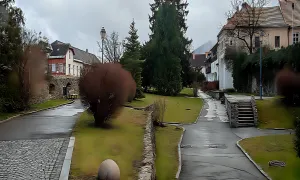
Real photos taken near the monument


Zdroj a licence jsou uvedeny u každého snímku.
Tips from visitors
No tips yet. Be the first!
Log in and add your tip.
Sources and literature
Photos: H2k4 / CC BY-SA 3.0 — Wikimedia Commons. The author and licence also appear when you hover over the image.
Faktickým podkladem tohoto textu byl článek na Wikipedii, jehož autory jsou přispěvatelé Wikipedie. Článek je dostupný pod licencí CC BY-SA 4.0.
Location on the map
More monuments – Prachatice I
Show all in the municipality


Příběhy a pověsti
Legendy, pověsti a příběhy spjaté s touto památkou
Fotografie návštěvníků
Zatím žádné fotografie. Buďte první, kdo přidá fotografii z návštěvy!
Log in a přidejte svou fotografii nebo hodnoťte.
Za ověřenou návštěvu v aplikaci získáte víc bodů — poznáme podle GPS, že jste na místě.
Reviews and comments