






Děvín Ruin
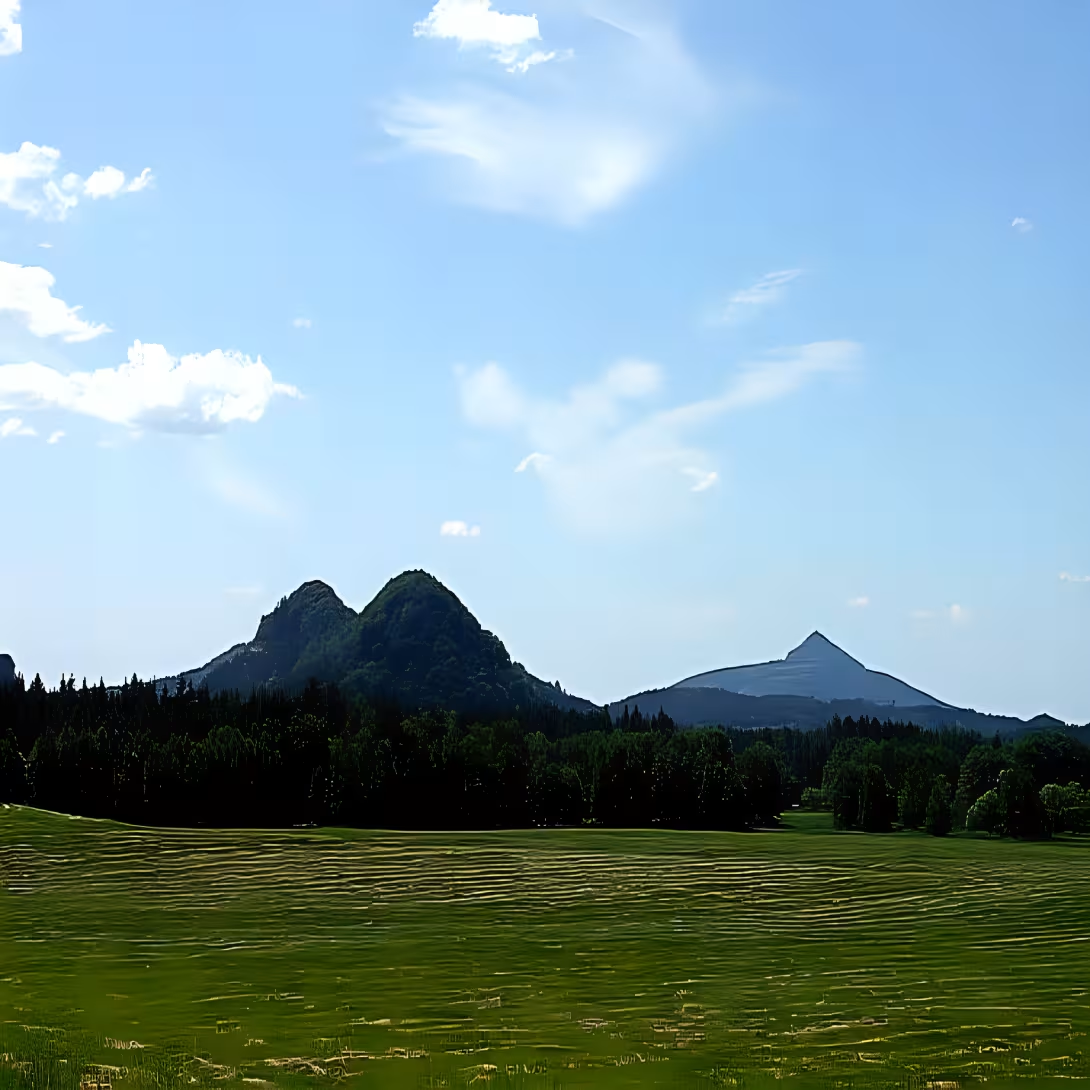
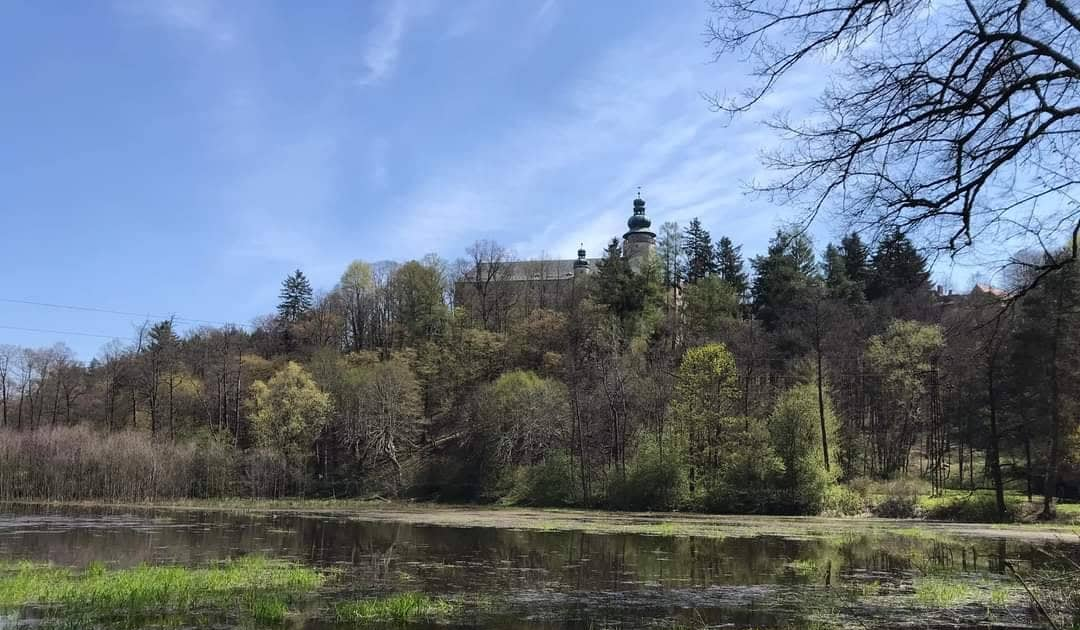
The ruin of the castle Děvín is situated on the hill 436 m high hill in the Ral hill in the district of Česká Lípa, in the administrative territory of the village Hamr na Jezeře. The remains of the castle are protected as a cultural monument and are located within the natural monuments Děvín and Sharp.
The name of the castle comes from the personal name Děva, which has its origin in the old Czech word of a whore, meaning a girl.
The oldest written reports about the castle document its existence in the property of King Premysl Otakar II in the 13th century. The castle was one of the fortifications built to protect the old trade route leading north to Lusatia. In 1283, the king's owner Václav II transferred it to John of Michalovice, and he later handed it to Zhehrad Prost John. The castle was completed in the following century by members of the House of Vartenberk, which owned it until 1516. In the 15th century, the practical military importance of the fortress gradually decreased. In 1444 he was besieged by the Zittau army, but he failed to conquer it. Since 1516 Biberstejn took the castle. During their reign, the political and military importance of the castle declined, but the construction arrangements continued and the castle retained elements of the Renaissance style. During the Thirty Years' War, the castle was defeated by the Swedes in 1645 and subsequently completely desolate. Over time, the inhabitants of the surrounding villages have partially dismantled its masonry on a building stone.
The construction form of the castle indicates a complex development lasting several centuries. The castle core probably had a perimeter structure. From the oldest construction phase comes the perimeter wall with a rectangular bastion exit on the northwest side and a square tower on its east corner. The outside fortification was created later, especially in the 15th century and during the Renaissance reconstruction. A characteristic element is a massive horseshoe artillery bastion on the south side of the complex. In the outer fortification, there was an arches portal that could be the rest of the old elevator. With the development of the artillery, the neighboring Hamer Špičák became a potential threat, so it was secured by a forward bastion made up of a pair of moats surrounding a wooden underlying structure.
Today, the ruins are badly damaged by the extraction of raw materials, rock rushing and the long-term dismantling of stones. Yet the castle retains the testimony of its complex building history.
The literature also remembers Děvín. Especially his deep castle well is mentioned by Bohuslav Balbino. The historian August Sedláček left a detailed description containing references to local rumors. One of them - an evil knight who, as a phantom, frightened the cottage from the nearby town of Osseèná - was later taken by Karolina Light into her story by Lamac and his child. Among the local traditions is also the legend of a secret underground corridor leading to the church in Ossečná, approximately six kilometres away.
The ruins of the castle are accessible after the red tourist mark leading from Hamr to Lake Hrastný.
Then and now
Drag the slider to compare how the landmark may have looked when it was built with the view today.
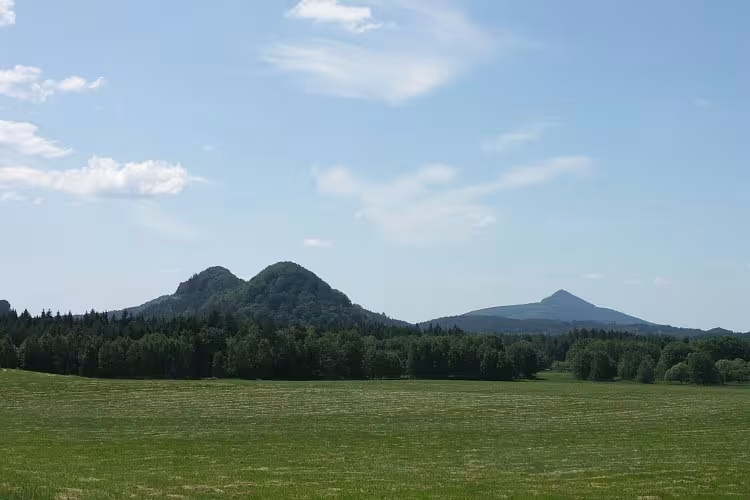
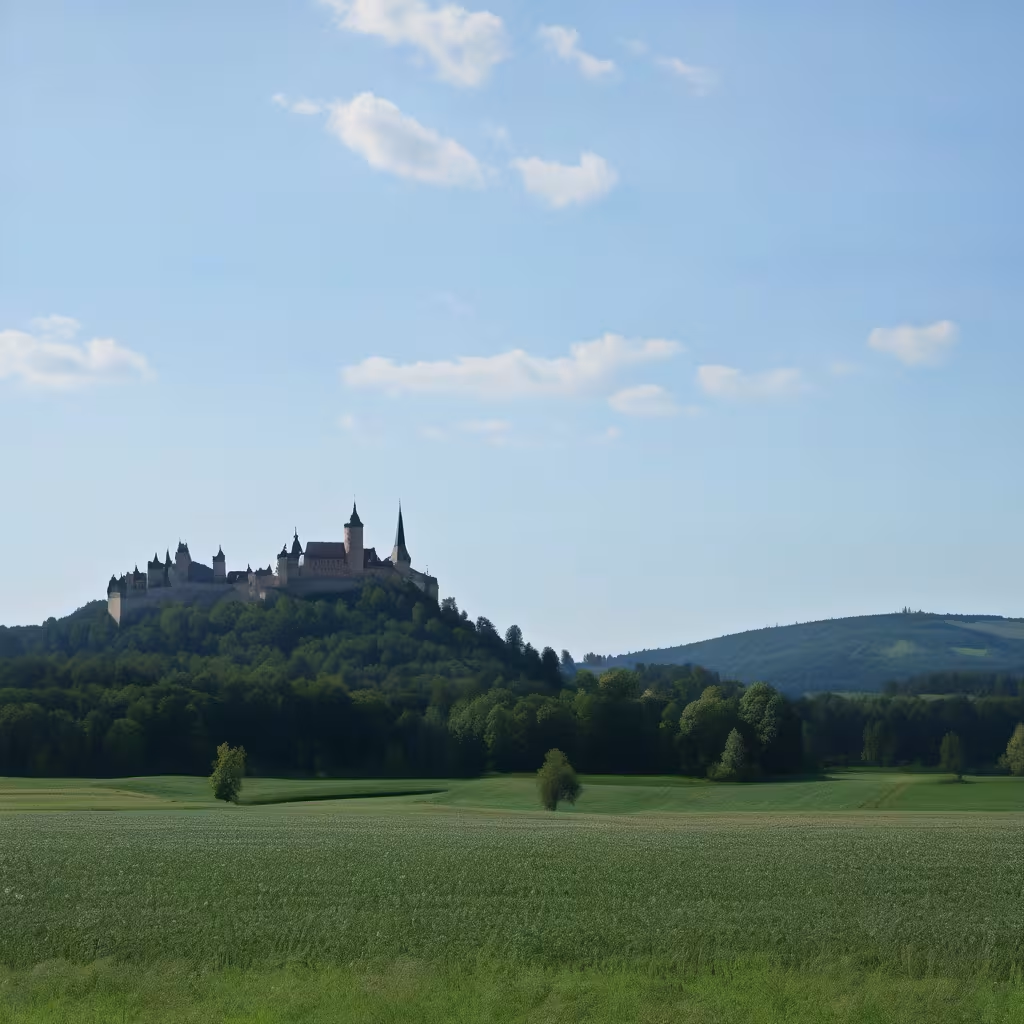
The historical appearance on the left is an AI-generated visualisation and serves as inspiration only.
Historical milestones
- 13th Century
- The position of the castle under the reign of Rehysl Otakar II.
- 1516
- The castle became the property of the Biberstejns.
Architectural development
The castle underwent several construction phases, starting with a circuit construction with a bastion outlet and a square tower. In the 15th century, external fortifications were added, including artillery bastion. Construction modifications continued during the Renaissance.
Historical events
- 13th Century
- The position of the castle under the reign of Rehysl Otakar II.
- 1444
- The siege of the Zittau army that failed to conquer the castle.
- 1645
- The Swedish division during the 30-year war.
Owners
- 13th Century
- 1283
- po Jan from Michalovic
- Next century
- 1516
Points of interest
- The ruins of castle Děvín are located on the top of 436 meters of high hill in the Ral hill.
- The name of the castle comes from the personal name Děva, which has its origin in the ancient Czech word of the whore, meaning the girl.
- The oldest written reports of the castle document its existence in the possession of King Premysl Otakar II in the 13th century.
In 1444, the Zittau army surrounded the castle, but it failed to conquer it.
- Today, the ruins are badly damaged by the extraction of raw materials, rock bursts, and long-term rock disassembly.
Guide
This guide is narrated by a synthetic voice generated by artificial intelligence.
Show guide text
This text was created by artificial intelligence and has not been editorially reviewed. It may contain inaccuracies.
The ruins of Děvín castle are located on the summit of a hill of the same name, 436 meters high, in the Ralská highlands, on the territory of the municipality Hamr na Jezeře in the Českolipsko district. The remains of the castle are protected as a cultural monument and are situated within the Děvín a Ostrý nature reserve. The name of the castle derives from the personal name Děva, which comes from the Old Czech word děva, meaning girl.
Written records document that in the thirteenth century the castle belonged to King Přemysl Otakar the Second. It was one of the castles that protected the old trade route leading north to Lusatia. In the year 1283, King Václav the Second transferred it to Jan of Michalovic, and from him the castle was acquired by the Vyšehrad provost Jan. In the following century, the Wartenbergs ensured its completion and held the castle until the year 1516. Děvín withstood raids by Hussite forces. In the year 1444 it was besieged by Žitava troops, but they were unable to capture it.
From the year 1516, the castle belonged to the Bibersteins. Its importance diminished under their rule, yet they continued to expand it in Renaissance style. Later the owners changed repeatedly. During the Thirty Years' War, in the year 1645, the castle was destroyed by the Swedes and subsequently fell into complete ruin. Local inhabitants dismantled part of the masonry.
The architectural development of the castle was complex. Its remains were severely damaged by mineral extraction, rockfall, and the dismantling of masonry for building stone. The castle core probably had perimeter structures. The oldest phase likely includes the perimeter rampart of the core with a rectangular projection resembling a bastion on the northwestern side. From the same period is probably also the lower part of a four-sided tower in the eastern corner. The outer fortifications arose probably only in the fifteenth century and during Renaissance modifications. Part of these fortifications is a massive horseshoe-shaped artillery bastion on the southern side and a much smaller fortification at the opposite end of the castle. An arched portal also survives here, perhaps a remnant of a lift.
With the development of artillery, the castle faced a threat from the peak of the neighboring Hamerský Špičák. Therefore, at the beginning of the fifteenth century it was secured by an advanced bastion. This consisted of a pair of ditches around a wooden vaulted building.
Bohuslav Balbín wrote about a very deep castle well. A description of the castle and mentions of legends were left by the historian August Sedláček. Karolina Světlá included one of these legends in her short story Lamač a jeho dítě. It tells of a once evil knight who, as a phantom, frightened a cottager from the nearby town of Osečná. Another legend speaks of a secret underground passage all the way to the church in Osečná, about six kilometers away.
Tips for visitors
The best time to visit Děvína is in the summer months, especially from May to September, when the conditions for walking are favorable and the horizons of the surrounding countryside are the most beautiful. The sunny days offer ideal lighting conditions for shooting ruins where dramatic shadows and colors can be captured.
For those who wish to use public transport, it is advisable to verify the current connections and possibilities in nearby cities such as Liberec.
When visiting the ruins of Děvín you should take with you comfortable shoes, because the corridor on the hill is partly rocky. Also remember the sun protection coat or apron and plenty of drinking water, especially in the summer months.
The best place for photography is on top of the hill, where the ruins themselves are located. Morning light offers fine colors and long shadows that can add dramatic effect to your photos. The evening visit can also be interesting for capturing ruins in a quiet light.
In the vicinity of Děvín you can visit the natural monument Děvín and Sharp, which offers beautiful views of the Ral Mountains. For families with children it can also be interesting to visit Chravny, where there are small ponds and natural spaces suitable for a short walk.
Frequently asked questions
Can the monument be visited?
This is a ruin. Such sites are often freely accessible, but some can only be visited with a guide or are closed for safety reasons. We have not verified the current situation – take care and respect any restrictions.
Where is the monument?
Location: Hamr na Jezeře, Liberecký kraj. The map on this page shows the exact spot.
Why is the monument protected?
It is listed in the Central List of Cultural Monuments of the Czech Republic as a cultural monument (register no. 20346/5-2940).
For kids
Imagine going back to the past, when Děvín was still a young castle, which was just standing at the foot of the same-name hill. It was a time of adventure and disaster. Who lived here? The knights who spread Christianity and the people who lived in a small village under the castle.
It was like a game where heroes fought against witches. The castle Děvín was their fortress, where the enemy's attacks were resisted. And when the wars went on, the people around the castle were hiding in his walls to protect themselves.
Businesses nearby
Do you run a restaurant, accommodation, shop, museum, rental, wellness or other visitor service near this monument? Show yourself directly to the people heading to it — this is how they will see you in the app and on the web:
Events nearby
Zdroj akcí: otevřená data měst a obcí ČR (Národní katalog otevřených dat) a kalendář akcí Národního památkového ústavu.
Nearby
Děvín is a protected cultural monument in the territory of the natural monuments Děvín and Sharp.
Ruins are available after a tourist sign from Hamr to Lake Hrastný.
Accommodation nearby
Trips and activities nearby
Guided tours, tickets and activities nearby from GetYourGuide
Affiliate link: if you buy from the partner, we may receive a commission. The price for you does not change.
Search tours and activities →Themed route
Thematic cruise route: Děvín and surroundings
1.Hamr na Jezeře - * Type: * Local center of the village - * Why is it worth a visit: * Hamr na Jezeře is the perfect starting point for your path to Devin. The village offers a peaceful atmosphere and beautiful views of the surrounding countryside, allowing you to relax before the start of the tourist brand.
2. Tourist brand: Hamr na Jezeře - Venerable - * Type: * Tourist route - * Why is it worth visiting: * This route will guide you through the picturesque landscape, which is part of the protected cultural monument Děvín and Sharp. During the trip you will enjoy a view of the ruins of Děvína and other historical and natural attractions that await you along the way.
3.Děvín - * Type: * Ruins * Děvín is one of the most famous and important ruins in the Czech Republic. Its history dates back to the 13th century, when it served as a castle fortress for the protection of the area. Today Děvín is a protected cultural monument and offers wonderful views of the surrounding landscape.
4. - * Type: * Local center - * Why is it worth a visit: * After exploring the ruins of Děvína you can continue to Chravný, where you can enjoy a quiet rest and perhaps even explore the surrounding picturesque paths. It is an ideal place to end your trip where you can relax and record your impressions from the visit Děvína.
This route offers a combination of historical discoveries and natural beauties, making it ideal for lovers of culture and landscapes.
Seasonal recommendations
Spring: In the spring season, the ruins of Děvín in Hamr are surrounded by flowering shrubs and trees that bring a living green touch. Sunshine days are ideal for exploring ruins when the sun high above the horizon reflects on their walls and creates dramatic light effects. This season the atmosphere is calm because visitors are still rare. It is recommended to visit early afternoon or evening when temperatures reach a pleasant degree and the crowds are minimal. A good idea is to wear multiple layers because spring weather can be variable.
Summer: Děvín becomes a popular destination for tourists and history lovers. Sunshine days increase the attractiveness of ruins when the light is best for photography and visitors enjoy pleasant temperatures. In the main summer season, however, there may be more people, so it is recommended to visit early morning or later in the day to avoid peak time. Hot clothes and sun protection are key, especially during the summer sun.
Autumn: In autumn, the ruins of Děvín melancholic atmosphere rise when tree leaves become yellow and red shades. The sun is lower in the sky, which creates softer lighting conditions for photography and visitors. In this season, crowds are slower than in summer, but it is still advisable to visit an early afternoon when temperatures reach their maximum. Clothes should be heat and humidity-proof, because autumn weather is often variable.
Winter: In winter Děvín becomes an atmosphere of mysterious calm. A freezing morning can bring snow decoration that gives ruins a romantic and mystical look. Sunshine in the west lights up ruins in exciting colors. Days are shorter and the traffic is usually lower, so it is advisable to visit later on the day when temperatures reach their maximum. Hot clothes, moisture protection and suitable shoes are necessary for a comfortable stay in a freezing outdoor area.
Visualizations and artistic views


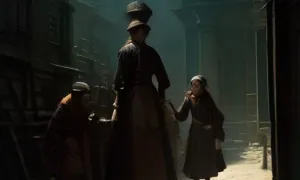
The visualisations are generated by artificial intelligence and serve as inspiration.
Photos from the area
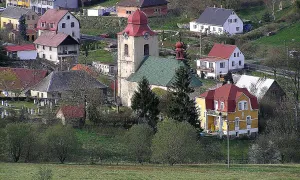
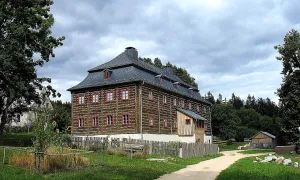
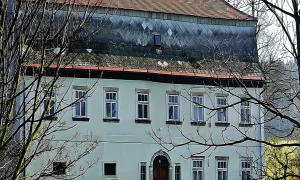
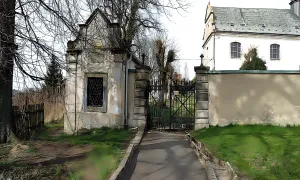
Real photos taken near the monument

Zdroj a licence jsou uvedeny u každého snímku.
View from the area
This animation was generated by artificial intelligence from a real photograph of the surroundings. The motion and details are not real footage of the location.
Atmosphere of the place
This atmospheric visualisation of the place and period was generated by artificial intelligence. It is not real footage of the location.
Tips from visitors
No tips yet. Be the first!
Log in and add your tip.
Sources and literature
Photos: Lutz Maertens Trendy64 19:09, 18 January 2007 (UTC) / CC BY-SA 3.0, rozlišení zvýšeno umělou inteligencí — Wikimedia Commons. The author and licence also appear when you hover over the image.
Faktickým podkladem tohoto textu byl článek na Wikipedii, jehož autory jsou přispěvatelé Wikipedie. Článek je dostupný pod licencí CC BY-SA 4.0.
Location on the map
Příběhy a pověsti
Legendy, pověsti a příběhy spjaté s touto památkou
Fotografie návštěvníků
Zatím žádné fotografie. Buďte první, kdo přidá fotografii z návštěvy!
Log in a přidejte svou fotografii nebo hodnoťte.
Za ověřenou návštěvu v aplikaci získáte víc bodů — poznáme podle GPS, že jste na místě.
Reviews and comments