






Dietrichsteinský palác (Olomouc) House
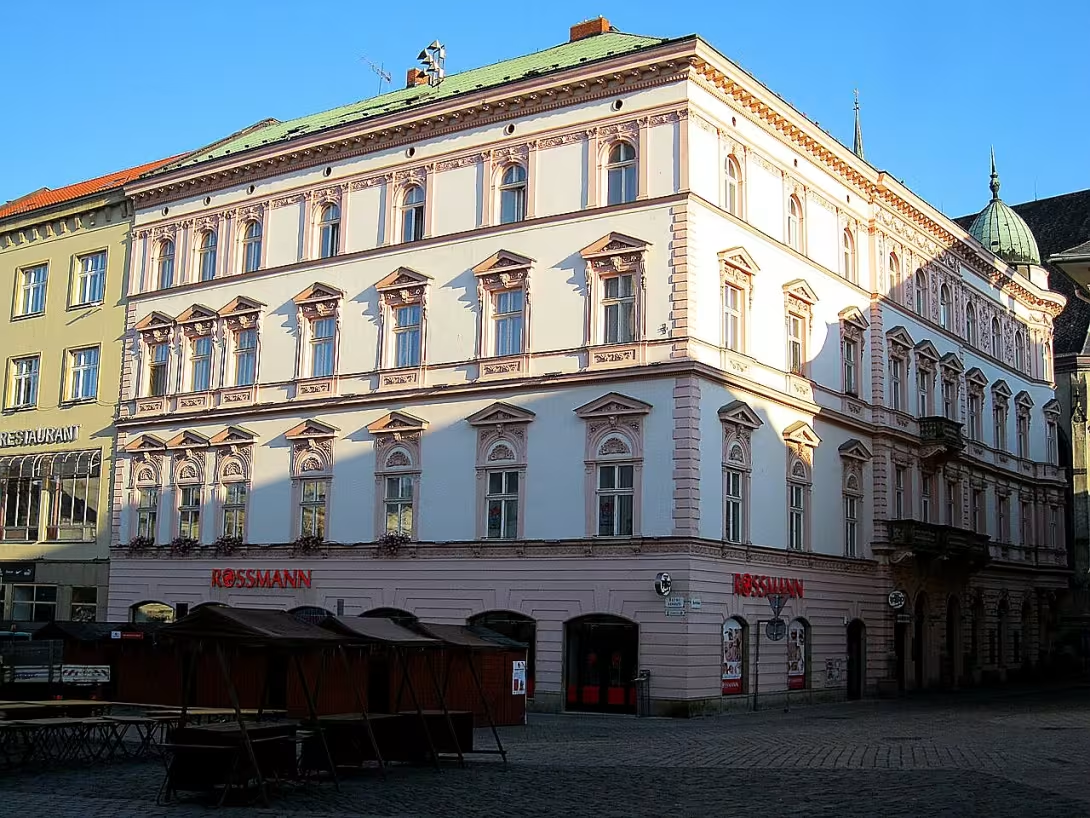
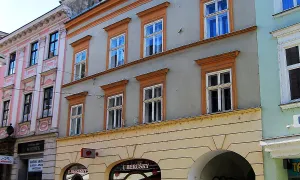
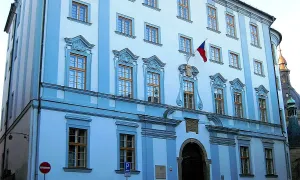
The Ditrichstein Palace is a three-storey corner building in Olomouci on the Upper Square. It is a representative residence located in a compact building of the historical core of the city, protected by a cultural monument of the Czech Republic. The palace was created by rebuilding two townhouses and connecting with neighbouring buildings. The front with the main entrance is turned into Opletalov Street, a shorter wing to the church of St. Morice.
Creation and historical context
The palace was built at the site of three Gothic houses. The house in the square was held by a rich businessman with Joachim Jeppner's skirt. After the Battle of White Mountain, the house became a confiscation of the property of František of Ditrichstein. He remained in possession of the genus from 1624 until 1802. František z Ditrichštejna inserted the newly acquired house into the Earth's records. According to the records from the City Archives of 1653, he was freed from paying the city benefits by the grace of the Emperor.
Architecture and creative rendition
The palace was built in 1630-1631. The front of the square is seven-axis, on the ground floor six-axis with triple windows on the left. The windows on two lower floors are rectangular, on the third floor they have semicircular enchantments. The facade to Opletalova Street is nine-axis with three-axis central risalite highlighted on the first and second floors of the balcony. The Neo-Renaissance facade of the house is divided by cordon mansions, above the windows on the 1st floor there are semi-circular Empire frontons, on the 2nd floor Renaissance. The northeast corner is decorated with a cylindrical bay with a top dome and a turret, supported by four giants on the ground floor.
Owners, administrators, fate
The palace was owned by the city of Olomouce. In the 20th century, the ground floor was newly adapted for business and restaurant purposes, there were residential units and art galleries on the floors. In 2011 the building was sold to a private owner.
Key events and attractions
In 1683, the palace was housed by King Jan Sobieski of Poland on his way to Vienna. Later the ground floor of the house was used for business purposes, there was a pharmacy and a cafe. After the catastrophic fire of the city in 1709, the rear part of the palace was badly damaged, only necessary repairs were carried out in the following years.
Today
The palace is open to the public and worth a visit. It is a unique example of Baroque architecture and the historical core of the city Olomouc.
Then and now
Drag the slider to compare how the landmark may have looked when it was built with the view today.
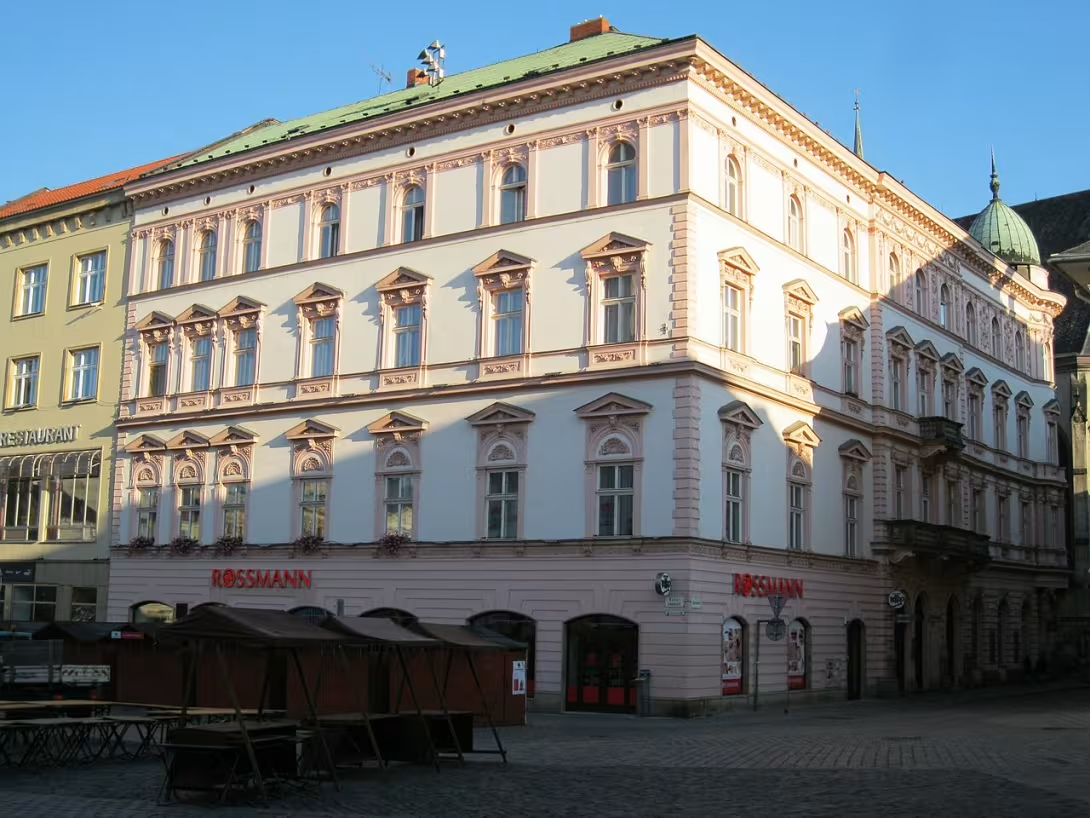
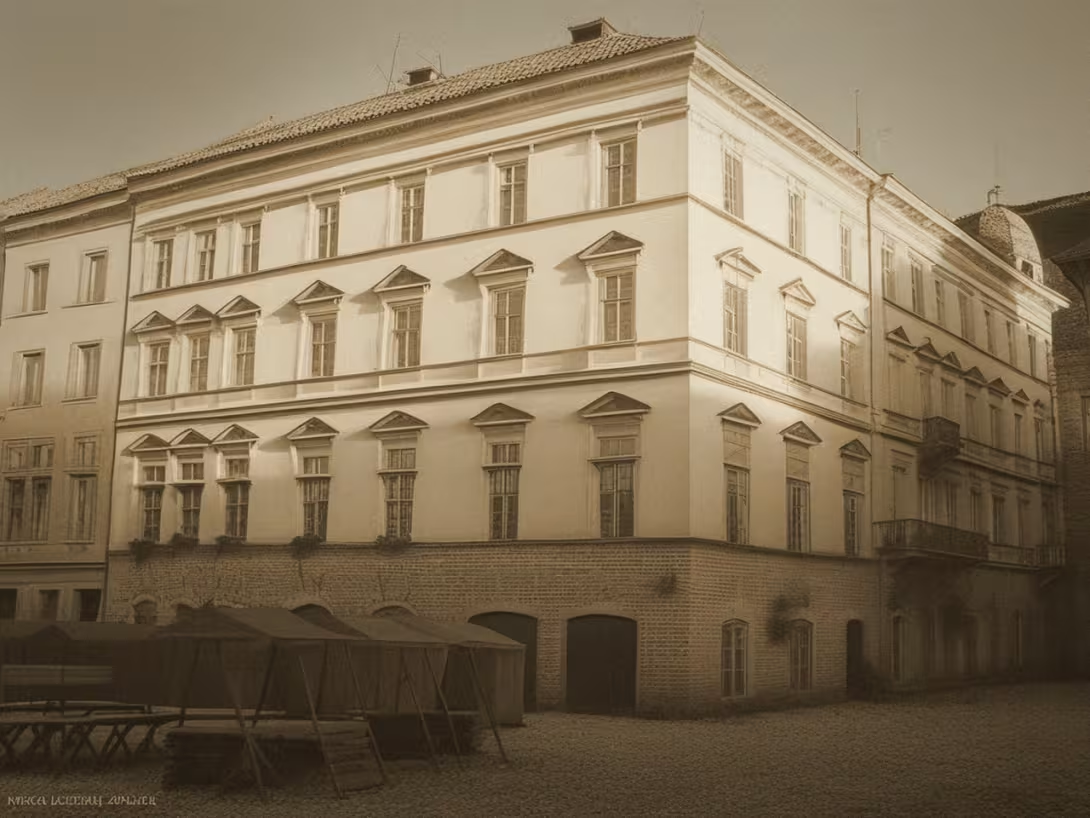
The historical appearance on the left is an AI-generated visualisation and serves as inspiration only.
Historical milestones
- 1631
- The formation of the palace
- 1877
- Extensive extension
- 1890
- Modified facade
Architectural development
The palace was built in 1630-1631, later modified in 1877-1879 and 1890.
Historical events
siege Olomouce in 1644
city fire in 1709
restoration of the palace in 1788
extensive extension in 1877-1879
Owners
František z Ditrichštejna
married to Emilie and Eduard May
city of Olomouc
private owner
Points of interest
- The palace was owned by the city of Olomouce. In 1683, the palace was housed by King John Sobieski of Poland on his way to Vienna. - The palace was sold to a private owner in 2011. - The palace is open to the public. The Palace is a unique example of Baroque architecture.
Guide
Show guide text
This text was created by artificial intelligence and has not been editorially reviewed. It may contain inaccuracies.
Welcome to the heart of Olomouc, the beautiful Upper Square. Stop for a moment and look ahead. You're standing in front of one of the city's most important buildings, the Ditrichstein Palace. Feel its size and the way this building dominates the space around it. It's an exemplary, three-storey corner building that will impress you with its power and nobility at first glance. Imagine how many stories these walls store and how many generations of people have gone through them over the centuries. It is a place where history meets the present and where you can feel the ancient glory of the noble generations that once ruled here.
Let us now look together at how this palace was created and in what context it was born. It all began much before the construction was in the form you see today. The foundation was two townspeople 'houses, dating back to the year four hundred and fifty. Imagine those little medieval houses that once stood in this place and served the people of the city. Over time, however, the needs of the owners have changed and there has been a desire for something much more representative in line with their social position. In the year sixteen hundred thirty-one so came the palace itself. The main role in this process was played by František z Ditrichštejna, a man with great vision and power who wanted to leave his mark in Olomouci. By combining the original houses with the neighboring buildings, a large three-wing complex was created to emit wealth, influence and stability. It was basically a symbol of power that was supposed to be seen from a distance, and to be respectful of anyone who approached it.
Now pay attention to the architecture itself and to what you can see right in front of you. Look at the layout of the building. The Palace is a unique example of Baroque architecture, style, which bets on grandeur, dynamics and play with space. Note that the front entrance with the front is turned into Opletal Street. If you look around now, you'll see that the shorter wing of the palace is headed towards the Church of St. Morice. This spatial link creates an interesting dialogue between the secular power of the palace and the spiritual space of the church, which was a very typical arrangement at the time. But the building was constantly breathing and changing with the times. In the year one thousand eight hundred seventy seven there was a large extension which extended the palace further and contributed to its present extent. And if you look at the outer appearance, that is, the facade, know that it was modified in a thousand eight hundred and ninety. The responsible architect Gustav Wiedermann was responsible for this later modification. He's the one who helped the palace get his final face, which you admire right now. Take a look at the overall line of the building, feel its rhythm and imagine how the Baroque base blends with later 19th century modifications.
Every house this magnificent has its secret stories and personalities that breathed life into it. One of the most important guests who found refuge here was the Polish King Jan Sobieski. Imagine the year sixteen hundred eighty-three. King Sobieski was on his way to Vienna at the time, which was one of the most important roads in all of Europe, full of political scheming and military plans. In Olomouci found accommodation in this very palace. Introduce yourself as a host at the time, who must prepare a noble chamber for the Polish monarch and his entourage in a short time. It is fascinating to think that important talks were once held in these premises, strategic actions were planned, and the king rested here before his next journey. It is the connection of Olomouce with a great European policy and history that goes beyond one city's borders.
Perhaps you now wonder who this palace belonged to in later times and how it was covered by the city. For a long time, the palace was owned by the city Olomouce itself, making it a symbol of urban pride and administration. It was a space that served the public interest and reminded the people of their rich past. However, times change and the way in which historical monuments are managed. In the year two thousand eleven, the palace was sold to a private owner. This asked many whether the building would still be accessible, but the good news is that the palace remains open to the public. So you can enter a world that was once reserved only for the highest nobles and rulers. It's basically a bridge between the closed aristocratic world of the past and the open culture of today. This change of ownership has brought a new chapter in the life of the building, but its historical value remains intact.
Now that you know the basic history and architecture of this place, I suggest you explore the palace more closely. Walk around its walls, perceive the atmosphere of the Upper Square and try to imagine what Olomouc looked like when kings and nobles were greeted here in the main entrance. Look again at the corner of the building and see how the original two houses from the middle of the fifth century became this monumental building. Whether you choose to enter and explore its interiors or continue to walk through the city, let yourself be inspired by this baroque splendour. It's a place that teaches us that architecture is not only about stones and mortar, but about people, their ambitions and the time that leaves its mark. Thank you for accompanying me on this short journey through the history of the Ditrichstein Palace. I wish you a pleasant rest of the day and many other beautiful experiences in our historic city. Goodbye.
Tips for visitors
The best time to visit the palace is from April to October when the weather is sunny and warm.
The palace is accessible by car and public transport; Check the current connection in the search engine.
It is advisable to bring a camera with you because there are beautiful interiors and exteriors worth taking.
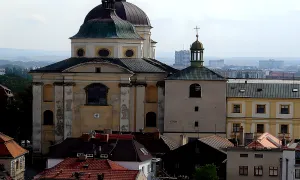
In the vicinity of the palace is worth visiting the church of St. Morice, located next to it.
The palace is also suitable for families with children, as there are exhibitions and exhibitions that are interesting for children.
Businesses nearby
Do you run a restaurant, accommodation, shop, museum, rental, wellness or other visitor service near this monument? Show yourself directly to the people heading to it — this is how they will see you in the app and on the web:
Nearby
Palác se nachází v historickém jádru města Olomouc, v blízkosti kostela sv. Mořice.
Accommodation nearby
Trips and activities nearby
Guided tours, tickets and activities nearby from GetYourGuide
Affiliate link: if you buy from the partner, we may receive a commission. The price for you does not change.
Search tours and activities →Themed route
Thematic cruise route: Dietrichstein Palace and surroundings
1. Dietrichstein Palace (Palace)
Why is it worth visiting: This Baroque palace is one of the most important monuments in the historical heart of Olomouce. Its architecture and rich interiors attract many visitors who are interested in heritage and art.
2. Church of St. Morice (Church)
Why is worth a visit: Located near Dietrichstein Palace and is known for its Gothic architecture and historical value. The church offers a view of the ancient part of the city and its interior is full of works of art.
3. St. Wenceslas Cathedral (Cathedral)
Why is it worth visiting: Even if it is not in the vicinity of the palace, it is one of the most interesting monuments Olomouce. St. Wenceslas Cathedral is famous for its Baroque interior and famous organ room.
4. Courts of Dietrichstein Palace (lecture)
Why is worth a visit: This place is ideal for relaxing and thinking about the history that the palace represents. The courtyard offers a comfortable environment to relax after a tour of the interiors.
5. Park near Dietrichstein Palace (park)
Why is worth a visit: Park around the palace is a place where you can enjoy quiet moments in nature. It is ideal for short walks and listening to music offered by the courtyard with concerts in summer.
This route will guide you to the most important historical and cultural places near Dietrichstein Palace, allowing you to explore the wealth of Olomouce deeply.
Seasonal recommendations
Spring: During the spring period Dietrichstein Palace in Olomouci appears in the light of golden and green shades, when the sun illuminates the architectural elements of the palace with new life. Flowers in the surrounding courtyard begin to bloom, adding a colorful and fresh character to the atmosphere. It is advisable to visit in the morning or in the shade of the afternoon to avoid excessive sun, which may still be strong at the beginning of the summer. Put on a suitable jumpsuit and a short coat to protect against cold winds.
Summer: In the summer months, Dietrichstein Palace offers ideal conditions for visiting when the sun is at its peak and surrounding gardens in full blooming splendor. The atmosphere is full of life and there are often various cultural events or exhibitions that attract many visitors. Therefore, we recommend visiting in the shade of the afternoon or early in the morning to avoid long fronts and handle warm weather. Don't forget the umbrella, the protective eyes and plenty of drinking water.
Autumn: The Dietrichstein Palace of Melancholic and calm character takes place in autumn months. The leaves of trees are colored in living shades, creating a beautiful landscape around the palace. The sun is less intense and usually brighter weather brings cooler air. This is an ideal time to visit because we avoid crowds and enjoy a quiet tour. Early arrival will allow you to take a place without a queue. Put on a warm shirt or a plaid to protect against cold cold mornings and evenings.
Winter: In winter, the Dietrichstein Palace offers a unique view in the snow rain, when architecture is decorated with a white blanket. The atmosphere is quiet and sometimes magical, especially in advent time, when the surrounding streets can be coloured with light decorations. The opening of the palace is limited for a shorter time and some parts may be closed, so it is important to inform yourself before departure. You should come with warm clothes such as hats and gloves, and don't forget to protect your feet against the cold surface.
Visualizations and artistic views


The visualisations are generated by artificial intelligence and serve as inspiration.
Photos from the area
Real photos taken near the monument


Zdroj a licence jsou uvedeny u každého snímku.
Tips from visitors
No tips yet. Be the first!
Log in and add your tip.
Sources and literature
Photos: Lehotsky / CC BY-SA 3.0 — Wikimedia Commons. The author and licence also appear when you hover over the image.
Faktickým podkladem tohoto textu byl článek na Wikipedii, jehož autory jsou přispěvatelé Wikipedie. Článek je dostupný pod licencí CC BY-SA 4.0.
Location on the map
Příběhy a pověsti
Legendy, pověsti a příběhy spjaté s touto památkou

Fotografie návštěvníků
Zatím žádné fotografie. Buďte první, kdo přidá fotografii z návštěvy!
Log in a přidejte svou fotografii nebo hodnoťte.
Za ověřenou návštěvu v aplikaci získáte víc bodů — poznáme podle GPS, že jste na místě.
Reviews and comments