






Diváky Castle
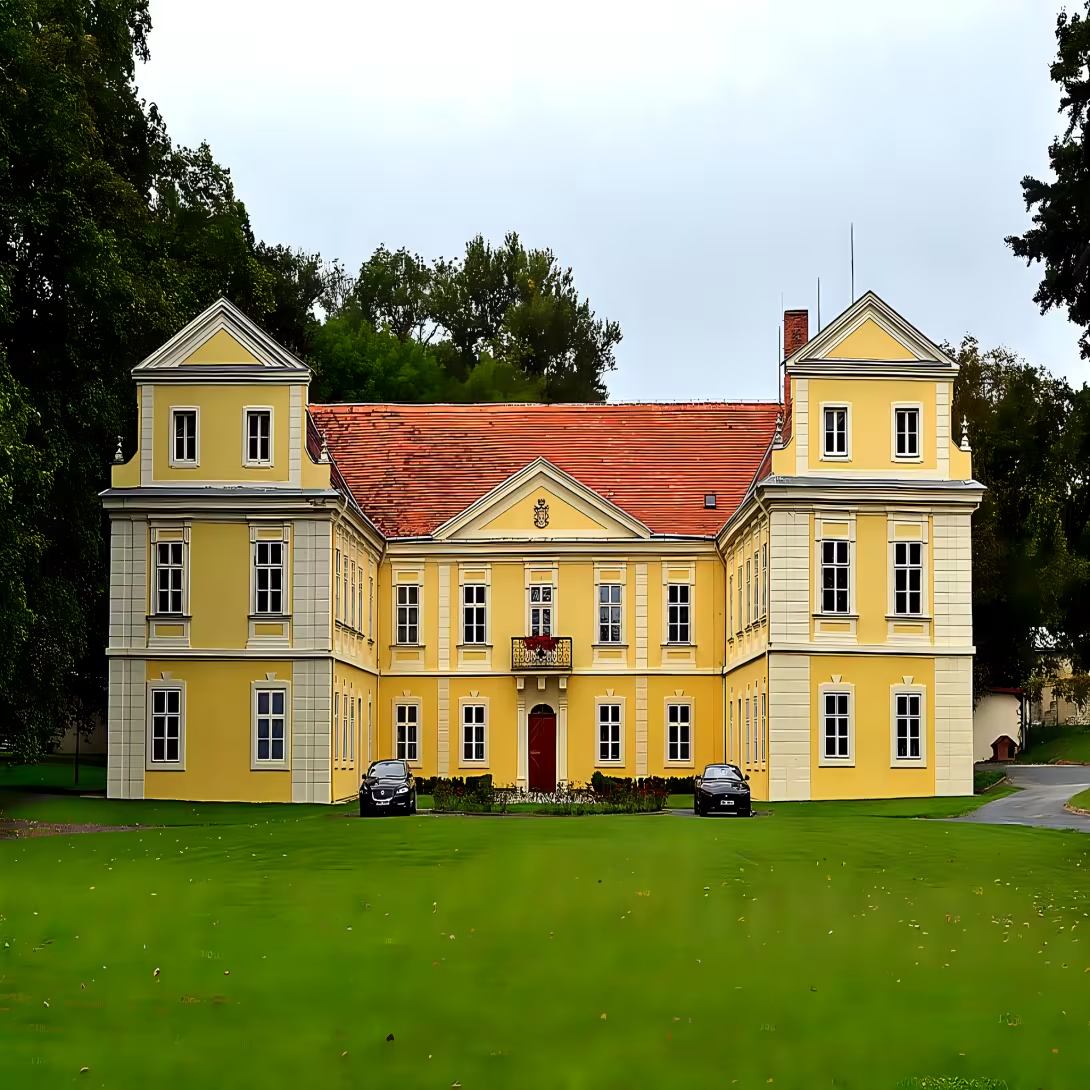
The castle Diváky was built in the 1940s as a residence of Brno Jesuits. The author of the project was builder František Antonín Grimm and according to archive data the construction was to be completed in 1747. The construction is in Baroque style and represents a good example of the village's noble architecture of the time. The castle belonged to the Jesuit Order until its abolition in 1773, then transferred to the property of the religious fund. Thus, in its beginnings of the aristocratic residence, it performed the role of a part of an extensive parish property.
The following period brought frequent changes to owners, and the castle gradually adapted to the changing needs and tastes of society. It is assumed that around the middle of the 19th century a natural landscape park was established around the castle, which perhaps replaced an older garden of the French type. In 1889 the castle was owned by the barons Lewetz, in whose possession it remained until World War II. During this period he served as a residential residence and was part of an agricultural network of noble assets in the region.
World War II meant a significant break in the fate of the castle. During the war, there was a training center called Hitler Youth. After the end of the war, the castle was nationalized and its property was taken over by the Czechoslovak state. Gradually he found new applications in the field of education - at first there was an agricultural apprenticeship school, later until 1998, the secondary technical training centre. These institutions transformed the Baroque residence into a functional educational establishment, and for nearly 50 years, its premises have played the role of a training centre.
Architecturally, it is a stand-alone three-wing building with a ground plan U. Side wings close an honest courtyard around the southeast facade of the middle wing. In the centre wing axis is the main entrance, highlighted by the stone balcony portal, which clearly accentuates the hierarchy and representativeness of the building. The lateral wings are closed with triangular shields, which are also located in the axis of the southeast facade of the central wing; On the northwest side, it's consistent with low risalites. The facades are split up by corner lizens and cordon roms forming both floors of the castle. The windows of the ground floor are framed by flat shamblers, plus suprafenestram on the floor. The ceilings on the ground floor are encapsulated by a vaulted vault with sections, while the ceilings on the floor remain flat.
In 2006 Jihomoravský kraj sold the castle to private owners who had it renovated. Although restored, the castle remains inaccessible to the public and serves exclusively its owners. Today it is mainly an architectural interest, which can only be viewed from the outside, but its Baroque composition and long history make it an interesting element of the cultural landscape of the district Břeclav. > > > > >
Then and now
Drag the slider to compare how the landmark may have looked when it was built with the view today.
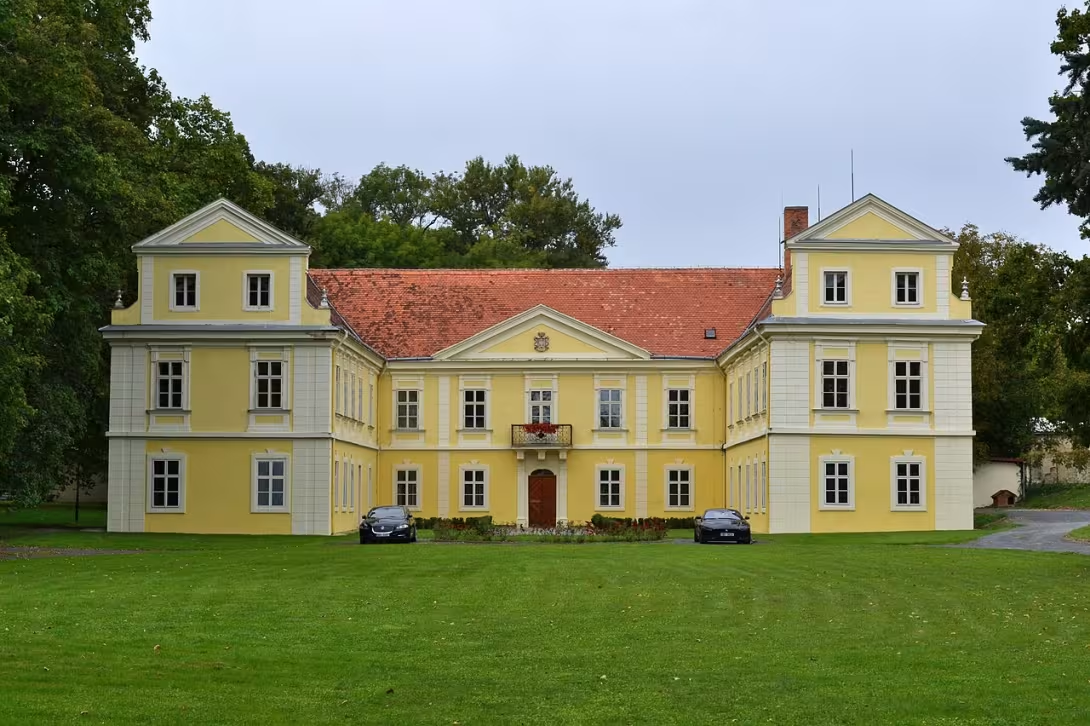
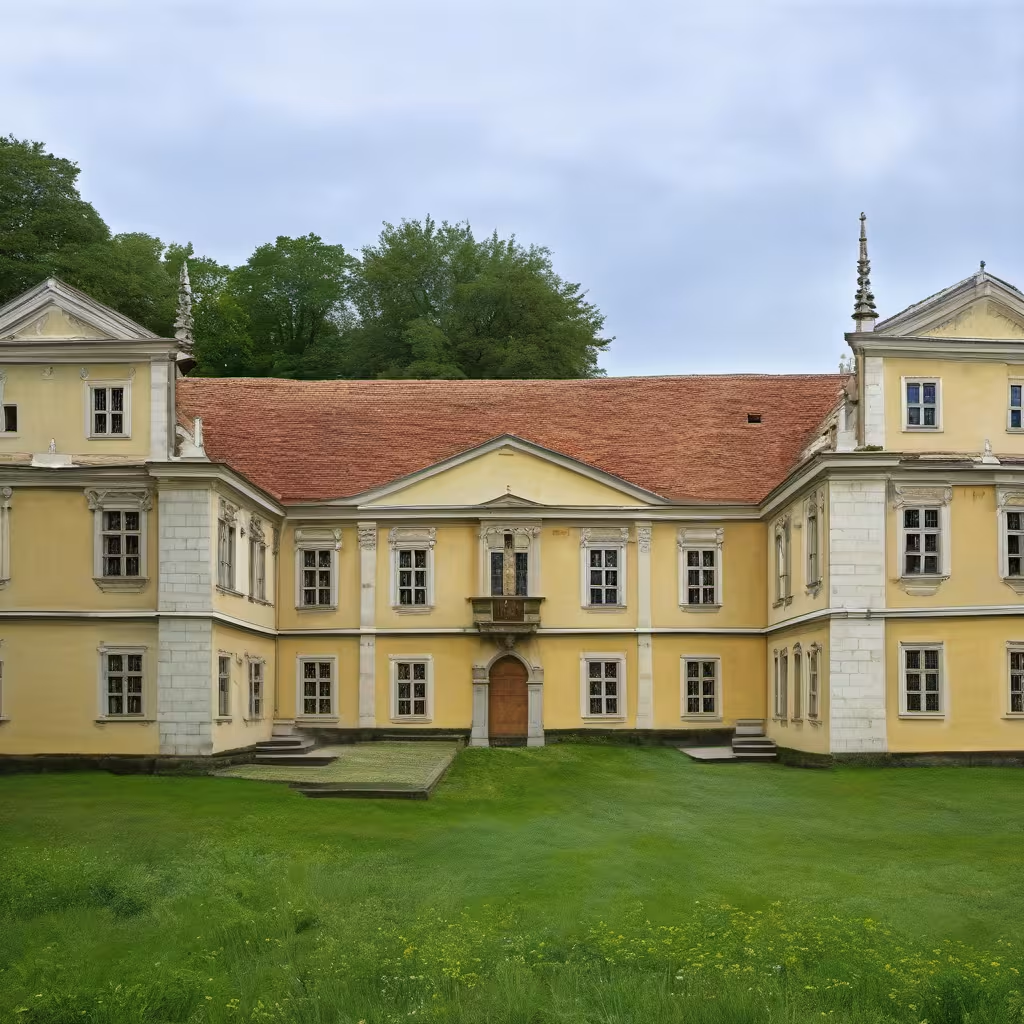
The historical appearance on the left is an AI-generated visualisation and serves as inspiration only.
Historical milestones
- 1747
- The completion of the castle.
- 1773
- The abolition of the Jesuit Order and the transfer of ownership to a religious fund.
Architectural development
The castle was built according to the design of František Antonín Grimm as a Baroque residence. Side wings are closed with triangular shields and facades broken apart by corner lizens. The ceilings on the ground floor have a vaulted vault with sections, the ceilings on the floor are flat.
Historical events
- 1747
- The completion of the castle.
- 1773
- The abolition of the Jesuit Order and the transfer of ownership to a religious fund.
- 1889
- Take over the castle of Baron Lewetz.
- 1940
- Finding the Hitler Youth training center in the castle during World War II.
Owners
The castle was originally held by the Jesuit Order until 1773, then switched to a religious fund. In the middle of the 19th century a natural landscape park was probably established around the castle. In 1889 it was purchased by the Barons Lewetz who held it until World War II. During the war there was a Hitler Youth training centre in the castle. After the war he was nationalized for school purposes, first as an agricultural apprenticeship school and later as a secondary technical training centre. In 2006 it was sold to private owners by the South Moravian Region.
Points of interest
- Castle Diváky was built in the 1940s as a residence of Brno Jesuits.
- The author of the castle project was builder František Antonín Grimm and according to archive data the construction was to be completed in 1747.
- The chateau represents a good example of Baroque rural aristocratic architecture.
- Around the middle of the 19th century around the castle was established a natural landscape park which replaced an older French garden.
- After World War II, the chateau served as an educational facility and its premises served as a training centre until 1998.
Guide
This guide is narrated by a synthetic voice generated by artificial intelligence.
Show guide text
This text was created by artificial intelligence and has not been editorially reviewed. It may contain inaccuracies.
Welcome to the Theater Castle. You are facing a unique baroque three-wing building, which was built in the 1840s for the Jesuits of Brno. Its construction was completed in 1747. At this point, you can move to the main facade and notice the corner lizens and the cordon moles that split the facade.
Let's move on to the main entrance and look at the stone balcony portal. It's a great example of baroque architecture, which was very popular at the time. Now pay attention to the central wing, which contains the main entrance. It's the heart of the castle and the place where visitors usually enter.
The Diváky Castle is also interesting in its historical past. It was built as a residence of Brno Jesuits and represents a good example of baroque village aristocratic architecture. In 1773 the Jesuit Order was abolished and the castle became the property of a religious fund.
František Antonín Grimm, the architect who designed the castle, was a well-known builder at the time. His work is distinguished by quality and taste. Castle Diváky is one of his best jobs.
Here is an interesting thing for you: The Diváky Castle was built in the 1940s as a residence of Brno Jesuits. The author of the castle project was builder František Antonín Grimm. The castle is a good example of Baroque village aristocratic architecture.
And now we stop at one of the most interesting things in the castle. The Diváky Castle is unique not only by its architecture, but also by its history. It's a place where the past and the present meet, where you can explore and discover.
Thank you for your attention and I hope you enjoy the experience of the castle tour. You can now walk through the courtyard and see other parts of the castle.
Tips for visitors
The best time to visit the Theatre Castle is in the spring or autumn period when vegetation is in full beauty and weather usually favourable for walks. Baroque architecture is particularly marked in these months.
When visiting, bring warm clothes and protective sunglasses, especially if you visit the castle during spring or autumn. Don't forget the water and refreshments.
The best place for photography is in front of the castle, where Baroque architecture is perfectly illuminated by sunlight. The best time for photo is morning or evening to be able to capture mild and pleasant radiation.
In the vicinity of the castle is located the historical pond Divácký, which is an ideal place for a short walk or relaxation. Children will also enjoy visiting this place.
Frequently asked questions
Can the monument be visited?
Some buildings of this kind are open for guided tours, others serve another purpose or are privately owned. We have not verified whether and when this monument is open – please ask the operator.
What are the opening hours and admission?
We have not verified the opening hours or admission. Current information is published by the operator. Official website: https://www.zamekdivaky.cz/
Where is the monument?
Location: č.p. 1, Diváky, Jihomoravský kraj. The map on this page shows the exact spot.
Why is the monument protected?
It is listed in the Central List of Cultural Monuments of the Czech Republic as a cultural monument (register no. 30427/7-1191).
For kids
Imagine going back to the past, when the Diváky Manor was the most important residence in the country. The castle stood on a cliff above the river and was home to the masters of the audience who ruled over this area.
How did it look here? Who lived here? What happened here? The castle was full of life! The Lords of the Audience held great festivities and tournaments where nobles and knights from all over the country met. The locals enjoyed the view of the river and the woods that stretched to the horizon.
Businesses nearby
Do you run a restaurant, accommodation, shop, museum, rental, wellness or other visitor service near this monument? Show yourself directly to the people heading to it — this is how they will see you in the app and on the web:
Nearby
The surrounding area of the castle is made up of forests and forests. There are other historical monuments nearby.
Accommodation nearby
Trips and activities nearby
Guided tours, tickets and activities nearby from GetYourGuide
Affiliate link: if you buy from the partner, we may receive a commission. The price for you does not change.
Search tours and activities →Themed route
Route: Diváky in the heart of the microregion Podluží
1. Castle Diváky - Main destination of the route. The castle is a dominant village and is worth visiting for its unique architecture and rich history. It is located in the centre of the village and is accessible to the public. 2. Church of St. Bartholomew - Church is worth visiting for its unique architecture and rich history. It is located in the centre of the village and is accessible to the public. 3. St. John Nepomuk Chapel - The chapel is worth visiting for its unique architecture and is located near the castle. 4. Mill - Mill is worth visiting for its unique architecture and is located near the castle.
Seasonal recommendations
Spring: In the spring season, the weather and beautiful nature are special for visiting the castle. A wet flower paradise will transform around the castle, where trees and flowers bloom. The atmosphere is relaxed and peaceful, ideal for a tour of historical spaces.
Summer: In the main summer season there is a characteristic of heat and humidity for visiting the castle in the Audience. Many tourists decide to visit the castle in summer, so it is good to come early to avoid large crowds. The atmosphere is relaxed and sunny, ideal for a tour of historical spaces.
Autumn: In the autumn period there is a specific beautiful colour of the surrounding nature for visiting the castle in the Viewers. Tree leaves turn to gold, red and brown green. The atmosphere is quiet and relaxed, ideal for a tour of historical spaces.
Winter: In winter, cold weather is a characteristic of visiting the castle in the Theatre. The atmosphere is quiet and quiet, ideal for sightseeing. Practical advice: The best time to visit the castle is in January when there are few visitors, and it is advisable to bring you tea or coffee to warm up.
Visualizations and artistic views


The visualisations are generated by artificial intelligence and serve as inspiration.
Photos from the area
Real photos taken near the monument

Zdroj a licence jsou uvedeny u každého snímku.
Atmosphere of the place
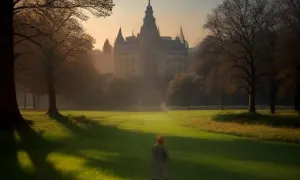
This atmospheric visualisation of the place and period was generated by artificial intelligence. It is not real footage of the location.
Tips from visitors
No tips yet. Be the first!
Log in and add your tip.
Sources and literature
Photos: RomanM82 / CC BY-SA 4.0, rozlišení zvýšeno umělou inteligencí — Wikimedia Commons. The author and licence also appear when you hover over the image.
Faktickým podkladem tohoto textu byl článek na Wikipedii, jehož autory jsou přispěvatelé Wikipedie. Článek je dostupný pod licencí CC BY-SA 4.0.
Location on the map

Příběhy a pověsti
Legendy, pověsti a příběhy spjaté s touto památkou
Fotografie návštěvníků
Zatím žádné fotografie. Buďte první, kdo přidá fotografii z návštěvy!
Log in a přidejte svou fotografii nebo hodnoťte.
Za ověřenou návštěvu v aplikaci získáte víc bodů — poznáme podle GPS, že jste na místě.
Reviews and comments