

Dolní Bělá Castle
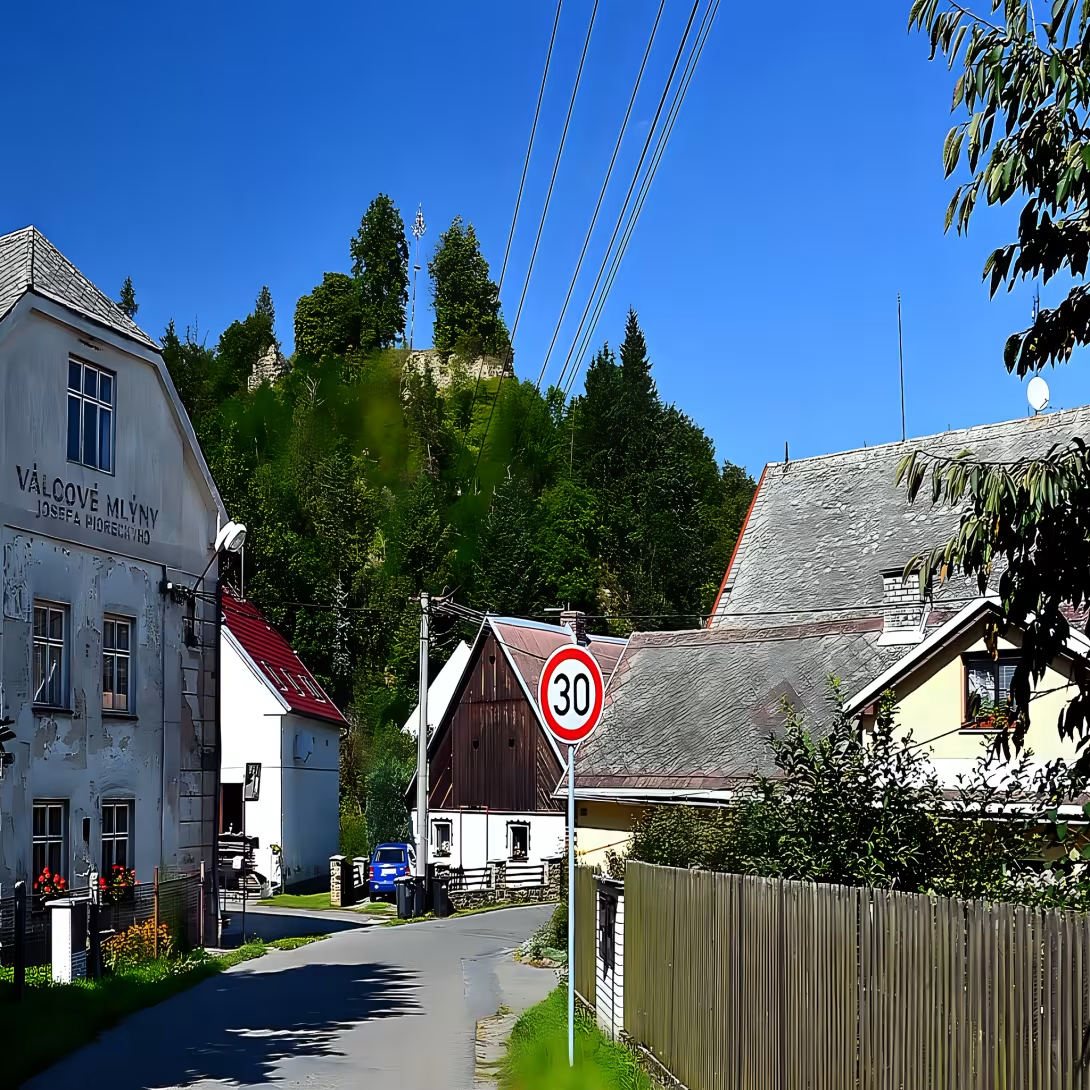
Dolní Bělá is situated on the hill in the small village of the district of Plzeň-sever and represents a typical ruins of the castle which gradually transformed into a castle. Since 1964, it has been a national cultural monument and testifies to over six centuries of transformation of its owner and purpose.
Start The white ones go back to the beginning of the 14th century. The castle was founded here by Racek z Bělé, a man of the nobleman's family. The first written mention of the castle dates back to 1318. After Rack's death, his sons shared Bela, and the house gradually acquired an entire estate involving around ten villages and forts. In the fifteenth century, ownership gradually moved among the various noble families - Švamberky and Gutštejn in particular.
An interesting episode of history comes at the turn of the 15th and 16th centuries. The lords of Gutstejn, who had owned Bela since 1426, kept behind their offspring a group of lackeys, who had been shooting with Pilsen townspeople. King Vladislav Jagellonský acted decisively: in 1509 he confiscated the castle and donated it to Albrecht of Kolovrat. But he died the following year, and Belou then owned the lords of Roup and Gutstejn on the plusieurs for decades.
The second half of the 16th century became a breakthrough for the appearance of the building. Kryštof Marklart of Hrádek, a member of the young reform noble family, took over the castle around 1584 and subjected it to a major reconstruction. The ancient medieval castle turned into a Renaissance castle, which was a sign of his shift from military role to representative function. However, this change was not maintained. After the defeat on the White Mountain in 1620, the Markarts lost their manor, and Belou bought the masters of Vrísovice, who owned it for another hundred and thirty years.
The ultimate decline came in 1757 when the indebted estate was sold to the Franciscan monastery. Since then, the castle began to dissipate and its building material was gradually taken away by local humanity. After the abrogation of the monastery during the 18th century reforms, the dismantling accelerated. Only fragments - especially massive ground fortifications, parts of the perimeter wall with three improvement pillars at the base of the castle and torsos of round towers or bastions in the foothold - have been preserved from the massive building. Even in this destroyed form, the building maintains the attractiveness of its place and the potential to introduce visitors to the layering of the history of Czech nobility.
Then and now
Drag the slider to compare how the landmark may have looked when it was built with the view today.
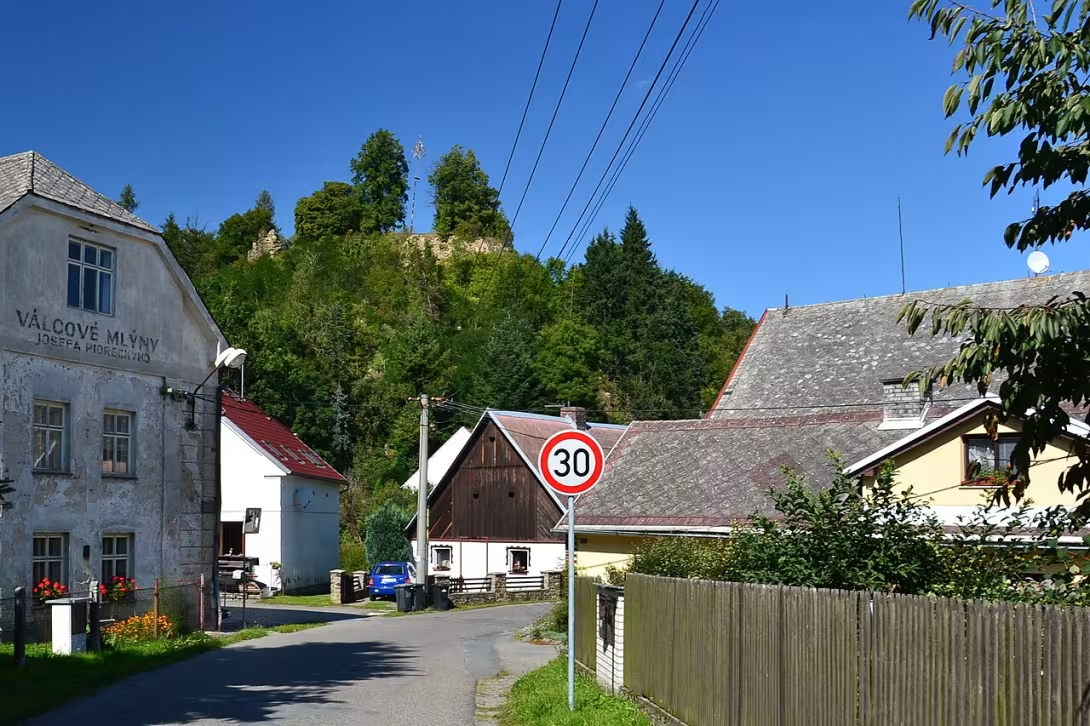
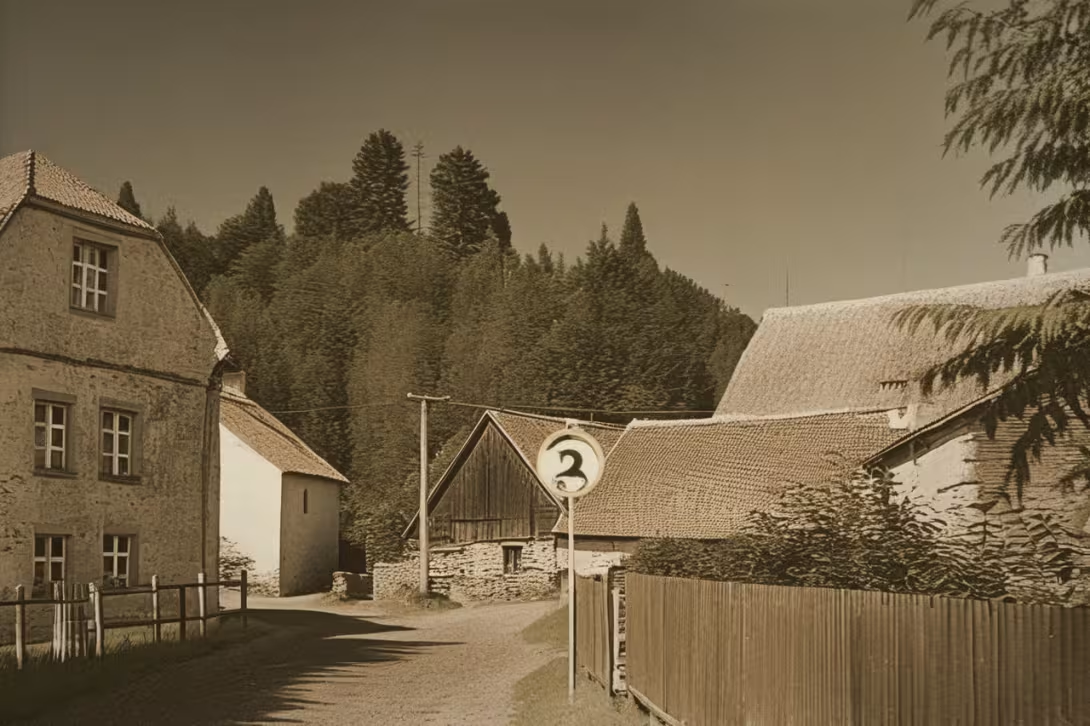
The historical appearance on the left is an AI-generated visualisation and serves as inspiration only.
Historical milestones
- 1318
- First written mention of the castle.
- 1509
- Confiscation of the castle by King Vladislav Jagellonsky.
- 1584
- Reconstruction of the castle to the Renaissance castle by Kryštof from Hrádek.
- 1964
- Announcement of a cultural monument.
Architectural development
The original medieval castle was extensively rebuilt by the gentlemen of Gutstejn. Around 1584 Kryštof z Hrádku rebuilt it into a Renaissance castle. The torso of round towers or bastions in the foothills and part of the perimeter wall with three pillars are currently preserved.
Historical events
1509: King Vladislav Jagellonský confiscated the castle because of the activities of the ladders. 1584: Reconstruction of the old castle into a Renaissance castle. 1757: Sale of the indebted estate to the plasma monastery.
Owners
Racek z Bělé (beginning of the 14th century), gentlemen from Švamberk, gentlemen from Gutštejn (from 1426), Albrecht from Kolovrat (1509), gentlemen from Roupov and Gutštejnova (until 1555), Markvart from Hrádek, gentlemen from Vřesovice (to 1757), the monastery of Pláska (from 1757)
Points of interest
- The monument lies on the hill in a small village in the district of Plzeň-sever and represents the ruins of the castle which gradually turned into a castle. - The castle was founded at the beginning of the fourteenth century by Racek z Bělé, which belonged to the noble family of the Gradiots. - The lords of Gutstejn kept in the castle at the turn of the 15th and 16th centuries a group of lackeys who fought the Pilsner townspeople, which led to King Vladislav Jagellonský confiscating the castle in 1509. - Around 1584 Kryštof Marklart of Hrádek performed a major reconstruction in which the old medieval castle turned into a Renaissance castle. - The definitive decline began in 1757 after the sale to the Franciscan monastery, when the castle was dilapidated and local people carried its building material.
Guide
This guide is narrated by a synthetic voice generated by artificial intelligence.
Show guide text
This text was created by artificial intelligence and has not been editorially reviewed. It may contain inaccuracies.
Welcome to Lower White. Right now, you're standing in front of a silent witness to centuries of history, spreading out in front of you on a high rock range. When you look around you, you will not see a whole palace with windows and a roof, but before you lies a ruin that carries traces of many generations. Feel this atmosphere of calm and oblivion, which is accompanied by only the wind in the surrounding region of Pilsen region. What you see are primarily fragments of masonry and the remains of the earth fortification, which once constituted an inaccessible obstacle to anyone who tried to break in. Now let's go far further back in time to the very beginning of this place. Imagine this peak over 700 years ago. At the beginning of the fourteenth century, there was a man named Racek z Bělé, who came from the noble family of the Grapes. He was the one who founded the original castle here. At that time, it was not just about home, but about the strategic point, the symbol of power and security. The first written mention of this castle dates back to a thousand three hundred and eighteen, giving us a clear idea of how deep it reaches the roots of this place. The castle was built at that time with a dual layout, which means it consisted of two main parts which together formed a comprehensive defence system on this high sharpness. Now, as you walk between the remains of the walls, pay attention to how the castle is bound to the terrain. Notice how much natural height differences are utilized. It was this position on the hill in a small village that made the castle in Lower Bela a a restless but still safe port. Look at the fragments of the masonry that remain standing. Although today they are only shadows of their former glory, they still tell the story of the craftsmanship of builders from the early 14th century. Think about how many people came through here, how many guards were standing here, and what view they were offered on the surrounding landscape, which seemed probably a lot wilder than today. But the history of this place was not only about peace and construction, but also about political vomit and power games. Let's move forward in time two centuries. We're getting into a thousand five hundred and nine. At this time, the castle became in the interest of the highest power in the country. King Vladislav Jagellonský confiscated the castle. Imagine the moment when the owner of such an important mansion changed in one royal decision. The castle stopped being in the hands of the original families and became an instrument of government. Over the course of the next century, it served as a residence for various noblemen who tried instead to adapt their times and needs. Here we come to a very interesting turn in the form of an architectural transformation. In a thousand and five hundred and eighty four came into play Kryštof z Hrádku. He didn't just want a fortified fortress to defend himself. At the time of the Renaissance, the understanding of comfort and beauty changed. Kryštof had the castle rebuilt. That's a fascinating detail you should keep in mind when you watch the ruins today. What you see is not only a remnant of the medieval castle, but a remnant of the Renaissance castle. This transformation from the castle to the representative residence shows how the social structure was changing at the time and how the nobility began to prefer comfort to purely military function. Now, if you look at the masonry fragments again, try to reconstruct in your mind what the Renaissance elements that Kryštof z Hrádku left behind might have looked like. Even though the ruins of the fortifications are dominated today, in every stone this petrified history is encoded. The castle in Lower Bela was not only a static building, but a living organism that changed along with the times. Apart from the noble families, the dandruff bases worked here at some point, which tells us that the site was also of practical importance for the management of the area. Let's stop by one interesting thing that may not be visible at first sight, but gives this place depth. Remember the mention of the gentlemen of Gutstejn who stayed here at the turn of the 15th and 16th centuries. Imagine these people, their daily lives, their disputes and their dreams that took place right here on this hill. It is fascinating to think that this small place in the Plzeň-sever district was once the center of important decisions and social life. Today, Dolní Bělá has been protected as a cultural monument since the year one thousand nine hundred sixty-four. This status is not only a formal entry in the list, but recognition that even these fragments of masonry are of enormous value to our memory. If you look at the Earth's fortifications, you realize you're looking at one of the oldest works of human hands in this area. It's a reminder of the time when safety was tied to rock height and wall thickness. Now that we've gone through the major milestones, from the summer of the 14th century to the royal foreclosure, to the Renaissance reconstruction, I suggest you just go through the space for a while. Feel the silence that rules here, and try to imagine the sounds that were made earlier: the beating of metals, the horses in the yard, the voices of nobles and servants. All these layers of time are stored in these stones. Take a look at the surroundings, see the diversity of the terrain and take the time to fully understand the size of the effort Racek z Bělé and then Kryštof z Hrádku have put into this place. Although today the castle in Lower Bela does not exist in full beauty, its ruin has its own melancholy beauty, which teaches us the fleeting power and duration of history. Thank you for joining me on this short journey through time. I hope this trip between the fragments of the masonry helped you better understand the importance of this place. You are now being left to explore the surroundings and to reflect on what history is whispering through these old walls. I wish you a pleasant rest of the day and pleasant moments in this beautiful corner of Pilsen Region. Goodbye.
Tips for visitors
Best time to visit the ruins in Dolní White is early morning or late afternoon in spring or autumn. At these times, the landscape is the most photogenic, trees do not cover the view of the remnants of the walls, and sunlight creates ideal shadows for images of historical remains on a high rocky edge.
On your way to this place, rely on your own feet or personal means of transport. We recommend using maps in a smartphone to find the most suitable route to this ancient building monument founded by the nobleman Racek z Bělé at the beginning of the 14th century.
With you, pack solid shoes suitable for the unequal terrain of the ruins, plenty of drinking water and snacks, as you will not find shops or refreshments in the immediate vicinity. A charged mobile phone or camera will also be useful to capture the atmosphere of a place that has been converted to a lock over the centuries.
For photography we recommend focusing the lens on the remains of the two-piece layout of the castle and surrounding nature from the ceiling. The best light to capture the details of the masonry is on the sharp edge during the golden watch before sunset, when the wigs penetrate the trees and highlight the structure of old building elements.
Families with children can see this ruin as an adventure to explore medieval history in nature. Take care, however, of the movement of children around unstable walls and rock cliffs, and adapt the whole tour to the physical capabilities of the smallest participants.
Frequently asked questions
Can the monument be visited?
This is a ruin. Such sites are often freely accessible, but some can only be visited with a guide or are closed for safety reasons. We have not verified the current situation – take care and respect any restrictions.
Where is the monument?
Location: Dolní Bělá, Plzeňský kraj. The map on this page shows the exact spot.
Why is the monument protected?
It is listed in the Central List of Cultural Monuments of the Czech Republic as a cultural monument (register no. 17613/4-1191).
For kids
Imagine going back 716 years to the Middle Ages, exactly the year Dolní Bělá Castle was built. That's in 1310, but we're gonna talk about when people lived here and their lives were full of adventure.
It was like playing a princess or a knight where everyone was trying to be the best warriors. Castle Dolní Bělá was built in a strategic place to protect the inhabitants of surrounding villages from attacks by enemies. Who wants to play the castle guard? They should have strong armor and the courage to fight.
Businesses nearby
Do you run a restaurant, accommodation, shop, museum, rental, wellness or other visitor service near this monument? Show yourself directly to the people heading to it — this is how they will see you in the app and on the web:
Events nearby

Zdroj akcí: otevřená data měst a obcí ČR (Národní katalog otevřených dat) a kalendář akcí Národního památkového ústavu.
Nearby
🏰 Historic sites (61)
- Vrtba 2.5 km
- sv. Jan Nepomucký 3.1 km
- sv. Jan Nepomucký 4.8 km
- Muzeum těžby borové smoly 5.5 km +420731587426 web
- Vísky 6.2 km
- Gryspekův hraniční kámen 6.4 km
- Socha Anděla Milosrdenství 7.0 km
- Památník Franze Metznera 7.0 km
- Všeruby 7.0 km
- sv. Jan Nepomucký 7.0 km
- Památník č. p. 26 7.1 km
- Hrad Podmokly 7.6 km
- Památník obětem druhé světové války 7.9 km
- Malšín 8.4 km
- U Gandalfa 8.4 km
- Frumštejn 8.9 km
- Kolo na Střele 8.9 km
- sv. Jan Nepomucký 9.1 km
- Muzeum keramiky 9.1 km
- Centrum stavitelského dědictví Plasy 9.2 km
🍽️ Restaurants and dining (76)
- U Rajchů 0.2 km
- Hostinec U Šípků 0.9 km web
- Restaurace Loza 1.2 km
- Kiosek Houkala 3.7 km
- Hotel Lipovka 6.0 km
- Pijavice 6.5 km
- Hospoda u Pašků 7.3 km
- kantýna Lachema 7.3 km
- Na Růžku 7.3 km
- Stop Cafe 7.4 km Plaská 442
- U Foksů 7.4 km +420 725 889 195 web
- Modrý Hrozen 7.8 km
- Jeskyně 7.9 km Náměstí 38 +420 604 382 115
- HT Bistro 7.9 km Náměstí 38 +420 604 382 115
- Pendl Café 8.1 km
- Hospůdka "Domeček" 8.4 km
- Český Lev 8.6 km
- Šefrhans 8.7 km třída 1. máje
- Střela 8.7 km
- Na Růžku 8.8 km
🏨 Accommodation (13)
- Stenly 6.4 km +420776312259 web
- Jubilant 7.2 km Úzká 481
- Rekreační středisko Máj 8.7 km
- Pivovarský dvůr Plasy 9.1 km Plzeňská 37 +420 724 105 953 web
- Penzion Na Farmě 10.1 km
- Zámek Nečtiny 10.7 km
- Bývalý špitál 11.3 km +420373313104 web
- U kaprů 11.5 km +420 604 741 337 web
- kemp Vobořice 11.7 km
- Levande Ranč 12.2 km
- Transkemp Hracholusky 14.0 km web
- Hotel Sport Zruč 15.0 km web
- Autokemp Radost 15.0 km web
🚲 Rentals and sport (15)
- FK Bohemia Kaznějov 7.4 km
- TK Kaznějov 7.5 km web
- bazén ZŠ Kaznějov 7.8 km
- Oranžové hřiště 7.9 km
- Cemos 8.1 km web
- Motokros Horní Bříza 8.6 km
- Prodej a servis jízdních kol Jiří Bretšnajdr 9.1 km
- Sportovně rekreační centrum 9.5 km web
- Sokol Obora 9.9 km
- Motokros Třemošná 10.7 km
- SPOKE s.r.o. 11.7 km web
- Sportovně střelecký klub Plzeň-Slovany 14.3 km web
- Sportovní klub Neslyšících 14.4 km
- Boulderingové stěny u Třemošenského rybníka 14.8 km
- Sportisimo 14.9 km Studentská 1709/131 web
🥾 Hiking and nature (219)
- Hejtmanka 0.6 km
- Na Velkém vrchu 0.7 km
- Obora Háječek 1.1 km web
- Kozinec 1.4 km
- Pramen Prdlavka 1.8 km
- U zámku 2.1 km
- Prašivec 2.1 km
- Hory 2.2 km
- Červený vrch 2.8 km
- Hřebensko 3.3 km
- Doubrava 3.7 km
- Bažantnice 4.0 km
- PP Malenický pramen 4.0 km
- Jezevčiny 4.4 km
- Krmníky 4.7 km
- Osojno 4.8 km
- Berdovna 5.1 km
- Prašivý vrch 5.2 km
- U Perta 5.3 km
- Račala 5.3 km
Accommodation nearby
Trips and activities nearby
Guided tours, tickets and activities nearby from GetYourGuide
Affiliate link: if you buy from the partner, we may receive a commission. The price for you does not change.
Search tours and activities →Themed route
Route: History in Lower Belé
Because in the given base the line "around" is empty, we design a route that focuses exclusively on the memory itself and its immediate area. The goal is to explore the ruins from all sides and understand its historical context on the spot.
1. Dolní Bělá (ruin) Type: Castle ruins Why is it worth a visit: It is a dominant village that resembles the medieval history of the region. The remnants of walls and foundations allow you to imagine the original size and structure of the castle that once protected the surrounding territory.
2. Tanks and internal spaces of ruins Type: Archaeological area Why is it worth a visit: Walk around the remains of the courtyard offers a view of places where residential and defence buildings once stood. The visitor can feel the atmosphere of abandonment and at the same time admire the resistance of stone structures to the tooth of time.
3. Tower and Defence Elements Type: Castle tower Why is worth a visit: The tower remains are the most significant part of the complex and provide the best view of the surrounding landscape. Here it is best to study the defence systems of medieval castles and their tactical use.
4. Ambient park and access routes Type: Natural green Why is worth a visit: The area is surrounded by greenery, which creates a quiet environment for relaxation and photography. Access routes lead the visitor to the individual parts of the ruins and allow himself to enjoy the calm of rural nature without disturbing influences.
5. Outlook points on the premises Type: Panorama Why is worth a visit: From various places on the ruins, views of the village Dolní Bělá and surrounding hills are opened. These views complement the picture of history and show the strategic position of the castle in the landscape.
This route allows for deeper immersion in history on site without leaving the immediate surroundings of the monument. The visitor gets a comprehensive idea of life in the castle and its importance to the local community.
Seasonal recommendations
Spring brings awakening nature, when the surrounding forests and meadows around the remains of old construction in Dolní Bělé in Pilsen region begin to grow green and flowering. Sun rays penetrate thin treetops that do not yet have a full list of solid curtains, creating impressive lighting conditions for lovers of photography of old walls. The practical advice for the spring season is to take fixed shoes to a humid and stormy terrain, as melting snow and spring rain can make the roads to the ruins very difficult. Choose a layered dress because the morning cold quickly turns into a warmer afternoon, and take a trip in the morning when the air is the cleanest.
Summer covers this historic place in the Pilsen region in a dense green grove, in which the outlines of stone walls are massively lost under the cover of vibrant plants and lush ferns. The light is very sharp at this time, but the deep shadows raised by the surrounding grown trees provide a welcome shelter from the noon heat, with the best atmosphere you will experience in the late twilight, when the sun falls behind the horizon. For the summer visit, do not forget the effective insect repellent and sufficient supply of drinking water, because in the remote vicinity of the ruin you will not find any refreshments, and wear airy but firm pants to protect your feet from scratches from wild vegetation.
Autumn turns the landscape into a colourful palette of shades of yellow, orange and red, making this decrepit monument an extremely photogenic goal for peaceful drifting in cooler air. The light is dampened by fog, which is often held in the valley, and the early twilight gives the whole place a slightly mysterious and distressing feel. This weather includes waterproof clothes and a warm hat, as the cold wind can blow through the exposed parts of the building. The best time to explore the surrounding area is around noon, when the fog will disperse for at least a moment and allow you to safely walk on slippery fallen leaves.
Winter gives the old masonry a completely sharp and raw face, when the snow cover covers the terrain inequalities and the surrounding forest in Pilsen region quiets under the freezing silence. The lighting is very short in December and January, while the low sun creates long shadows and magical glare on snowy stones, as long as the weather is clear. For the winter hike, choose highly warm winter boots with anti-slip soles, warm gloves and thermo-linens, because the ruin provides little protection from the cold wind. The ideal time for a visit is early afternoon before it closes quickly and the forest covers early darkness.
Visualizations and artistic views


The visualisations are generated by artificial intelligence and serve as inspiration.
Photos from the area
Real photos taken near the monument

Zdroj a licence jsou uvedeny u každého snímku.
Atmosphere of the place
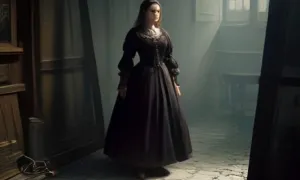
This atmospheric visualisation of the place and period was generated by artificial intelligence. It is not real footage of the location.
Tips from visitors
No tips yet. Be the first!
Log in and add your tip.
Sources and literature
Photos: Petr Kinšt / CC BY-SA 4.0, rozlišení zvýšeno umělou inteligencí — Wikimedia Commons. The author and licence also appear when you hover over the image.
Faktickým podkladem tohoto textu byl článek na Wikipedii, jehož autory jsou přispěvatelé Wikipedie. Článek je dostupný pod licencí CC BY-SA 4.0.
Location on the map





Příběhy a pověsti
Legendy, pověsti a příběhy spjaté s touto památkou
Fotografie návštěvníků
Přidat fotografiiZatím žádné fotografie. Buďte první, kdo přidá fotografii z návštěvy!
Máte k místu vzpomínku nebo zajímavý příběh?
Log in a přidejte svou fotografii nebo hodnoťte.
Za ověřenou návštěvu v aplikaci získáte víc bodů — poznáme podle GPS, že jste na místě.
Reviews and comments