






Dominikánský klášter (Malá Strana) Monastery
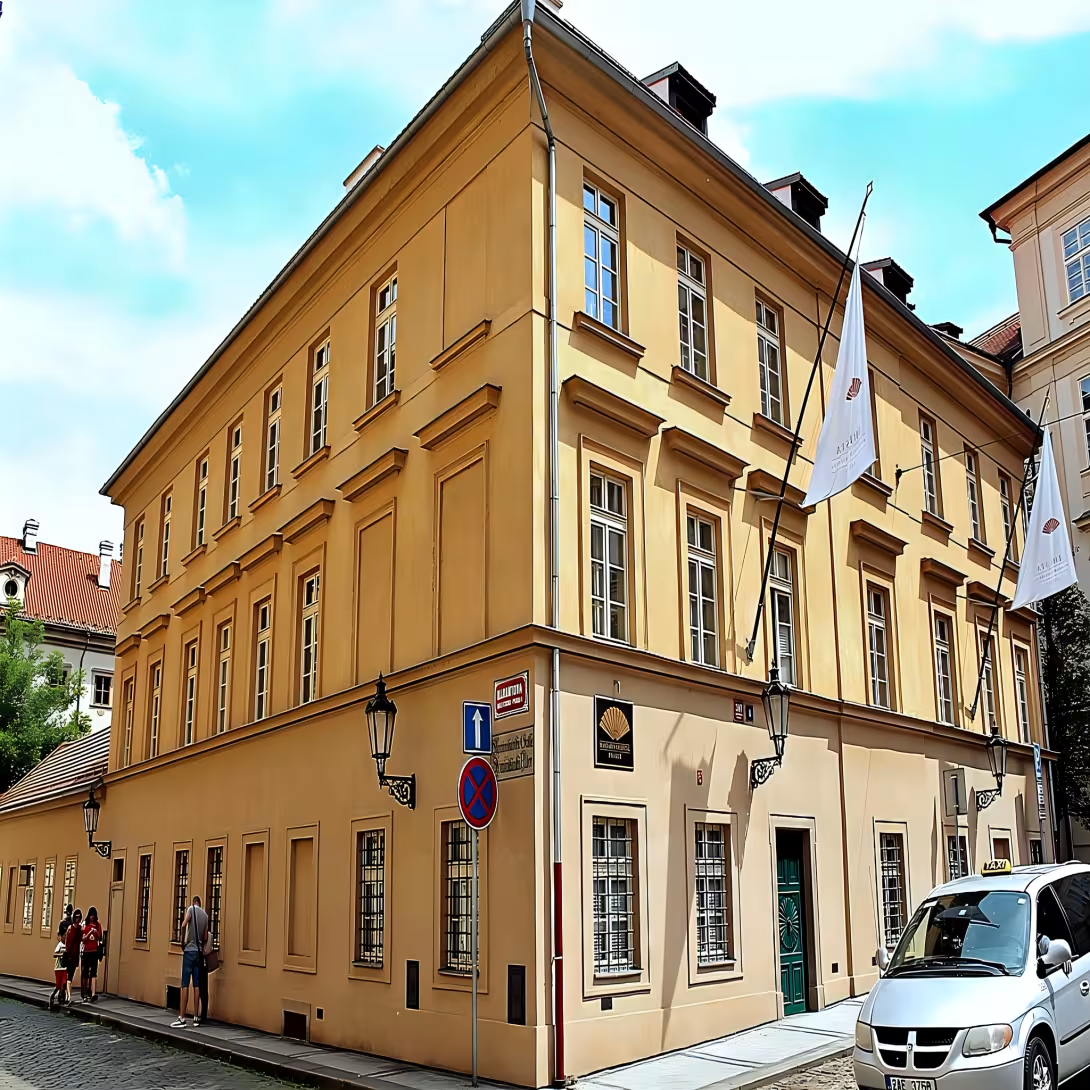
The Dominikánský klášter, located in Prague's Malá Strana district, is a former Baroque convent now transformed into the Mandarin Oriental Prague hotel. Established by the Dominicans in 1604 on the site of an earlier Magdalenite convent destroyed by the Hussites in 1420, it reflects the area's rich religious and architectural history. The complex was dissolved during Joseph II's ecclesiastical reforms in 1783 but later served as a state printing house from 1848 to 1948. Its recent transformation into a luxury hotel underscores its ongoing cultural significance.
Founded during a Catholic resurgence following the Thirty Years' War, the Dominikánský klášter was built adjacent to the Church of St. Mary Magdalene, which still stands today. Initially constructed in the Baroque style, it underwent significant changes after its dissolution in 1783 and was repurposed as a state printing house until 1948. Extensive restoration efforts between 2004 and 2006 preserved much of its historical architecture while converting it into a hotel.
Ownership and administration have shifted dramatically over time. Founded by the Dominicans in 1604, it was dissolved during Joseph II's reforms in 1783 and later served as a state printing house until 1948. In 2006, ownership transitioned to the Mandarin Oriental Hotel Group following its conversion into a luxury hotel.
Key events mark this site's history: the original Magdalenite convent was destroyed by the Hussites in 1420, leading to the Dominican convent's establishment in 1604. It faced dissolution during Joseph II's reforms in 1783 and served as a state printing house from 1848 to 1948. Its transformation into a luxury hotel began with restoration efforts between 2004 and 2006.
Today, the Dominikánský klášter is accessible as part of the Mandarin Oriental Prague hotel, offering visitors historical architecture alongside modern luxury. Adjacent to it is the Czech Museum of Music, housed in a repurposed church, adding cultural significance. Located on Malá Strana, known for its picturesque streets and proximity to Prague Castle, it attracts tourists.
The Dominikánský klášter stands as a testament to Prague's dynamic history, reflecting religious, architectural, and cultural transformations over centuries. As a luxury hotel, it offers visitors the chance to experience this historical site in a modern context. The blend of its rich past with contemporary amenities makes it a must-visit location for anyone exploring Prague's storied streets.
Then and now
Drag the slider to compare how the landmark may have looked when it was built with the view today.
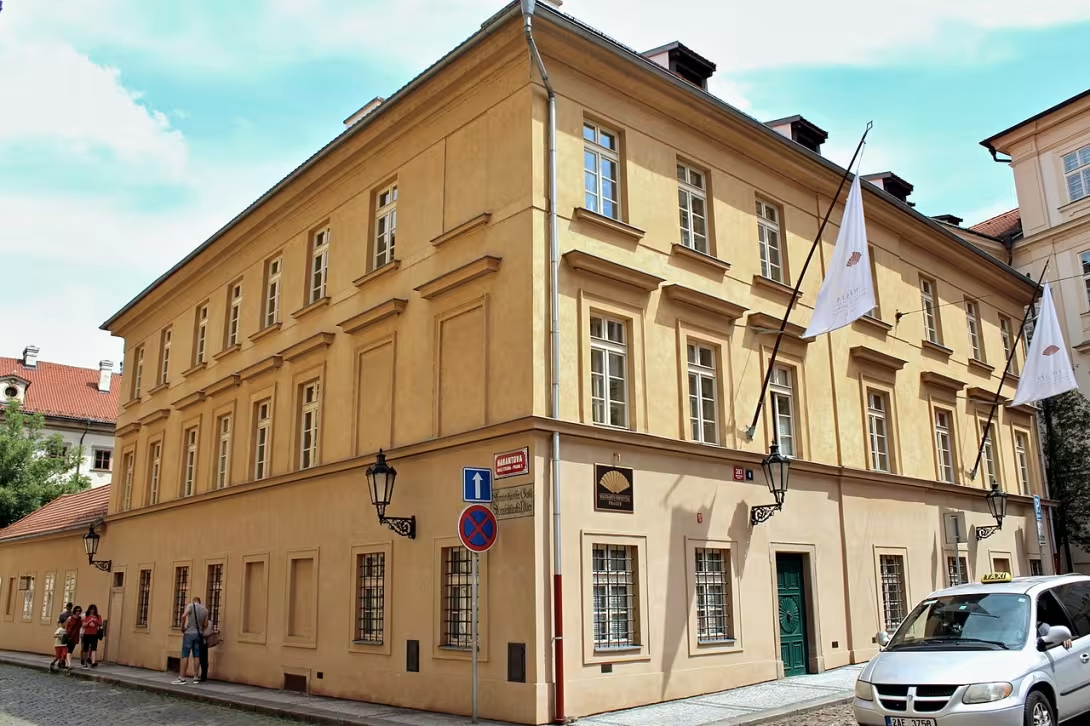

The historical appearance on the left is an AI-generated visualisation and serves as inspiration only.
Historical milestones
- 1420
- Hussites destroyed the Magdalenite convent.
- 1604
- Dominicans established the Dominikánský klášter.
- 1783
- The complex was dissolved during Joseph II's reforms.
- 1848
- Served as a state printing house.
- 1948
- Stopped serving as a state printing house.
- 2004
- Restoration began for conversion into a hotel.
Architectural development
Initially built in the Baroque style in 1604, the Dominikánský klášter underwent significant changes over the centuries. After its dissolution in 1783, it was repurposed for secular use as a state printing house. The building experienced extensive restoration from 2004 to 2006, transforming it into a luxury hotel while preserving its historical architecture.
Historical events
The original Magdalenite convent on this site was destroyed by the Hussites in 1420.
In 1604, Dominicans established a new convent here.
The convent and church were dissolved in 1783 during Joseph II's reforms.
From 1848 to 1948, it served as a state printing house.
Owners
Founded by Dominicans in 1604, the convent was dissolved in 1783 during Joseph II's reforms. It then became a state printing house until 1948 and is currently owned by Mandarin Oriental Hotel Group since its conversion to a hotel in 2006.
Guide
This guide is narrated by a synthetic voice generated by artificial intelligence.
Show guide text
This text was created by artificial intelligence and has not been editorially reviewed. It may contain inaccuracies.
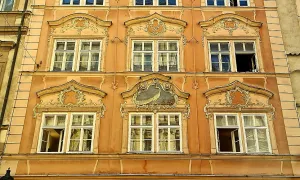
Welcome! You are standing before the Dominican Monastery in Prague's Lesser Town, one of the best-preserved historical complexes in Prague. Before you is the baroque façade that towers upwards, creating an impression of many years of history. Let us delve into its fascinating past.
The Dominican Monastery was founded in 1604 on the site of an older Magdalene Monastery, which was destroyed by Hussite forces in 1420. This attests to the turbulent religious past of this area during the Hussite Wars. Now, pay attention to the façade, executed in baroque style. Notice the details and architectural elements that are displayed here. It is evidence of the rich religious and architectural history of this area.
Over time, the complex has undergone many changes. In 1783, the monastery was dissolved during the Josephine reforms, but later served as a state printing press in 1848. Later, in 1948, it ceased to function as a printing press and remained in decline until 2004. Restoration of the complex began in 2004 for its transformation into the luxury Mandarin Oriental Prague hotel.
The Dominican Monastery has a rich history full of interesting stories and personalities. Although there are not many historical figures directly associated with this place, its history is fascinating on its own. Take a look at the façade and sense the atmosphere that prevails here. It's something that will accompany you even after your visit.
Whether it’s your first time or you’re returning, the Dominican Monastery in Prague's Lesser Town is always a captivating place to explore. Invitation for further exploration and farewell.
Tips for visitors
The best time to visit the Dominikánský klášter, now part of the Mandarin Oriental Prague hotel, is during late spring or early autumn. These seasons offer pleasant weather and fewer crowds compared to peak tourist months like summer. The area's natural lighting enhances the architectural beauty of the Baroque structures, making it ideal for photography enthusiasts.
Transportation options are convenient as the site is accessible by both car and public transport.
When visiting, it's advisable to bring comfortable walking shoes as you'll likely explore the surrounding picturesque streets of Malá Strana. A camera is recommended for capturing the stunning views and architectural details. Additionally, carrying a light jacket can be helpful due to variable weather conditions in Prague.
For photography enthusiasts, the best spots include the hotel's exterior facades, which are beautifully lit during golden hours—early morning or late afternoon. The area around the Church of St. Mary Magdalene also offers excellent opportunities for capturing stunning images with its Baroque architecture and scenic views.
Nearby attractions within a 30-minute walk include the Church of St. Mary Magdalene, known for its impressive Baroque design, and various other historic buildings that showcase Prague's rich architectural heritage. These sites are perfect for extending your exploration beyond the hotel grounds.
Frequently asked questions
Can the monument be visited?
Religious buildings are usually open mainly during services; at other times a visit is normally arranged with the parish or the operator. We have not verified specific times.
Where is the monument?
Location: Praha 1, Hlavní město Praha. The map on this page shows the exact spot.
Why is the monument protected?
It is listed in the Central List of Cultural Monuments of the Czech Republic as a cultural monument (register no. 1000151478).
Businesses nearby
Do you run a restaurant, accommodation, shop, museum, rental, wellness or other visitor service near this monument? Show yourself directly to the people heading to it — this is how they will see you in the app and on the web:
Events nearby

Zdroj akcí: otevřená data měst a obcí ČR (Národní katalog otevřených dat) a kalendář akcí Národního památkového ústavu.
Nearby
Located on Malá Strana, the area is known for its picturesque streets and proximity to Prague Castle. Other notable nearby sites include the Church of St. Mary Magdalene and various Baroque buildings.
Accommodation nearby
Trips and activities nearby
Guided tours, tickets and activities nearby from GetYourGuide
Affiliate link: if you buy from the partner, we may receive a commission. The price for you does not change.
Search tours and activities →Themed route
Dominikánský klášter (Malá Strana)
1. Church of St. Mary Magdalene: This beautiful Baroque church is located just a short walk from the Dominikánský klášter. Its stunning architecture and peaceful atmosphere make it a must-visit spot. 2. Baroque buildings: Malá Strana is known for its picturesque streets lined with beautiful Baroque buildings, including the famous Wallenstein Garden. Take a stroll through the charming streets to admire the architecture and soak up the history. 3. Wallenstein Garden: This beautiful Baroque garden is a hidden gem in the heart of Malá Strana. The garden features stunning fountains, statues, and a tranquil atmosphere, making it the perfect spot to relax and unwind.
Seasonal recommendations
Jaro
Spring is the ideal time to visit the Dominican Monastery because nature around it begins to bloom and the sun shines brightly. The atmosphere is relaxed and calm, allowing for a deeper exploration of the monastery's interior. We recommend visiting the monastery in the early morning or evening when the light from the sun or candles is pleasant for photography.
Summer
In the main summer season, the monastery is very popular, so it’s best to arrive early to avoid crowds. Summer is also a great time to explore the monastery's garden, which is full of flowers and greenery. We recommend bringing an umbrella as shade under trees is limited.
Autumn
In autumn, the monastery is surrounded by beautiful fall nature when tree leaves turn into stunning colors. The atmosphere is calm and quiet, allowing for a deeper exploration of the monastery's interior. We recommend visiting in the late afternoon when the sun shines brightly and the light is pleasant for photography.
Winter
In winter, the monastery is less visited, making it an ideal time for a peaceful tour. We recommend bringing warm clothing as the interior of the monastery is cool.
Visualizations and artistic views


The visualisations are generated by artificial intelligence and serve as inspiration.
Photos from the area
Real photos taken near the monument


Zdroj a licence jsou uvedeny u každého snímku.
Atmosphere of the place
This atmospheric visualisation of the place and period was generated by artificial intelligence. It is not real footage of the location.
Tips from visitors
No tips yet. Be the first!
Log in and add your tip.
Sources and literature
Photos: VitVit / CC BY-SA 4.0, rozlišení zvýšeno umělou inteligencí — Wikimedia Commons. The author and licence also appear when you hover over the image.
Faktickým podkladem tohoto textu byl článek na Wikipedii, jehož autory jsou přispěvatelé Wikipedie. Článek je dostupný pod licencí CC BY-SA 4.0.
Location on the map


Příběhy a pověsti
Legendy, pověsti a příběhy spjaté s touto památkou

Fotografie návštěvníků
Zatím žádné fotografie. Buďte první, kdo přidá fotografii z návštěvy!
Log in a přidejte svou fotografii nebo hodnoťte.
Za ověřenou návštěvu v aplikaci získáte víc bodů — poznáme podle GPS, že jste na místě.
Reviews and comments