






Drlíčov 8 House
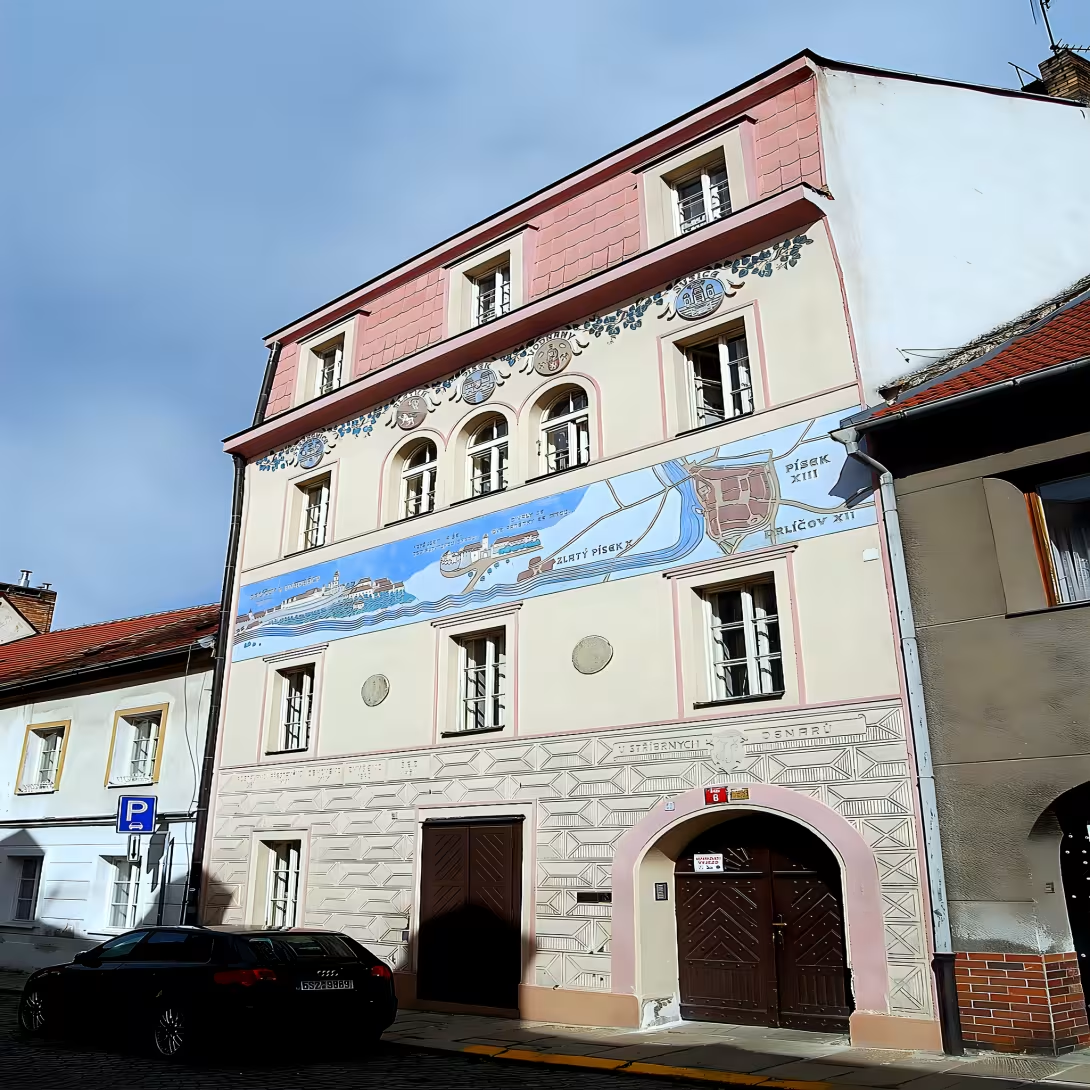
House No. 8 in Drlíčov, located in the inner city of Písek district, is one of the smaller but important cultural monuments of the Czech Republic. It is a historic building with preserved facade, decorated with frescos and sgraffiti from 1940. These artistic elements were designed by Czech artist Ivo Beneš. The house is part of the original building of this neighborhood and its interior and construction represent a valuable example of regional building tradition.
There is little information about the origin of the house. According to the landmark, however, it is likely to come from the Gothic period, followed by early Renaissance and Classicist modifications. These changes reflect the development of Czech architecture, although specific data or owners from these times are not known.
The facade of the house is its most distinctive artistic element. Frescos and sgraffiti from 1940, created according to Ivan Beneš's design, add a unique face to the object. Sgraffiti is a technique in which embossed plaster forms embossed ornaments or motifs, while frescoes are painted directly on the plaster. These elements not only highlight the historical value of the house, but also show how the artistic trends of the 20th century have translated into regional architecture.
The house is protected as a cultural monument, which means that its interior and construction are considered valuable. Accurate information about its ownership or trustees in the past is not publicly available, but its preservation to date is indicative of the care of cultural heritage. Today, the object is part of private property, and its current status and use are not publicly known.
Although the house has no dramatic historical event associated with it, its artistic and building values make it interesting for lovers of architecture and history. Frescos and sgraffiti from 1940 are a rare example of regional art that cannot be found on every corner. Visiting such an object offers the opportunity to become acquainted with local culture and artistic tradition, which is reflected in the details of everyday life.
The house on Drlíčov 8 is an example of how history and art are reflected in everyday environments. His visit is not only a tour of the building, but also a trip to the past where various styles and artistic techniques meet. If you are interested in Czech architecture and its development, it is worth looking at this object. Small details often hide the greatest value.
Historical milestones
- 1940
- Creation of frescoes and sgraffiti on the facade according to the design of Ivan Beneš
Points of interest
- House No. 8 in Drlíčov is a smaller but important cultural monument with preserved facade decorated with frescos and sgraffiti from 1940.
- The artistic elements on the facade were designed by Czech artist Ivo Beneš.
- The house is part of the original building and its interior and construction are a valuable example of the local building tradition.
- According to the landmark register it probably dates from the Gothic period, then underwent early Renaissance and Classicist modifications.
- Frescos and sgraffiti are a rare example of 20th century regional art.
Guide
Show guide text
This text was created by artificial intelligence and has not been editorially reviewed. It may contain inaccuracies.
Welcome to this hidden treasure of the inner city where time stopped and left a trail in the form of this picturesque house. You are standing in front of the house at Drlíčov 8, whose facade is like an open book full of stories. A building which is part of the original building of this picturesque village, which is proud to be protected as a cultural monument of the Czech Republic, is located in front of you. Remember what it's like to stand in front of a place that's witnessed generations past.
Let's take a closer look at the history of this house. In 1940 unique artistic elements were created on the facade - frescoes and sgraffiti. These decorations were made according to Ivan Beneš's design, which is proof that even in this small corner of Bohemia there were creative souls who were trying to enrich the everyday environment with something more beautiful. Even if we don't know the names of the architects or the personalities that were connected to this house, we can imagine what it was like to live at a time when such a work of art appeared on the facade of the family home.
Now pay attention to what you're seeing. Look up and look at the front of the house. Notice how the facade is decorated and how different shapes and patterns are projected on it. These sgraffiti and frescoes are not only decoration, but also proof of art work from the past. Sgraffiti is a technique in which the plaster forms embossed patterns while the frescoes are painted directly on the plaster. These techniques were popular at the time and gave the houses a unique face.
Although we don't know the specific stories of the people who lived here, we can imagine what it was like to watch new paintings born on the facade. Each of these artistic elements tells its own story - about the joys, worries and everyday lives of the people. Here we meet the atmosphere of the past, which is still alive and waiting for our attention.
If you look carefully, you may notice that every detail has its meaning. Frescos and sgraffiti are not only an ornament, but they also revive and bring it to life. These artistic elements are like small pearls that are reflected in the overall appearance of the house and give it a unique identity.
Now let's see what else this house is hiding. Although there are no known mysteries or secrets that attract attention, we can enjoy the atmosphere of the place and its historical value. You're standing in front of a house that's like a living document of the past that reminds us of how important art and beauty were in everyday life.
Let's stay a little longer at this place. Look at the facade from different angles and feel its unique atmosphere. Every corner of this house has a story, and even though we don't know it, we can imagine and perceive the beauty this monument offers us.
If you like this monument, it is certainly worth exploring other jewels of the inner city and its surroundings. Every house, every street and every corner of this area has its own story and secrets. Get carried away by the path of time and discover the beauty our heritage offers us.
Thank you for stopping by this place and be inspired by its beauty. When you look back, you may realize that even in small villages there are great stories. Be welcome to our historical heritage and be carried away by his magic.
Tips for visitors
The best time to visit this historic house is in the summer months when the outdoor environment is pleasant and sunlight better illuminates the facade with artistic elements. The morning or afternoon is ideal because you avoid direct sun and avoid crowds of tourists. In winter, the visit is interesting thanks to a quiet environment and the opportunity to explore the memory without distracting.
In the summer months you can see the most details on the facade and the surrounding nature is green and blooming, which increases the overall atmosphere of the place.
Parking can be found in public parking lots in the centre of the inner city. It is recommended to arrive by car because public transport may not be on site. The current parking options and connections with public transport are good to check before visiting the map search engine.
Vnitřní Město is a small village, but parking in the centre can be limited, so it is better to come by car and find a vacancy.
When visiting the sights, wear comfortable shoes, as the journey through the historic centre can be on stony or uneven sidewalks. I also recommend you take a small camera or mobile phone with a high-quality lens to capture the details of the facade and the surrounding environment. If you are interested in history, you can bring a small notebook and a note pencil.
Stone walkways can be uncomfortable for footwear with thin soles and a high-quality camera allows you to capture the beauty of the sights.
Photography is allowed, but the best places for images are the facade of the house and surrounding historical buildings. It is recommended to take photographs with scattered light, for example in the morning or in the afternoon when the sun does not flash directly into the lens. It is best photographed from an angle that captures the overall appearance of the house and its details.
The scattered light softens the contrasts and allows you to see more detail of the facade without bulking areas.
In the vicinity of the monument there is only a limited attraction because Vnitřní Město is a small village. If you have time, you can see other historic houses in Drlíčov, which are part of the original development. If you go to a nearby area (within 30 minutes' drive), you can visit other interesting places in the South Bohemia region, but there is no other place in the vicinity of Drlíčov 8 within the given information.
Drlíčov is a small village, therefore there are not many other attractions, but the house itself offers enough historical details.
For families with children, the visit to this house is particularly interesting thanks to the possibility of exploring history and architecture. Children can see the facade with artistic elements and talk about what the village looked like in the past. It is recommended to take some activity with you, such as painting or guessing, so that children are involved and remember the beauty of the monument.
Children can learn about the history of the game while enjoying a walk around the historic place.
Businesses nearby
Do you run a restaurant, accommodation, shop, museum, rental, wellness or other visitor service near this monument? Show yourself directly to the people heading to it — this is how they will see you in the app and on the web:
Nearby
➜ Zobrazit interaktivní přehled okolí – restaurace, ubytování, půjčovny a další místa v okruhu 15 km.
Data: OpenStreetMap contributors, okruh 15 km.
🏰 Historické památky
- Jan Žižka - odbojář (0.1 km)
- Kamenný most v Písku (0.2 km – Velké náměstí 114)
- Melegnanský pomník (0.2 km)
- Kamenný most v Písku (0.3 km)
- Kamenný most v Písku (0.4 km)
- Památník legionářů (0.9 km)
- památník Dr. Aloise Rašína (1.4 km)
- Památník lesnického školství v Písku (1.6 km)
🍽️ Restaurace a stravování
- Bufet U Gora (0.2 km)
- Pizzeria San Marco (0.2 km – Velké náměstí 118/11)
- Travel Cafe (0.3 km – Komenského 87/16)
- Tandoor (0.3 km)
- Restaurace Ostrov (0.4 km)
- U Smetáka (1.6 km)
- Penzion U Malířských (2.1 km)
- Chata Živec (3.4 km)
🏨 Ubytování
- Hotel Villa Conti (1.3 km – Lesní 1277)
- Interhotel Amerika (1.5 km)
- Hotel U Smetáka (1.6 km)
- Penzion U Malířských (2.1 km)
- Chata Živec (3.4 km)
- Apartmán Ve škole (8.5 km)
- Chata Jistec (8.5 km)
- Chata Vráž (8.6 km)
🚲 Půjčovny a sport
- Harmony Wellness Club (0.2 km)
- Venkovní bazén (0.2 km)
- Plavecký stadion (0.2 km)
- Sokol Písek (0.4 km)
- A3 SPORT (0.6 km)
- Loděnice (0.6 km)
- Sport centrum Písek (0.6 km)
- Martes Sport (0.7 km)
🥾 Turistika a příroda
- Infocentrum Písek (0.2 km)
- Písek (Palackého sady) (0.3 km)
- Písek Jiráskův most (1.2 km)
- Na Trubách (1.4 km)
- U Hesouna (1.9 km)
- U Vodáka (2.0 km)
- U Honzíčka (2.3 km)
- Jarník (rozhledna) (3.2 km)
Accommodation nearby
Themed route
Thematic cruise route with starting point in Drlíčov 8
1. House Drlíčov 8 Family house with rich history - The original 19th century building retains original interiors and furniture. Suitable for lovers of folk architecture and home life of the past century.
2. The Village of Internal Town Traditional rural atmosphere - In the middle of the village there is a picturesque village with stone houses and historical church. Ideal for walking and observing folk custom.
3. Road to Castle Pond (approximately 1 km from the village) Natural calm and water landscape - A small pond in the middle of the fields offers the possibility of relaxing and observing water birds. Suitable for a short stop.
4. Church of St. Wenceslas Baroque sacral monument - A simple but impressive 18th century building with original equipment. Suitable for visiting during services or as a stop during walking.
5. Municipal Park at Castle Pond * * * * Green escape with views - A small park with benches and trees offers a quiet sitting by the water. Suitable for relaxation after a walk in the city.
The route is designed to connect the historical centre with nature in the surrounding area.
Seasonal recommendations
Spring In Drlíčov 8, a unique atmosphere is created in spring associated with the waking city and changing light. The sun reflects from historical facades and long shadows create a game of light on the stone details of the house. Nature surrounds itself in green, but the leaves are not so thick as to cover the views. The right time to visit is in the afternoon, when crowds of tourists have not yet returned from other parts of the city. I recommend light but warm clothes - spring weather is variable, and morning or evening can be cold. If you want to avoid clusters, take a tour immediately after opening, when the monument is quieter and the staff has more time to explain the details.
Summer In the main summer season Drlíčov 8 offers not only historical atmosphere, but also pleasant shadows and moments of rest from the sun's heat. The warm afternoon is ideal for walking around the city when the streets fill up with life, but at the same time it is possible to enjoy the peace in the interior of the house, where it is often pleasantly cold. I recommend early morning time to avoid crowds starting gathering around noon. Clothes should be easy, but with the possibility of covering the shoulders - the sun in southern Bohemia can be intense. If you go for a walk around, take water and sunglasses, because in the summer months there is little shade on open areas.
Autumn Autumn brings to Drlíč 8 golden shades and a quiet, almost mysterious atmosphere. The leaves in the surrounding trees turn into shades of yellow to red, creating contrast with darker stone facades. The evening sun gives a special heat to the memory, and therefore it is the best time to visit the late afternoon when light becomes softer and the crowds are shrinking. I recommend warmer clothes - autumn evenings are cold, and the interior can be damp. If you're interested in history, enjoy a calmer day in September when the city is still full of life, but not as crowded as it was in the summer. Walking along the surrounding streets at this time of the year is pleasant because temperatures are mild and nature offers a rich variety of colors.
Winter The winter visit to Drlíčov 8 brings a unique atmosphere where the historic house appears to be from another century, surrounded by snow and fog. Freezing air conditions and short days create a mysterious mood, supplemented by light candles or lamps in the interior. I recommend warm, layered clothes and fixed shoes because the streets can be slippery. The best time is the afternoon when the monument is lit by artificial light and the opening time is shorter than in summer. If you go for a walk, take a hot drink - in winter it is nice to stop in some of the nearby cafes and enjoy a quiet environment. In advent time the city can be decorated, which adds even more magic to the visit.
Visualizations and artistic views


The visualisations are generated by artificial intelligence and serve as inspiration.
Photos from the area
Real photos taken near the monument


Zdroj a licence jsou uvedeny u každého snímku.
Tips from visitors
No tips yet. Be the first!
Log in and add your tip.
Sources and literature
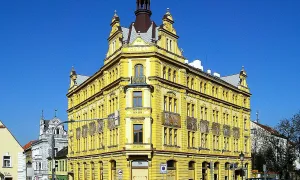
Photos: Richenza / CC BY-SA 3.0, rozlišení zvýšeno umělou inteligencí — Wikimedia Commons. The author and licence also appear when you hover over the image.
Location on the map
More monuments – Vnitřní Město
Show all in the municipality
Příběhy a pověsti
Legendy, pověsti a příběhy spjaté s touto památkou
Fotografie návštěvníků
Zatím žádné fotografie. Buďte první, kdo přidá fotografii z návštěvy!
Log in a přidejte svou fotografii nebo hodnoťte.
Za ověřenou návštěvu v aplikaci získáte víc bodů — poznáme podle GPS, že jste na místě.
Reviews and comments