






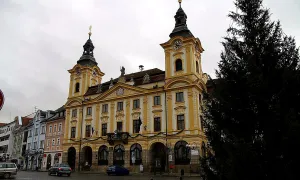
Hotel Otava Hotel building
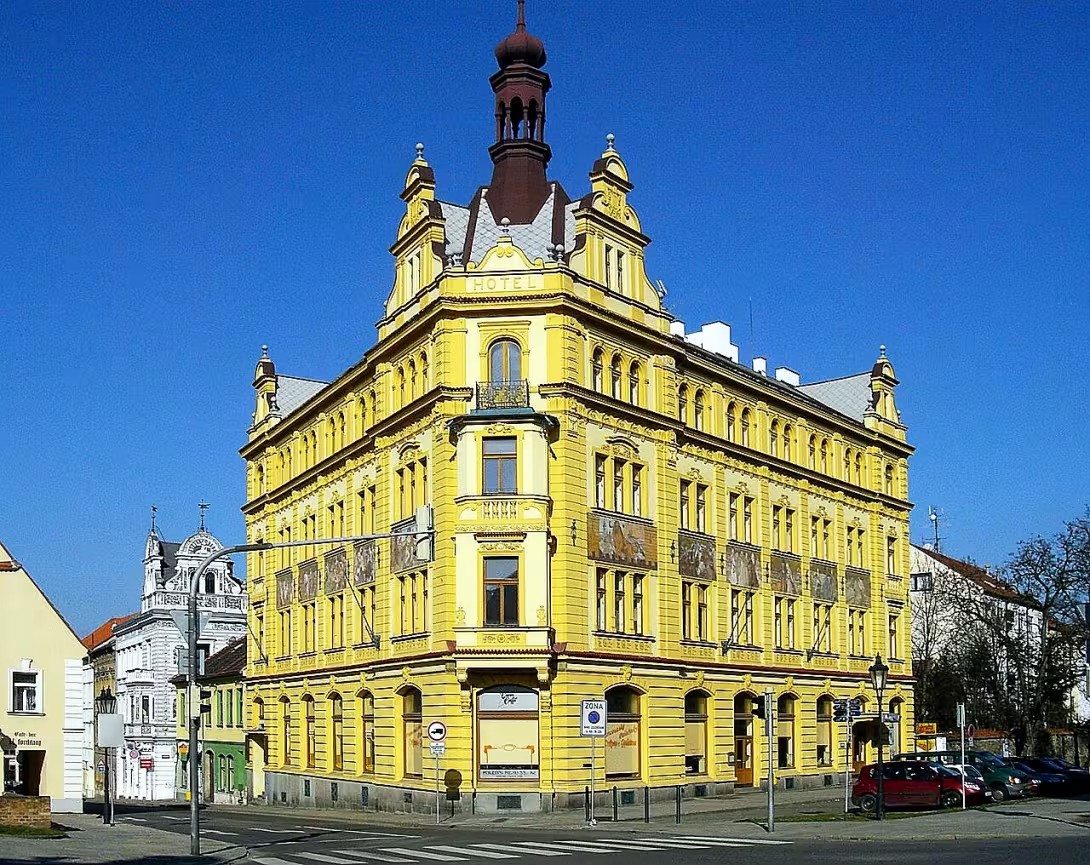
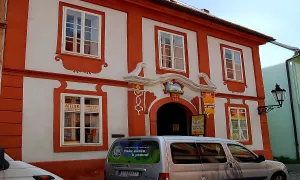
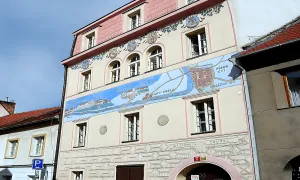
Hotel Otava represents a three-storey historical building from 1899, which stands on the site of the former Budějovice Gate in Internal Town. This monument to the end of the nineteenth century is one of the most famous hotels in the city and stands out primarily with unique decoration in the form of eleven sgraffiti with themes of South Bohemian life and regional history.
This building was built in 1899 when the local pharmacist Dvořáček built it, after which the hotel was initially named. In the late nineteenth century, Czech countries were in a growing process of national renewal and industrialization. At the time, social life was developing in Písek and urban architecture was enriched with historical elements with emphasis on national motives.
The three-storey construction of the historic character is characterised primarily by a facade decorated with eleven sgraffiti on the south and east facades. The designs of this art decoration were created by Mikoláš Aleš and implemented by Josef Bosáček. The south facade carries five sgraffiti with names of Gold Grinding in Otava, the Tábor captain Matej Louda of Chlumčan on the stone bridge, the Knights' Tournament, the Conquest of the City in the Thirty Years' War and the Allegorie of the Hunt. On the eastern facade there are six other sgraffiti, namely Apotheosis of the City Sign, Battle of the Chinese, City Festival, Venované z Sandy, Sand students in Animal and Vory in Otava.
The first owner of the building was the local pharmacist Dvořáček. During its existence, the building served other purposes besides hotel operation. At the beginning of the twentieth century, Professor Otakar Ševčík's violin school was founded here. At the end of the 1940s, there was a boarding school in the building. At the end of the twentieth century the whole hotel then underwent a total reconstruction.
The history of the building is linked to the visits of prominent statesmen. In 1920, President Tomáš Garrigue Masaryk visited the hotel, and in 1937 Edvard Beneš visited these places. The Otava River and the historic stone bridge are located in the vicinity of the monument.
Today, this important building continues to serve as one of the most famous hotels in the city. Visitors can admire the preserved facade with an extensive cycle of historical sgraffiti from Mikolas Alš and Josef Bosaček. Hotel Otava thus represents its architecture and history a valuable reminder of the nineteenth century in Písek and is worth a distinctive visit.
Then and now
Drag the slider to compare how the landmark may have looked when it was built with the view today.
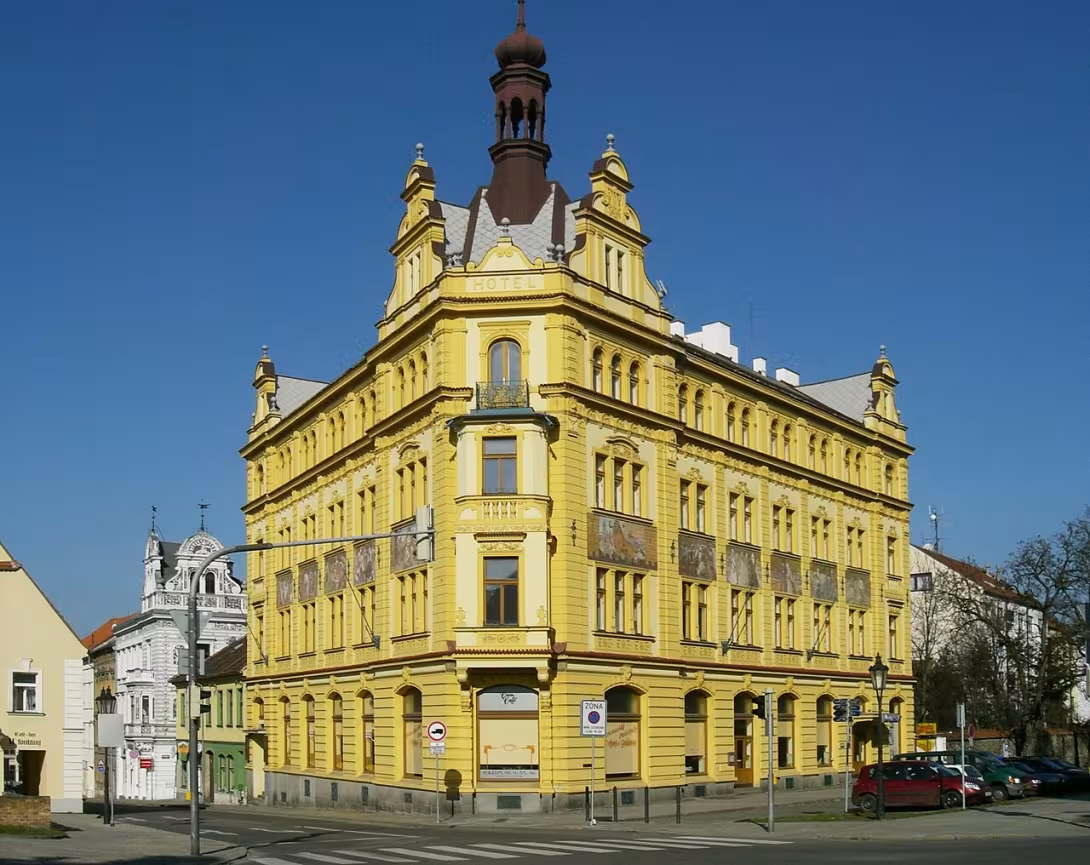
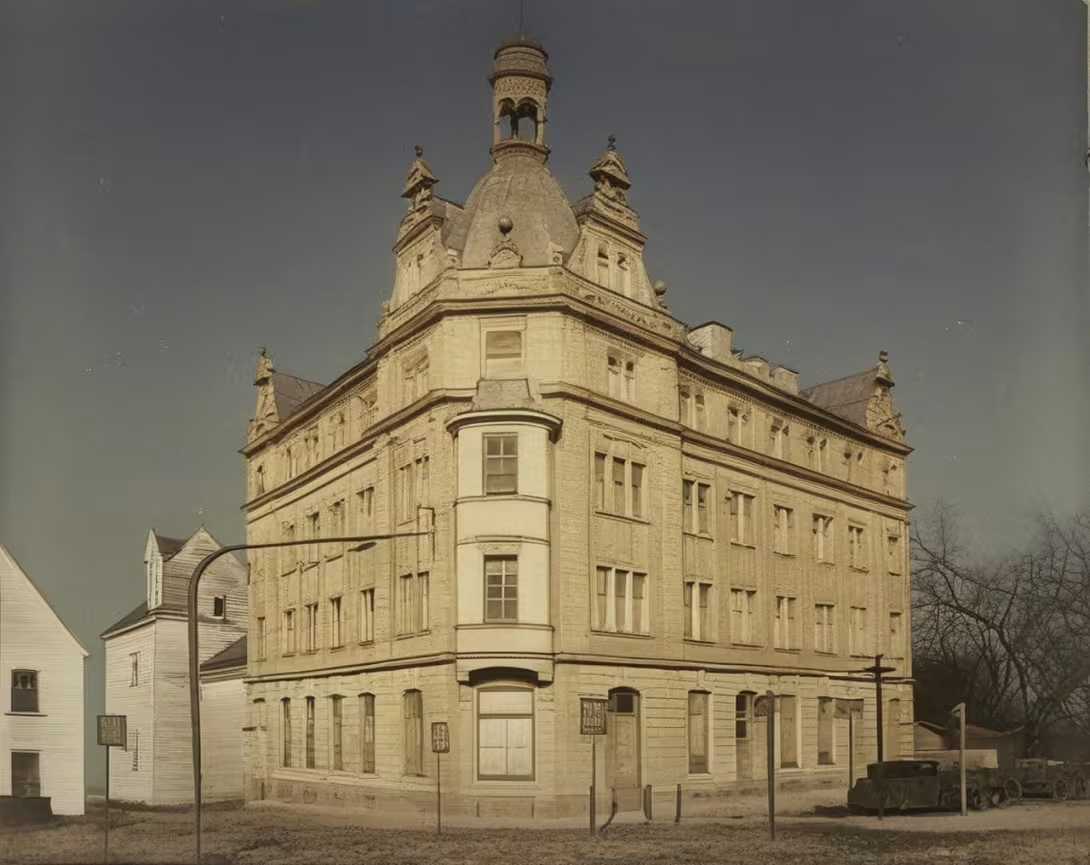
The historical appearance on the left is an AI-generated visualisation and serves as inspiration only.
Historical milestones
- 1899
- The location of the hotel building in the location of the Budějovice Gate.
- 1920
- Visit to President Thomas Garrigue Masaryk.
- 1937
- A visit from President Edvard Benes.
Architectural development
A three-storey building was built in 1899 on the site of the broken Budějovice gates. The facade is decorated with unique sgraffiti on the south and east facades. At the end of the twentieth century the hotel underwent a general reconstruction.
Historical events
The hotel building was built in 1899. At the beginning of the twentieth century, Professor Otakar Ševčík's violin school was founded here. In 1920 the hotel visited Tomáš Garrigue Masaryk and in 1937 Edvard Beneš.
Owners
Local pharmacist Dvořáček
Points of interest
- The building was built in 1899 on the site of the former Budejovice Gate and its first owner was the local pharmacist Dvořáček, after which the hotel was initially named. - The facade on the south and east facade is a unique decoration in the form of eleven sgraffiti, designed by Mikoláš Aleš and implemented by Josef Bosáček. - At the beginning of the twentieth century, the violin school of Professor Otakar Ševčík was established in the building and at the end of the 1940s there was a boarding school of the secondary industrial school. - The history of the building is linked to the visits of prominent statesmen because in 1920 the hotel was visited by President Tomáš Garrigue Masaryk and in 1937 Edvard Beneš visited. - The whole hotel went through a complete reconstruction at the end of the twentieth century.
Guide
Show guide text
This text was created by artificial intelligence and has not been editorially reviewed. It may contain inaccuracies.
Welcome to Internal City. You're standing in front of an important historical building you know as Otava Hotel. Raise your head and look around you. You have a large three-story building in front of you, one of the most prominent houses in the city. Its solid walls carry stories of decades and perceive the buzz of the surrounding streets.
Let's look into the past and see how this building came into being. The year is a thousand eight hundred ninety-nine, and there is a great transformation in this place. In earlier times, the old Budejovice Gate was built here, which was part of the city fortification. But when the gate stopped serving its purpose and the city grew, it had to give way to new needs. A new hotel building grew up in her place. The first owner was the local pharmacist Dvořáček, which is why this house was originally named after him.
Now pay attention to the architecture itself and the details you have right in front of you. Take a look at the south and east facade of the building, because that is where its greatest decorative pride is hiding. Notice the eleven sgraffiti that cover the walls. These works of art didn't just happen by accident. Their designs were created by the famous painter Mikoláš Aleš and the artist Josef Bosáček performed them on the walls until the end. The exhibition decoration captures interesting motifs that are worth a longer examination. Stop for a moment, examine the individual paintings on the walls and let the skill of the old masters be on you.
This house wasn't just an ordinary place to sleep in travelers. Over the years, a number of prominent personalities have been replaced here. In a thousand and nine hundred and twenty, the city welcomed an important visit when the first Czechoslovak President Tomáš Garrigue Masaryk came here. Seven years later, in the year one thousand nine hundred thirty-seven, the actions of another statesman led to this place, as President Edvard Beneš also came here. The famous violinist Otakar Ševčík is also connected to this space. We can easily imagine how these great people went through the same places you're standing right now and perceived the atmosphere of the then Sand.
When we think about the history of this house, we find that every epoch has left its mark in its walls. Breaking down the old gate and building a new hotel in a thousand eight hundred ninety-nine meant a big step for the entire Vnitřní Město. The pharmacist Dvořáček then laid the foundation of the tradition of hospitality, which lasts until today. Moreover, the association of names such as Mikoláš Aleš and Josef Bosáček gave this place a permanent artistic value that is admired by generations of residents and visitors.
I believe you were intrigued by the tour of this place and brought you closer to the rich history of the region. When you walk the other streets of the inner city, remember the stories of the people who shaped the face of the Sand. Thank you for your attention, I wish you a wonderful rest of the day and I look forward to seeing you again when you discover our sights.
Tips for visitors
The best time to visit the historic centre of Sand and the surrounding area of Otava is early in the morning or at sunset, when the sun's rays light up the historic facades and river level beautifully. Parking and transport are possible directly in the wider city centre, the location is available by car and public transport, while check the current connection in the local search engine. Bring comfortable shoes to walk on historic tiles, camera and clothes suitable for outdoor movement. For photography, choose the waterfront and surrounding nearby Stone Bridge in Sand where you will get the best footage of historical architecture reflected on the river Otava. In the immediate vicinity within 30 minutes' walk you can visit the ancient Stone Bridge in Sand and the picturesque shores of the river Otava, which encourage peaceful walks. For families with children, this location is ideal thanks to easy paths along the water and sufficient space to relax in nature.
Businesses nearby
Do you run a restaurant, accommodation, shop, museum, rental, wellness or other visitor service near this monument? Show yourself directly to the people heading to it — this is how they will see you in the app and on the web:
Events nearby
Zdroj akcí: otevřená data měst a obcí ČR (Národní katalog otevřených dat) a kalendář akcí Národního památkového ústavu.
Nearby
Kamenný most v Písku a řeka Otava
Accommodation nearby
Themed route
Thematic cruise route from the inner city
1.Hotel Otava - Type: Hotel, restaurant - Why is it worth a visit: This historic hotel offers comfortable accommodation and excellent culinary experience with local specialties. It's the perfect beginning or end of your trip to the Sand.
2. Stone bridge - Type: Bridge, monument The Stone Bridge is one of the oldest and most famous places in the Sand. Its historical architectural elements and a beautiful view of the Otava River make it the necessary visiting material.
3. Otava River - Type: Natural water flow - Why it is worth a visit: Otava River is a living element of the city, offering quiet moments for relaxation and a beautiful view of the local landscape. It is ideal for short walks or picnics.
4. Square by the Stone Bridge - Type: Square, historical center - Why is it worth visiting: This square is the heart of the city and offers a view of the Stone Bridge. It is an ideal place to explore architectural monuments and walk on historic streets.
5. Sand dam - Type: Water tank, recreational area - Why is it worth a visit: This dam is a beautiful place for relaxation and various water activities. It offers a view of the Otava River and the surrounding countryside, making it an ideal place to relax after a trip.
This route offers a combination of historical sites and natural beauties, which Sand has to spur.
Seasonal recommendations
Spring in the historic inner city of Hotel Otava brings awakening nature, when the surrounding parks become green and the ancient facades water a fine, welcoming light. The atmosphere is quiet and ideal for quiet contemplation over history. In this period you will encounter a smaller number of travelers, so you will enjoy the alleys without pushing. Put on layered clothes and a light jacket because spring weather can be variable. The best time for a tour is in the morning, when the morning herpes gives the place a unique charm.
Summer lights up this memory with colorful colors and long sunny days, while the sun radiates stone walls until late evening and creates a lively, almost holiday atmosphere. However, the main season attracts a large number of tourists. Wear breathtaking clothes made of natural materials, don't forget the headgear and the hot water bottle. For escape from crowds and noon heat it is best to visit the premises immediately after early morning opening or late evening.
Autumn turns the surroundings of Hotel Otava into a palette of warm shades of yellow and red, falling leaves rustling under the feet and low sun creates dramatic shadows on the historic wall. The air is fresh and the melancholic atmosphere directly encourages romantic walks. The tourist rush is fading. A warm sweater, solid waterproof shoes and scarf are suitable for these days, because autumn wind bursts can cool. The best time to visit is around noon when the strongest daylight is warm.
Winter covers the Vnitřní Město in silence, often under the snow cover, with early dimming and muted artificial lighting of street lamps supplying the Hotel Otava with a mysterious, fairy tale character. Advent time is a little more lively, but otherwise there is deep calm. The need is a quality winter coat, hat, gloves and warm shoes with anti-slip sole. Since it soon gets dark and the opening times of the monuments are shortened, plan your arrival for the early afternoon so you can make the full tour in daylight.
Visualizations and artistic views


The visualisations are generated by artificial intelligence and serve as inspiration.
Photos from the area
Real photos taken near the monument


Zdroj a licence jsou uvedeny u každého snímku.
Tips from visitors
No tips yet. Be the first!
Log in and add your tip.
Sources and literature
Photos: User:Chmee2, digital enhancement by User:Aktron (19th June 07) / CC BY-SA 3.0 — Wikimedia Commons. The author and licence also appear when you hover over the image.
Faktickým podkladem tohoto textu byl článek na Wikipedii, jehož autory jsou přispěvatelé Wikipedie. Článek je dostupný pod licencí CC BY-SA 4.0.
Location on the map
More monuments – Vnitřní Město
Show all in the municipality
Příběhy a pověsti
Legendy, pověsti a příběhy spjaté s touto památkou
Fotografie návštěvníků
Zatím žádné fotografie. Buďte první, kdo přidá fotografii z návštěvy!
Log in a přidejte svou fotografii nebo hodnoťte.
Za ověřenou návštěvu v aplikaci získáte víc bodů — poznáme podle GPS, že jste na místě.
Reviews and comments