






Synagoga v Písku Synagogue
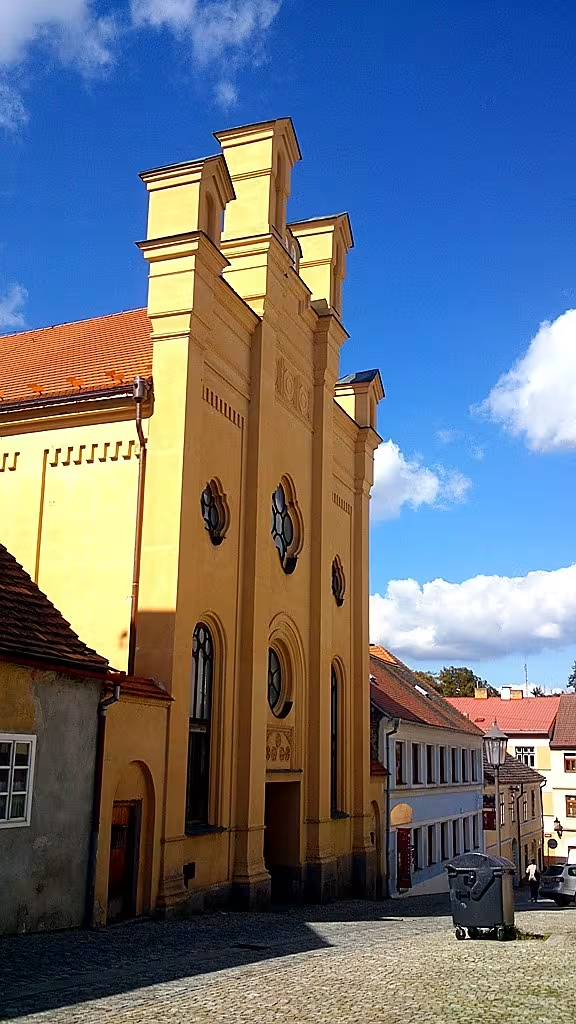
The former synagogue in Písek, built in 1872 on Soukenicka Street, is protected as a cultural monument of the Czech Republic. This historic building served the local Jewish community as a place of worship until the end of World War II. After the war, in 1953, the synagogue was transformed into a warehouse, which led to changes in the inner layout - they divided the prayer house into two floors. Since 1995 it has been the property of the Jewish village in Prague. In 2005 its reconstruction took place with financial support from the Czech-German Fund of the Future, which helped to preserve the historical character of the building.
The synagogue was established at a time when Jewish communities and construction in historical style developed in the second half of the 19th century in Europe and Czech countries. This context reflects the cultural and religious expansion of the time when many Jewish communities tried to build not only functional but also aesthetically distinct religious centres.
The architectural elements of 1872 are characteristic of historism, a style often combining various historical influences. Although the details of the building materials are not described in detail, the famous changes from 1953 indicate adaptation of the building for new purposes. To meet the needs of the warehouse, the prayer room was divided into two floors.
The ownership and administration of the synagogue have undergone some significant changes. After World War II, the building was converted into a warehouse, reflecting dramatic shifts in its use and care for religious memory. In 1995 the property was transferred to the hands of the Jewish village in Prague, which meant a new stage in its management and care of the historical object. The reconstruction carried out in 2005 with the support of the Czech-German Fund of the Future was crucial for preserving the original form and history.
Among the key events are the transformation from a religious centre to a warehouse in 1953, which was common for similar buildings after the war. An important milestone was also the reconstruction in 2005, which not only restored the historical nature, but also strengthened the importance of the monument.
Today, the Sand Synagogue is accessible to visitors. It is worth visiting not only because of its historical value, but also because it is an important part of the cultural and religious heritage of the city. Its restoration shows an effort to preserve historical monuments and their importance for future generations.
Visiting the synagogue in Sand is an opportunity to immerse yourself in the rich history of the city and understand the important aspects of the Jewish heritage. This monument tells of changes in time and the importance of preserving cultural values for the future.
Then and now
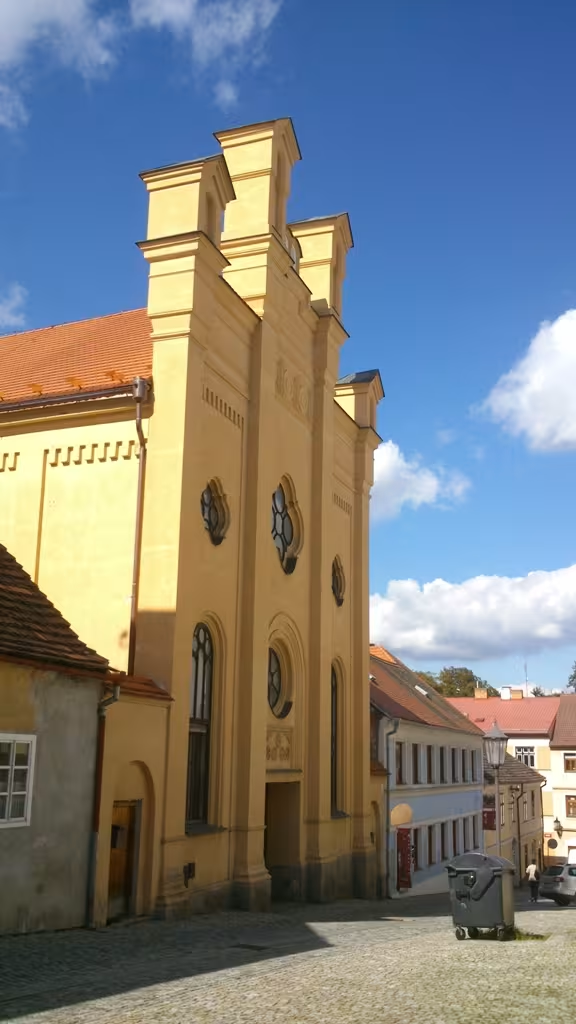
Drag the slider to compare how the landmark may have looked when it was built with the view today.
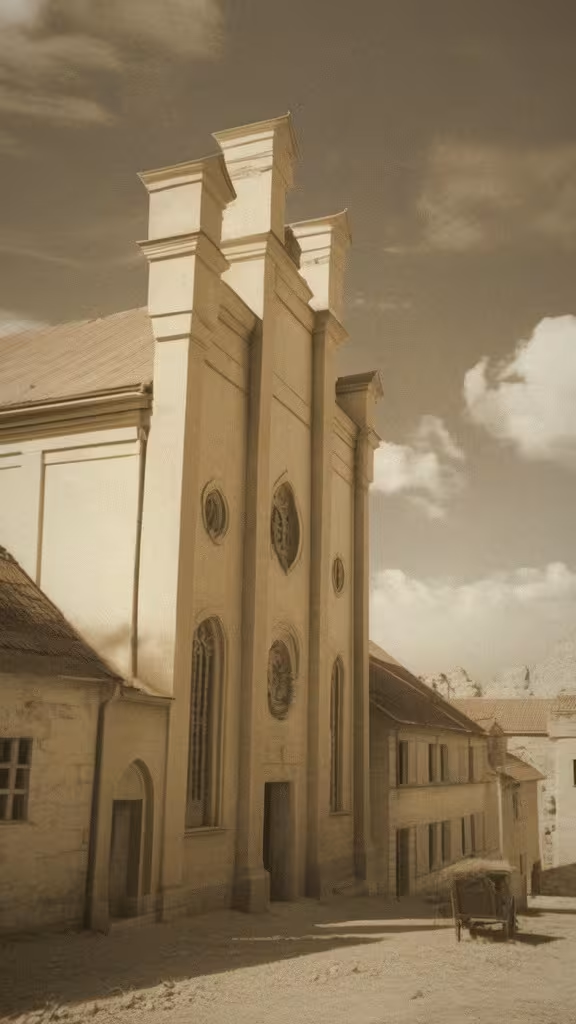
The historical appearance on the left is an AI-generated visualisation and serves as inspiration only.
Historical milestones
- 1872
- Building a synagogue on Soukenicka Street.
- 1953
- Change of use to the warehouse and split the prayer room into two floors.
- 1995
- Transfer of property to the property of the Jewish village in Prague.
- 2005
- Reconstruction of the synagogue with support of the Czech-German fund of the future.
Architectural development
The building was built in 1872. In 1953 the prayer room was divided into two floors for the needs of the warehouse. Reconstruction was carried out in 2005.
Historical events
In 1953, the building was used as a warehouse. The building was renovated in 2005.
Owners
Jewish village in Prague (since 1995).
Points of interest
- Synagoga v Písku was built in 1872 on Soukenicka Street and is protected as a cultural monument of the Czech Republic. By the end of World War II, the Jewish community served as a place of worship. - In 1953 it was converted into a warehouse, and the prayer room was divided into two floors. - Since 1995 the property belongs to the Jewish village in Prague. - Reconstruction in 2005, financed by the German Fund for the Future, preserved the historical character of the building.
Guide
Show guide text
This text was created by artificial intelligence and has not been editorially reviewed. It may contain inaccuracies.
Welcome to the heart of the historic Sand. Right now, you're standing in Soukenica Street, and there's a building in front of your eyes that's much more than just a wall and a roof. He is a silent witness to the fates, faith, and relentless changes that this region has been subjected to in the last century and half centuries. Feel this atmosphere, feel the calm that rules here, even if you are moving in the center of the city. This synagogue, which you are now seeing, is one of the most important pillars of local history, and its presence here gives the street a special depth.
Let's go back together to the time when a whole different story began to be written on this street. Imagine 1872. The sand was a living city in which various people worked together, and it was this year that the synagogue was built. It wasn't just a building, it was a firm anchor for the local Jewish community. For the people who lived here, they had their place here for prayer, for meetings and for sharing their culture. This building served as a spiritual centre until the end of World War II, a period that has left deep and painful traces in the history of our country. So the synagogue was not just an architecture, it was a living part of the community that had been part of this city's colorful mosaic for generations.
Now pay attention to the very form of the building in front of you. Although history no longer has the name of the architect who designed it, its character is very clear. Now, if you look at her appearance, feel the historical character that has been preserved. Although the building has been through many difficult times, its current form is the result of a great effort to restore it. Notice how her face works. Thanks to the thorough reconstruction that took place in 2005, the synagogue retains its dignity. This reconstruction was not just about repairing the roof or the facade, it was about trying to make this historical object a solid part of the urban landscape again and so that its history could continue in a new chapter.
When we talk about the people connected to this place, we come across an interesting paradox. Although we do not know the names of the particular builders or the names of the individual rabbis who once stood here, this place is simple to thousands of unknown figures. It is the people who have been here every day looking for spiritual peace, the people who have been celebrating the holidays and the people who have been looking for hope in difficult times. It is this unknown but deep human presence that gives this place its true weight. Every stone and every part of this building carries a reflection of those who were once here, even though their names had already disappeared.
And this is where we get to one of the most interesting and possibly surprising parts of the history of this place. You might be surprised, but this building, which was created for worship and nobility, went through a very unusual period in the middle of the last century. In 1953, her function changed completely. Instead of prayers, things started to be stored here. The synagogue was converted into a warehouse. Imagine the contrast between the sacred space and a simple utility store. This change was so essential that the inner space of the prayer house was divided into two floors to use as much space as possible to store the goods. It is a fascinating but at the same time a sad reminder of how priorities have changed over the years and how the fate of buildings can be radically reversed.
But from this darker period, the building gradually swerved. In 1995 the property was transferred to the property of the Jewish village in Prague, which was the first big step towards its return to its original meaning. And, as I mentioned, the key moment was the 2005 reconstruction, which took place with the support of the Czech-German Future Fund. With people taking care of her again, the synagogue could return to the realm of culture and history, not just as an empty box or a warehouse.
Today this building is protected as a cultural monument of the Czech Republic, which gives it an unquestionable status. You stand in front of a place that survived the war, survived the change of political regimes and the change of its own use. It's a symbol of resistance and ability to recover.
Now I want to ask you to stop for a while, explore the area, and see how this building fits into the overall image of Soukenice Street. Let this atmosphere run out and maybe you can imagine what sounds and voices there were in the past. Then you can go further along the historic paths of the Sand, which still have something to offer you. Thank you for spending this moment right here with me. I wish you a beautiful and inspiring walk through the city.
Tips for visitors
For the best experience we recommend a visit in the quiet morning, where there are fewer visitors in the interior and you can view the historical details of the building in peace.
You can easily reach the inner city by car and public transport. Please check the current transport connection in advance in the Internet search engine or mobile application for transport.
We recommend taking with you small cash payments for any fees and drinking water. If you want to focus on photography, the best light to capture the atmosphere of the interior is during the day when natural light penetrates through the windows and highlights architecture.
After the tour you can explore the historical centre of Písek and other cultural monuments nearby. For families with children it is advisable to join the visit with a walk around the area that offers many attractions.
Businesses nearby
Do you run a restaurant, accommodation, shop, museum, rental, wellness or other visitor service near this monument? Show yourself directly to the people heading to it — this is how they will see you in the app and on the web:
Events nearby

Zdroj akcí: otevřená data měst a obcí ČR (Národní katalog otevřených dat) a kalendář akcí Národního památkového ústavu.
Nearby
The historical center of Písek and other cultural monuments nearby.
Accommodation nearby
Themed route
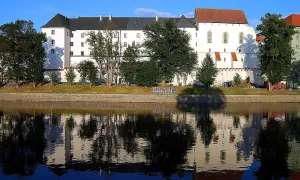
Thematic cruise route to the historic city centre of Písek
1. Historical Center of Písek - Type: Historical Square and street - Why is it worth a visit: Visitors can immerse themselves in the atmosphere of an antique city, walking past important Gothic and Renaissance buildings. The historical centre offers a beautiful architectural landscape composition with beautiful houses and churches that testify to the rich history of the city.
Synagoga v Písku - Type: Historical Synagogue - Why is it worth visiting: The synagogue is one of the oldest and best preserved Jewish prayer halls in the Czech Republic. It is a noble example of historical architecture, which carries traces of many generations of people and provides a deep insight into Jewish culture in the region.
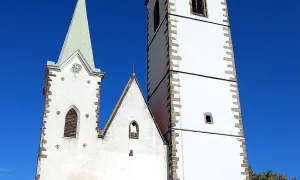
3. St. Peter and Pavla Church - Type: Gothic Basilica - Why is it worth visiting: This church is one of the most important sacral objects in the Sand. Its Gothic architectural features and rich history make it fascinating for visitors who are interested in the spiritual and cultural heritage of the city.
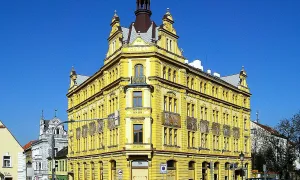
4. Old Town Square - Type: Historical Square - Why is it worth a visit: The square is the heart of the historical centre of Písek, where there are many cultural monuments. It's a place full of life and history where you can explore ancient buildings and enjoy peace in the atmosphere of past times.
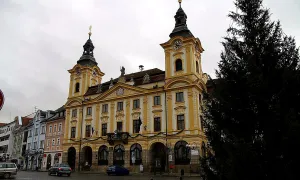
5. Town Hall - Type: Historical Town Hall - Why is it worth visiting: Town Hall is an icon of the city with its distinctive Gothic appearance and historical towers. It is not only an administrative centre, but also a cultural monument that attracts attention to its architecture and history.
This route offers visitors a comprehensive view of the historical and cultural wealth of the city of Písek, from its medieval streets to significant sacral and civic monuments.
Seasonal recommendations
Spring: In the spring season Synagoga v Písku is revived by mild sunlight, which joins the interior and emphasizes architectural beauty. Flowers begin to bloom around the courtyard, bringing to the atmosphere a warm and lively feeling of renewal. It is strange to visit the synagogue this season because fewer people visit the memory compared to winter time, which allows more intimate tours. We recommend arriving at the early noon or afternoon when the sun is at its highest level and illuminates the interior best. A good idea is to wear clothes suitable for a mild temperature, because it can be colder in the morning.
Summer: Summer brings long sunny days and high temperatures, making a visit to the Synagogue in Sand an ideal experience. The sun illuminates the interior in its most beautiful way and nature around the monument is full of life, with flowering trees and lawns. More visitors may appear this season, especially on Saturday or evening during the main summer season, so it is advisable to come early in the morning or later in the afternoon. Wearing light clothes and a sun helmet is important to avoid overheating.
Autumn: Autumn offers Synagogue in Sand in an atmosphere of golden and orange colors, when leaves of falling trees form beautiful floors around the monument. The sunlight is mild and warm, which creates a calm and beautiful atmosphere for the tour. This season, a smaller number of tourists may appear compared to the summer season, so it is advisable to visit the memory in any time during the day. We recommend wearing clothes at mild temperatures and perhaps an umbrella, because autumn weather can suddenly be variable.
Winter: The Winter Age brings a unique atmosphere in the Sand with cool air and silence that emphasizes its historical beauty. The sunlight is weaker, but it still joins the interior in a quiet and peaceful atmosphere. Visiting this season can be particularly interesting, because you will often meet fewer visitors, which allows for more peaceful tours. It is important to come in warm clothes and perhaps even with an umbrella or snow protection because winter weather can be very cold. The monument is usually opened for a shorter period of time, so make sure you read the current opening times.
Visualizations and artistic views


The visualisations are generated by artificial intelligence and serve as inspiration.
Photos from the area
Real photos taken near the monument


Zdroj a licence jsou uvedeny u každého snímku.
Tips from visitors
No tips yet. Be the first!
Log in and add your tip.
Sources and literature
Photos: Helcapas / CC BY-SA 3.0 — Wikimedia Commons. The author and licence also appear when you hover over the image.
Faktickým podkladem tohoto textu byl článek na Wikipedii, jehož autory jsou přispěvatelé Wikipedie. Článek je dostupný pod licencí CC BY-SA 4.0.
Location on the map
More monuments – Vnitřní Město
Show all in the municipality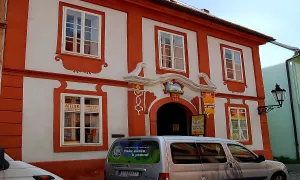
Příběhy a pověsti
Legendy, pověsti a příběhy spjaté s touto památkou

Fotografie návštěvníků
Zatím žádné fotografie. Buďte první, kdo přidá fotografii z návštěvy!
Log in a přidejte svou fotografii nebo hodnoťte.
Za ověřenou návštěvu v aplikaci získáte víc bodů — poznáme podle GPS, že jste na místě.
Reviews and comments