






Kostel Narození Panny Marie (Vnitřní Město) Church
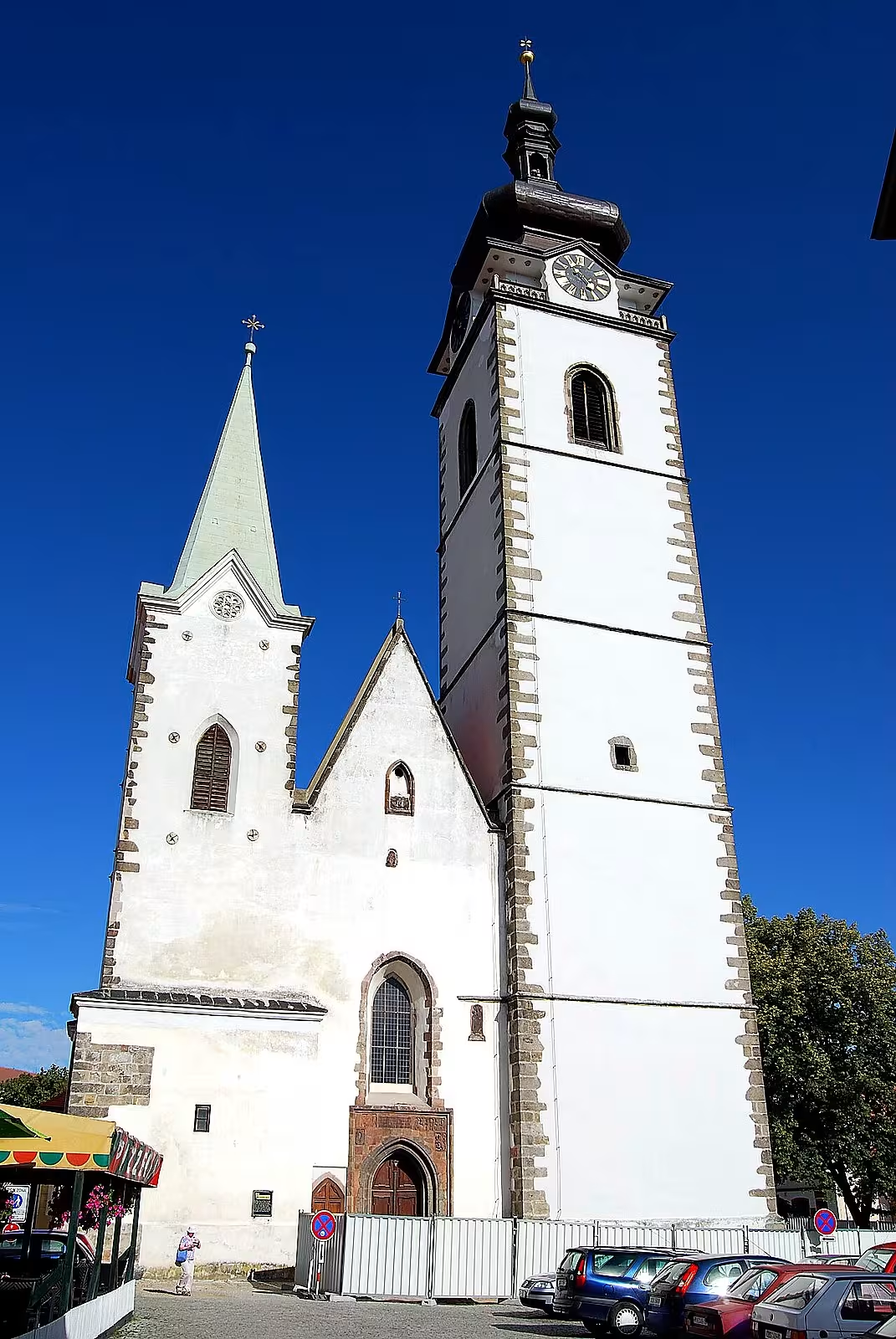
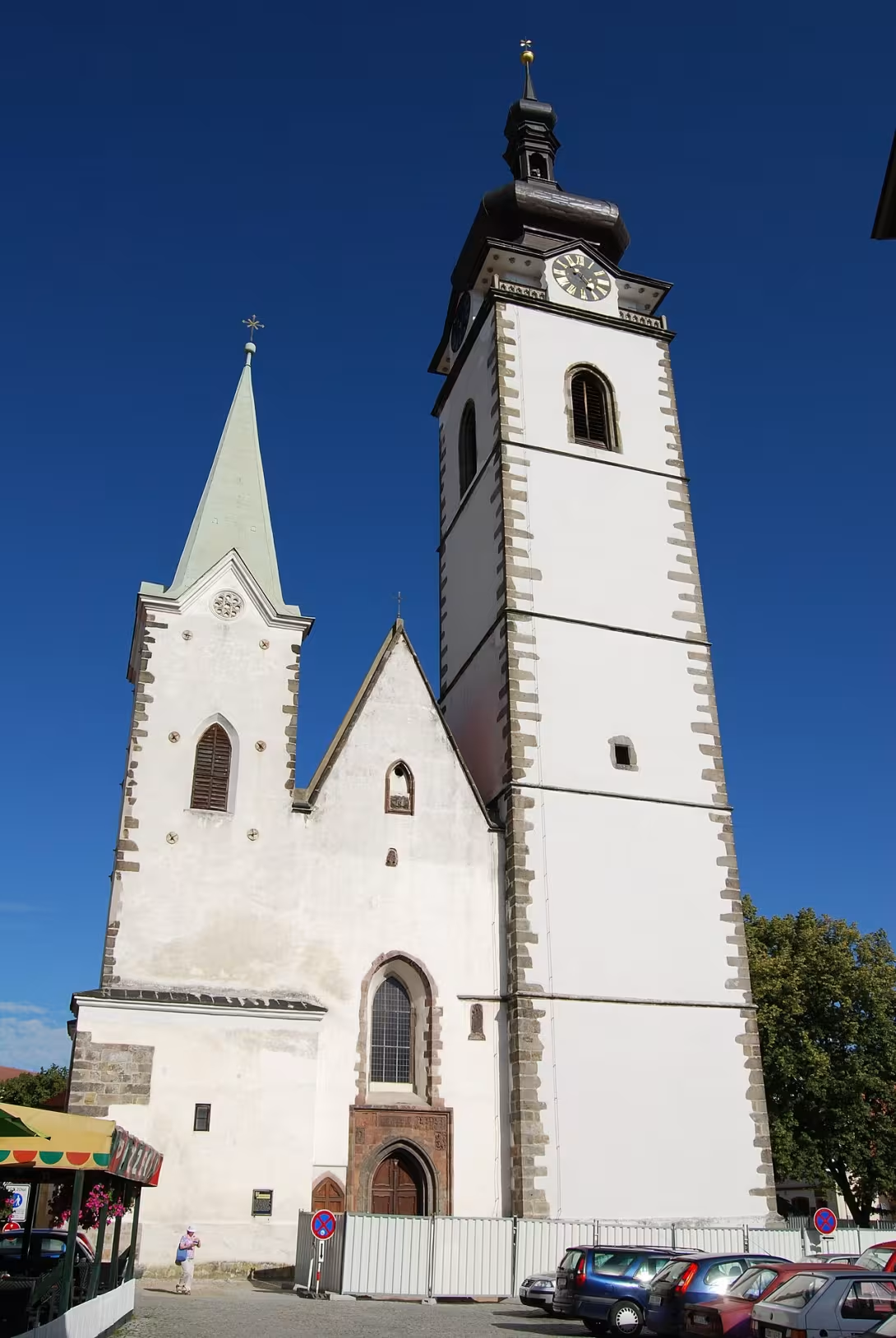
The Church of the Birth of the Virgin Mary in Sand is a proof of Gothic architectural fitness. This Roman Catholic basilica is located in the Inner Town in the South Bohemian region of the Czech Republic and is remarkable for its three-boat structure and the towering bell tower on the south side of the western facade, which has become a symbol of Sand.
The construction began with a presbytery in 1240, during the period when Gothic architecture flourished under King Přemysl Otakar II., which supported architectural development throughout his kingdom. The origin of basilica dates back to the beginning of the 13th century, initiated by building a presbytery. In the mid-14th century, significant developments included the addition of the Marian Chapel to the southern wall of the presbytery, indicating the period when religious and architectural expansion was intertwined.
The construction continued until the 14th century, culmination in completion around 1360. During this period he participated master builder Mikuláš Sícký, contributing to late Gothic modifications, including changes to the western facade and construction of the south tower.
In architecture, the church is a three-boat basilica with a boat, two alleys and a prominent bell tower. The exterior shows Gothic elements such as polygonal closure and buttens. The remarkable features include an entry portal from the middle of the 14th century decorated with reliefs depicting Nicholas Sandy and perhaps King Vladislaus II of Hungary and his son Louis II. The southern bell tower, reaching a height of 74 metres, is particularly remarkable, after having undergone a reconstruction after a lightning strike in 1555 which led to the addition of its large roof.
The interior uses a "tied construction system" where the length of the boat corresponds to two fields of alleys and arcades. This design interrupts a tower built in the western fields of the south alley. The presbytery is equipped with a cross-ribbed safe with a polygonal end, while the boat boasts a cross-ribbed safe supported by massive columns. The remarkable inner elements include images such as Madonna and Jesus, crowned by two angels from 1270, and frescoes such as crucifixion.
Throughout his history, the church saw various modifications, including neogotic reconstruction led by architect Josef Mocker. The northern facade was changed during the reconstruction of the tower in the 16th century, Renaissance shields were added above the northern portal. Despite these modifications, the north aisle remains less affected by the reconstructions that preserved most of the original structure.
The Church of the Birth of the Virgin Mary today stands as an important historical and architectural monument in the Sand. Its mix of gothic elements and subsequent adaptations for centuries reflects the region's rich cultural heritage. Visitors are invited to explore this basilica for its architectural beauty and historical significance, which offers a view of the past while standing proudly as the tallest building in the Sand.
Then and now
Drag the slider to compare how the landmark may have looked when it was built with the view today.

The historical appearance on the left is an AI-generated visualisation and serves as inspiration only.
Historical milestones
- 1240
- The beginning of the presbytery was given by the premeditated Otakara II.
- around 1300
- The proportional amount of the aid was booked in support of the 13th century.
- half of the 14th century
- Transmission of the Mariánské maple to the south wall of the presbytery.
- 1360
- Subsidy for the construction of the church with modifications of Nicholas Sand.
- 1555
- The restructuring of southern values after lightning strikes and front bulb machines.
Architectural development
Construction of the church began in the early 13th century with presbytery and continued to the 14th century. It is equipped with gothic architectural elements such as polygonal closure and buttress. Over time, it has undergone various modifications including the addition of the Marian Chapel and changes to its portals.
Historical events
The construction of the presbytery began around 1240 with the completion of the 1960s.
In the middle of the 14th century, the Mariánska Chapel was added to the south wall of the presbytery.
Points of interest
- The Church of the Birth of the Virgin Mary offers an entrance portal with reliefs, which may display Nicholas Sandy next to King Vladislaus II. Hungarian and his son Louis II. They highlight a mixture of local and royal influences in their design.
- The lightning shock in 1555 caused considerable damage to the southern bell tower, which led to its reconstruction and addition of a large roof, which since then has become one of the most distinctive features of the church.
- Part of the interior is the picture of Madonna from 1270, which makes it one of the oldest works of art within the church, which offers a view of early medieval religious art in the region.
- Architect Josef Mocker led during the late 19th century in the church of neo-gothic reconstruction, which introduced new stylistic elements while trying to preserve its historical integrity.
- Despite various modifications for centuries, the north aisle of basilica has remained relatively unaffected by renovation, allowing it to retain much of its original architectural character.
Guide
This guide is narrated by a synthetic voice generated by artificial intelligence.
Show guide text
This text was created by artificial intelligence and has not been editorially reviewed. It may contain inaccuracies.
Welcome to the Church of the Birth of the Virgin Mary in Sand, a charming three-boat basilica that stands as proof of the rich history of the city and the architectural heritage. As you stand here on the southern edge of the historical center, take a moment to absorb the size of this structure. Note how it blends smoothly with the urban landscape while at the same time leading the attention of its important bell tower, known as the Sandy Tower. This tower is not only an architectural feature but a symbol of the city itself.
The story of this church begins in the 13th century during the reign of King Přemysl Otakar II. Construction began with presbytery around 1240, which means the beginning of a major religious and cultural project that would last for decades. As you look at the church today, imagine its evolution in time: starting with a simple structure in the early 13th century, it has grown into a spectacular basilica that we now see in the middle of the 14th century.
Take a closer look at the entrance portal where the reliefs can display Nicholas Sandy next to King Vladislaus II. Hungarian and his son Louis II. These characters are not just decorative, they represent a mixture of local craft and royal influence that shaped the design church. As you explore further, notice how each element tells part of this historical story.
the church saw its share of the transformations, especially in 1360, when Mikuláš Sícký completed his construction with significant modifications. Another crucial moment occurred in 1555, when lightning damaged the south tower. The subsequent reconstruction not only corrected the damage, but also added a pebble roof, which gives us a view of the adaptive nature of historical architecture.
As you stand here, imagine the stories and events that appeared in these walls. From royal influences to natural disasters, everyone left their mark on this sacred space. Now, as you continue your research, let your curiosity guide you through every corner and tear of this historic place. Enjoy revealing more secrets and details that make the Church of the Birth of the Virgin Mary a truly remarkable place.
Thank you for joining us on this journey through time and architecture. We hope that this experience has enriched your understanding and appreciation of Sand's historical treasures. Safe travels as you continue your research!
Tips for visitors
The best time to visit the Church of the Birth of the Virgin Mary is at the end of spring or early autumn, when the weather is pleasant for exploring the historical centre of Píska. These seasons offer comfortable temperatures and fewer crowds, allowing you to fully appreciate the architecture of the church and its surroundings without summer heat or winter cold. In addition, a visit outside the top tourist season can provide a calmer experience.
The area around the city is accessible both by car and public transport. For those who prefer public transport, Písek has a network of buses that connect to different parts of the city, including the City of Home.
When visiting the Church of the Virgin Mary, it is recommended to bring comfortable walking shoes as you will probably explore more than just the church itself. The historical centre and its surroundings offer many to see on foot. In addition, a camera or smartphone for photography is necessary, especially if you are interested in capturing the architectural beauty of the church and its iconic belfry. Don't forget to take water and maybe even a hat or sunscreen during warmer months.
Photographing enthusiasts will find several places around the Church of the Birth of the Virgin Mary which offer stunning views, especially during the golden hour of the early morning or late afternoon when light is soft and warm. The bell tower provides an excellent view to capture the church and its surroundings. A survey of the area on foot may also reveal unique angles and perspectives, especially in quieter streets near the former cemetery.
For families with children who visit this historic place, there are several nearby attractions within a 30-minute walk that can make your trip more fun. The historical centre of Sand itself is full of narrow paved streets, charming shops and cafés, where you can relax during the survey. In addition, the proximity of the area to other historical buildings and monuments offers educational opportunities for children interested in history or architecture.
Near attractions within a 30-minute walk include the former cemetery moved in 1549, which now serves as a green space offering a look into the Písek past. This area provides an opportunity for a peaceful walk while learning about local history. The proximity to other historical buildings and monuments around the Interior Town also allows visitors to immerse themselves in the rich cultural heritage of the region, making it a valuable reconnaissance after visiting the church.
Frequently asked questions
Can the monument be visited?
Religious buildings are usually open mainly during services; at other times a visit is normally arranged with the parish or the operator. We have not verified specific times.
Where is the monument?
Location: Bakaláře, Vnitřní Město, Písek, Jihočeský kraj. The map on this page shows the exact spot.
Why is the monument protected?
It is listed in the Central List of Cultural Monuments of the Czech Republic as a cultural monument (register no. 26525/3-2422).
Businesses nearby
Do you run a restaurant, accommodation, shop, museum, rental, wellness or other visitor service near this monument? Show yourself directly to the people heading to it — this is how they will see you in the app and on the web:
Nearby
the church is located near the historical centre of Písek, surrounded by other historical buildings and monuments. The area includes the former cemetery moved in 1549.
Accommodation nearby
Themed route
Thematic walking tour: Historical Heart of Rural Town
1. Demanding Virgin Mary Church (Church) Start your journey in the heart of the Inner Cities with the National Church of the Virgin Mary, an amazing example of Gothic architecture, which stands as a spiritual beacon since its construction in the 14th century. Its complex design and historical importance make it a mandatory visit for anyone interested in religious history or architectural beauty.
2. Former cemetery (Historical landmark) A short walk from the church, explore the area where the former cemetery once stood before the move in 1549. This site provides insight into the medieval past of the city and its developing urban landscape. It is an astonishing reminder of how historical changes have shaped the community for centuries.
3. Historical Surration Centre (City Survey) Walk through the historic centre surrounding the Church of the Virgin Mary, where you will find charming paved streets lined with buildings that whisper stories from different times. This area offers a view of the daily life of past residents and shows architectural developments in the Inner Town.
4. Near the historical building (Architectural tour) As you continue your research, take the nearby historical buildings that complement the church of grandeur. These structures contribute to the rich tapestry of the inner city heritage and offer a deeper understanding of its cultural heritage. Each building tells a unique story through its design and purpose in time.
5. Church of the Tanks (courtyard) Finish your tour of the church's courtyard where you can think about the daily journey in the middle of a quiet environment. This courtyard provides an intimate space to appreciate the church in a wider context, surrounded by its historic neighbours and echoes of history that resonate through the Inner City.
This thematic route offers a comprehensive survey of the historical core of the Interior City, focused on architectural treasures and cultural stories.
Seasonal recommendations
Spring: The wall of the Church of the Virgin Mary in the spring possible acquisition of its own experience, when the green vegetarian around the enchanted melt and the sun rays of the muscled stone facade. This time of year is ideal for photographing the doses of added quantity, which has the colour of the bushes and trees around it. The association of companies having a market share in relation to the company benefiting from the sale. It is recommended that to a cold place and remote but also adjacent sunny frame or cap for sun protection.
The sunny Denominated Change includes the architecture of the beauty of the church, but it can also be intense, which is locked, that it is married to wear a wound or late evening to avoid peak temperature and crowd. The round on the corner should be light, considering the range of the sun such as wide hats and long sleeves. The maintained hydration is germ, so bring some water.
Autumn: Autumn offers a one-way atmosphere of the Church of the Virgin Mary with cold but bright days and golden leaves covering the way. This season is an ideal for those who influence that with fewer tourists is not in the summer period to be determined. The sunny city is warm and pleasant, like the lighting of the bone architecture in individual colors. The inclusion should be carried out by a warm notification for cold evenings and may also be rainy for the aid concerned.
Winter: Winter value Church of the Virgin Mary offered a quiet, quiet atmosphere with a time ratio to be historic. Sunshine days are bound, but when they cross, they can provide a breathtaking contrast between the white dream and the black and white building materials of the church. The opening times shall be calculated by achieving the proportional share shown in the table. It should be adapted in such a way that with these shirts and for snow or rain. This season is also ideal for those that have an effect on increasing numbers without crowds, allowing intensive products and reflection.
Visualizations and artistic views


The visualisations are generated by artificial intelligence and serve as inspiration.
Photos from the area
Real photos taken near the monument


Zdroj a licence jsou uvedeny u každého snímku.
Tips from visitors
No tips yet. Be the first!
Log in and add your tip.
Sources and literature
Photos: Chmee2 / CC BY-SA 3.0 — Wikimedia Commons. The author and licence also appear when you hover over the image.
Faktickým podkladem tohoto textu byl článek na Wikipedii, jehož autory jsou přispěvatelé Wikipedie. Článek je dostupný pod licencí CC BY-SA 4.0.
Location on the map
More monuments – Vnitřní Město
Show all in the municipality
Příběhy a pověsti
Legendy, pověsti a příběhy spjaté s touto památkou
Fotografie návštěvníků
Zatím žádné fotografie. Buďte první, kdo přidá fotografii z návštěvy!
Log in a přidejte svou fotografii nebo hodnoťte.
Za ověřenou návštěvu v aplikaci získáte víc bodů — poznáme podle GPS, že jste na místě.
Reviews and comments