






Dům čp. 217 House
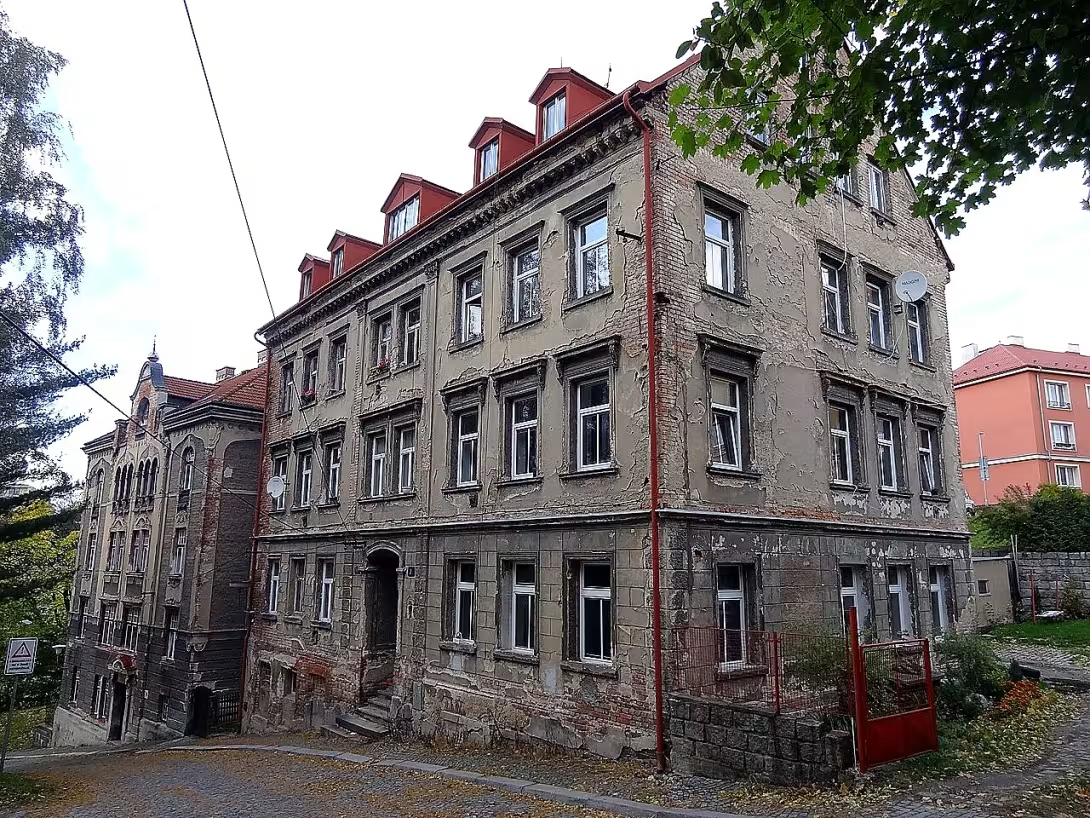
Dům čp. 217 on Dolní street in Štramberk (Nové Jicin district) is a remarkable historical monument built at the end of the 18th century. This grafted building was registered in the Central List of Cultural Monuments of the Czech Republic before 1988 and is part of the town conservation. The building represents a rare example of the original suburban development, which makes it an attractive destination for historically inquisitive tourists.
The history of Štramberka is rich and complex. According to the urbarian from 1558, 22 houses were originally built in the square with wooden flooring, which had a beech law, and seven settlements in the suburbs. There was a brewery in the middle of the square. In 1614 there are 28 farms, farms, church, school and behind the walls of 19 houses. In 1656, 53 houses were listed for the reign of Jesuits. The first brick house No. 10 was built on the square in 1799. In 1855, Štramberk caught a fire, burning down 40 houses and two barns. In the 1930s, twelve wooden houses stood near the square. The original grafted house No. 217, built at the end of the 18th century, is a typical sample of the then suburban development.
Architecturally, it is a ground-floor grafted building with a rectangular plan, oriented by the shield side to the street. The layout is three-piece and includes a hall, a scar and a chamber. The construction is built from carved balls and stands on a plaster stone suspect that equalizes the slope inequality of the terrain. During the reconstruction at the end of the 20th century, a significant number of original wood elements were exchanged. The shield facade is two-axis with wall-to-wall windows. The triangular shield is vertically boarded, equipped with a pair of windows, a cabin at the top and a broken heel. The wall of the inner furnace is embedded in the right gutter wall and the entrance is located in the left gutter side. The roof of the house is saddle.
Although specific owners or administrators are not known, House No. 217 is a key element of local history and architecture. Its conservation and restoration underscore the importance of the original buildings for the development of the city.
Today, the building is part of the city monument reservation, which makes it not only a historical unique place, but also an attractive place for visitors to Štramberka. Authentic architecture and location in the monument zone attract especially lovers of history and building art.
Dům čp. 217 is not only a witness to the city's rich past, but also a reminder of the importance of preserving cultural heritage. Visiting this place offers a unique view of history and allows you to enjoy the beauty of historical architecture. He deserves to be examined by anyone who finds himself in Štramberk.
Historical milestones
- End of the 18th Century
- Graphic building of house No. 217
- before 1988
- Registration of the building into the Central List of Cultural Monuments of the Czech Republic
- End of the 20th Century
- Reconstruction of the house and replacement of original wood elements
Architectural development
The building is grafted from a coiled ball and stands on a stone suspect. At the end of the 20th century, a reconstruction took place in which more of the original wood elements were replaced.
Points of interest
- This grafted building was built in the late 18th century. - It is registered in the Central List of Cultural Monuments of the Czech Republic before 1988. The building represents a rare example of the original suburban development. - The layout is three-piece and includes a hall, a scar and a chamber. - The construction is built from carved balls and stands on plaster stone suspect.
Guide
Show guide text
This text was created by artificial intelligence and has not been editorially reviewed. It may contain inaccuracies.
Welcome to Štramberk. You just stopped by one of those places that makes up the real soul of this historic city. In front of your eyes is house number two hundred and seventeen. If you look at it as a whole, you'll probably immediately feel the peace and authenticity that we find so hard to find in modern, sharp buildings. This grafted building right in front of you is not just an ordinary home. It is a rare witness to history that allows us to look into the time when Štramberk has only just formed into the form that we love today. Feel the atmosphere of a place where human work meets, natural materials and relentless time.
Let us now return together deep into the past. To understand the meaning of this house, we have to move on to the end of the eighteenth century. That's when this house came into being. At that time, Štramberk was not as heavily built as you know it today. This object represents a rare and very valuable example of the original suburban development. Imagine at that time you were on the outskirts of the city, in a place where urban civilization was confronted with nature and rural environment. Life here had a different rhythm, more closely linked to the rhythm of agriculture and craft. This house was built as part of this marginal development, which today forms an invaluable fragment of the old world.
Now pay attention to what you see right below you and around the foundation of the building. Notice the stone suspect on which the whole house stands. It is a fascinating detail, which is not just an aesthetic matter, but a thorough solution to the practical problem. Štramberk is a city that has to deal with the difficult, sloping terrain. In order to build houses on uneven ground, people had to use a stone base that balanced the slope inequality of the terrain. This plastered stone foundation gives the house stability while giving it the right, firm look. It is proof of the wisdom of the then builders who have been able to use local materials to resist the weather and the gravity of the terrain for centuries.
If you look at the walls themselves, you will see the true beauty of traditional construction. The house is grafted, which means that its structure is made up of wooden tribes or beams that are stuck together. This method of construction was typical for our country and gives the building its unique texture and warmth. Although we know that the house was renovated at the end of the twentieth century when some original wood elements were exchanged, its essence remained. Thanks to this care we can now monitor the harmony between stone and wood, which is so characteristic of this type of architecture. The whole object is part of the city conservation, which means that its appearance is protected and ensures that any change corresponds to its historical value.
If you could now magically teleport inside, you would find that life in this house was organized very logically and practically. The layout of the house is three-piece, which was the standard for better suburban houses at the time. The first space you would meet is the hall. It served as the entrance and communication hub of the whole house. The ride followed, which is the main living room, the heart of the home, where everyday life took place, where it was cooked, eaten and where the family was meeting by the fireplace. The last part is the chamber, space designed to store supplies, tools or other things needed to survive. This three spaces - the hall, the ride and the chamber - creates a functional whole that was ideal for the then needs.
It's fascinating to think about the people who lived here. Although the names of the particular inhabitants or architects themselves who designed this house have disappeared from history, we see their presence in every detail of this building. We don't know their faces, we don't know their voices, but their efforts, their efforts to build a solid and dignified home for their family, they smell in every piece and every stone block. They are unknown personalities, but they remain part of our heritage through this house. It is this anonymity that gives the place some mystery and depth.
We can also take into account how incredible it is that this house has survived for so long. It's a real mystery how it managed to preserve such an authentic example of suburban development at a time when the world around it changed so dramatically. It is important to note that this building was registered in the Central List of Cultural Monuments of the Czech Republic before 1988. This means that long before the preservation of monuments began to be spoken of as intensely as today, people perceived the value of this house and understood that we had to protect it for future generations. This early protection was crucial for the fact that it can become so close to you today and that you can view it in its original beauty.
Now that you know the story of house number two hundred and seventeen, I suggest you continue along these historic alleys. Štramberk offers endless details, each building has its own speech and its own hidden story. Don't forget to stop by other buildings, notice the details of the plaster, the shape of the windows and the way the city has adapted to its rugged terrain. Every step can lead you to a new discovery. Thank you for stopping by this very house and paying attention to its history. I wish you a beautiful and inspiring walk through this historic shredder.
Tips for visitors
For the best experience we recommend visiting outside the main summer season, for example in spring or autumn. In these times, the atmosphere is quieter in the historical environment and light is ideal for capturing the details of the old architecture.
You can reach Štramberk by car and public transport; We recommend checking the current connection and parking possibilities in the area. Comfortable shoes are necessary to move in the historical area and we recommend taking water with us.
When shooting, focus on detailed textures of the grafted structure. The best results are obtained in the morning or late afternoon hours, when the sun rays best highlight historical elements of the house.
As part of your visit, you can also visit the wider City Monument Reservation Štramberk. For families with children, it is ideal to take a slow walk through the historic streets to bring their lives closer to the past.
Businesses nearby
Do you run a restaurant, accommodation, shop, museum, rental, wellness or other visitor service near this monument? Show yourself directly to the people heading to it — this is how they will see you in the app and on the web:
Nearby
City Monument Reservation Štramberk
Accommodation nearby
Themed route
Thematic cruise route - City Monument Reservation Štramberk
1.Dům čp. 217 - Type: Historical residential houses - Why is it worth a visit: This house is a representative of architecture from when Štramberk prospered as a iron and metal center. Its construction reflects historical living conditions and artistic value of the region.
2. Strasbourg Water Plant - Type: Technical monument - Why is it worth a visit: Water plant is a key element of Štramberk, which was previously known for its iron production. It is an impressive technical monument that illustrates the history of water use for metallurgy and industrial activity.
3. Strasbourg City Hall - Type: Historical administrative object - Why is it worth visiting: Town Hall is not only a centre of local administration, but also an architectural pearl with a rich history. Its decoration and construction reflect the spiritual and political changes Štramberk experienced over centuries.
4. Strasbourg Square - Type: Historical Center The square is the heart of a city where history and the present meet. It is a place full of life that offers a view of other monuments and comments of the past Štramberka.
5. St Gilji's Church of Strasbourg - Type: Religious monument - Why is it worth visiting: The church is not only a spiritual centre, but also an architectural pearl with a rich history. Its decoration and location offer a view of Štramberk from a higher angle.
This route offers travelers a comprehensive view of the history and culture of Štramberka, each point being an important part of its monument reservation.
Seasonal recommendations
Spring: In spring, Štramberk awakens into life and the surrounding slopes turn green. The lighting is very fine during this period, which highlights the details of the historical facade of the house. It is ideal to choose the morning hours when the air is still fresh and the visitors are still few. We recommend you take light but practical clothes that prepare you for the variable spring weather.
Summer: The summer months bring to the town the greatest burden of people and a lively, warm atmosphere. The sun hits the roofs at a sharp angle, so it is best to come right after opening to avoid the biggest crowds and midday heat. Don't forget the protective caps and plenty of fluids. The shady streets Štramberka provide a pleasant hiding place during the hottest days.
Autumn: Autumn in this city works magically thanks to morning fog and golden shades of leaves on the surrounding hills. The light is low in this period and creates deep shadows on historical walls, which gives the memory a Tajemeni touch. It is advisable to prepare for cooler winds and choose layering clothes. Autumn walks are the best in the afternoon when the colors most excel.
Winter: Winter brings peace and quiet to Štramberka, especially if the city covers snow. The atmosphere is very cozy in advent time, but the days are short and the light quickly disappears. Due to lower temperatures, it is necessary to wear very warm clothes and tight shoes for walking down slippery alleys. Plan a visit in clear morning to make maximum use of the remaining daylight.
Visualizations and artistic views


The visualisations are generated by artificial intelligence and serve as inspiration.
Photos from the area
Real photos taken near the monument


Zdroj a licence jsou uvedeny u každého snímku.
Tips from visitors
No tips yet. Be the first!
Log in and add your tip.
Sources and literature
Faktickým podkladem tohoto textu byl článek na Wikipedii, jehož autory jsou přispěvatelé Wikipedie. Článek je dostupný pod licencí CC BY-SA 4.0.
Location on the map
More monuments – Štramberk
Show all in the municipality
Příběhy a pověsti
Legendy, pověsti a příběhy spjaté s touto památkou
Fotografie návštěvníků
Zatím žádné fotografie. Buďte první, kdo přidá fotografii z návštěvy!
Přihlaste se a přidejte svou fotografii nebo hodnoťte.
Za ověřenou návštěvu v aplikaci získáte víc bodů — poznáme podle GPS, že jste na místě.
Reviews and comments