






Dům čp. 266 House
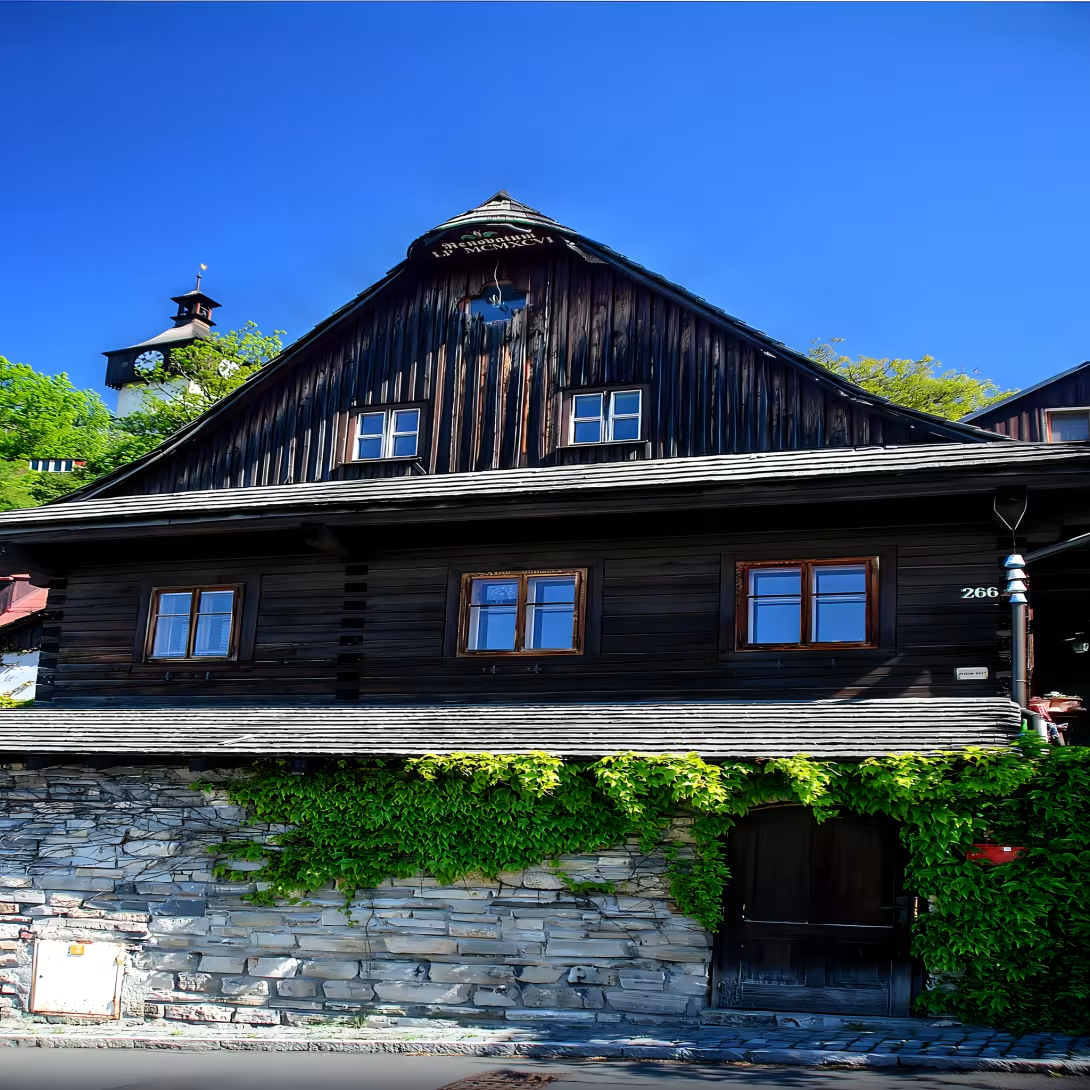
House No. 266 is a traditional log dwelling on Dolní Bašta Street in Štramberk, serving as a prime example of the town's original suburban development. Constructed at the end of the 18th century, it features a characteristic three-part layout and sits on a high stone base to accommodate the sloping terrain.
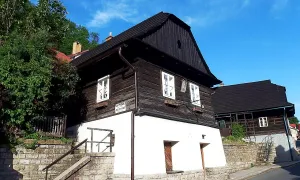
While dating back to the late 18th century, its original wooden frame was replaced during a major reconstruction in 1996. This single-story building consists of roughly hewn logs on a rectangular plan, resting on a high plastered stone foundation and topped with a shingle-covered saddle roof with a western dormer.
The triangular gable is vertically boarded with three windows and topped by a decorative finial, with the renovation date inscribed on the closing board. The rear ground floor is made of masonry, blending traditional timber techniques with modern materials.
This monument is a rare surviving example of the town's early suburban residential architecture, offering a glimpse into the region's stylistic transition from late Baroque to Classicism. Its well-preserved state and historical value make it a vital part of Štramberk's urban monument reservation.
Today, House No. 266 remains a significant cultural monument in the Czech Republic, open to visitors wishing to appreciate its unique design and rich history. Situated within Štramberk's urban monument reservation between Horní and Dolní Bašta streets, the residence is a must-visit for those exploring the region's building traditions.
Historical milestones
- 1750
- Construction of the house begins at the end of the 18th century
- 1996
- Major reconstruction replaces the original wooden frame
Architectural development
The building is a single-story log structure made of roughly hewn logs on a rectangular plan. It is built on a high plastered stone base and features a shingle-covered saddle roof with a western dormer. While the main structure is wooden, the rear part of the ground floor is constructed from masonry.
Historical events
The house was constructed at the end of the 18th century. In 1996, it underwent a significant reconstruction.
Points of interest
– This traditional log dwelling is a prime example of Štramberk's original suburban development.
– The house was constructed at the end of the 18th century and features a characteristic three-part layout.
– Its original wooden frame was replaced during a major reconstruction in 1996.
– The monument is a rare surviving example of the town's early suburban residential architecture, offering a glimpse into the region's stylistic transition from late Baroque to Classicism.
Guide
Show guide text
This text was created by artificial intelligence and has not been editorially reviewed. It may contain inaccuracies.
Welcome. You stand before House No. 266, a traditional log house situated on Dolní Bašta street in Štramberk. Take a deep breath and let the scene settle around you. The building rises with a quiet dignity, its form rooted firmly in the late eighteenth century. You are not merely looking at a structure; you are standing within the urban monument reservation, a specially protected zone that safeguards the original suburban fabric of this historic town. The air here carries the weight of centuries, and the house before you is one of the quiet guardians of that legacy. Look closely at the facade and you will see a characteristic three-part layout, a rhythmic division that reveals the building traditions of the region. The house rests upon a high stone base, a solid foundation that anchors the wooden walls above. If you allow your eyes to travel across the surface, you will recognize the typical log construction that defines this type of dwelling, though you should know that much of the original framework was replaced during a major reconstruction in 1996. That intervention means what stands before you today is a careful blend of historic silhouette and modern restoration, a fact that adds a layer of intrigue to your visit and invites you to look beyond the surface.
Let us now step back in time and consider how this house came to be. It was constructed at the end of the eighteenth century, a period when Štramberk was gently expanding beyond its medieval core. This was the era of suburban development, when new residential buildings began to appear along the slopes and streets outside the old town walls. House No. 266 exemplifies that growth, serving as a prime example of how the town originally spread into its surroundings. It was not shaped by a famous architect; the records tell us the architects are unknown. Nor are there celebrated historical personalities linked to this specific address. Yet the absence of famous names does not diminish the story. Every log, every stone in the base, every division of the facade represents the everyday lives of ordinary citizens who shaped Štramberk’s suburban character. The house became part of the urban monument reservation and was registered as a cultural monument of the Czech Republic, ensuring that this quiet witness to centuries of change would be preserved for future generations. Its inclusion in the reservation means that the town recognizes the value of this modest building as a piece of living history, not merely an old house but a document of how communities grew and adapted.
Now, let us direct your attention to what you can see right now. The three-part layout is not merely an abstract plan drawn on paper; it is visible in the arrangement of the facade before you. You can discern how the structure is divided into three distinct sections, creating a balanced and harmonious proportion that feels both functional and orderly. The high stone base supports the wooden walls above, and you can appreciate the contrast between the solidity of the stone and the warmth of the timber. Because the original wooden frame was replaced in 1996, some of the surface details you observe may reflect later craftsmanship, yet the overall impression remains true to the late eighteenth-century model. The log construction technique, even if partially renewed, still conveys the texture and mass of a traditional dwelling. As you stand there, imagine the house in its original context, surrounded by the suburban development that once made this street a lively residential corridor. The building does not shout for attention; instead, it invites a quiet contemplation of how towns grow and adapt over time. Notice how the proportions relate to the street, how the stone base meets the ground, and how the three-part rhythm guides the eye along the facade. These are the details that reward a patient observer.
When it comes to stories and personalities, the records are strikingly silent. No famous figures are documented as residents or patrons of this house. But silence here is itself a kind of story. It reminds us that history is not only made by the prominent; it is woven into the daily routines of countless unnamed families who cooked, slept, and lived within these log walls. The house has watched over Dolní Bašta street for more than two centuries, surviving changes in ownership, shifts in taste, and the relentless passage of time. Its survival through the twentieth century and its careful reconstruction in 1996 speak to a community commitment to remembering its own past. While you cannot point to a specific historic event tied to this address, you can feel the continuity of suburban life that the building embodies. Think of the generations who passed through its doorway, the children who played nearby, the adults who worked and rested within. The house is a vessel of those unrecorded lives, and by standing before it, you become part of its ongoing story.
Here is an interesting fact worth holding onto as you continue your walk. House No. 266 is a traditional log dwelling that stands as a prime example of Štramberk’s original suburban development. That designation is not casual; it means the house helps define the historic character of the entire town. The three-part layout you see is a hallmark of the period’s residential architecture, a deliberate arrangement that optimized space and light within the constraints of the site. Yet there is a gentle mystery embedded in the 1996 reconstruction. Because the original wooden frame was replaced, visitors and scholars alike may wonder how much of the original material survives beneath the new surface. Is the soul of the house still present in the logs, or has the reconstruction created a faithful echo rather than a direct continuation? Such questions are what make preservation so fascinating. You are not just looking at a building; you are looking at layers of time, each one visible if you know where to look. The 1996 work may have renewed the structure, but it did so with the intention of honoring the original form, a tension between old and new that gives the house its unique presence on Dolní Bašta street.
As your visit here draws to a close, I invite you to carry this sense of quiet discovery with you. Štramberk holds many such hidden corners, each one a fragment of the town’s long narrative. From this spot on Dolní Bašta street, you have a vantage point not only on a single house but on the broader story of suburban growth and architectural continuity. Take a final look at the three-part facade, feel the solidity of the stone base, and let the atmosphere of the place settle in your memory. Whether you continue along the street or turn back toward the historic center, you now carry with you a deeper understanding of what this modest log house represents: resilience, adaptation, and the enduring human desire to build a home within a changing world. Thank you for sharing this moment with me. Until we meet again on your journey through history, stay curious and keep exploring.
Tips for visitors
The best time to visit House No. 266 is during the spring and autumn seasons, when the weather is mild and sunny. This allows you to fully appreciate the traditional log architecture of the house.
Parking is available on Dolní Bašta street, with ample space for cars. You can also reach the house using public transportation, such as buses that stop nearby.
When visiting, be sure to bring a camera to capture the charming atmosphere and unique architectural features of the house. Consider bringing a pair of comfortable shoes as well, as you'll want to explore the surrounding area.
For photography enthusiasts, the best spots are around the house itself, with its picturesque log façade and lush green surroundings. The morning sunlight is ideal for capturing stunning photos.
If you're looking for something to do nearby, consider visiting the urban monument reservation of Štramberk, which offers a glimpse into the town's rich history. This can be done within a 30-minute walk or by taking a short drive.
Businesses nearby
Do you run a restaurant, accommodation, shop, museum, rental, wellness or other visitor service near this monument? Show yourself directly to the people heading to it — this is how they will see you in the app and on the web:
Nearby
The house is situated within the urban monument reservation of Štramberk, positioned between the Horní and Dolní Bašta streets.
Accommodation nearby
Themed route
Štramberk Heritage Trail
The trail takes you on a journey through the charming town of Štramberk, with its rich history and cultural heritage. The main attraction is House čp. 266, a unique architectural gem that stands out in the urban monument reservation.
1. Horní Bašta Street: Start your journey at the picturesque Horní Bašta Street, lined with historic buildings and quaint shops. Take a stroll along the cobblestone road to get a feel for the town's charm. 2. Dolní Bašta Street: From Horní Bašta, head to Dolní Bašta Street, where you'll find more beautiful architecture and a lively atmosphere. Be sure to stop by the local cafes and bakeries to sample some traditional treats. 3. House čp. 266: The highlight of your journey is House čp. 266, an impressive example of traditional Moravian architecture. Take a moment to appreciate its unique design and history.
This trail offers a glimpse into Štramberk's rich cultural heritage, with its blend of historic buildings, charming streets, and local charm.
Seasonal recommendations
Spring
As spring arrives, the historic landmark of Dům čp. 266 (ostatní) in Štramberk transforms into a picturesque destination. The surrounding nature awakens from its winter slumber, with blooming flowers and lush greenery creating a vibrant atmosphere. Visitors can enjoy the warm sunshine and gentle breeze, making it an ideal time to explore the area.
Practical tips: Be prepared for moderate crowds during peak spring weekends. Wear comfortable shoes and layers for changing weather conditions. The best time to visit is from late March to early May, when the temperature is mild and the scenery is particularly stunning.
Summer
During the summer months, Štramberk's Dům čp. 266 (ostatní) comes alive with a lively atmosphere. The warm sunshine and long days create an ideal setting for outdoor activities. Visitors can enjoy strolling through the charming streets, taking in the sights and sounds of the season.
Practical tips: Plan your visit early in the morning or later in the evening to avoid peak tourist hours. Wear light clothing and comfortable shoes for a day of exploring. The best time to visit is from June to August, when the weather is warm and sunny.
Autumn
As autumn arrives, Štramberk's Dům čp. 266 (ostatní) takes on a cozy charm. The surrounding nature dons a kaleidoscope of colors, with leaves turning golden, crimson, and orange. Visitors can enjoy the crisp air and scenic views, making it an ideal time to relax and unwind.
Practical tips: Be prepared for cooler temperatures, with layers and warm clothing recommended. Wear comfortable shoes for exploring the area's scenic trails. The best time to visit is from September to November, when the autumn foliage is at its peak.
Winter
During the winter months, Štramberk's Dům čp. 266 (ostatní) takes on a serene beauty. The snow-covered landscape creates a peaceful atmosphere, perfect for a quiet getaway. Visitors can enjoy the festive lights and decorations, making it an ideal time to relax and recharge.
Practical tips: Plan your visit during weekdays or early mornings to avoid peak tourist hours. Wear warm clothing and comfortable shoes for exploring the area's winter wonderland. The best time to visit is from December to February, when the snow-covered landscape is at its most picturesque.
Visualizations and artistic views

The visualisations are generated by artificial intelligence and serve as inspiration.
Photos from the area
Real photos taken near the monument


Zdroj a licence jsou uvedeny u každého snímku.
Tips from visitors
No tips yet. Be the first!
Log in and add your tip.
Sources and literature
Fotografie: Kankovaa / CC BY-SA 4.0, rozlišení zvýšeno umělou inteligencí — Wikimedia Commons. The author and licence also appear when you hover over the image.
Faktickým podkladem tohoto textu byl článek na Wikipedii, jehož autory jsou přispěvatelé Wikipedie. Článek je dostupný pod licencí CC BY-SA 4.0.
Location on the map
More monuments – Štramberk
Show all in the municipality
Příběhy a pověsti
Legendy, pověsti a příběhy spjaté s touto památkou
Fotografie návštěvníků
Zatím žádné fotografie. Buďte první, kdo přidá fotografii z návštěvy!
Přihlaste se a přidejte svou fotografii nebo hodnoťte.
Za ověřenou návštěvu v aplikaci získáte víc bodů — poznáme podle GPS, že jste na místě.
Reviews and comments