






Dům čp. 31 (Město) House
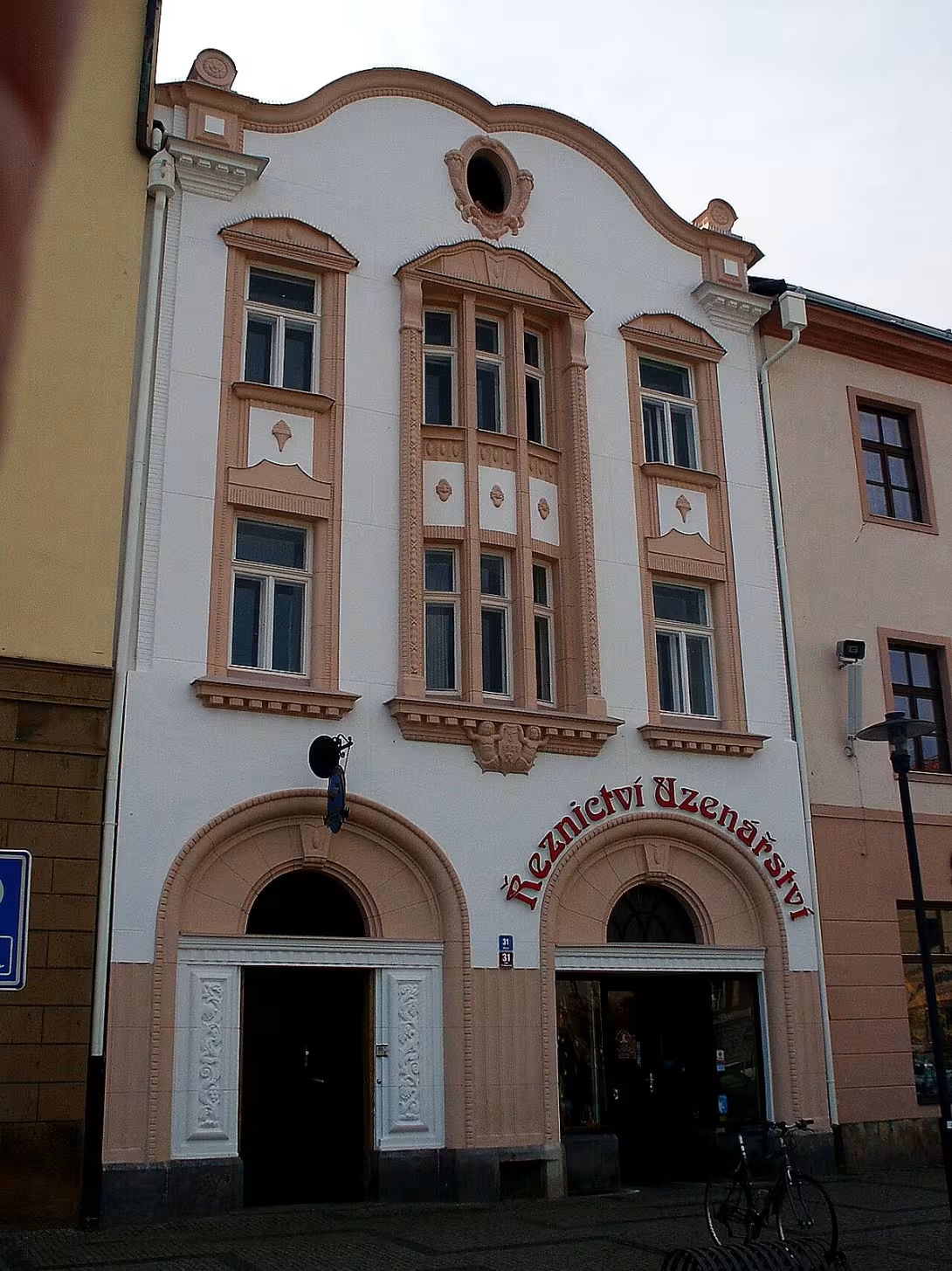
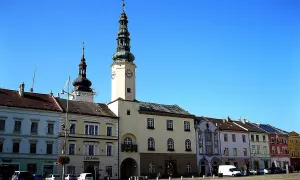
The townhouse No. 31 / 31 is a historical building in the southern front of T. G. Masaryk Square in Moravian Třebová. It originated from a stone in the 2nd half of the 13th century during the creation of the city and the development of urban construction in the last Přemyslovovice. Over the centuries, he has undergone many reconstructions and retained the elements of most of the styles. It contains late Gothic and Renaissance interiors and facade in a spirit of decorative art deco from 1921. Since 8 April 1964 it has been listed on the list of cultural monuments of the Czech Republic.
Construction developments were deeply influenced by the city's devastating fires in 1509 and 1541. After the first one, there was a late Gothic reconstruction. After the second fire, townspeople used the authorities' support for further adjustments.
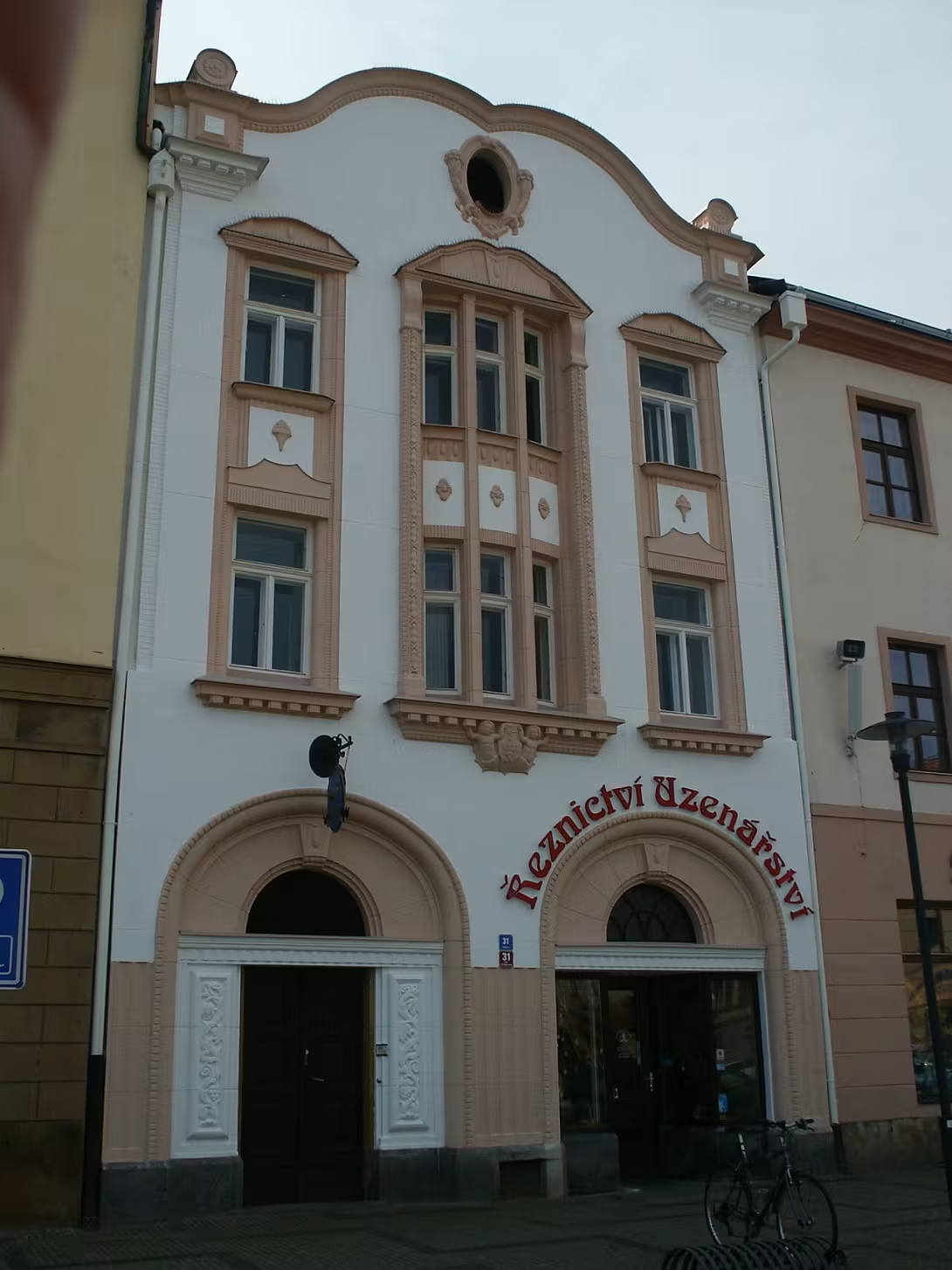
The architectural form is based on mixed masonry and stone foundation. The building turns into the square with three window axes in a two-story facade. In the middle there is a slightly segmented bay, whose three-part combined windows connect vertical ribs carrying a wavy front. Side windows close flat frontons. On the ground floor there are two receding oval arches with inner semi-circular arches and embossed frames. In the left portal there are carved doors from the facade. Under the windows on the first floor, there are massive parapets on the consoles. The entire facade is closed by a segmentalized atician shield. The yard facade is shield, has three window axes and a light plaster. The yard closes a high wall with doors facing the Church Square. The roof of the building is saddled, covered with eternity and sheet metal.
The interior hides a number of valuable historical elements. The house is under the roof of the vaults. The entrance from the entrance hall and directly from the square led to the front cellar. In the right part of the ground floor there is an entrance mázhauz with a cross vault with ribs and a inscription plate from 1554. It carries a boskovice coat of arms and an ancient philosophical inscription about the history of the world. In the left part of the ground floor there used to be a chamber and an economic space. In the middle there was a black cooking kitchen on an open fire, behind which was a back chamber with windows to the yard. Top mazhauz with star pattern of crest vaults was created on the floor after the fire in 1541. They resemble the painted draperies pulled against the wall by a double sickle-like carving. The contemporary appearance of the facade in the style of decorative art deco dates back to 1921. The number is located under the central windows and the author of the design was Oskar Czep.
The important milestone in the history of the house was 1820 when Karl Giskra was born in it. In 1848, this later politician was elected to the Reich Parliament as Moravian-Tribune. Another breaking date became April 8, 1964, when the building was officially declared a cultural monument.
Today this construction represents a valuable example of historical construction in Moravian Třebová. It combines traces of medieval foundation, Renaissance adjustments and interwar modernization. It offers a unique opportunity to see preserved Gothic vaults, Renaissance portals and architectural details of art deco right in the historic heart of the city.
Then and now
Drag the slider to compare how the landmark may have looked when it was built with the view today.
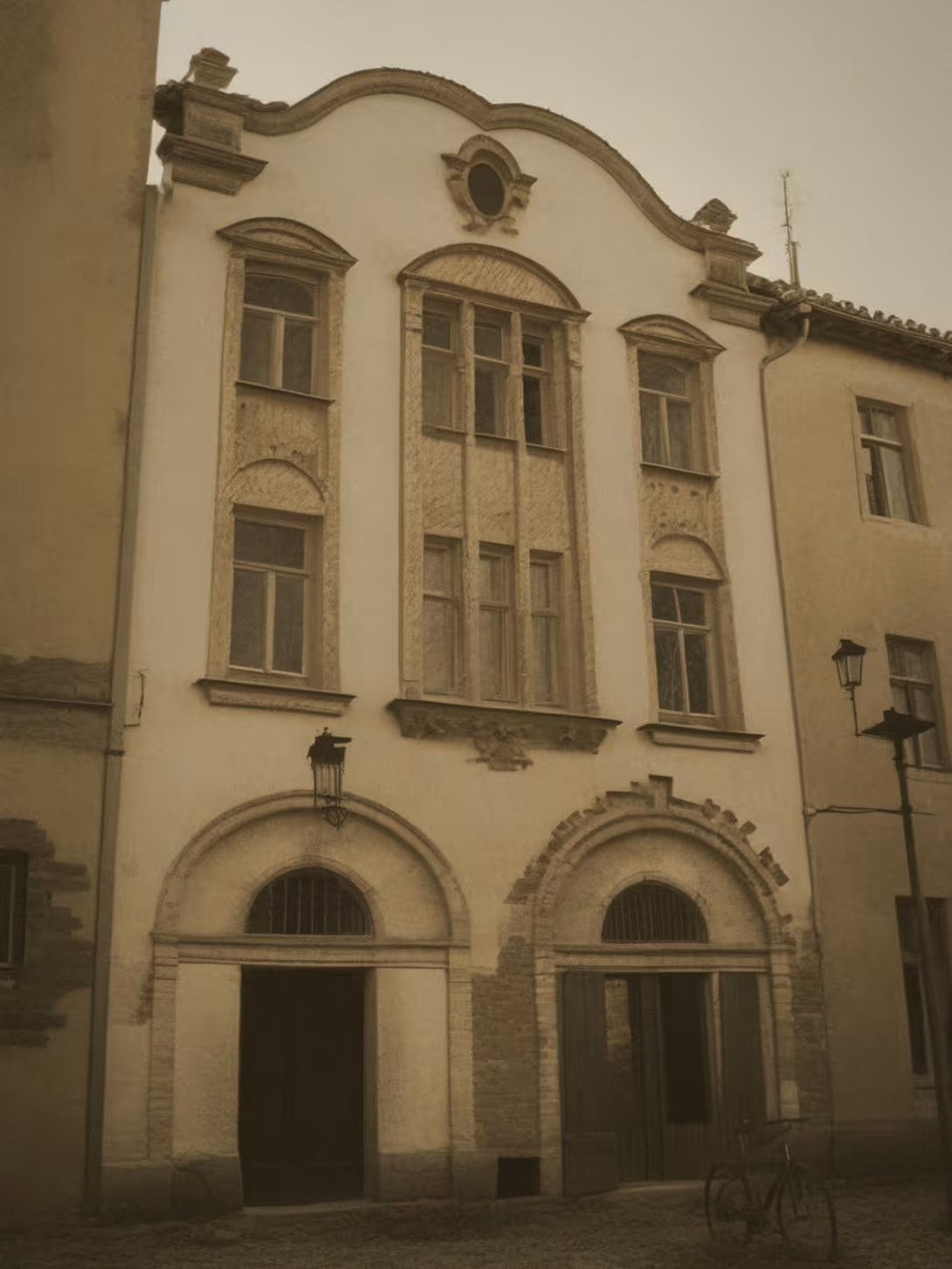
The historical appearance on the left is an AI-generated visualisation and serves as inspiration only.
Historical milestones
- 1509
- City fire and subsequent late Gothic rebuilding.
- 1541
- Another fire of the city after which the upper mazhauz and the portal with the year 1554.
- 1820
- The birth of Karl Giskra's politician in the house.
- 1964
- Registration of the house on the list of cultural monuments of the Czech Republic.
Architectural development
The house was built from mixed masonry and stone in the second half of the 13th century. After the fire in 1509, he received a late Gothic mazhauz with a cross arch and after the fire in 1541, the upper mazhauz with an asterisk vault and a portal were created. Later construction arrangements included the construction of decorative facade in art deco style in 1921.
Historical events
Between 1509 and 1541, the city and the house were hit by fires followed by significant Gothic and Renaissance reconstruction. In 1820 an important politician Karl Giskra was born in the house. In 1921 the facade was rebuilt in the spirit of art deco according to the design of Oscar Czep.
Points of interest
- The house was made of stone in the second half of the 13th century during the creation of the city and the development of urban construction during the last Přemyslovovice. - The building development of the building was deeply influenced by the city's devastating fires in 1509 and 1541. - In the right part of the ground floor there is an entrance mázhauz with a cross vault and a walled-up inscription plate from 1554, which carries a boskovic coat of arms and a philosophical inscription about the history of the world. - In 1820 a later politician Karl Giskra was born in the house, who was elected to the Reich Parliament in 1848. - Since April 8, 1964 the building has been registered on the list of cultural monuments of the Czech Republic.
Guide
Show guide text
This text was created by artificial intelligence and has not been editorially reviewed. It may contain inaccuracies.
Welcome to Moravian Trebova, where history meets the present in every stone. Please stop for a moment and focus fully on the building you're standing in front of. You are in the southern front of T. G. Masaryk Square and your attention is now on the townhouse with the number 31. The first impression of this object may be an impression of stability and endurance. Take a look at its overall silhouette and perceive the atmosphere of this place, which will immediately carry you back hundreds of years. This house is not just an ordinary building of stone and mortar, it is a silent witness to the transformation of the entire city, which carries layers of different epoch and stories.
Let us now return together in time, to the very beginning. Imagine the time when Moravská Trebová was just being founded, i.e. the second half of the 13th century. It was during this period, in the last representatives of the Přemyslíková dynasty, that this house was created. At that time, urban construction was on the rise and the fact that this building was built from stone shows the importance of its original owners and the ambition with which the city grew. The stone building was at that time a symbol of wealth, security and endurance. When you look at the walls of this house today, remember that its foundations commemorate the first inhabitants of this city and the first steps that were taken on this square more than seven styles ago.
But the history of this house wasn't just about peaceful growth. Life in those cities was full of danger, and the biggest threat was fire. The building development of house number 31 was deeply influenced by two devastating fires that hit the city in 1509 and 1541. Imagine the chaos, the dust and the smoke he had to tie up in those streets at the time. But it was from these ashes that the house was born again, and it absorbed new architectural trends into itself. After the first big fire in 1509, a late Gothic reconstruction followed. The goth with its specific shapes and spiritual depth left its mark in the house, which remained in it even after further changes came.
Now pay attention to details that you can observe directly in front of you. Although the house has changed many times over the centuries, in its structure the elements of most of the styles that dominated our landscapes have been preserved. Look at the facade. The current form of the facade is the result of the work of architect Oscar Czep, who printed her style of decorative character. Notice how the facade works and how it complements the overall face of the square. It is an elegant ending to the long journey that the house has traveled from its rugged stone form in the thirteenth century to today.
Although you are now outside, allow me to take you for a brief picture of the inner space that the house is hiding inside. The interior is a real treasure for every history lover. Home hides valuable arched spaces that are silent witnesses to the craftsmanship of past generations. One of the most important elements is mazhauz, the entrance hall, which served as a connecting element between the public area of the street and the privacy of the house. There are even two mazhauses in this house, one late Gothic and one Renaissance. If you could look at the right side of the ground floor, you would see this very entrance space with a beautiful cross vault. It's where time stopped.
Speaking of renaissance, we must not forget 1541 and the recovery after the second big fire. It was at this time that the upper mazhauz and the very important detail that is recorded in the house's background was created, namely the portal with the year 1554. This year is engraved in stone and reminds us of a period of bloom when confidence returned to the city and the house gained its new, representative face. The portal was not just an entrance to the house, it was a statement about the status and taste of the family that lived here.
House number 31, however, is not only about stones and architectural styles, but above all about the people who left their mark. Karel Giskra was one of the prominent figures associated with this place. It was here that he was born in 1820, when the house was no longer a novelty but a respected part of urban tissue. Imagine young Karl growing up in an environment filled with history, a house that had already survived for hundreds of years and several disasters. It is fascinating to think that the walls you are standing on have heard the first cry and the first steps of a man who later influenced the political events of his time.
Perhaps you are now interested in one interesting thing that makes this house something more than a memory. It's his incredible ability to adapt. Most of the 13th century buildings in our cities either died or were completely wiped off the face of the earth. But House 31 managed to survive everything. From the founding of the city in the last Přemyslívov, to the devastating fires of the 16th century, to the birth of prominent personalities, to the modern era. It's the stone archive of Moravian Třebová. Each layer of plaster, every arch of the vault and every detail of the facade tells a different chapter in the history of this region.
This value was officially recognised in 1964 when the house was listed as cultural monuments of the Czech Republic. That means the state has acknowledged that this object is an irreplaceable part of our national heritage. When you look at it now, you see not only an old house, but a protected jewel that allows us to touch history in a tangible way.
Imagine now for a moment how the sound around this house changed over the centuries. From rust wheels in the early Middle Ages, to the noise of Renaissance markets, to the silence of the 10th century, when the Giskra family lived here. It all happened right here, within a few meters of where you're standing.
Now that you know the story of house number 31, I suggest you observe it in peace again. Notice the contrast between its ancient core and the decorative facade. Try to imagine those sacraments that are hidden deep inside, and think of all the people who went through his portal over 700 years.
Thank you for joining me on this short journey in time. I hope you find this house now a much more lively and interesting place than when you first stood before it. Now I invite you to continue to explore the beautiful Moravian Třebová and discover other hidden pearls of this city. We wish you a pleasant walk and many new experiences. Goodbye.
Tips for visitors
The best time to visit the townhouse No. 31 at T. G. Masaryk Square in Moravska Třebová is in the morning when there is a quiet atmosphere and you can relax to see historical architecture dating back to the 13th century. You can use the car and public transport for transport, and check the nearest parking possibilities and the current connection in advance in the local search engine. Take your comfortable shoes to walk on the historic pavement of the square and the camera to capture the Gothic and Renaissance details of the original stone object. The best light for photographing the exterior of the building in the south front square is in the morning, when the sun ideally illuminates the front of the house. Since there are no other specific places in the area within 30 minutes, we recommend to explore the rest of the historical centre of Moravská Trebová, which offers a number of other monuments.
Businesses nearby
Do you run a restaurant, accommodation, shop, museum, rental, wellness or other visitor service near this monument? Show yourself directly to the people heading to it — this is how they will see you in the app and on the web:
Nearby
🏰 Historic sites (99)
- Panna Maria Immaculata 0.1 km
- sv. 0.1 km
- sv Roch 0.1 km
- sv Josef 0.1 km
- sv František Borgia 0.1 km
- sv. Karel Boromei 0.1 km
- sv Antonín Paduan 0.1 km
- sv Jan Nepomucký 0.1 km
- sv. Petr 0.1 km
- Moral column 0.1 km
- Gate 0.2 km
- Castle Moravian Třebová 0.2 km Castle us. 185 / 1 web
- Gate 0.2 km
- Josephine Lamm 0.4 km
- Alfred Lamm 0.4 km
- Oskar Holzman 0.4 km
- Municipal Museum Moravian Třebová 0.4 km Svitavská 315 / 18
- Calvary 0.8 km
- Třebov Hradisk 1.8 km
- Memorial to victims of World War I 2.2 km
🍽️ Restaurants and dining (82)
- Big Pizza & Burger 0.1 km
- HOTEL - Třebovská restaurant 0.1 km
- Jaha 0.1 km
- Bar- Bar 0.1 km
- Pizza Burgr Caffé 0.1 km
- Na blacksmith 0.1 km
- Caffé To the prince's meadow 0.1 km
- Praying brewery 0.2 km web
- Restaurant Excalibur 0.2 km + 420 777 662 662
- Pivnice U Degrees 0.2 km
- MoravA 0.2 km Svitavská 304 / 2 web
- Laskavárna 0.4 km + 420 733 741 415 web
- U Matouše 0.4 km
- Pink 0.5 km
- U 0.5 km
- U pike 0.7 km
- Bistro on the road 0.9 km web
- U Calvary 1.0 km + 420731655566 web
- Na level 1.0 km + 420 774 301 933 web
- Restaurant U Railway station 1.1 km + 420 461 312 189
🏨 Accommodation (19)
- Best 0.3 km Brno 14 / 10 + 420 605 515 256 web
- V subtitle 0.3 km
- Guesthouse U Cyril 0.5 km Olomouc 37 + 420 777 242 118 web
- Trnava grunt 6.8 km + 420604316913
- Hostel On the Redfish 8.1 km
- Vacation resort Butterle 8.4 km web
- Monastre of St. Alfonz of Lingui 8.9 km web
- Guesthouse Oáza 13.4 km
- Padma Farma 13.5 km + 420 737 550 156 web
- EDEN 13.6 km
- Vermon 13.6 km Czech 6 / 1 + 420 603 109 648 web
- Pension Svitavy Fountain 13.8 km U Stadium 708 / 6 + 420 605 404 860 web
- Body unity Needle, z. 14.0 km + 420 777 081 531
- U apostola 14.2 km
- Hotel & Gallery Kopackax 14.2 km + 420 775 912 912 web
- Old Mill Glamp 14.3 km Kozov 8 + 46722244244 web
- Old Mill Glamp 14.3 km Kozov 8 + 46722244244 web
- Hotel Morava 14.4 km
- Kemp Opatovec 15.0 km web
🚲 Rentals and sport (6)
- Bicycle - Jelinek 0.3 km
- ♪ 0.5 km Gorazdova 8 + 420 608 861 453
- Sportisimo 13.3 km web
- Gyzna 14.0 km
- Swimming pool Svitavy 14.4 km
- Sports shooting range 14.8 km
🥾 Hiking and nature (149)
- Lume bath 0.4 km
- Cross top 0.8 km
- Nad Boršov 1.3 km
- Shepherd 1.3 km
- Hradisk 1.8 km
- V Pekle 1.8 km
- Peklo 1.9 km
- Třebov Hradisk 1.9 km
- Watchman 2.0 km
- Dubin 2.4 km
- Ouncle 2.7 km
- Stone kopec 3.3 km
- Zlatník 3.4 km
- Black top 3.5 km
- Horka 3.6 km
- Liska 4.0 km
- Pod pond 4.1 km
- U flyer monument 4.6 km
- Gravity anomaly (optical illusion) 4.8 km
- Burned Top 4.9 km
Accommodation nearby
Themed route
1.Dům čp. 31 (Město) - Type: Historical building - Why is it worth a visit: This main objective represents an interesting example of local historical architecture. A tour of the building and its immediate surroundings offers a view of the building development and history of the village.
2. Area of House No. 31 - Type: Court and background of monuments - Why it is worth a visit: The immediate surroundings and the inner area of this building allow detailed examination of the building details up close. Provides a quiet environment for exploring architectural elements associated with this monument.
Seasonal recommendations
Spring at the house number thirty-one brings awakening surrounding nature and fresh air, which attracts to the first longer walks on the urban conservation. The sun's rays begin to warm and the building facade is in the morning filled with pleasant, soft light, which ideally highlights architectural details of historical masonry. During this period you will not yet meet a large tour of tourists, so you will enjoy the tour in complete peace. I recommend to leave in the morning right after opening and put on layered clothes with a light windproof jacket, because spring weather is usually variable and shady corners of the city can cool.
During the summer, a lively atmosphere full of sun dominates the memory, which attracts afternoon visits, when the sun sets behind the roofs and creates dramatic shadows on the historic facade. In the main tourist season you have to count on a greater concentration of visitors, which is why the best time for a quiet tour early in the morning before nine o'clock, or vice versa, is when the crowds retreat. Bring breathtaking clothes, sunglasses and plenty of drinking water. Due to the heated city surface, you will appreciate the headgear and solid, but air shoes are essential for the pavement.
Autumn moons cover the house in melancholy moods, where the surrounding trees change colors and morning fog gives the whole place a mysterious touch. The lighting is dampened throughout the day, creating great conditions for nostalgic photography lovers. The crowds are gone, which guarantees an undisturbed experience. The practical board is in charge of wearing a warm sweater and waterproof shoes, because historical tiles are usually after rain or morning dew slippery. The best time to visit is around noon, when the fog usually disperses and the daily temperatures reach their daily maximum.
Winter season turns the surroundings of the monument into a quiet and quiet zone, where almost a fairy tale atmosphere reigns under snow. Early dimming comes already in late afternoon and artificial street lighting gives the house a distinctive, warm character. The tour at this time requires careful preparation due to cold and shorter opening times. Do not forget to wear warm winter shoes with anti-slip soles, hat, gloves and a quality jacket, as temperatures between historic walls may fall significantly below freezing. The best time to visit is an early afternoon when there is the best chance of daylight and slightly higher temperatures.
Visualizations and artistic views


The visualisations are generated by artificial intelligence and serve as inspiration.
Photos from the area
Real photos taken near the monument


Zdroj a licence jsou uvedeny u každého snímku.
Tips from visitors
No tips yet. Be the first!
Log in and add your tip.
Sources and literature
Photos: JiriMatejicek / CC BY-SA 4.0 — Wikimedia Commons. The author and licence also appear when you hover over the image.
Faktickým podkladem tohoto textu byl článek na Wikipedii, jehož autory jsou přispěvatelé Wikipedie. Článek je dostupný pod licencí CC BY-SA 4.0.
Location on the map


Příběhy a pověsti
Legendy, pověsti a příběhy spjaté s touto památkou
Fotografie návštěvníků
Zatím žádné fotografie. Buďte první, kdo přidá fotografii z návštěvy!
Log in a přidejte svou fotografii nebo hodnoťte.
Za ověřenou návštěvu v aplikaci získáte víc bodů — poznáme podle GPS, že jste na místě.
Reviews and comments