






kamenný most v Moravské Třebové Bridge
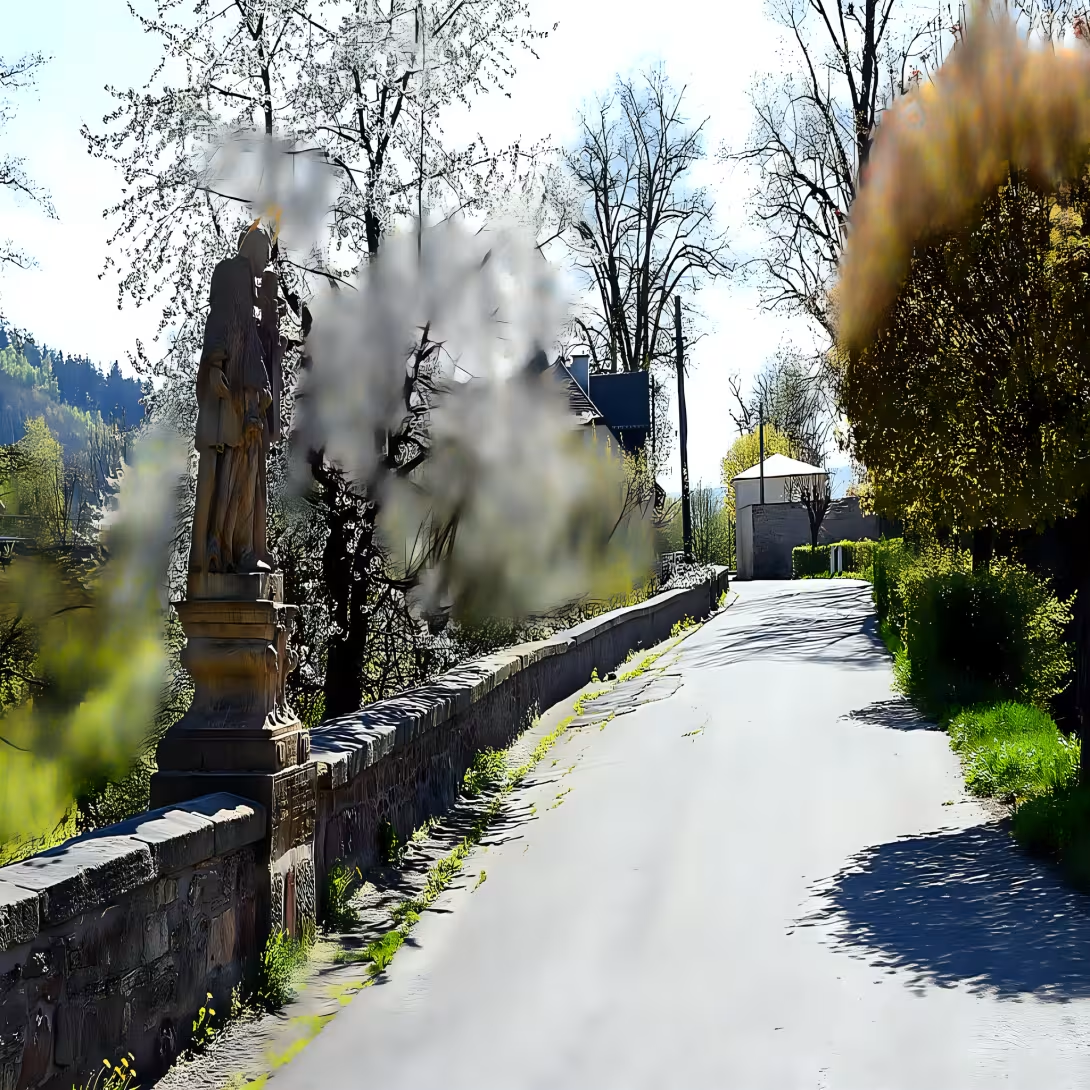
The bridge of St. John is turned off over the small river Třebobovka under the Moravian-Třebov castle on Evíčská street. It is a renaissance stone building, which represents an important part of the educational path Journey from Renaissance to Baroque and testifies to the rich and often dramatic past of Moravian Třebová.
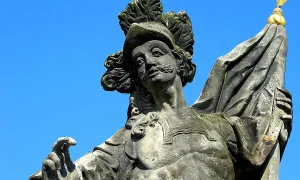
At the beginning of the bridge is the statue of the Parting with the Virgin Mary dating back to 1722. The author of the work is supposed to be a Třebov sculptor J. Pacák. The sculpture was originally intended as part of a cross road leading from the parish church to the Cross Hill, so there are many years longer than the bridge itself.
The creation of a bridge building is closely linked to the natural disasters that have affected Moravian Trebova. In 1663 the city was hit by a burst of clouds, which became catastrophic floods and унесла with 33 lives. A hundred and ten years later, in 1773, the second great flood came, which again caused extensive damage. After this second disaster, a stone bridge was built to protect the city from future natural misfortunes.
The architecture of the bridge reflects the time of its creation. The building consists of a brick wall divided into three equal fields with individual moldings and shields decorated with so-called cannon cross. In the central field is the relief of Calvary with the remains of the original inscription, which has been preserved in a badly damaged form.
The most characteristic element of the bridge is flood memorial boards. The older plate resembles a flood from 1663 with relevant data. The younger plate dates back to 1773 and records the second great flood. Both boards carry Liechtenstein's crest in its various forms, documenting its heraldic transformation. In 2002 a complete restaurant of records was carried out, and since then the bridge has requested further renewal in 2013 due to damage caused by vandals.
St. John's Bridge presents a fascinating combination of Renaissance architecture, religious art and social memory. Each layer of construction tells us how the local community has retained awareness of historical tragedies and adapted to them by building activities. Visiting the bridge provides insight into the spirit of the Moravian Třebová and its long journeys between the Renaissance and the Baroque.
Then and now
Drag the slider to compare how the landmark may have looked when it was built with the view today.
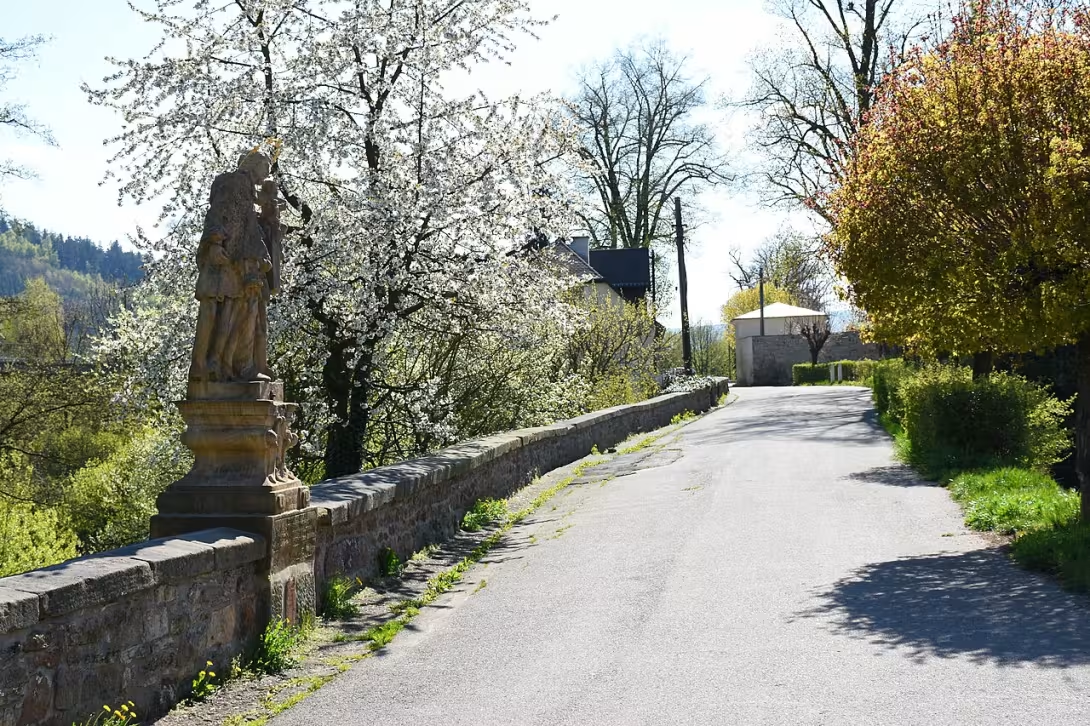
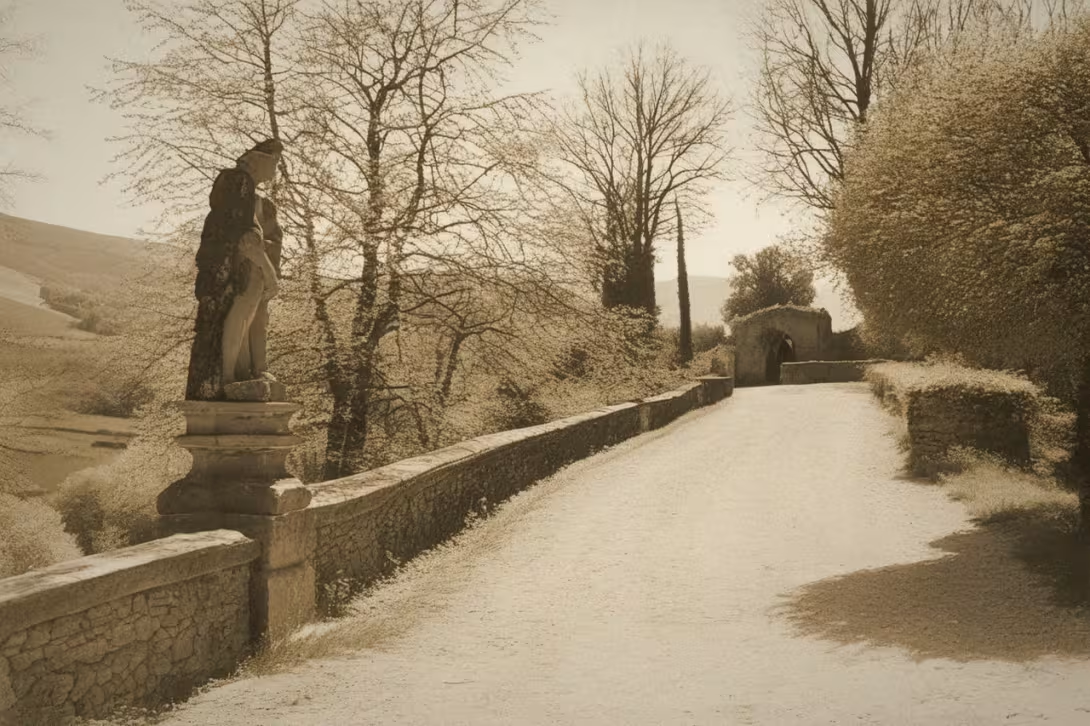
The historical appearance on the left is an AI-generated visualisation and serves as inspiration only.
Historical milestones
- 1663
- A catastrophic flood caused by a strong burst of clouds.
- 1722
- The creation of the sculpture of the Parting with the Virgin Mary.
- 1773
- A devastating flood wave causing great damage to property.
- 1776
- Building a contemporary stone bridge.
- 2002
- Complete reconstruction of memory boards.
- 2013
- Reconstruction of necessitated vandalism.
Architectural development
The construction is Renaissance-style, but its current form was created after the flood in 1773. It is built of stone and decorated with a brick wall divided into three fields. The whole is accompanied by Baroque decoration and commemorative plates.
Historical events
In 1663, there was a devastating flood caused by a burst of clouds. Another catastrophic flood wave took place in 1773. The stone bridge itself was built in approximately 1776.
Points of interest
- St. John's Bridge is a Renaissance stone building over the Třebovka River. - At the beginning of the bridge stands the statue of the Parting with the Virgin Mary from 1722, which is older than the bridge itself. - A stone bridge was built after a great flood in 1773 to protect the city from future natural disasters. - The building has three fields with moldings and shields decorated with a cannon cross and in the middle field lies the relief of Calvary. - Flood memorial panels from 1663 and 1773 document heraldic transformation of Liechtenstein's coat of arms.
Guide
This guide is narrated by a synthetic voice generated by artificial intelligence.
Show guide text
This text was created by artificial intelligence and has not been editorially reviewed. It may contain inaccuracies.
Welcome to Moravian Trebova, a place where history is entered into the landscape through stone and water. Right now, you're standing before one of the most important witnesses of local history, the stone bridge of St. John. Stop for a moment, take a breath and feel the atmosphere of this place. In front of you is a sturdy stone structure which, with calm and dignity, brightens the river Třebovka. If you look above the bridge, you'll see a castle complex that's watching over this whole scene. It is a place where the practical need to overcome the water trough is combined with deep symbolism and art. This bridge is not just a path from one shore to another, but a monument to human endurance in the fight against the elements of nature.
To understand why this bridge is so important, we need to go back many centuries in time and think about the power of water. The Třebovka River may seem calm, but history tells us another story. In 1663 the area was hit by a catastrophic flood caused by a strong burst of clouds. At that time, water destroyed everything in its path, leaving deep fear of nature's unpredictability in human hearts. Even though people tried to live with water in harmony, another devastating blow came in 1773. This flood wave was so strong that it caused massive damage to property and essentially forced a change in how the city approached the construction of its bridges. It is from this need for safety and protection from future misfortunes that a bridge has emerged that you see before you. The current stone building was built in 1776. It was designed to withstand the power of the current and serve as a reliable artery of the city.
Now please take a closer look at the architecture itself. The bridge is built in Renaissance style, which gives it some harmony and stability. Notice the surface of the stone and the way the building rests on the banks of the river. It's the honest work of unknown builders who knew how to work with material in the eighteenth century to last centuries. While walking through a bridge or watching it from the shore, pay attention to commemorative flood boards. These boards are not just decoration, but they serve as a talking chronicle. They record water levels that have threatened the city in the past and remind us how high the Třebovka levels can be at worst times. These plates underwent a complete reconstruction in 2002 to remain readable for future generations. It is fascinating to think that every line on these boards represents drama, fear, but also the subsequent restoration of the city.
Now let's move on to one of the most beautiful elements of this place. At the beginning of the bridge, your attention must have attracted a Baroque sculpture. It's a display of the farewell to the Virgin Mary. If you notice the dates of its creation, you will encounter a fascinating historical paradox. This sculpture dates back to 1722. This means that it is more than 50 years older than the stone bridge itself on which it stands today. How is that possible? The answer is that sacred elements have often survived the demise of previous buildings or have been moved to watch over the new construction. The Baroque-style sanctuary gives the bridge a spiritual dimension and reminds us that in times of great disasters, people sought refuge and hope in faith.
This place is also associated with J. Pacák, a personality that has left a mark in the history of this region. Although the names of the particular architects of the bridge remained in oblivion, thanks to people like Pacak and the careful study of history, we can now understand the context that this bridge creates. St. John's Bridge is not an isolated object. It is a key part of the educational path called the Journey from Renaissance to Baroque. This trail guides you through the architectural development of the city and this bridge is one of its most important stops. It combines Renaissance practice with Baroque emotional depth and shows how Moravian Trebova evolved over centuries.
Perhaps now you will be interested in one question that floats over this place as a secret. Why was the bridge rebuilt in 2013? It was not the power of water this time, but the human hand. Vandalism has damaged some parts of the monument, which teaches us that even if a stone resists the flood of the eighteenth century, it is vulnerable to insecurity at present. But the 2013 reconstruction proved that the city values its sights and is prepared to protect them from any threat.
Now, if you look at St. John's Bridge again, you don't just see a pile of rocks over the water. You see a symbol of resistance to elements, you see baroque piety in the form of sculptures and you perceive a quiet dialogue between Renaissance architecture and the resulting river. This bridge is a bridge even between times. It connects us to the people from 1663 who watched with horror the rising surface, as well as the craftsmen from 1776 who were hoping to lay the last stones of the current building.
Thank you for stopping by this special place. I suggest you now slowly cross the bridge, feel its stability under your feet and let yourself be carried away by ideas about the history of Moravian Treb. If you are interested in the journey from Renaissance to Baroque, continue to explore it and discover other hidden corners of this beautiful city. I wish you a pleasant walk and many new discoveries in the Pardubice region. Goodbye.
Tips for visitors
For the best experience we recommend a visit in late afternoon or early morning. In these times, the light is softer, highlighting the Baroque sculpture and historical details of the stone bridge, and the surrounding area of the water is more peaceful.
You can easily walk directly from the city centre. If you arrive by car, use the parking lot near the city core. The location is also available by public transport; Please check the current connection in the traffic controller.
For lovers of photography, the best angles from the banks of the Třebovka River are the whole length of the bridge and its decoration. For comfortable field movement we recommend to bring with you fixed shoes and possibly drinking water.
Families with children can combine a tour of the bridge with a pleasant walk in nature. As part of a short trip you can visit the Moravian-Třebov Castle, walk along the river Třebovka or get off on the cross hill.
Frequently asked questions
Is kamenný most v Moravské Třebové open to the public?
Yes, it's open all year round. The best time to visit is in the morning or evening when the light is ideal for photography.
How do I get to the place by car / public transport?
You can get by car and park in a nearby parking lot. The public transport is also available from the centre of Moravian Třebová.
How much is the entrance fee and is it paid on the spot?
Admission is free, but if you want to extend your tour by a guide or special programs, small fees may be charged.
Is the tour suitable for children and seniors?
Yes, the tour is suitable for all ages. Children will be able to play on the bridge and take pictures while seniors can take advantage of a quiet environment.
How long does the tour take?
The tour takes approximately 30 minutes, but you can decide to spend more time on the bridge and the surrounding area.
What are the opening times and booking is required?
The bridge is accessible throughout the year from 9:00 to 6:00. Reservation is not necessary, but if you want to extend the tour with special programs, we recommend ordering it in advance.
What's interesting in the immediate vicinity?
In the vicinity you will find the historical centre of Moravian Třebová with many monuments and museums. You can also visit local parks and forests.
For kids
Imagine going back to the past and suddenly you're in the beautiful town of Moravian Trebova. Město is full of living people who are busy working on their houses, fields and producing hand goods.
The town was surrounded by forests and river Svitavou, which flowed calmly and moderately. People lived here in village houses made of wooden structures with roofs covered with straw or shingles. Most people were employed in agriculture or the craft industry.
Businesses nearby
Do you run a restaurant, accommodation, shop, museum, rental, wellness or other visitor service near this monument? Show yourself directly to the people heading to it — this is how they will see you in the app and on the web:
Nearby
Moravian-Trebov castle, River Třebovka and Cross Hill.
Accommodation nearby
Themed route
Thematic cruise route from Moravian Třebová
1. Stone bridge in Moravian Třebová (bridge) * Why is it worth a visit: * Classic architecture and history of this stone bridge overcoming Třebovka River offers a beautiful entrance to local culture. It's an ideal start to explore the area.
2. Moravian-Trebov Castle * Why is it worth visiting: * This Baroque castle is a key historical and cultural centre of the city. Its beautiful interiors, including the park and garden, offer a view of the rich past.
3. River Třebovka * Why is it worth a visit: * Beautiful landscapes of the river are ideal for relaxation and a short view of nature. It's also a place that contributes to the atmosphere of the whole neighborhood.
4. Cross Hill * Why is it worth a visit: * This important monument is not only a spiritual centre but also offers a view of the whole area. Its history and architecture are fascinating to any visitor.
5. Park near Moravian-Trebov Castle * Why is it worth visiting: * Park is an ideal place to relax after exploring other monuments. Its natural beauty and peaceful space are perfect for relaxation.
This route offers a harmonious combination of history, architecture and nature around Moravian Trebova.
Seasonal recommendations
Spring in the Moravian Třebová brings to the stone bridge the gradual exploitation of nature. Specific here is the soft, scattered light of the waking sun, which underlines the texture of the old stone and reflected in the water under the arches. The surrounding vegetables are still waking up, creating a fresh contrast with a grey historical footbridge. The atmosphere is calm and thoughtful, ideal for photographers looking for mild angles without disturbing elements. Practical advice shall cover variable weather; Spring rains can leave slippery spots on the tiles, so it is suitable for footwear with a good heel. Clothing should be layered in order to easily adapt to sudden temperature changes. The best time to visit is in the morning when the humidity is lower and shadows shorter, which makes it easier to capture the details of the bridge.
Summer offers the longest days and brightest lighting that reveals every groove in the rocks of the bridge. Specific is intense sunlight that can be sharp in the midday hours, but afternoon golden hours bring dramatic shadows and warm tones. Nature around the river is in full bloom, with a rich vegetation that frames historical construction. The atmosphere is vibrant and full of energy, often accompanied by sounds of the surrounding life of the city. Practical advice shall include the need to adapt to higher temperatures; light, breathable clothes and enough drinking regime are necessary. Due to the increased attendance in the main summer season, it is recommended to arrive early in the morning or late in the afternoon in order to avoid the largest crowds and gain more peaceful space for the tour.
Autumn transforms the surroundings of the bridge into warm, golden and red tones of decaying leaves. Specific is the soft, oblique light of the autumn sun, which creates an atmosphere of nostalgia and calm. The water under the bridge often reflects the colours of trees, which creates a visually rich scenery. The atmosphere is colder and thoughtful, suitable for slow walks and observations of details. Practical advice focuses on protective clothing against cold and possible rain; Jacket and waterproof shoes are key. Visitors are falling, which allows a more private experience. The best time is the late afternoon, when the color of leaves develops the most and the light is the hottest, while the evening cold has not yet felt.
Winter brings to the bridge a cold, sharp atmosphere, often decorated with snow or frost. Specific is short, low sunlight, which creates long shadows and emphasizes the massive stone structure. Nature is in sleep mode, with bare branches of trees that contradict white snow. The atmosphere is quiet and dramatic, especially with snow, when the bridge turns into a winter fairy tale. Practical advice requires robust winter clothes, including a warm cap, gloves and shoes with anti-slip soles. Shorter opening times and lower temperatures mean that the visit should be planned for shorter periods of time. The best time is the late morning when the sun is at its highest and the temperature is relatively highest, which minimizes the inconvenience of freezing.
Visualizations and artistic views


The visualisations are generated by artificial intelligence and serve as inspiration.
Photos from the area
Real photos taken near the monument


Zdroj a licence jsou uvedeny u každého snímku.
Atmosphere of the place
This atmospheric visualisation of the place and period was generated by artificial intelligence. It is not real footage of the location.
Tips from visitors
No tips yet. Be the first!
Log in and add your tip.
Sources and literature
Photos: Ben Skála, Benfoto / CC BY-SA 3.0, rozlišení zvýšeno umělou inteligencí — Wikimedia Commons. The author and licence also appear when you hover over the image.
Faktickým podkladem tohoto textu byl článek na Wikipedii, jehož autory jsou přispěvatelé Wikipedie. Článek je dostupný pod licencí CC BY-SA 4.0.
Location on the map

Příběhy a pověsti
Legendy, pověsti a příběhy spjaté s touto památkou

Fotografie návštěvníků
Zatím žádné fotografie. Buďte první, kdo přidá fotografii z návštěvy!
Log in a přidejte svou fotografii nebo hodnoťte.
Za ověřenou návštěvu v aplikaci získáte víc bodů — poznáme podle GPS, že jste na místě.
Reviews and comments