






dům U Bílého orla House
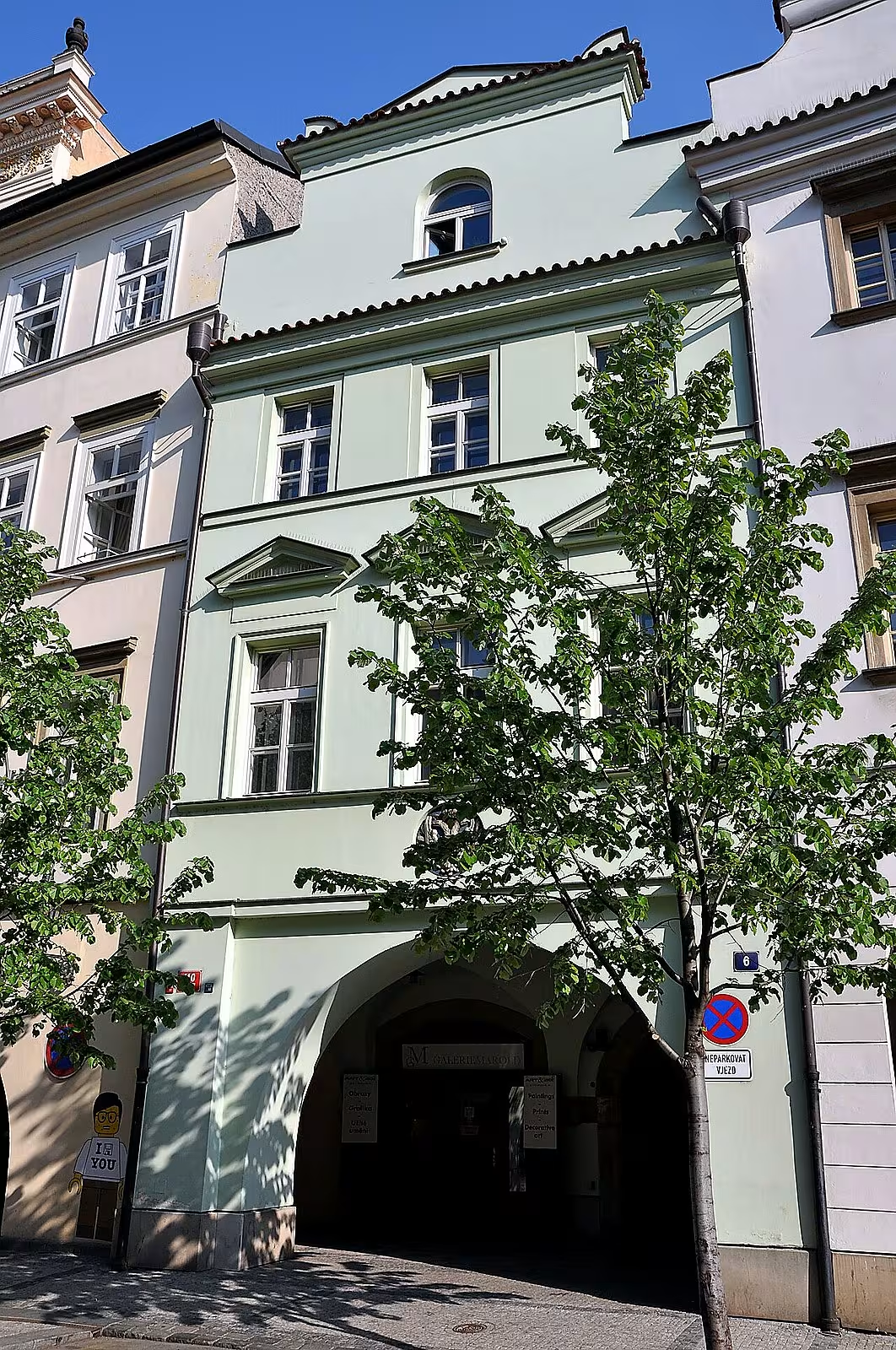
Dům U Bílého orla is a historic building located at Rytířská ulice 6 in Prague's Old Town. It sits between Dům U Beránků and Dům U Machtů. This architectural gem reflects the city’s rich history, evolving through Gothic and Neoclassical styles since its construction before Hradčany was established. Recognized for its cultural significance, it is protected as a cultural monument in the Czech Republic.
The origins of Dům U Bílého orla date back to an era preceding the foundation of Hradčany. Significant transformations occurred in the late 14th century when the building underwent substantial reconstruction and expansion, incorporating Gothic elements like vaulted spaces and distinctive windows. The earliest documented references to the house are from between 1406 and 1412, when it was owned by Opat Matyáš of the Cistercian convent in Klášterní Skalica. Shortly thereafter, around 1411-1412, Zikmund z Jihlavy acquired the property.
The architectural journey of Dům U Bílého orla is marked by its stylistic evolution from Gothic elements to Neoclassical aesthetics through significant redesigns. By the early 17th century, sculptor Jan Jiří Bendl purchased the house in a dilapidated state and transformed it into a tavern by 1641. The building's current Neoclassical facade emerged from Zacharias Fiegerth’s redesign before 1835, while Heinrich Hausknecht contributed to interior modifications.
Ownership of Dům U Bílého orla has seen various notable figures throughout history. After Jan Jiří Bendl's acquisition in the early 17th century, Abraham Engel z Engelsperka sold it in 1621. The property later came under the ownership of Jan Braun and was eventually acquired by sculptor Richard Prachner in the 19th century. These transitions reflect changes in possession and shifts in the building's function over time.
Key events associated with Dům U Bílého orla include its significant reconstruction in the late 14th century, introducing Gothic architectural features. Another pivotal moment occurred in 1641 when Jan Jiří Bendl transformed it into a tavern. The house's name, "U Bílého orla," originates from a stone relief of a double-headed eagle with imperial symbols.
Today, Dům U Bílého orla serves as a residential property with commercial use, housing a hairdressing salon on the ground floor. Its rich history and architectural evolution make it an intriguing site for visitors interested in Prague's cultural heritage. The building’s proximity to other historic structures within the Old Town enhances its appeal.
Dům U Bílého orla stands as a monument of architectural significance, witnessing centuries of historical change and continuity. Its preservation allows visitors to connect with Prague's storied past, offering insights into the city’s cultural and architectural development. This historic building invites exploration, promising an enriching experience for those who appreciate its historical layers.
Then and now
Drag the slider to compare how the landmark may have looked when it was built with the view today.
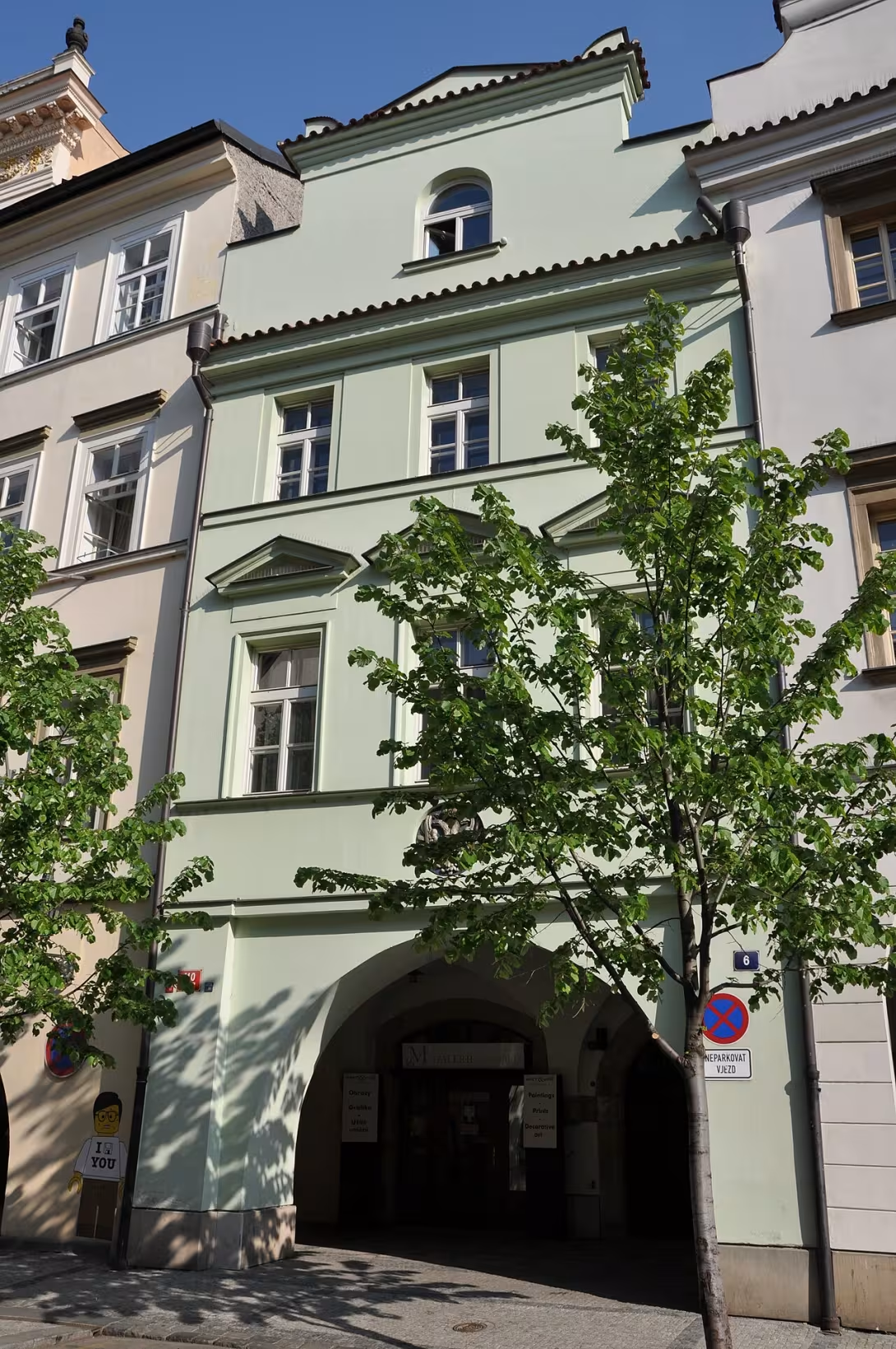

The historical appearance on the left is an AI-generated visualisation and serves as inspiration only.
Historical milestones
- kolem 1350
- Original building before the founding of Hradčany.
- koncem 14. století
- Significant reconstruction with Gothic elements.
- 1406-1412
- First documented mentions of the house, owned by Abbot Matthias.
- kolem 1411-1412
- Zikmund z Jihlavy becomes the owner.
- 1641
- Jan Jiří Bendl transforms the building into a brewery.
- před 1835
- The creation of the current neoclassical façade according to Zachariáš Fiegerth.
Architectural development
The building was originally constructed before Hradčany's establishment. In the late 14th century, it underwent significant reconstruction with Gothic elements like vaulted spaces and windows. By the early 17th century, sculptor Jan Jiří Bendl acquired it in a dilapidated state. The Neoclassical facade emerged from Zacharias Fiegerth's redesign before 1835, while Heinrich Hausknecht modified interiors.
Historical events
Late 14th century: Significant reconstruction and expansion, including a Gothic window.
1641: Jan Jiří Bendl purchased the house and began operating a tavern.
Owners
1406–1412: Opat Matyáš, Cistercian convent in Klášterní Skalica
around 1411-1412: Zikmund z Jihlavy
1429-1433: krejčí Tomáš Okřín
1621: Abraham Engel z Engelsperka sold to Jan Jiří Bendl
19th century: owned by Jan Braun and later sculptor Richard Prachner
Points of interest
- The name "U Bílého orla" is derived from a stone relief featuring a double-headed eagle adorned with imperial symbols, reflecting the building's historical significance and connection to power.
- In 1641, sculptor Jan Jiří Bendl purchased Dům U Bílého orla in a dilapidated state and transformed it into a tavern, marking a significant functional change that contributed to its social history.
- The architectural evolution of the building includes a transition from Gothic elements introduced in the late 14th century to Neoclassical aesthetics by Zacharias Fiegerth before 1835, showcasing the dynamic stylistic changes over centuries.
- Dům U Bílého orla was once owned by Opat Matyáš of the Cistercian convent in Klášterní Skalica between 1406 and 1412, highlighting its early connection to religious institutions before becoming a secular property.
- The building's transformation into a hairdressing salon today reflects its adaptation to modern commercial uses while maintaining its historical essence as part of Prague’s cultural heritage.
Guide
This guide is narrated by a synthetic voice generated by artificial intelligence.
Show guide text
This text was created by artificial intelligence and has not been editorially reviewed. It may contain inaccuracies.
The House U Bílého orla, sometimes also called U Vokřínů, belongs to the Old Town in Prague. You will find it on Rytířská Street, with the descriptive number 410 and the orientation number 6. It borders the houses U Beránků and U Machtů and is protected as a cultural monument.
The house stands on a very narrow and deep plot and its origins date back to the time before the founding of Havelské Město. Around the second half of the 14th century, it was significantly rebuilt and extended. From this period comes the arcade with a Gothic window and three spaces with barrel vaults. The portal frame is Gothic-Renaissance.
The oldest written records about the house are from 1406 to 1412. At that time it was owned by the abbot Matěj from the Cistercian convent in Klášterní Skalici. At the turn of 1411 and 1412, the abbot sold it to Zikmund from Jihlava, who was the mayor of the charcoal market. From 1429 to 1433 it is mentioned as being owned by a tailor Tomáš Okřín. It was according to him that the house received its first name.
In 1621, the house was sold by an exile Abraham Engel from Engelsperka. It was bought by the sculptor Jan Jiří Bendl, and it was in a neglected state. Already in 1641 he ran an inn there and after 1653 he had the house rebuilt. From this rebuild comes the stone house sign. It is a relief of a double-headed eagle with an imperial crown, which holds a sceptre and a sword in its claws.
Later the house was owned by Jan Braun, and after him the sculptor Richard Prachner with his wife Alžběta. In 1796 they still had a small garden behind the house, but in the 19th century it was built over. The present street facade was created during a classicist rebuild before 1835, which was directed by Zacharias Fiegerth. The staircase in the courtyard wing and the interior modifications were carried out by Heinrich Hausknecht.
The house serves as a rental building. In 2024 there was a hairdressing salon in its ground floor.
Tips for visitors
The best time to visit Dům U Bílého orla is during the late spring or early fall when the weather is pleasant, allowing you to comfortably explore the historic architecture and nearby cultural landmarks without the crowds typical of peak tourist seasons. The softer light during these months also enhances the beauty of the building's Gothic and Neoclassical features.
It is advisable to use public transportation or park outside the city center and walk or take a tram into the area. The Old Town is well-connected by trams and buses, making it easy to reach Dům U Bílého orla without needing a car.
When visiting Dům U Bílého orla, consider bringing comfortable walking shoes as you'll likely be exploring on foot. A camera with a zoom lens is recommended for capturing the intricate architectural details of the building and its surroundings. Additionally, carrying a map or using a navigation app can help in navigating the historic streets.
For photography enthusiasts, the best spots to capture Dům U Bílého orla are from the nearby Charles Bridge at sunrise or sunset when the lighting is soft and golden. The reflections on the Vltava River also provide unique perspectives of the building. Early morning visits often offer quieter conditions for taking photos without large crowds.
In a 30-minute radius, you can visit several notable sites such as Dům U Beránků and Dům U Machtů, which are in close proximity to Dům U Bílého orla. These buildings also showcase the rich architectural history of Prague's Old Town. Exploring these nearby landmarks will give a broader understanding of the area's historical significance.
For families with children, visiting Dům U Bílého orla can be an educational experience. The historic architecture and proximity to other cultural sites make it ideal for learning about Prague’s history. Consider planning your visit during weekdays when there are fewer tourists, making it easier to navigate with young ones.
Frequently asked questions
Can the monument be visited?
This is a residential or farm building, not a museum with opening hours. Please view it from public space and respect the owners' privacy. We have no information about access to the interior.
Where is the monument?
Location: Praha 1, Hlavní město Praha. The map on this page shows the exact spot.
Why is the monument protected?
It is listed in the Central List of Cultural Monuments of the Czech Republic as a cultural monument (register no. 1000150465).
Businesses nearby
Do you run a restaurant, accommodation, shop, museum, rental, wellness or other visitor service near this monument? Show yourself directly to the people heading to it — this is how they will see you in the app and on the web:
Events nearby

Zdroj akcí: otevřená data měst a obcí ČR (Národní katalog otevřených dat) a kalendář akcí Národního památkového ústavu.
Nearby
Dům U Bílého orla is situated in Prague's Old Town, bordered by Dům U Beránků and Dům U Machtů. The area features historic architecture and cultural landmarks within a short distance.
Accommodation nearby
Trips and activities nearby
Guided tours, tickets and activities nearby from GetYourGuide
Affiliate link: if you buy from the partner, we may receive a commission. The price for you does not change.
Search tours and activities →Themed route
Tematická výletní trasa: Historické centrum Prahy - Dům U Bílého orla a okolí
1. Dům U Bílého orla
- Typ: Historický dům
- Proč stojí za návštěvu: Tento architektonicky významný goticko-renaissanční dům je jedním z nejstarších a nejznámějších budov na Staroměstském náměstí. Jeho bohatá historie sahá do 14. století, kdy byl postaven pro řemeslnickou cechu. Je známý svou charakteristickou sochou orla a mnohostrannou architektonickou strukturou.
2. Dům U Beránků
- Typ: Historický dům
- Proč stojí za návštěvu: Nachází se přímo naproti Důmu U Bílého orla a je jedním z nejstarších domů na Staroměstském náměstí. Jeho gotický vzhled s bohatou dekorací a historie, která sahá do 13. století, přitahuje mnoho návštěvníků. Dům je známý svou ikonickou sochou berana nad vchodem.
3. Dům U Machtů
- Typ: Historický dům
- Proč stojí za návštěvu: Tento dům, nacházející se na jihovýchodní straně Staroměstského náměstí, je známý svou gotickou architekturou a historií spojenou s cechem kobercovníků. Dům U Machtů je vynikajícím příkladem staročeského obchodního domu z 14. století, který svědčí o bohaté historii obchodu a řemesel v Praze.
4. Staroměstské náměstí
- Typ: Historické náměstí
- Proč stojí za návštěvu: Toto centrální náměstí je srdcem Starého Města a sloužilo jako důležitý obchodní a kulturní prostor po staletí. Je známé svou krásnou gotickou architekturou, včetně kostela Týnského a Staroměstské radnice s jejím památným věžovým hodinami. Náměstí je také místem důležitých historických událostí, jako bylo popravení mistra Jana Husa.
Tato trasa nabízí návštěvníkům pohled na nejcharakterističtější a historicky významné budovy Staroměstského náměstí, přičemž každý z těchto míst má svou jedinečnou příběhovou linii.
Seasonal recommendations
Spring: Visiting Dům U Bílého orla during spring offers a refreshing experience with the city beginning to bloom, bringing vibrant colors and floral scents that enhance the historical ambiance of this iconic Prague landmark. The mild temperatures are perfect for leisurely strolls around Staroměstské náměstí, allowing visitors to fully appreciate the architecture without the summer crowds. Early mornings or late afternoons provide ideal lighting conditions for photography, capturing the interplay between natural light and the ornate details of the building. With fewer tourists than in peak seasons, it's an excellent time to explore at a relaxed pace.
Summer: Summer is when Dům U Bílého orla truly comes alive with longer daylight hours offering extended visiting times. The lively atmosphere of Prague during this season adds a festive touch to your visit, as the city buzzes with tourists and locals alike enjoying outdoor cafes and street performances in the vicinity. To avoid large crowds, it's advisable to arrive early in the morning or later in the afternoon when the sun is less intense. Comfortable walking shoes and light clothing are recommended due to warmer temperatures, ensuring a pleasant exploration of this historic site.
Autumn: Autumn transforms Dům U Bílého orla with a stunning display of fall colors as leaves change hues around Staroměstské náměstí, creating a picturesque setting that complements the historical architecture. The cooler weather makes for comfortable walking tours and exploration without the summer heat. As daylight hours shorten, arriving early ensures you make the most of natural lighting to appreciate the building's intricate details. This season offers a quieter experience compared to spring and summer, with fewer tourists allowing for more intimate encounters with Prague’s rich history.
Winter: Winter at Dům U Bílého orla is marked by a magical atmosphere as snow blankets Staroměstské náměstí, adding a fairy-tale quality to the historic site. The shorter days mean visiting hours are reduced, so planning your visit for midday when it's open can maximize your experience. With colder temperatures, dressing warmly in layers is essential, and don't forget a hat and gloves for comfort during your exploration. Despite potential icy conditions, the winter scenery provides a unique backdrop that highlights the architectural beauty of this Prague landmark against a crisp white landscape.
Visualizations and artistic views


The visualisations are generated by artificial intelligence and serve as inspiration.
Photos from the area
Real photos taken near the monument

Zdroj a licence jsou uvedeny u každého snímku.
Tips from visitors
No tips yet. Be the first!
Log in and add your tip.
Sources and literature
Photos: Ben Skála / CC BY-SA 3.0 — Wikimedia Commons. The author and licence also appear when you hover over the image.
Faktickým podkladem tohoto textu byl článek na Wikipedii, jehož autory jsou přispěvatelé Wikipedie. Článek je dostupný pod licencí CC BY-SA 4.0.
Location on the map
More monuments – Praha 1
Show all in the municipality

Příběhy a pověsti
Legendy, pověsti a příběhy spjaté s touto památkou
Fotografie návštěvníků
Zatím žádné fotografie. Buďte první, kdo přidá fotografii z návštěvy!
Log in a přidejte svou fotografii nebo hodnoťte.
Za ověřenou návštěvu v aplikaci získáte víc bodů — poznáme podle GPS, že jste na místě.
Reviews and comments