



dům U Voříkovských House
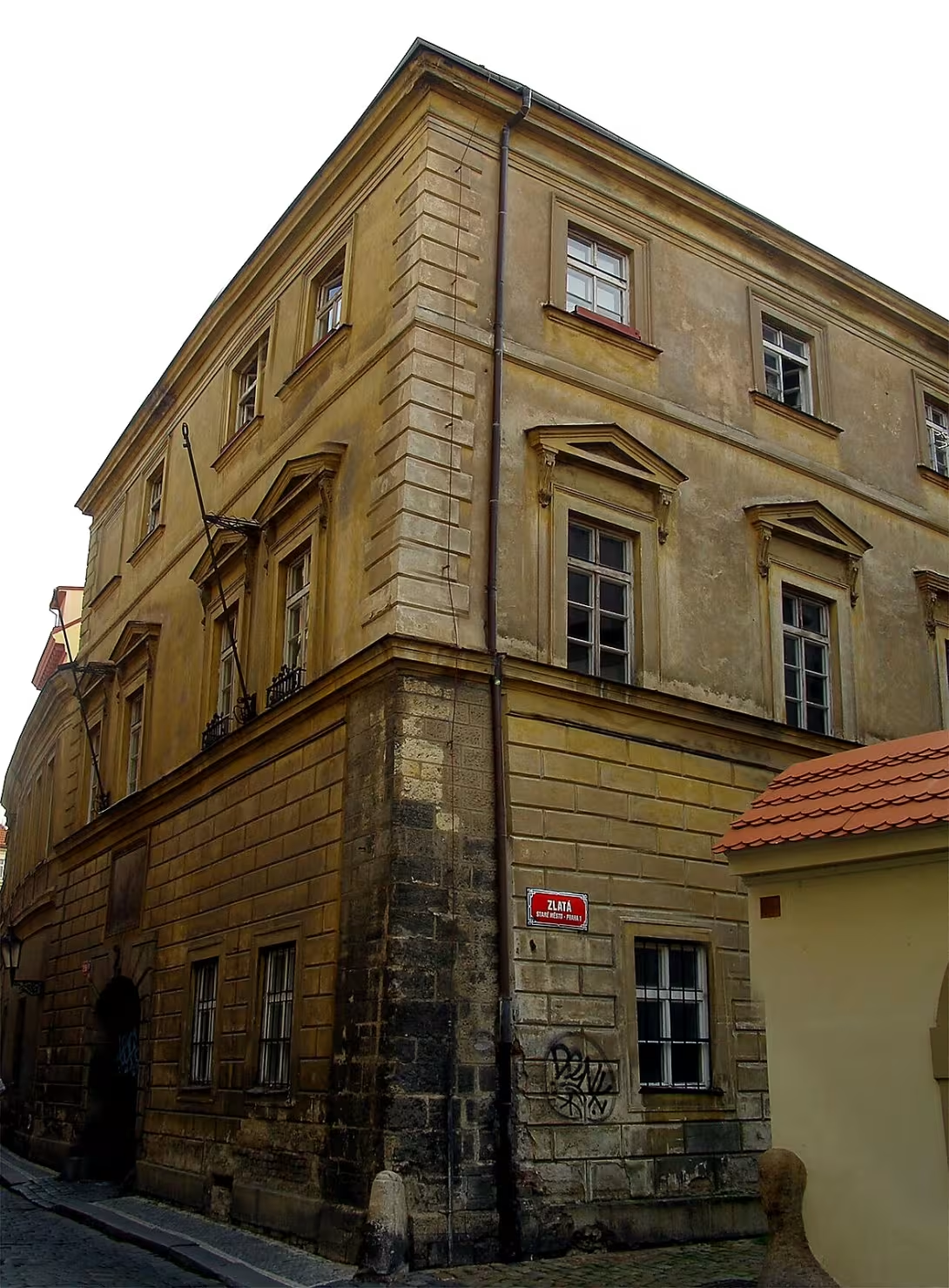
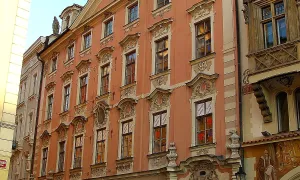
The House of Voríkovsky stands on the corner of Lilio and Golden Street in Prague's Old Town. This vast historical object was created by a gradual combination of several medieval houses. The cultural monument excels at the architectural membership in which Gothic foundations, Renaissance reconstruction and baroque modifications are combined. Currently serves as an administrative and professional background of the National Heritage Institute.
The oldest news about the building dates back to the 14th century, when the land belonged to the lords of Dubé. The important milestone was the year 1329, when Perchta z Dubé dedicated part of the complex to Dominicans near the nearby church of St. Anne. The house has grown over the centuries by merging separate objects. Its present form is the result of long-term building development, which experts have examined and documented in detail during the reconstruction between 2015 and 2017.
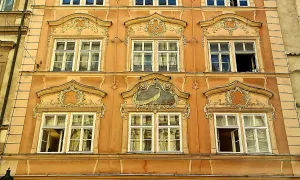
The construction is remarkable by its architectural diversity. While the cellars and parts of the above-ground structures are of gothic origin, the Renaissance brought especially in the north wing the installation of painted tilting ceilings and the formation of large roofs. Their age was confirmed by a dendrochronological survey. The interiors preserved stucco paintings, frescoes and several rooms of the first floor also rococo wall paintings. The facade to Lilius Street is architecturally inconsistent. Includes a floor area with a volute shield, a central tract with renaissance crest vaults and a two-storey Neo-Renaissance corner section, modified in 1873- 1875 according to the project Václav Jábanek.
Property history reflects social changes in Prague. After the Dominicans the building was owned in the 16th and 17th centuries by the noble family of Špetl, followed by František Cortesi from Peregrin and Martin Aron from Rosenstejn. The house was named after Jan Bohuslav Vořikovský of Kundratic, who owned it at the time of his work in the office of Prague Mayor from 1700 to 1723. Since 1793, the building belonged to the Urban family and the Josef Jungmann was temporarily housed in its premises.
The fresco painting Escape to Egypt on the facade above the late Renaissance portal, which is an unusual picture of the pyramid. There is also a relief of the hand holding the nut above the entrance. In the back of the yard there is a restaurant gazebo with cast iron columns. The house is adjacent to the premises of St. Anne's Church, where already in the 12th century stood the rotunda of St. Lawrence and later the Templar commendation.
After a period of neglected maintenance, the building underwent a comprehensive reconstruction between 2015 and 2017. It respected the historical value and adapted the premises to the needs of the National Heritage Institute, including the location of the library and archaeological centres. The house today represents valuable proof of Prague's urban architecture and its development. The visit to this place offers a unique insight into the pedestal history of the ancient urban development, which is preserved for future generations thanks to the sensitive restoration.
Historical milestones
- 1329
- Part of the complex dedicated to Dominicans at St. Anne's Church.
- 1700
- The beginning of the primary office of Jan Bohuslav Vořikovsky, according to which the house bears the name.
- 1873
- The launch of extensive neoplasms according to the Václav Jábánek project.
- 2015
- Opening of the overall reconstruction for the needs of the National Heritage Institute.
Architectural development
The building was created by combining three Gothic houses, from which the cellars and parts of the above-ground structures were preserved. Significant Renaissance reconstructions enriched the house with painted cover ceilings and roofs, while the Baroque period brought modifications to the roof and facades. In the 19th century, the corner section was modified in a neo-Renaissance style.
Historical events
In 1329 Perchta z Dubé donated part of the premises to Dominicans. In 1873- 1875 there were extensive neoplasms according to the Václav Jábánek project. Between 2015 and 2017 the house underwent a comprehensive reconstruction for the needs of the National Heritage Institute.
Owners
Lords of Dubé (14th century), Dominicans of St. Anne's, family of Špetl (16th-17th century), František Cortesi z Peregrinu (1663), Martin Aron z Rosenštejnu (1666), Jan Bohuslav Voříkovský z Kundratic (18th century), family of Urbans (from 1793).
Points of interest
- The house was built by gradually connecting several medieval objects. - On the facade above the portal is the fresco Escape to Egypt, which is an unusual representation of the pyramid. - Above the entrance to the house is placed relief of the hand holding the nut. - In the back of the yard there is a gazebo designed to rest or eat, which has columns made of cast iron. - The Josef Jungmann was temporarily housed in the premises.
Guide
Show guide text
This text was created by artificial intelligence and has not been editorially reviewed. It may contain inaccuracies.
Welcome to the heart of Old Prague, a place where every paving cube and every old wall seems to be a silent witness to the constant passage of time. You're standing in front of one of those extraordinary objects that carry a lot more than their size or appearance at first glance. The House of Vořikovsky, as you know it from its name, is a fascinating example of how the history of the city is constantly being rewritten and how different epochs can intertwine into one magnificent whole. Feel now the atmosphere of the old town, where secrets lie around every corner and architecture becomes the living chronicle of human life. There's a building in front of you that might seem like one solid and unified building, but it's actually a complex mosaic. It is the result of the gradual joining of many smaller, medieval houses that have joined together over the centuries in this vast and significant object.
Let us now return together deep into the past to understand how this space began to exist. The roots of this place go back to the year thousand thirty-ninth. At that time, part of this area was devoted to the order of Dominicans, which were located near St. Anne's Church. Imagine that time when the city was just forming and every building had a clear and specific purpose. This house was never finished in a single moment, but it grew like a living organism. Gradually, more parts were added, more houses were joined together, creating more and more space. The big break in the history of this place was around a thousand seven hundred. At this time there was a major office that was connected to Jan Bohuslav Vořikovsky of Kundratic. It was his work and his position in the company that made this house a place with a big name, and according to him, the house still bears its name.
Now pay attention to the architecture itself and what you see right in front of you. If you look at the structure of this building, you realize its incredible wealth. This building is like a book that has chapters written in different languages of architecture. Beneath its present surface, there are Gothic foundations that are the oldest skeletons of the entire building. Above them, a layer of Renaissance reconstruction and baroque treatment, which gave the house its contemporary elegance and complexity. Feel the architecturous fragility that is so typical of this object. Now if you look carefully at the facade, right above the main portal, that is, above the entrance, you can see something really unusual. There's a painting, a fresco that shows the escape to Egypt. What makes it absolutely special is the way the whole scene is depicted - a pyramid appears in the painting, which is very unexpected in this context and gives the whole place a touch of exotic and mysterious. And if you look up even above the entrance to the house, you can see another interesting detail. There's a relief, a carved painting that shows the hand holding the nut. This small but very distinctive element is exactly the kind of detail that makes the old Prague so unique.
But this house is not just stone and colours, it is primarily a place that shaped the fate of important people. There were people in these areas whose names became part of our nation's history. Here we can remember Percht from Dubé or the great Jan Bohuslav Voríkovsky whose name is carved into the identity of the whole place. The great people of Czech culture and science, such as the famous Josef Jungmann, moved in this area and in these buildings. The site was closely linked to many important personalities, such as František Cortesi z Peregrinu or Martin Aron z Rosenštejnu. Each of these characters left a trail in the history of the city and this house was one of the places where their paths could cross. Now, when you look at these walls, try to imagine their steps, their voices, and all the decisions they made back then.
Before you go on your next trip, let me draw your attention to one interesting thing that may surprise you. This whole object is the result of constant bonding. It is not just one building, but an ally of many smaller units that have gradually interconnected to create this magnificent work. This complexity can be seen in every corner. And if you have a chance to look at the back of the yard, you will find a place that is a rare treasure in a busy city. There is a gazebo that was intended to rest or eat. It's a hidden piece of peace waiting for its discoverers in the background of this magnificent object.
This house has gone through modern history. In eighteen hundred seventy-three there were extensive modifications in the Neo-Renaissance style prepared by architect Václav Džbánek. And even recently, in the year two thousand and fifteen, the house was re-transformed thanks to the overall reconstruction that was carried out for the needs of the National Heritage Institute. Thanks to the fact that the house is in such good condition today, we can see its beauty in it today, even though it is now mainly used for administrative and official purposes.
I hope you are interested in this brief view of the history of the House of Voríkovsky and that it has helped you better understand what you are seeing in front of you. This house is living proof that history is not just something in textbooks, but something that surrounds us in every detail of our journey. Please continue to walk through the old city, perceive its atmosphere and let yourself be carried away by the beauty of every other detail you meet. Thank you for your journey and I wish you a wonderful continuation in discovering the secrets of our Prague.
Tips for visitors
We recommend a visit in the morning during the working week, where there is less movement of tourists in the historical centre and you can enjoy the architectural details of the facade.
The house is located in the heart of the historic core, where the entrance of cars is restricted. We recommend using public transport and get off at the nearest stop within walking distance, check the connection in the route search application.
Take comfortable shoes suitable for walking on historic tiles and a camera with a wide-angle lens to help you capture the facade's fragility in narrow alleys.
The best light to capture the details of the house is in the morning when the sun illuminates the facade. Focus on portals and architectural elements created by joining medieval objects.
In the vicinity you can visit the church of St. Anne with a former monastery of Dominicans, Old Town Square or Charles Bridge. For families with children the location is suitable as a starting point for walking through history, we recommend planning the route to include rest breaks in nearby parks.
Frequently asked questions
Can the monument be visited?
This is a residential or farm building, not a museum with opening hours. Please view it from public space and respect the owners' privacy. We have no information about access to the interior.
Where is the monument?
Location: Praha 1, Hlavní město Praha. The map on this page shows the exact spot.
Why is the monument protected?
It is listed in the Central List of Cultural Monuments of the Czech Republic as a cultural monument (register no. 1000150309).
Businesses nearby
Do you run a restaurant, accommodation, shop, museum, rental, wellness or other visitor service near this monument? Show yourself directly to the people heading to it — this is how they will see you in the app and on the web:
Events nearby

Zdroj akcí: otevřená data měst a obcí ČR (Národní katalog otevřených dat) a kalendář akcí Národního památkového ústavu.
Nearby
Kostel sv. Anny s bývalým klášterem dominikánek, Staroměstské náměstí, Karlův most.
Accommodation nearby
Trips and activities nearby
Guided tours, tickets and activities nearby from GetYourGuide
Affiliate link: if you buy from the partner, we may receive a commission. The price for you does not change.
Search tours and activities →Themed route
Thematic cruise route: Historical heart of Prague
1. Old Town Square
Type: Square
Old Town Square is one of the most important and famous historical sites in Prague. It's a place where traditions and modernity meet, with iconic monuments like the Old Town Hall and the Marian statue. The square is an ideal place for the beginning of your trip, where you can enjoy the atmosphere of old Prague.
2. Church of St. Anne with former monastery of Dominicans
Type: Church and former monastery
This church is famous for its architectural beauty and history, which dates back to the 14th century. It is an important place for visitors interested in history and art because it contains important statues and paintings. St. Anne's Church is also known for witchcraft, which adds an interesting legendary layer to its history.
3. House of Vořikovské
Type: Historical House
This house is one of the oldest houses in Prague and has been an important part of the city's life for centuries. Today it serves as a seat of the Museum of Arts, which makes it an ideal place for visitors interested in art and the history of architecture. Its unique appearance and rich history attract anyone who is interested in cultural heritage.
4. Charles Bridge
Type: Bridge
Charles Bridge is not only a key element of Prague's infrastructure, but also one of the most famous symbols of the city. Its original construction dates back to the 14th century and has been restored several times after devastating floods. The bridge is an ideal place for relaxation, where you can enjoy panoramic views of the Vltava and surrounding sights.
5. Old Town Square (repetition)
Type: Square
After exploring other places, return to Old Town Square to enjoy its atmosphere even more. You can see the details of the town hall or enjoy one of the local specialities in the restaurant. This place serves as an ideal concept point for your route where you can close your adventure in the historic heart of Prague.
This route offers a view of the most important historical and cultural places in the Old Town area, making it an ideal choice for anyone who wants to discover Prague's rich past.
Seasonal recommendations
Spring: In the spring season dům U Voříkovských is fertilized by warm rays of sun and flowering trees, creating attractive lighting. Flowers in the surrounding gardens add colour and beauty, creating a wonderful atmosphere for pedestrians. Visiting during spring is suitable for mild temperatures, where you can choose clothes according to your comfort. The best time to visit is at noon, when the sun lights up and warms up the memory, which allows a full apreciation of its architecture.
Summer: In summer, dům U Voříkovských becomes the center of attention due to warm sunlight and long days that bring light to every detail of architecture. This season the area around the sights is full of people, so it is recommended to walk early in the afternoon to avoid large crowds. Hot clothes and sun protection such as hats or parasols are essential for comfortable walking.
Autumn: In autumn, dům U Voříkovských is transformed into an atmospheric shelter with darker colours of trees and sunlight that gives magic. This time of year is ideal for a quiet visit, because the crowd is shrinking, which allows a better tour without obstacles. Clothes should be mild, with the possibility to add a warm layer because temperatures are gradually decreasing.
Winter: Winter visit dům U Voříkovských offers unique lighting of the snowy environment, where the sun rays create a beautiful contrast with pale trees. Hot clothes, including leather shoes and cups, are essential for a comfortable visit, while the sun rays can be pleasant for a short time.
Visualizations and artistic views


The visualisations are generated by artificial intelligence and serve as inspiration.
Photos from the area
Real photos taken near the monument


Zdroj a licence jsou uvedeny u každého snímku.
Tips from visitors
No tips yet. Be the first!
Log in and add your tip.
Sources and literature
Photos: Tilman2007 / CC BY-SA 4.0 — Wikimedia Commons. The author and licence also appear when you hover over the image.
Faktickým podkladem tohoto textu byl článek na Wikipedii, jehož autory jsou přispěvatelé Wikipedie. Článek je dostupný pod licencí CC BY-SA 4.0.
Location on the map
More monuments – Praha 1
Show all in the municipality

Příběhy a pověsti
Legendy, pověsti a příběhy spjaté s touto památkou
Fotografie návštěvníků
Zatím žádné fotografie. Buďte první, kdo přidá fotografii z návštěvy!
Log in a přidejte svou fotografii nebo hodnoťte.
Za ověřenou návštěvu v aplikaci získáte víc bodů — poznáme podle GPS, že jste na místě.
Reviews and comments