



dům U Zlaté studně Hotel building
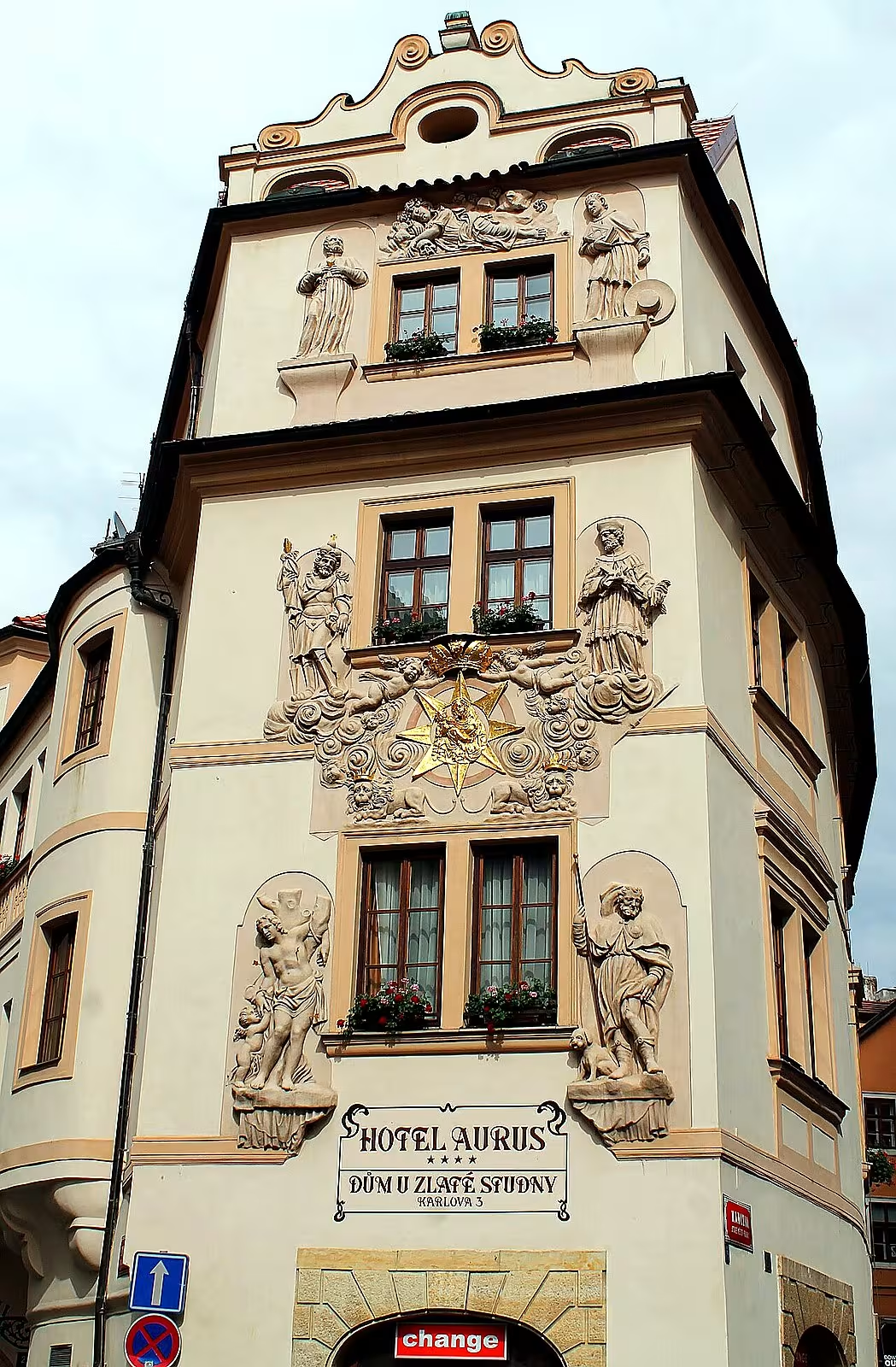
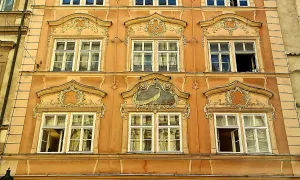
The House of the Golden well, sometimes called The Red Sesel, is a top Baroque building with classical elements in Prague's Old Town. It stands on the corners of the streets of Seminar and Charles near Clementine. It is particularly remarkable with rich facade with stucco reliefs from 1713.
The first written report about the house dates back to 1354, when the knife Václav Muldorfer bought it from Nicholas Znojemský. In the Gothic times there were knives and swordsmen. It also affected the name of the surrounding square, the Knife Slack. At that time the house had a sign in the middle of the wheel, which referred to its location against the garden of St. Kliment's church.
The current object stands at the site of the Romanesque house. It preserved the vaults in the basement of Seminar Street. In the early 17th century, the house was probably radically rebuilt in a late Renaissance spirit. In the 18th century he connected with a small nearby house of Gothic origin, which in the previous century was adapted baroque. After 1769, the building was extended to the third floor. A significant reconstruction took place in the 1980s. Only part of the perimeter wall and interior to the level of the first floor remained from the original building. In the lower lots, specifically in the basement, on the ground floor and on the first floor, are preserved rolled vaults.
The facade is decorated with stucco reliefs from 1713 created by Jan Oldřich Mayer. Decoration is divided into three stages. In the centre, under the combined window of the second floor, there is a Czech Palladium gold medallion. It shows the half figure of the Virgin Mary Starobyslazská with Jesus on the eight-pointed star, accompanied by crowns and Czech lions. Saint Wenceslas and Jan Nepomucký are also displayed on this floor. The first floor is decorated by the pestilence patrons of St. Sebastian and St. Roch. On the third floor are placed Jesuit patrons, probably St. Ignac and St. Francis Xaversky or František Borgia. Above the window on the third floor is the relief of St. Rosalie's pestilence.
Hotel Aurus currently resides in the building.
The building represents a valuable example of the layering of Prague architecture from the Romanesque period to the Baroque peak. It is recommended to visit it mainly because of a unique facade program that documents the religious and social symbolism of its time.
Historical milestones
- 1354
- The purchase of a house by Václav Muldorfer by Nicholas Znojemský.
- 1713
- Creating stucco reliefs on Jan Oldřich Mayer's facade.
- 1769
- Adding the third floor of the building.
Architectural development
Originally a Romanesque object, followed by Gothic modifications and a probable Renaissance reconstruction in the early 17th century. In the 18th century there was a Baroque connection with the neighbouring house and after 1769 the third floor was added. In the 1980s, the house was significantly modified, while maintaining some of the perimeter masonry and vaults in the lower floors.
Historical events
1354: First written report of the house; 1713: Creating stucco relief on the facade.
Owners
1354: Václav Muldorfer (he bought a house from Nicholas Znojemský)
Points of interest
The building is remarkable with a rich facade with stucco reliefs from 1713. - The first written report of the house is from 1354, when the knife Václav Muldorfer bought it. - At the time of Gothic times, there were knives and swordsmen, which affected the name Knife Slat. The current object is in the location of the Romanesque house, from which the vaults remained in the basement. - The facade is decorated with a gilded medallion with the Virgin Mary of Staro-Boyslavsky and various saints.
Guide
Show guide text
This text was created by artificial intelligence and has not been editorially reviewed. It may contain inaccuracies.
Welcome to the heart of old Prague. Right now, you're standing in front of a building that looks like it attracts the attention of anyone who walks by. Look ahead at dům U Zlaté studně. It is a building that carries layers of many centuries and its present form is a significant testament to the era of the high baroque, which later included elements of Classicism. If you look at the overall appearance of the house like this, you may feel a unified harmony, but the history of this place is much more complex than it seems at first glance. Let's stop together for what happened here long before the building got its face today. To understand the spirit of this place, we have to go back deep into the past in our minds. Under the feet you're standing right now, there are secrets from the Roman era. It was from this earliest period that the vaults in the basement were preserved in the building. So imagine that the current house is based on foundations that are much older than most of the surrounding streets. It is a fascinating notion that under the modern operation of the hotel that is based here today, the core of the early Middle Ages has been preserved. Now pay attention to the period of goth. At that time, this space was not just a common residence, but a living centre of craftsmanship. This is where the masters who controlled the art of steel and iron worked. They were knives and swordsmen. These craftsmen here formed their workshop, forged blades and produced tools that were necessary for every citizen and soldier at that time. This activity was so pronounced that it significantly influenced the name of the surrounding plaque, which is called Knife's. It is a beautiful example of how human work and craft leave a mark in the names of cities that persist after the craft itself has disappeared. Now, if you look at the building again, focus on its facade. Notice the rich decorating that decorate the facade. What you see are stucco reliefs that were created in the year seven hundred and thirteen. Their author was Jan Oldřich Mayer. Look closely at the details of these ornaments. At that time, such decorating was a symbol of prestige and wealth. The Baroque style was characterized by this desire for dynamism and pomp, which is very clearly visible in the facade of the Golden well house. These reliefs aren't just decorations, but they're like an open book telling us about the aesthetics of the early eighteenth century. Now let's think about the personalities who have linked their fate to this house. The first written report on this place takes us to the year three hundred and fifty-four. There was a major transaction at the time. The house was bought by a knife named Václav Muldorfer from a man named Mikuláš Znojemský. Imagine Václav Muldorfer entering his new home and planning on developing his knife production here. It is fascinating to think that one purchase of a house over 600 years ago helped define the character of this whole corner of Prague. It is thanks to people like Muldorfer that a centre of specialized craft has been created here, which then lasted generations. If you follow the building line upwards, notice its height. The house looks very balanced, but it wasn't always like that. In the year seven hundred and sixty-nine, the building was extended to the third floor. This change was probably caused by the need for more space, suggesting that the house did not lose its value in a later period and its owners invested in its development. This superstructure combined with the previously mentioned baroque elements creates the integrity you see today. Let's stop by one interesting thing that might surprise you. We often walk around buildings and perceive them as static objects, but dům U Zlaté studně is basically a layered collage of different epoch. From Romanesque vaults in the depths of the earth, to Gothic cutters, to baroque stucco and classical details. It's like every generation has added their own layer of paint to one big picture. The most fascinating, however, is the contrast between the hard work of the swordsmen of Gothic and the fineness of stucco reliefs by Jan Oldřich Mayer. It's a path from iron and fire to art and aesthetics. Notice how the building is being written into today. The Hotel Aurus is currently housed here, which means that the house still serves as a shelter, only in modern and luxurious design. It is a beautiful ending to the story of the house, which began as a craft workshop and today serves as a resting place for visitors from all over the world. Now that you know the story of the Golden well house, I suggest you stay put and let your eyes cross the facade again. Try to imagine the sound of iron forging, which was heard from this place centuries ago, while at the same time aware of the peace and quiet of today's Prague. Feel the atmosphere of this place where history meets the present in every detail. Thank you for walking together through the history of this house. I hope you enjoyed this brief dive into the past. Now, let's invite you to further explore the area. Go through the Knife Slice and look for traces of craftsmen who once lived and worked here. I wish you a pleasant rest of the day in our beautiful city and a pleasant journey to other Prague secrets. Goodbye.
Tips for visitors
The best time to visit is in the morning when natural light hits the baroque facade and the classicist details of the building, allowing it to capture its beauty in full. The building is located in the historical centre, therefore it is best to use public transport or walk from nearby nodes; Check the current connection in the search engine.
We recommend taking a quality camera with us when visiting. The best places for pictures are from the street level, where you can see the architecture of the house. Since it is an operated building, we recommend to be discreet when shooting and respect people in the building.
In the immediate vicinity, within short walks, you can visit Klementinum. This combination allows for one short trip to see both the top barok and the extensive complex of libraries and colleges.
For families with children we recommend focusing on observing the exterior details of the building and telling the children about the history of the place where the Romanesque object once stood and where old vaults were preserved in depth.
Frequently asked questions
Can the monument be visited?
The building is in use (offices, a school, shops and the like). The interior is generally accessible only during operating hours and tours are not usually offered; we have not verified the details. You can see the exterior from the street.
Where is the monument?
Location: Praha 1. The map on this page shows the exact spot.
Why is the monument protected?
It is listed in the Central List of Cultural Monuments of the Czech Republic as a cultural monument (register no. 1000150268).
Businesses nearby
Do you run a restaurant, accommodation, shop, museum, rental, wellness or other visitor service near this monument? Show yourself directly to the people heading to it — this is how they will see you in the app and on the web:
Events nearby

Zdroj akcí: otevřená data měst a obcí ČR (Národní katalog otevřených dat) a kalendář akcí Národního památkového ústavu.
Nearby
Klementinum
Accommodation nearby
Trips and activities nearby
Guided tours, tickets and activities nearby from GetYourGuide
Affiliate link: if you buy from the partner, we may receive a commission. The price for you does not change.
Search tours and activities →Themed route
Here is the design of the thematic route:
1. Clementinum - Building set. The place is famous for its rich history and a beautiful library. 2. Golden well house - Historical building. The main destination of the journey, which will capture its architecture and atmosphere.
Seasonal recommendations
In spring, the surrounding area of the building awakens to life and the first trees bloom in the streets. The light is soft and pleasant, which excels from the SLC face of the house in full beauty. We recommend light spring coats and walks in the morning when the air is the cleanest.
Summer brings intense sun and hot air, which is held in the narrow streets of Prague. The facade of the house in bright light is very rich. It is advisable to choose breathtaking clothes and visit the place in the early morning to avoid the greatest heat and the largest number of people in the city centre.
The atmosphere in the streets is quieter. The light is full and falls at a lower angle, which highlights the details of architecture. It is practical to carry a waterproof coat and shoes suitable for wet weather.
Zimą is ruled by freezing air around and the building can be surrounded by snow or fog, giving it a mysterious look. In Advent Time, the atmosphere in the city centre is dreamy. It is necessary to choose warm winter clothes, wool hats and gloves, while the best is to observe the house behind the glow of street lamps.
Visualizations and artistic views

The visualisations are generated by artificial intelligence and serve as inspiration.
Photos from the area
Real photos taken near the monument


Zdroj a licence jsou uvedeny u každého snímku.
Tips from visitors
No tips yet. Be the first!
Log in and add your tip.
Sources and literature
Photos: Sarah Stierch / CC BY 4.0 — Wikimedia Commons. The author and licence also appear when you hover over the image.
Faktickým podkladem tohoto textu byl článek na Wikipedii, jehož autory jsou přispěvatelé Wikipedie. Článek je dostupný pod licencí CC BY-SA 4.0.
Location on the map
More monuments – Praha 1
Show all in the municipality
Příběhy a pověsti
Legendy, pověsti a příběhy spjaté s touto památkou
Fotografie návštěvníků
Zatím žádné fotografie. Buďte první, kdo přidá fotografii z návštěvy!
Log in a přidejte svou fotografii nebo hodnoťte.
Za ověřenou návštěvu v aplikaci získáte víc bodů — poznáme podle GPS, že jste na místě.
Reviews and comments