



dům U Zlatého jelena (Malá Strana) House
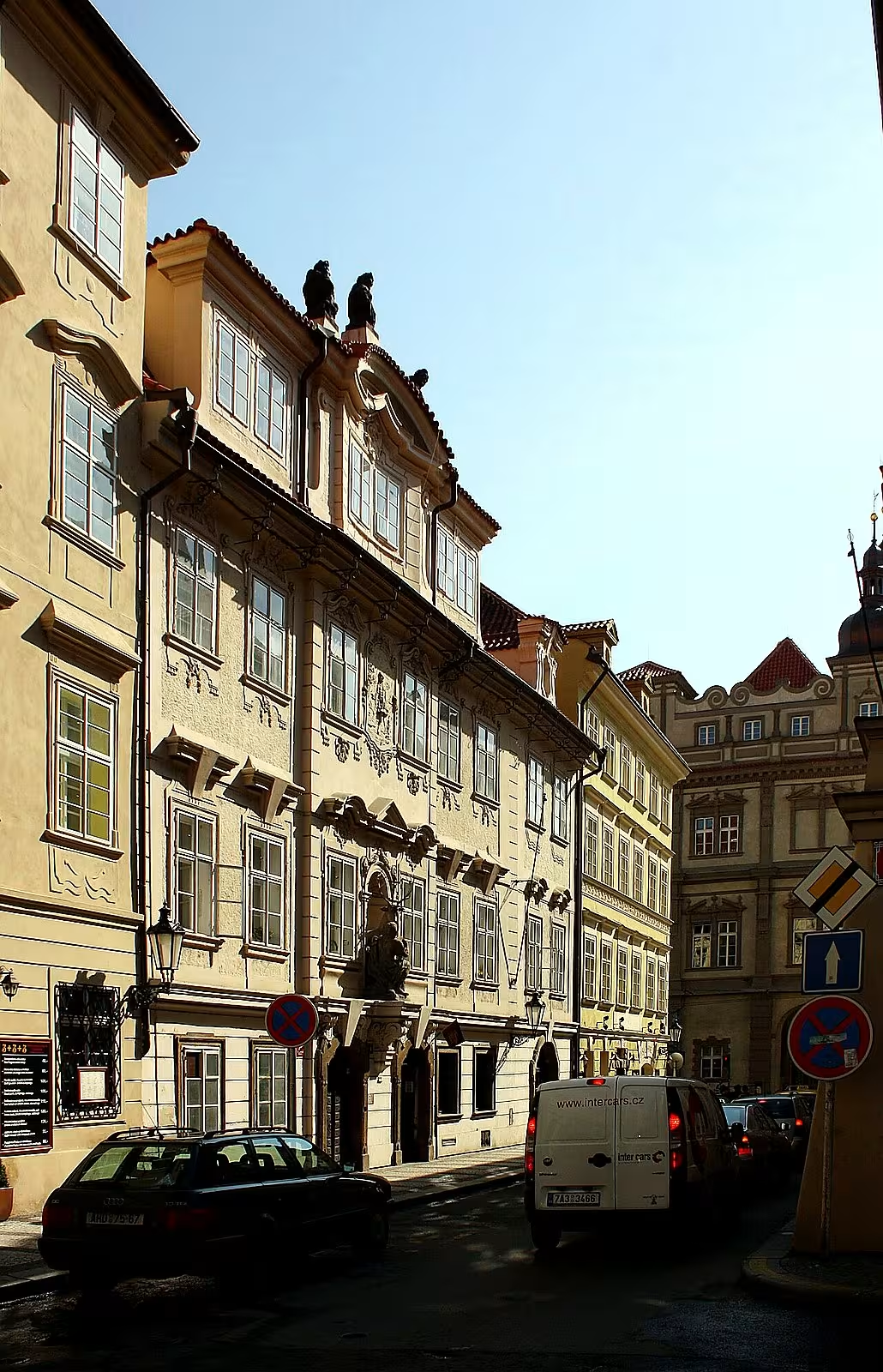
The House U Zlatého jelena is a significant Renaissance building in Prague's Malá Strana neighborhood, near the Augustinian Church of St. Thomas. Dating back to the 16th century, this historic house boasts a well-preserved baroque facade, added in 1726. As part of the Historic Centre of Prague, a UNESCO World Heritage Site, the house U Zlatého jelena is a must-visit destination for those interested in Prague's rich architectural heritage.
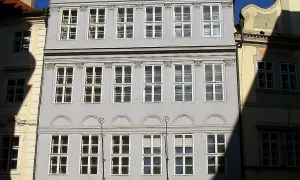
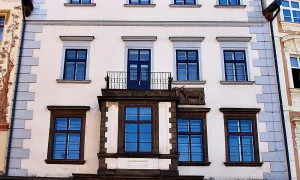
Built in the 16th century by František Tondl, the house retains its original Renaissance character in its rectangular shape and mansard roof. However, significant baroque renovations in 1726 added a baroque facade and a decorative stone sign featuring a scene of Saint Hubert meeting a miraculous stag. The facade is adorned with baroque architectural elements, including portals, profiled window frames, and a richly decorated sign.
The house has undergone several renovations and restorations over the centuries, including the addition of a mansard roof and enlarged windows. Although the current owners are unknown, Jan Kašpar Friedrich oversaw the baroque renovations in 1726. The house was declared a cultural monument in 1958.
One of the house's most striking features is its unique sign, depicting a scene from Czech folklore. The house is also notable for its association with the nearby Augustinian Church of St. Thomas. The house's baroque facade and sign are a testament to the city's rich cultural and artistic heritage.
Today, the house U Zlatého jelena is a significant part of Prague's historical architecture, with its well-preserved facade a must-see for those interested in the city's rich cultural heritage. Visitors can admire the house's unique sign and baroque facade, and learn more about the house's history and significance in Prague's architectural development.
Then and now
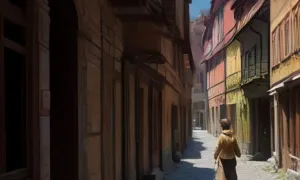
Drag the slider to compare how the landmark may have looked when it was built with the view today.
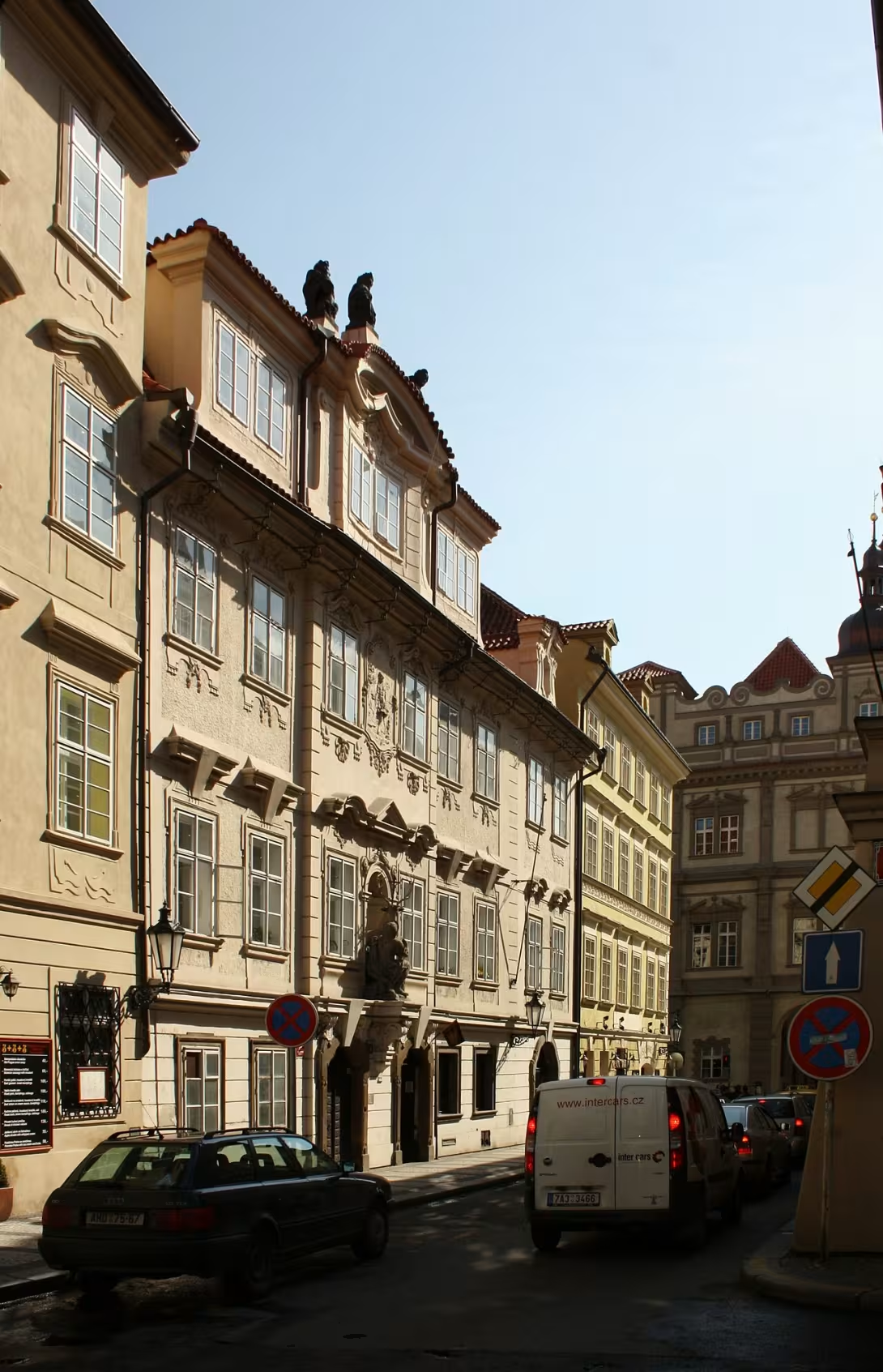
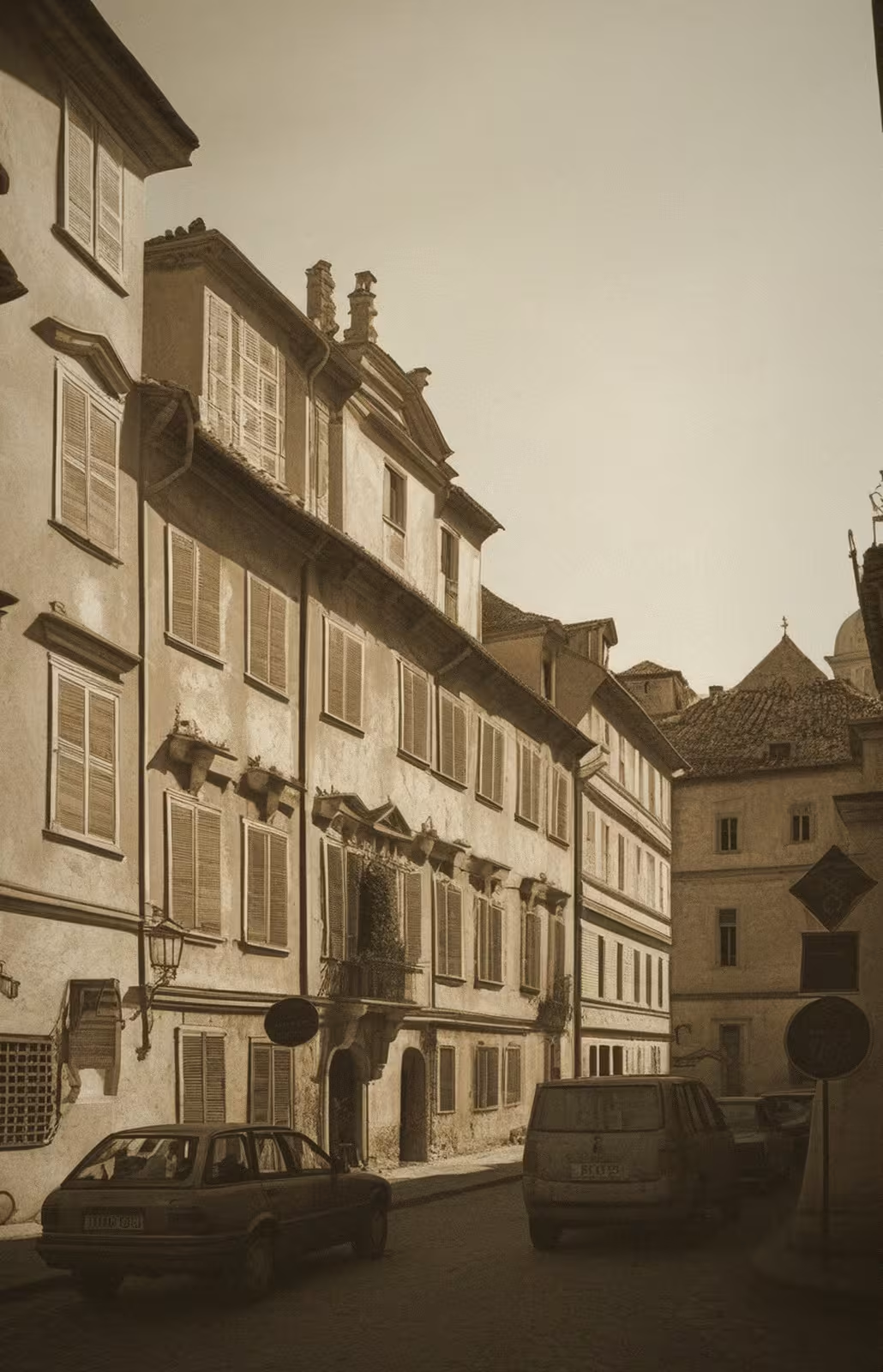
The historical appearance on the left is an AI-generated visualisation and serves as inspiration only.
Historical milestones
- 1558
- The house was built by František Tondl
- 1726
- The house underwent significant baroque renovations
- 1958
- The house was declared a cultural monument
Architectural development
The house was built in the 16th century with a Renaissance character. It underwent significant baroque renovations in 1726, which included the addition of a baroque facade and a domovnice. The house has undergone several other renovations and restorations over the centuries, including the addition of a mansard roof and the enlargement of the windows.
Historical events
The house was built in the 16th century
The house underwent significant baroque renovations in 1726
The house was declared a cultural monument in 1958
Owners
František Tondl, Jan Kašpar Friedrich
Points of interest
– František Tondl, the original owner of the house, was a wealthy merchant who played a significant role in the development of Prague's Malá Strana neighborhood.
– The baroque facade of the house features a decorative stone sign depicting Saint Hubert meeting a miraculous stag, which is a unique and striking feature of the building.
– The house has undergone several renovations and restorations over the centuries, including the addition of a mansard roof and enlarged windows, which have helped to preserve its original Renaissance character.
– The house U Zlatého jelena is closely associated with the nearby Augustinian Church of St. Thomas, which is a significant cultural and historical landmark in Prague.
– The house was declared a cultural monument in 1958, recognizing its importance in Prague's architectural heritage and its contribution to the city's rich cultural and artistic history.
Guide
This guide is narrated by a synthetic voice generated by artificial intelligence.
Show guide text
This text was created by artificial intelligence and has not been editorially reviewed. It may contain inaccuracies.
The townhouse called U Zlatého jelena is located on Tomášská street in Malá Strana. Like the neighboring houses, it has Renaissance origins, but its present appearance was determined by an expensive Baroque reconstruction from seventeen twenty-six.
In the Middle Ages, the plot here was under the administration of an Augustinian monastery at Saint Thomas. After the Malá Strana fire in fifteen forty-one, the plots were newly divided and new houses began to be built. The original Renaissance house was built shortly before fifteen fifty-eight by builder František Tondl. By the end of the sixteenth century, it was gradually expanded. In sixteen oh-seven, its back part was modified so that access to the monastery was enlarged. Around sixteen thirty-six, the house expanded onto the plot of a former lane leading to the monastery, but no cellar was created under this section.
A fundamental transformation was carried out in seventeen twenty-six by the then owner Jan Kašpar Friedrich. The Baroque reconstruction design is attributed to Kiliánus Ignatius Dientzenhofer. The house sign and busts of three emperors are probably the work of sculptor Ferdinand Maximilian Brokoff. The authorship of either one is not directly documented. However, the fact that both artists were working for the neighboring Augustinian monastery of Saint Thomas at that time speaks in its favor. Until seventeen ninety, further modifications followed, primarily the windows facing the Church of Saint Thomas were enlarged. Later Classical interventions were only minor.
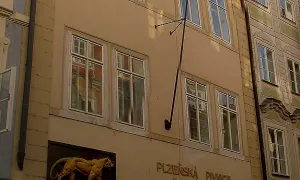
The townhouse has a rectangular floor plan and a mansard roof. From it rises a large dormer window and on its gable stand three stone busts of Roman emperors. The three-story facade facing Tomášská street is decorated with Baroque stucco and stone elements, portals and profiled window frames. In the niche above the double portal is a house sign which gave the house its name. It depicts Saint Hubert's encounter with a miraculous deer.
Since nineteen fifty-eight, the house has been a cultural monument. It belongs to the Prague Monument Reservation, which is registered under the name Historic Centre of Prague on the UNESCO World Heritage List.
Frequently asked questions
Can the monument be visited?
This is a residential or farm building, not a museum with opening hours. Please view it from public space and respect the owners' privacy. We have no information about access to the interior.
Where is the monument?
Location: Praha 1, Hlavní město Praha. The map on this page shows the exact spot.
Why is the monument protected?
It is listed in the Central List of Cultural Monuments of the Czech Republic as a cultural monument (register no. 1000150988).
Businesses nearby
Do you run a restaurant, accommodation, shop, museum, rental, wellness or other visitor service near this monument? Show yourself directly to the people heading to it — this is how they will see you in the app and on the web:
Events nearby

Zdroj akcí: otevřená data měst a obcí ČR (Národní katalog otevřených dat) a kalendář akcí Národního památkového ústavu.
Nearby
The house is located in the Malá Strana neighborhood of Prague, near the Augustinian Church of St. Thomas.
Accommodation nearby
Trips and activities nearby
Guided tours, tickets and activities nearby from GetYourGuide
Affiliate link: if you buy from the partner, we may receive a commission. The price for you does not change.
Search tours and activities →Themed route
Trasa: Malá Strana
1. Augustinian Church of St. Thomas (kostel) - worth visiting for its unique architecture and history, it is also near the House at U Zlatý Jelen. 2. Valdštejn Garden (zahrada) - a peaceful spot in the heart of Malá Strana, ideal for relaxation and strolling. 3. Wallenstein Fountain (kašna) - a historic fountain that is part of the Valdštejn Garden and is known for its beautiful architecture. 4. House at U Zlatý Jelen (dům) - the main destination on the tour, historically significant house with stunning architecture and rich history.
Seasonal recommendations
Jaro: In the spring season, the House at Zlatý jelene is surrounded by greenery and flowers, creating a pleasant atmosphere. The lighting is also specific in that it is softer and warmer. Practical tips: the best time to visit the house is in the morning or late afternoon to avoid ladies coming into town for shopping or lunch. It's advisable to wear comfortable shoes and clothing that allows easy movement on the pavement.
Léto: During the main summer season, the House at Zlatý jelene is very popular, so it's a good idea to arrive early to avoid crowds of people gathering around the house. The specific features are the warmth and sunshine, which create a pleasant environment. Practical tips: the best time to visit the house is in the morning or early afternoon to avoid crowds. It's advisable to wear sunglasses and scarves for sun protection.
Podzim: In the autumn season, the House at Zlatý jelene is surrounded by the colors of autumn nature, creating a beautiful atmosphere. The weather is also cooler, so it's good to dress warmly. Practical tips: the best time to visit the house is in the morning or late afternoon to avoid ladies coming into town for shopping or lunch. It's also advisable to wear warm shoes and clothing that allows easy movement on the pavement.
Zima: In the winter season, the House at Zlatý jelene is uncovered and brightly lit, creating a pleasant atmosphere. The weather is also cooler, so it's good to dress warmly. Practical tips: the best time to visit the house is in the morning or early afternoon to avoid ladies coming into town for shopping or lunch. It's also advisable to wear warm shoes and clothing that allows easy movement on the pavement.
Visualizations and artistic views


The visualisations are generated by artificial intelligence and serve as inspiration.
Photos from the area
Real photos taken near the monument

Zdroj a licence jsou uvedeny u každého snímku.
Tips from visitors
No tips yet. Be the first!
Log in and add your tip.
Sources and literature
Photos: Matěj Baťha / CC BY-SA 3.0 — Wikimedia Commons. The author and licence also appear when you hover over the image.
Faktickým podkladem tohoto textu byl článek na Wikipedii, jehož autory jsou přispěvatelé Wikipedie. Článek je dostupný pod licencí CC BY-SA 4.0.
Location on the map
More monuments – Praha 1
Show all in the municipality

Příběhy a pověsti
Legendy, pověsti a příběhy spjaté s touto památkou
Fotografie návštěvníků
Zatím žádné fotografie. Buďte první, kdo přidá fotografii z návštěvy!
Log in a přidejte svou fotografii nebo hodnoťte.
Za ověřenou návštěvu v aplikaci získáte víc bodů — poznáme podle GPS, že jste na místě.
Reviews and comments