






Dům Ve dvoře House
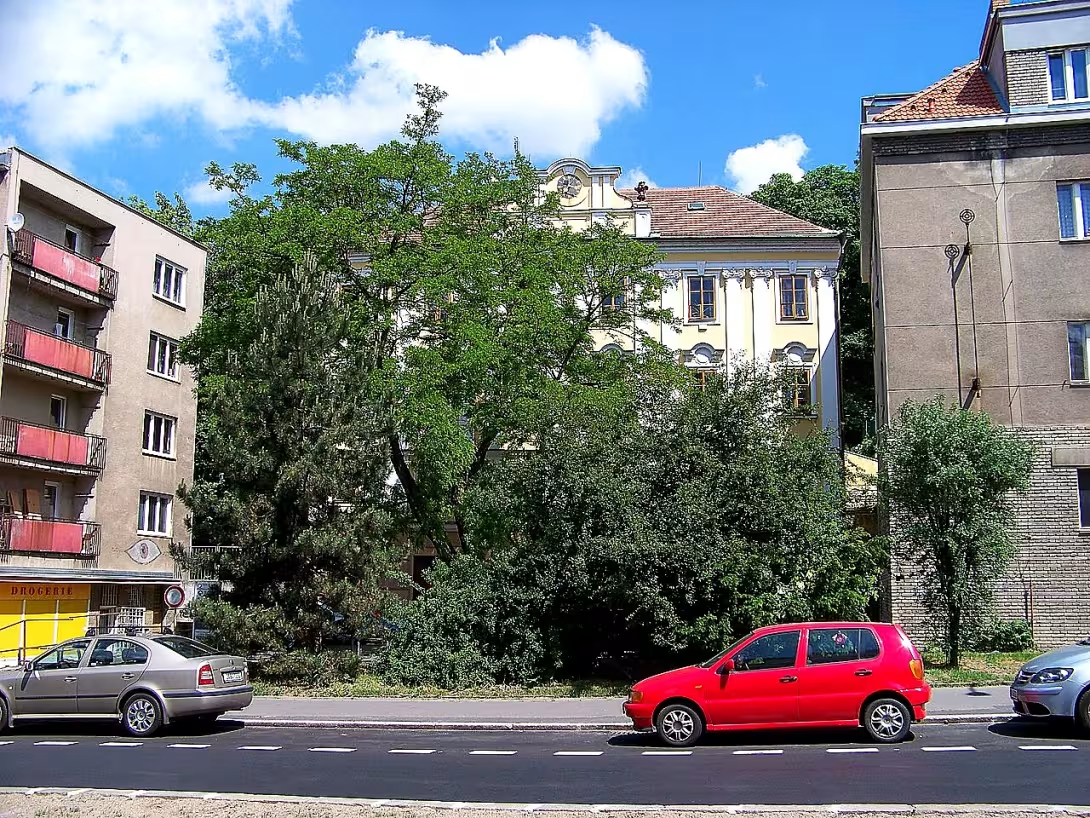
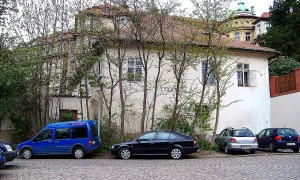
Dům Ve dvoře, also known as the Podolský Court, is a historical monument located in the street of Yeremenkova no. 411-9 in the village Praha-Podolí. This unique object represents the remnants of once several settlements in the village of Dvorce and is remarkable by its neo-Baroque facade, which was created during the reconstruction in 1870-1880. Originally built in the late 18th century, the house was preserved despite the demolition of two adjacent economic buildings in 1966 and is now protected as a cultural monument.
Dům Ve dvoře was built at a time when Europe was going through a period of Enlightenment and Industrial Revolution. These historical contexts had a major impact on social and cultural life, which was reflected also in architecture and urban planning at the time. Although the concrete details of the original construction are not documented, it is known that the object gained its present neo-Baroque appearance during the reconstruction in the early 19th century.
Architecturally, Dům Ve dvoře boasts neo-Baroque elements that were introduced during its reconstruction in 1870-1880. This style is characterized by rich decorative elements and harmonious symmetry, making the house visually attractive even in terms of historical importance. Although the specific materials used in this reconstruction are not documented in detail, it can be assumed that normal building materials of that period have been used.
History of ownership and administration of the house It's not recorded in the yard. However, it is known that the building underwent a significant change in 1966 when two adjacent economic buildings were demolished. This event could affect not only the physical structure of the surroundings, but also the historical context of the house as monuments.
Dům Ve dvoře is today protected as a cultural monument and represents an important element of local heritage. Its neo-Baroque facade and historical roots make it an interesting location for visitors who are interested in the architecture of the 19th century and the history of the Praha-Podolí region.
Visit the Mine In the yard offers a unique opportunity to explore part of local history and appreciate architectural details that have been preserved despite changes over the years. This monument is not only an important historical object, but also a reminder of the past and its impact on the current landscape. It is a place worth visiting for anyone interested in the history and architecture of the Czech Republic.
Dům Ve dvoře is a reminder of the past, which has preserved its beauty despite time changes. Its neo-Baroque facade and historical significance make it not only a monument, but also an inspiration for those who want to understand the wealth of local heritage. Visiting this building is an opportunity to appreciate not only architectural beauty, but also the history and culture of the Praha-Podolí area.
Historical milestones
- end of 18th century
- Status of the original house in the yard
- 1870-1880
- Rebuilding the house to a neo-Baroque style
- 1966
- Demolition of two adjacent economic buildings
Architectural development
The house was originally built in the late 18th century and gained a neo-Baroque look during the reconstruction in 1870-1880. There were changes in 1966 when two adjacent economic buildings were demolished.
Historical events
- 1966
- The demolition of two adjacent economic buildings.
Points of interest
- Dům Ve dvoře is a historical monument located in the street Yeremenkova no. 411-9 in the village Praha-Podolí. - This unique object represents the remnants of once several settlements in the village of Dvorce and is remarkable by its neo-Baroque facade, which was created during the reconstruction in 1870-1880. - Originally built in the late 18th century, the house was preserved despite the demolition of two adjacent economic buildings in 1966 and is now protected as a cultural monument. - Dům Ve dvoře was built at a time when Europe was going through a period of enlightenment and industrial revolution. - Architecturally proud of the neo-Baroque elements that were introduced during its reconstruction in 1870-1880.
Guide
Show guide text
This text was created by artificial intelligence and has not been editorially reviewed. It may contain inaccuracies.
Welcome to Prague, namely its quiet and historically rich part called Podoli. Right now, listening to these words, you're standing right in front of one of the most important witnesses to the past of this area. In front of your eyes is a building that bears the name Dům Ve dvoře. You may at first glance think it's just one of the many residential buildings on this street, but if you stop, take a deep breath and allow us to take you on a short journey through time, you'll realize what an extraordinary place you just found. You're standing in the street of Yeremenkov, and this particular object, this building, is one of the few leftovers we have left to understand what this place looked like before.
Look at the house and try to imagine what was here before. This house is not just a lonely object. It's the last living clue of an ancient settlement called the Dvorce. Imagine that in this place where people go to work or come home today, there once was a whole concentration of homestead. It wasn't just one building, but the whole community center, where they lived, worked, and where the local history was made. Today, however, the situation is different, and this house is the only survivor that allows us to look into the ancient, fragmented form of the Dvorce settlement. It's like the last page of a very old book that tells us about how this place was changing from a rural character to a part of a big city.
If we now attempt to return even further to the past in the spirit of our ancestors, we must move towards the end of the eighteenth century. This was the time when the foundations of what we are seeing today began to lie here. It was then, at the end of the eighteenth century, that the original house was built in the courtyard. At that time, there was probably a completely different atmosphere, a different rhythm of life, dictated by nature and working on the soil. This house was then part of a larger whole, part of a living settlement that had its own rhythms and traditions.
But now pay close attention to what you see right in front of you on the very face of this house. Even though its roots go deep into the past, its present appearance, which you were so interested in, is the result of much later times. Notice his facade. It was in the thousands of eight hundred seventy to eighty years that this house had undergone a major transformation. During this reconstruction, the house was transformed into a style we call neo-Baroque. This style strives for some elegance, for nobility and for a return to rich, decorated shapes that were popular in the past. Although we cannot say with certainty today what precise details were most appreciated at the time, the overall impression of the facade is clear - the house has a certain dignity and beauty that distinguishes it from simple chalets or modern buildings. This neo-Baroque face was a deliberate step towards making the house more significant and representative.
Looking at this facade, you can ask who was behind this transformation. Who was the man who built the first stones in the eighteenth century, and who was the artist who designed this beautiful facade in the eighteenth half of the nineteenth century? Unfortunately, history has not given us those names. The architects who shaped this house remained unknown in history. Their names were lost in the dust of time, but their work remains. It's a fascinating idea that even though we don't know the names of the creators, their work still speaks to the people who pass by them. Their visions and their work are still tangible in every profile and every shape you see on this facade.
But you have to realize that the view you see now is not exactly the same as it was a few decades ago. There is also one sadder chapter that has influenced the way this house operates today. If you look around you, you might notice that the space around the house seems a little lonely. It is because in the year one thousand nine hundred sixty-six there was a great change. In addition to this main house you see today, there were earlier economic buildings. These buildings formed one integrated unit with the house, one functional unit of the estate. It was buildings that used to work, to store crops, to live on a farm. However, these buildings were removed in the year one thousand nine hundred sixty-six. This demolition changed the face of the whole place and removed part of its original dimension. So today we see only this main object, which stands as a lonely monument to its ancient glory and its original, wider existence.
This house is today protected as a cultural monument. This means that its value is not only that it serves as a residential building, but that it is a memory carrier. It is an object that reminds us that Prague has not always been a city of large palaces and wide boulevards, but that its roots reach into small settlements, into these particular streets and into these particular houses. Dům Ve dvoře is a bridge between today and the time when life here was different.
Stop for a moment and feel the atmosphere of this place. Even though it's quiet here today and the house is for living, in its walls it can feel the weight of time. It's a fascinating contrast between what is fleeting and what remains. Those economic buildings have disappeared, the people who lived here are long gone, even the architects are forgotten, but this house is still standing. He's still here to remind us of his neo-Baroque beauty and his history, which began over 200 years ago.
I hope this short journey over time has helped you see this house a little differently. It is no longer just an ordinary building on the street of Yeremenkov, but it is a witness of transformations, a witness of the defunct village of the Dvorce and a witness of the human quest for beauty, which will persist despite changes in the surroundings. Please continue your walk around Podolí and pay attention to other details of this area. Every street and every older house here can have their own story, just waiting for someone to listen. Thank you for spending this moment with us and for being interested in the history of this place. We wish you a beautiful rest of the day and a pleasant discovery of other secrets of our history. Goodbye.
Tips for visitors
The best time to visit Dům Ve dvoře is early spring or autumn - soft light and fewer visitors will allow quiet tours and better photographic conditions.\ n\ nHouse is easily accessible by car; near you will find public parking, where you can park. The location is connected by tram and bus - check the current connection in the search engine or on the transport portal.\ n\ n When visiting, wear comfortable shoes, umbrella or raincoat in case of bad weather, a bottle of water and a camera or a mobile phone with a good camera. The inner spaces can be colder, therefore a light jacket is useful.\ n\ n For photography are the most interesting places before the neo-Baroque facade, in the inner courtyard and on the west side of the building where the afternoon sun creates pleasant shadows. Use the natural light and avoid direct sun at noon so that the architecture details are not deleted.\ n\ nV surrounding Dům Ve dvoře are not listed in the background specific other monuments but area Podolí offers quiet walks along the river and local cafés where you can relax after the tour.
Businesses nearby
Do you run a restaurant, accommodation, shop, museum, rental, wellness or other visitor service near this monument? Show yourself directly to the people heading to it — this is how they will see you in the app and on the web:
Events nearby

Zdroj akcí: otevřená data měst a obcí ČR (Národní katalog otevřených dat) a kalendář akcí Národního památkového ústavu.
Nearby
🏰 Historic sites (1678)
- František Klinger 0.2 km
- Karel Klinger 0.2 km
- František Klinger 0.2 km
- Karel Klinger 0.2 km
- svatý Jan Nepomucký 0.6 km
- Panna Maria Svatohorská 0.6 km
- 100. km elektrických drah 0.6 km web
- Jaroslav Smutný 0.6 km
- Musoleum 0.8 km Nádražní 2 +420 721 029 804 web
- obětem Květen 1945 0.9 km
- Kostka Gallery 0.9 km
- Základní kámen TT Hlubočepy-Barrandov 1.0 km
- Pomník obětem 1945 Karel Špirk 1.1 km
- Artur Lederer 1.1 km
- Edita Ledererová 1.1 km
- Hradiště Děvín 1.1 km
- obětem a mstitelům 1.1 km
- Hugo Kaufmann 1.2 km
- Olga Kaufmannová 1.2 km
- Hanuš Kaufmann 1.2 km
🍽️ Restaurants and dining (5508)
- Link Kitchen 0.0 km Jeremenkova 920
- OANH'S BANH MI 0.1 km
- Chilli and Lime 0.1 km Podolská 445/40 +420 608 962 655 web
- Čínské bistro FENG ZE 0.1 km Podolská 451/38 +420 241 403 146;+420 723 298 776
- Kofyka Café 0.1 km Podolská
- Gemüse Corner Kebab 0.2 km
- Kebab To go 0.2 km +420773745185
- SOHO 0.2 km Podolské nábřeží 1108/1 web
- Prima Kantýna 0.2 km Podolská 401/50 +420775658412 web
- Pizza Napoletana 0.2 km
- Kikiriki Gril 0.2 km
- Tančírna 0.3 km
- Ristorante Da Toni 0.3 km +420 777 115 170 web
- Restaurace Njů bába 0.3 km +420 223 010 245 web
- La Carezza 0.3 km
- Bistro Na Kavčích Horách 0.5 km Na Kavčích horách web
- Gaviota 0.5 km +420 737 454 431 web
- Kavárna Nová hra 0.6 km +420 603 437 734 web
- Stop Cafe 0.6 km
- Plavecké občerstvení 0.6 km Podolská 47
🏨 Accommodation (823)
- Hotel Sanssouci 0.2 km web
- Hotel Bohemians 0.3 km Modřanská 1107/51 web
- Botel Racek 0.5 km +420 241 004 811 web
- Minihotel Vitex 0.8 km Pravá 619/6
- Praguecamp 1.0 km Císařská louka 162 +420 702 145 150 web
- U Divadla 1.2 km U Staré pošty 247/6 +420 777 738 609 web
- Apartmány Flora 1.3 km Nedvědovo náměstí 3
- Apartmány a ubytování Vila Barbora 1.3 km Doudova 22
- Sporthotel Oáza 1.4 km +420 241 440 820 web
- Hotel iNOS 1.4 km
- Start 1.4 km Branická 146 +420244462950 web
- Prokop 1.4 km
- Panorama Hotel 1.6 km Milevská 1695/7 +420 261 161 111 web
- Hotel Coronet 1.6 km
- Hotel Pankrác 1.6 km Na Pankráci 76 +420 261 211 918
- Occidental Praha 1.7 km +420 296 772 111 web
- hotel Vladař 1.7 km
- Caravan Park Yacht Club Císarská Louka 1.7 km Cisařská louka 599 +420 257 318 387 web
- Hotel Oya 1.7 km Na Pankráci 109 +420 261 210 796 web
- Hotel Otar 1.7 km Sevřená 8 +420 261 212 431
🚲 Rentals and sport (541)
- Skicentrum Podolí 0.1 km web
- Geokeš 0.2 km Podolská 42 +420 607 497 388 web
- Klub Kanoistů Slavia 0.3 km
- Krab Cycles 0.4 km Modřanská 1107/51 +420 777 827 399 web
- Loděnice Bohemians 0.4 km
- Půjčovna lodiček 0.5 km +420 739 000 022 web
- Plavecký areál Podolí 0.5 km Podolská 47 +420 220 407 311;+420 241 431 795 web
- Armádní sportovní centrum Dukla 0.7 km +420 973 219 582 web
- Tělocvičná jednota Sokol Pražský 0.7 km web
- Hoffi Surf Shop 0.7 km Modřanská 33/120 web
- ŘEKA - Klub pro vodní sporty, z.s. 0.8 km web
- Český veslařský klub Praha 0.8 km
- Vodácký Ráj 0.8 km Císařská louka ev.27 +420 257 215 439;+420 603 441 272 web
- Veslařský klub Blesk 0.8 km
- Sokol Praha Podolí 0.8 km
- Bajkazyl 0.9 km
- Wellness Club MIDA 1.0 km Pod Klaudiánkou +420739421127 web
- Bikestore.cz 1.0 km Podolská 245/116 +420 257 311 113 web
- Caravan Centrum 1.1 km
- SmíchOFF 1.2 km +420 604 240 887 web
🥾 Hiking and nature (468)
- Kavčí hory 0.4 km
- Vávrova vyhlídka 0.5 km
- Skála Rozloučení 0.6 km
- Milenecká vyhlídka 0.7 km
- Park Adolfa Borna 0.7 km
- Jezerka 0.9 km
- Klobouček 1.1 km
- Libušina studánka 1.5 km
- Magorova studánka 1.8 km
- Děvín 1.8 km
- Pod Děvínem 1.8 km
- Vyšehrad 2.0 km
- Karlachovy sady 2.0 km
- Slavín 2.0 km
- Štulcovy sady 2.1 km
- Paví vrch 2.2 km
- Park Josefa Kohouta 2.3 km
- Na Rovinách 2.3 km
- Social Impact 2 2.4 km Radlická
- park Na Pláni 2.4 km
Accommodation nearby
Trips and activities nearby
Guided tours, tickets and activities nearby from GetYourGuide
Affiliate link: if you buy from the partner, we may receive a commission. The price for you does not change.
Search tours and activities →Themed route
Thematic cruise route from Prague-Podolí
1.Dům Ve dvoře (house) Type: Historical object Why is it worth a visit: This Classicist House, built in the first half of the 19th century, is an example of the architectural art of that time and provides insight into the life of the people of those years. It is an ideal place for those interested in history and architecture.
2. St. John Nepomuk Chapel (Chapel) Type: Religious monument Why is worth a visit: The chapel is located near the house and offers a quiet place to relax. It is a beautiful example of Baroque architecture, which can be an interesting addition to visiting a house in the yard.
3. Church of St. Nicholas (church) Type: Church building Why is it worth a visit: This church is the historical center of the village and offers a view of rich church architecture. It is suitable for those who wish to learn more about the spiritual life of the region.
4. Municipal Office (historical building) Type: Historical administration building Why is it worth a visit: This building, located in the centre of the village, is an example of local administration from previous years. It is interesting for those who want to make an impression on the historical functioning of the community.
5. Church Park (park) Type: City Park Why is worth a visit: The park offers an opportunity to relax and walk in a quiet green zone. It is an ideal place to relax after exploring the historical places of the village.
This route offers a view of the cultural and historical wealth of the village Praha-Podolí, with an emphasis on its key monuments.
Seasonal recommendations
Spring: In the spring season Dům Ve dvoře in Praze- Podolí is specially lit by sunlight, which are projected through foggy air and brings pastel colors to the green environment. This atmosphere is ideal for relaxing and exploring historical walls of the house in peace, as visitors do not return in large after winter months. It is recommended to visit in the morning or later in the afternoon to avoid possible doses and enjoy a quiet moment. Clothes should be suitable for mild weather with the possibility of adapting to rapid temperature changes.
Summer: In summer Dům Ve dvoře is surrounded by living and green nature, which offers ideal space for relaxation under the shadow of old trees. The sunlight illuminates the architectural details of the house in its full glory, which is the perfect time for photography and sightseeing walks. Due to the popularity of the summer season we recommend to come earlier afternoon or a selection of weekends where visitors can be more frequent. Clothes should be light and light, with sun protection such as hats or scarves.
Autumn: In autumn, Dům Ve dvoře is surrounded by colorful leaves falling trees, creating a unique and romantic atmosphere. The sunlight is soft and warm, which increases the beauty of the historical architecture of the house. This period is ideal for visiting on quiet days when try to avoid Saturdays or holiday weeks. It is recommended to wear clothes suitable for colder weather and the possibility of rain such as a combination of warm top with water protection.
Winter: In winter Dům Ve dvoře offers a peaceful impression under covered snow trees or wet, cool atmosphere. The sunlight at this time illuminates home in a special way and brings peaceful moments for a tour without large crowds. Opening hours may be limited, so it is appropriate to plan accordingly. It is recommended to wear warm clothes and protective shoes against frost and snow in order to enjoy your visits in peace.
Visualizations and artistic views


The visualisations are generated by artificial intelligence and serve as inspiration.
Photos from the area
Real photos taken near the monument


Zdroj a licence jsou uvedeny u každého snímku.
Tips from visitors
No tips yet. Be the first!
Log in and add your tip.
Sources and literature
Photos: ŠJů (cs:ŠJů) / CC BY-SA 3.0 — Wikimedia Commons. The author and licence also appear when you hover over the image.
Faktickým podkladem tohoto textu byl článek na Wikipedii, jehož autory jsou přispěvatelé Wikipedie. Článek je dostupný pod licencí CC BY-SA 4.0.
Location on the map
Příběhy a pověsti
Legendy, pověsti a příběhy spjaté s touto památkou
Fotografie návštěvníků
Zatím žádné fotografie. Buďte první, kdo přidá fotografii z návštěvy!
Log in a přidejte svou fotografii nebo hodnoťte.
Za ověřenou návštěvu v aplikaci získáte víc bodů — poznáme podle GPS, že jste na místě.
Reviews and comments