



Dům zemědělské osvěty Administrative building
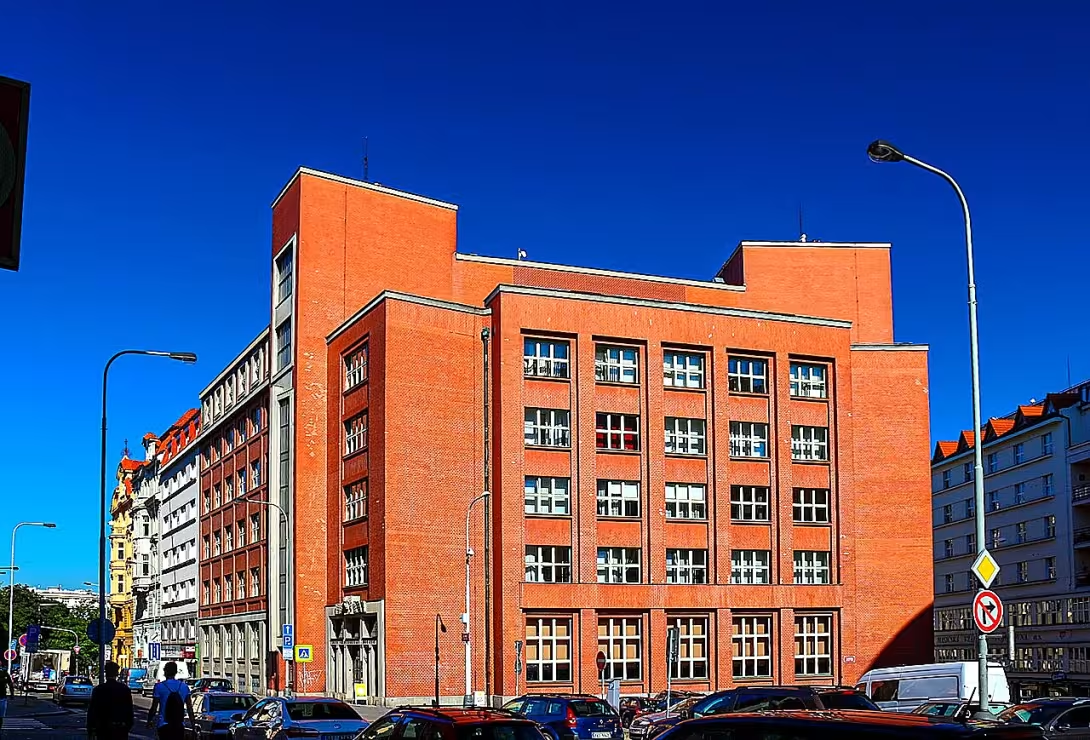
Dům zemědělské osvěty, located on the corner of the streets of Rome, Blanici and Silesia in Prague 2-Vinohrady, is an architectural work of Josef Gočár. This building from the years 1924-1926 has a reinforced concrete square construction with brick facade and stylized interiors, making it a unique example of Art Nouveau. The importance of the building underlines its location in the City Monument Zone Vinohrady, Žižkov and Vršovice, where it is recognised as a separate cultural monument. Originally served as a centre of agricultural education; today there are various institutions, such as the Czech Breeding Inspection and the State Veterinary Administration.
The creation of the House of Agricultural Inflation is closely linked to the processes of modernization and industrialization in the first half of the 20th century in Czechoslovakia. The architecture at the time often reflected new aesthetic directions such as Art Nouveau, which is evident in this object. Josef Gočár, author of the building, has contributed his innovative work to shaping Prague's city face.
The structure of the building is excellent with functional and stylized design. The reinforced concrete base structure ensures stability, while the brick facade increases its aesthetic value. There are sandstone reliers above the northern and southern portals, created in 1927 by sculptor Otto Gutfreund. The picture of the Observer depicts a woman's face with grain ears, while the relief of the Vineyard adorns the stylized vine.
After completion in 1926, the building became a centre for agricultural education and development. Over the years, there have been various organisations contributing to the modernisation and promotion of Czech agriculture. At present it is home to the Czech Breeding Inspection, State Veterinary Administration and other bodies focused on the agricultural economy and research.
The key moment was the installation of sandstone reliers in 1927, which gave the building a characteristic look. These artistic elements not only decorate the facade, but also symbolize agricultural tradition and innovation.
Dům zemědělské osvěty can today visit interested people for historical architecture and the importance of agriculture in the Czech context. Although the building is located in an urban environment, its design and location make it an exceptional monument worth visiting.
The building reminds of the time when modernization and tradition intertwined in a unique architectural form. As a witness to the history and development of Czech agriculture, it represents not only cultural heritage but also inspiration for future generations. Visiting this monument allows you to appreciate the work of Josef Gočár and understand the role of agriculture in the Czech context.
Then and now
Drag the slider to compare how the landmark may have looked when it was built with the view today.
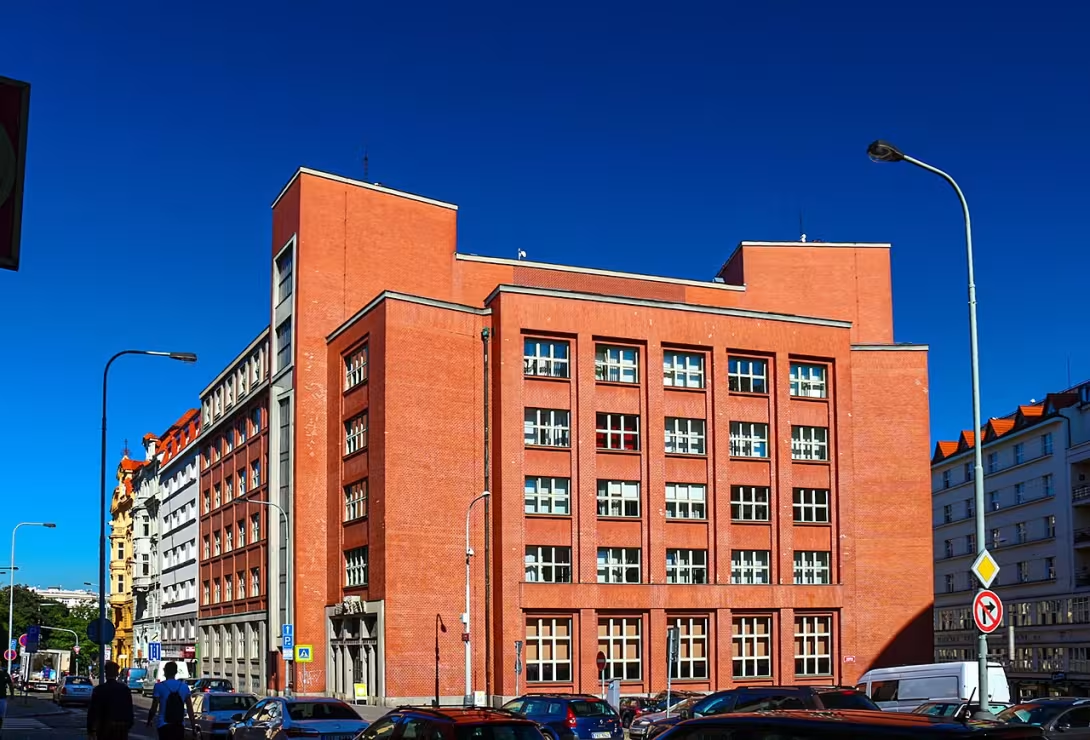

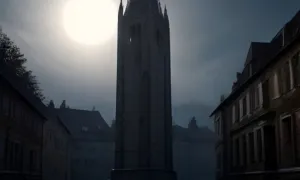
The historical appearance on the left is an AI-generated visualisation and serves as inspiration only.
Historical milestones
- 1924
- Start of the construction Home of agricultural education
- 1926
- Completion of the construction of the Home agricultural education
- 1927
- Installation of sandstone reliers from Otto Gutfreund on the building
Architectural development
The building was built in 1924-1926 as a functional and stylized structure. It is characterized by its iron concrete base, brick facade and sandstone reliers over portals.
Historical events
- 1927
- Installation of sandstone reliers over the north and south portals.
- 1926
- Building completion.
Points of interest
- Dům zemědělské osvěty is an architectural work of Josef Gočár. - The building has a reinforced concrete square construction with brick facade and stylized interiors, making it a unique example of Art Nouveau. - It is located in the City Monument Zone Vinohrady, Žižkov and Vršovice and is recognised as a separate cultural monument. - On the building are sandstone reliers created by sculptor Otto Gutfreund from 1927, which symbolize agricultural tradition and innovation. - After completion in 1926 it became a centre for agricultural education and development.
Guide
Show guide text
This text was created by artificial intelligence and has not been editorially reviewed. It may contain inaccuracies.
Welcome to the unique architectural work in the heart of Prague - Home of agricultural education. You are standing here in Vinohrady, where the streets of Rome, Blanická and Silesia intersect, making this place a real urban jewel. The building in front of you is an excellent example of the architecture of the 20th century and is one of Josef Gočár's most prominent creatures, one of the key figures of Czech modernity.
Let's dive into the history of this place. In 1924 the construction of the Home of Agricultural Instruction began and already in the following year, 1926, was completed. This building served as a centre for the development of agriculture and its creation reflected the ambition of the time - to link modern architecture with the practical needs of society. Josef Gočár, the architect of this work, imagined a building that would not only fulfil its function, but also take its form and design.
Look up at the facade. Note the brick facade with its simple yet elegant appearance. This construction is a combination of reinforced concrete and brick materials, which was then an innovation. What you may be particularly interested in are sandstone reliers on the facade, supplied by sculptor Otto Gutfreund. These artistic elements added another layer of aesthetic value to the building and show harmony between architecture and sculpture art.
Now pay attention to the interiors. The building is famous for its stylized furniture supplied by Josef Gočár itself. These elements not only decorate space, but also reflect the spirit of the time and philosophy of an architect who wanted to create a harmonious whole, where every detail has its function and form.
Let's look at some of the key stories and personalities associated with this building. Josef Gočár is one of the most important Czech modern characters whose works influenced architecture throughout the region. His work on Domo agricultural education shows his ability to combine functional and aesthetic aspects, thereby contributing not only to the city's visual and cultural wealth.
The location of this place is interesting in the City Monument Zone Vinohrady, Žižkov and Vršovice. This site is recognised as a separate cultural monument and attracts many visitors each year with its historical value and architectural appearance. Dům zemědělské osvěty is therefore not only a monument, but also an important element of local culture and history.
I recommend looking at the surroundings as Vinohrady offers many other architectural pearls and beautiful green spaces. Let yourself be inspired by this place and its history. I hope this guide has led you to a deeper understanding of this architectural work. When we meet again in another interesting place!
Tips for visitors
Best time to visit At home, agricultural education is in the spring or autumn season, when the weather is pleasant and sunlight allows you to capture the architectural details of the building beautifully. These months are also ideal for walking around where other historical monuments are located.
When you visit, take your purse with you so that you can walk comfortably through historical information about the building. This will give you a deeper understanding of the architectural importance and history of the site.
For photography it is best to wait for a time when the sun is not directly above your head, which is usually morning or evening. The most beautiful views can be obtained from Silesian and Blanic street, where the building is well lit.
In the vicinity of the House of Agricultural Instruction there is the Tobacco Direction building, which can be visited as another historical interest. It is also suitable for families with children to find out more about the fire department.
Frequently asked questions
Can the monument be visited?
The building is in use (offices, a school, shops and the like). The interior is generally accessible only during operating hours and tours are not usually offered; we have not verified the details. You can see the exterior from the street.
Where is the monument?
Location: Vinohrady, Hlavní město Praha. The map on this page shows the exact spot.
Why is the monument protected?
It is listed in the Central List of Cultural Monuments of the Czech Republic as a cultural monument (register no. 1000152275).
Businesses nearby
Do you run a restaurant, accommodation, shop, museum, rental, wellness or other visitor service near this monument? Show yourself directly to the people heading to it — this is how they will see you in the app and on the web:
Events nearby

Zdroj akcí: otevřená data měst a obcí ČR (Národní katalog otevřených dat) a kalendář akcí Národního památkového ústavu.
Nearby
Naproti se nachází Budova Tabákové režie, dílo architekta Aloise Dryáka. Na rohu ulic Slezské a Blanické je Hasičský dům (1926–28) a odvětrávací šachta metra.
Accommodation nearby
Trips and activities nearby
Guided tours, tickets and activities nearby from GetYourGuide
Affiliate link: if you buy from the partner, we may receive a commission. The price for you does not change.
Search tours and activities →Themed route
Thematic cruise route from the village Vinohrady
1. Dům zemědělské osvěty (Administrative Building) - This historic administration building is our main destination. Its architecture and significant role in the education of farmers make it necessary for a visit.
2. Tobacco directed building (architectural monument) - It is located opposite the Dome of Agricultural Information and is the work of architect Alois Dryák. Its unique design and historical significance make it interesting for lovers of architecture.
3. Fire house (historical construction site) - This building, built between 1926 and 1928, is located on the corner of Silesian and Blanic streets. It is interesting in its history and architecture, which reflects the history of firefighting in the region.
4. Subway ventilation shaft (infrastructure monument) - This shaft is part of the urban infrastructure and represents an interesting view of underground communication. Its location close to other targets from the visit makes the routes logical.
This route offers a view of the history and architecture of the Vinohrady area, each point having its unique characteristics and importance.
Seasonal recommendations
Spring: In the spring period, Dům zemědělské osvěty in Vinohrady is transformed into a magnificent flower region, where every trip offers a view of newly opened leaves and flowering shrubs. The sun illuminates the building with a special light that highlights its historical architectural character. It is advisable to be on time in the morning or later in the evening to avoid the initial crowd of tourists. Allowed to choose clothing with mild clothing and hat to protect from sunlight.
Summer: In the summer, the atmosphere around the monument is full of life when a green park is spread around. The sun floods space with light and heat, creating ideal conditions for long walks on the historic streets of Vinohrady. For an optimal visit it is recommended to come early in the morning or later in the evening to avoid the hottest time and load the crowd of tourists. The important thing is to bring warm clothes, an umbrella and plenty of drinking water.
Autumn: In the autumn period, the memory of a quieter tone is gained when leaves falling from trees cover the paths with a coloured and soft carpet. The sun becomes finer, creating a mild light that highlights the historical architecture of the building. It is advisable to be on time in the morning or later in the evening to avoid cold noon hours and possible crowd loads. It is recommended to wear warmer clothes with hat to protect against frosty winds.
Winter: In the winter months Dům zemědělské osvěty gains melancholy and quiet tone when snow covers streets and trees. The sun is weaker at this time, which gives room for another atmosphere full of calm and fatigue. The opening times of the monument may be shorter, so it is advisable to choose the time of the visit in the morning or later in the evening. It is recommended to wear warm clothes and protective legs for a comfortable stay inside the building.
Visualizations and artistic views


The visualisations are generated by artificial intelligence and serve as inspiration.
Photos from the area
Real photos taken near the monument


Zdroj a licence jsou uvedeny u každého snímku.
Tips from visitors
No tips yet. Be the first!
Log in and add your tip.
Sources and literature
Photos: VitVit / CC BY-SA 4.0 — Wikimedia Commons. The author and licence also appear when you hover over the image.
Faktickým podkladem tohoto textu byl článek na Wikipedii, jehož autory jsou přispěvatelé Wikipedie. Článek je dostupný pod licencí CC BY-SA 4.0.
Location on the map
More monuments – Vinohrady
Show all in the municipality
Příběhy a pověsti
Legendy, pověsti a příběhy spjaté s touto památkou
Fotografie návštěvníků
Zatím žádné fotografie. Buďte první, kdo přidá fotografii z návštěvy!
Log in a přidejte svou fotografii nebo hodnoťte.
Za ověřenou návštěvu v aplikaci získáte víc bodů — poznáme podle GPS, že jste na místě.
Reviews and comments