




Dvě celní kola Reconciliation cross
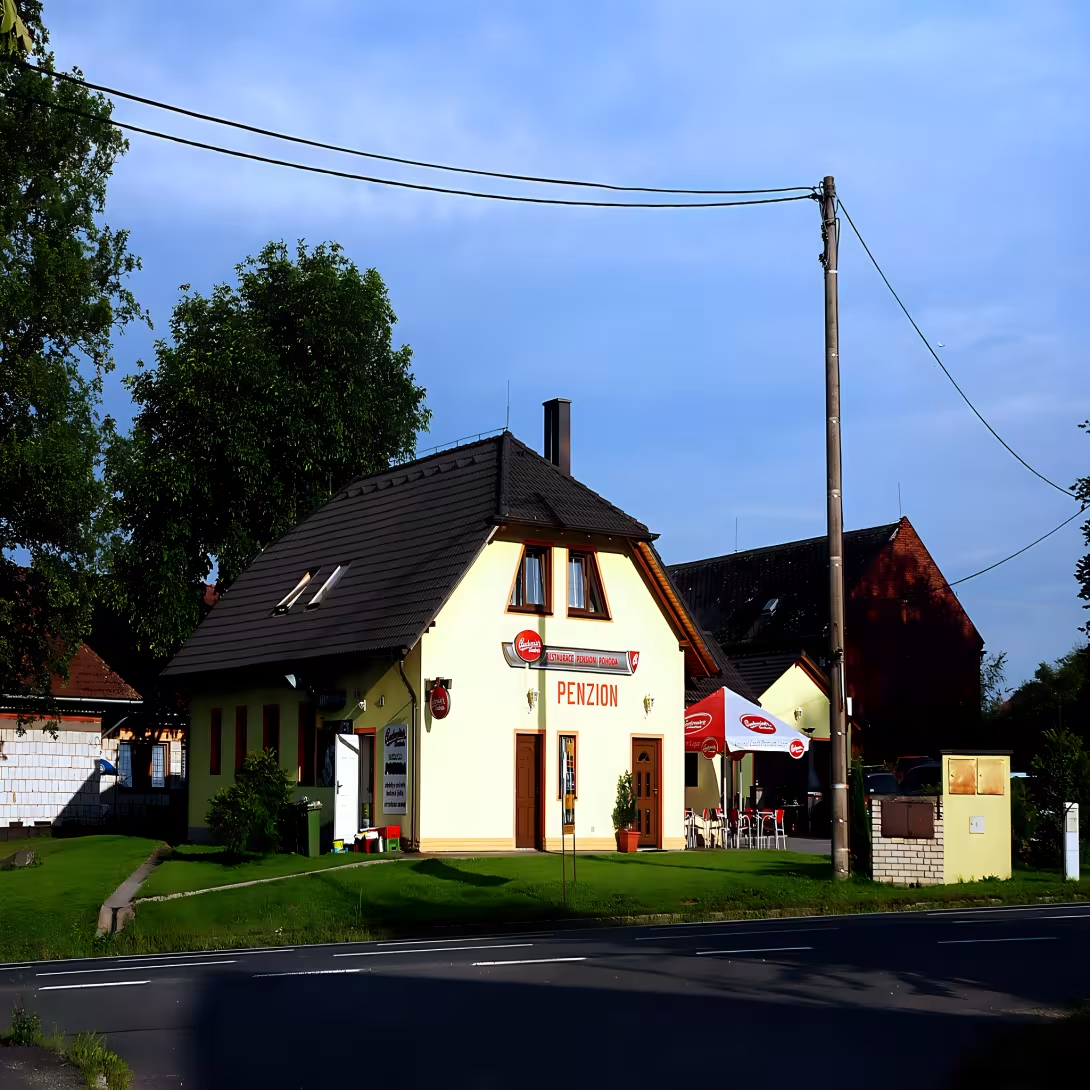
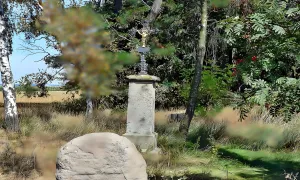
Two stone monolithic cross stones in the shape of circular stalks stand in the middle of the village Vítkov in the district of Tachov. These are monuments of the type of conciliation cross whose original purpose and circumstances remain unknown. Nevertheless, it is one of the protected cultural monuments of the Czech Republic. The quality stone works and their location in the centre of the village demonstrate their historical value, although the exact date of origin and the reasons for their establishment are not substantiated.
The peace crosses, whose original functions remain unclear, are often linked to the borders of the manor, the paths or places of tragic events. However, in the case of Vítkova, historical sources do not contain any specific information on their purpose. Their shape - circular stalks with cross motif - corresponds to the typical signs of medieval and early modern peace crosses, which could serve as border marks, monuments of unfortunate events or symbols of reconciliation. In the absence of written records, it cannot be established with certainty whether they belonged to one of these purposes or whether they had other meaning.
Architecturally, there are two stone monolithic crosses in the shape of circular stalks, which are carefully worked in stonework. Their simple, yet precise shape reflects the medieval tradition of stone monuments, which may not have been decorated, but whose meaning consisted precisely in the presence and symbolism. The local stone typical of the region probably served as material, but the exact determination of the stone and its origin is not documented.
No records of ownership or management of these crosses have been retained in the past. Today they are managed by the National Heritage Institute, which ensures their protection. Dramatic changes in their history are unknown, as it is a monument which was not the subject of any significant building modifications or reconstructions.
The interesting thing is their location right in the middle of the village, which suggests that they may have been of importance to the locals. There are other historical monuments in the area, such as the Castle Bezdružice, about 15 kilometres away. Although there are no specific historical events on these crosses, their existence enriches the region's cultural heritage.
Today both crosses in Vítkov are preserved in their original state and are freely accessible to the public. Their visit allows one of the few preserved examples of peace-keeping crosses in this area to be seen as expressed in the past by popular faith and tradition through stone. For tourists who are interested in local history and cultural monuments, they are an interesting and easily accessible destination when exploring the Tachova surroundings.
Points of interest
- Two stone monolithic cross stones in the shape of circular stalks are located in the middle of the village Vítkov. - It belongs to protected cultural monuments of the Czech Republic. - Their architectural shape and location in the centre of the village illustrate their historical value. - They are administered by the National Heritage Institute, which ensures their protection. - The location right in the middle of the village suggests that they may have been relevant to the locals.
Guide
Show guide text
This text was created by artificial intelligence and has not been editorially reviewed. It may contain inaccuracies.
Welcome to the village Vítkov, in the heart of the Pilsen Region, where time stopped in the form of two silent stone guardians. Legally, you are now standing in the very centre of the village, and before you stand two fascinating works, which both residents and visitors know under the name of two customs wheels. The first impression you're probably thinking is a sense of mystery and peace. You see two stone columns protruding from the face of the earth and controlling the space around them with their presence. They are objects that may seem modest at first glance, but on closer examination they carry the depth of centuries and stories that no one can tell us anymore with complete certainty.
Now let's think together about what these two customs wheels are and what their origins are. Although their name may be a little misleading and may give rise to ideas about transport or trade, it is something much deeper in terms of history and conservation. These objects are actually stone monolithic cross stones that are shaped by circular stalks. In the technical terminology we rank them among monuments of the type of peace cross. The peace crosses have been built in our regions in the past as symbols of forgiveness, reminders of tragic events or as part of an agreement between the culprit and the victim or their families. They were silent witnesses of human suffering, but also hope for reconciliation and inner peace.
However, when we look at the specific history of these two stones here in Vítkov, we come across a fascinating void. Their exact origin, the particular year they were carved, and the names of the people who placed them here remain unknown. We don't know who their architect was or who the stonemason master was who put his work into these blocks of stone. However, this ignorance does not remove anything from the monument, but gives it a certain mystical dimension. You're standing in front of objects whose original functions and circumstances of creation have been lost in the folds of time, and yet still standing here, firmly anchored in the ground, as a reminder of something important that once happened.
Now I ask you to pay full attention to the very form of these stones. Notice their material and structure. They're monolithic stones, which means each of them was carved from one single, large piece of stone. This required not only considerable power during transport, but above all great precision during processing. Look at their shape. They're not the classic crosses we know from church cemeteries, but they're shaped like circular stalks. Stele is basically an erected stone column that served as a symbol or inscription carrier.
Pay attention to the surface of the stones and the ways they have been worked. Although these monuments are exposed to the effects of weather, wind and rain for many generations, it is still possible to sense the quality of stonework. This precision shows the high historical value of these objects. Who in the past devoted many hours of patiently working hard stone to create works that would last centuries. Try to imagine the sound of a chisel hitting a rock and dust that was rising in the space where you're standing today. This craftsmanship is what makes these stones real art monuments and not just ordinary boulders.
When we look for key stories or personalities associated with this place, we have to accept the fact that the stones are silent. There are no records of any particular people connected to these crosses. No names, no dates, no letters. Maybe it's the most magical thing. These stones do not belong to one particular person, but they belong to the whole community, to the entire community of Vítkov and to all of us who are today their visitors. They become a universal symbol. They could be reminiscent of an unfortunate coincidence, an argument that ended tragically, or perhaps an expression of deep humility. The fact that they are located right in the center of the village suggests that they should have been seen by everyone, that they should have been part of the everyday life of people who lived here centuries ago.
And this is where we come to the greatest mystery of this place. Why are these peace crosses called customs? It's a name that carries a certain contradiction. The bike evokes movement, travel, business, while the stone cross evokes stopping, memory and eternity. Is it possible that there was some kind of customs control in the area or the place where the fees from traders were withdrawn, and these stones were connected to this place in people's memory? Or is it just a random name that's taken over generations and gradually replaced the real meaning? This question remains open and is left to your imagination. It is this ambiguity that makes the visit of Vítkov more than just a tour of historical objects. It is a journey to a secret that cannot be solved simply by reading a book, but requires a moment of reflection and perception of the atmosphere of the place.
Due to its irreplaceable value, these two tariff rounds are today classified as protected cultural monuments of the Czech Republic. This means that the State recognises their importance and ensures that they are imported in an unchanged form in the future. It is a recognition not only of their aesthetic value, but above all of their role as carriers of history, although this history is partly hidden. When you look at them, you don't just see two pieces of stone, but you see a bridge between us and our ancestors. You see evidence that people in the past felt the need to leave a mark, express regret, or record an event in such a way that those who come long after them can see it.
Now that you have looked at these unique monuments and tried to perceive their silent narrative, I suggest you stay silent for a while. Try to perceive the rhythm of the village Vítkov, which developed and grew around these stones. These two monolithic columns were there when they were spoken in a different way, when they were walking in different shoes and when the world looked completely different. They're like anchors that keep this place in touch with his past.
Let's slowly say goodbye to these silent witnesses. I hope you were interested in meeting two customs wheels and that you found inspiration for your own reflection on time and memory. Vítkov has many other corners that are worth exploring, and each aisle can hide its own little story. I invite you to continue your journey, to see the beauty of the Pilsen Region and to look for other clues of history that teach us humility and respect for what preceded us.
Thank you for a moment together at this fascinating monument. I wish you a pleasant rest of the day and many other discoveries on your travels. Change the headphones and let us take you around the village Vítkov. Goodbye.
Tips for visitors
The best time to visit is from May to September, when the weather is pleasant and nature in the surroundings is full of life. In winter the area is less visited but suitable for those who prefer a quiet environment. Always make sure the weather is favourable because stone monuments are exposed to the influence of weather.
Transport is possible both by car and public transport, but it is advisable to check current planning in the region for a precise connection.
To visit the sights it is advisable to wear high-quality shoes on fixed heels because the terrain can be impassable. It is also recommended to wear lightweight but durable clothing, which is easy to remove. It is also appropriate to take water, sunglasses and sun protection cream. It is useful for families with children to carry toys or small items to distract them.
The best places for photography are circular walls and their surroundings, where light is pleasant and composition is interesting. The best time for photography is in the morning or in the evening when light is softer and less discouraging from stone surfaces. Make sure the local rules are respected so that the monuments are not damaged.
The Castle Bezdružice, approximately 15 kilometres from Vítkova, is an interesting historical monument. It is suitable for exploring and exploring medieval architecture. You can see the castle walls, towers and other historical elements.
Frequently asked questions
Can the monument be visited?
This is a structure in a public space that can usually be seen from outside free of charge. We have not verified that this particular one is freely accessible.
Where is the monument?
Location: Vítkov, Plzeňský kraj. The map on this page shows the exact spot.
Why is the monument protected?
It is listed in the Central List of Cultural Monuments of the Czech Republic as a cultural monument (register no. 50172/4-5182).
Businesses nearby
Do you run a restaurant, accommodation, shop, museum, rental, wellness or other visitor service near this monument? Show yourself directly to the people heading to it — this is how they will see you in the app and on the web:
Nearby
Obec Vítkov leží v okrese Tachov, Plzeňský kraj, nedaleko od přírodních rezervací a lesních oblastí. V blízkém okolí se nachází další historické památky, jako například hrad Bezdružice, který je vzdálen přibližně 15 kilometrů.
Accommodation nearby
Themed route
1.Dvě celní kola (others) Technical monument, historical symbol The only preserved customs wheels in the Czech Republic that were used to measure the length of the wagons and prevent the release of goods. A unique example of old customs procedures in the region, connected with trade routes between Bohemia and Bavaria.
2. Castle Bezdružice Castle ruin, medieval fortress One of the most important castles in Western Bohemia, built in the 13th century. It offers picturesque views of the surrounding countryside and illustrates the rich history of the area where the Czech and German influences intertwined.
3. Natural Reservation Vítkov Rocks Natural reserves, rock formations Protected area with typical limestone rocks and a rare flower. Ideal for short walks and observations of local nature, which is typical of this part of Pilsen.
4. Forest area at Vítkova Forestry, hiking trails Large forests with free walks or cycling. They provide a quiet environment and combine historical monuments with nature, typical of this area of Western Bohemia.
5. Municipal Office Vítkov Local administration, information for visitors Here you can get detailed maps and information about the surroundings, including a visit to Two Customs Coles. The small municipal office also offers a view of local traditions and life in this part of the Pilsen region.
Seasonal recommendations
Spring During the spring, when nature awakens to life, Dvě celní kola offers a unique combination of historical surroundings and flourishing surroundings. The light of the sun, which is prolonged, creates soft shadows on stone structures and green leaves of young trees provide a monument of fresh, almost mysterious appearance. The first flowers appear in the surrounding area and the air is saturated with the delicate scent of the wet ground after winter. The ideal time for visiting is from mid-April to May, when the days are warm but not yet empty. It is recommended to wear layered clothing - it is cold in the morning and evening, while the noon can be pleasantly warm. Avoid weekends when groups of tourists come from around here. The best time to explore is in the afternoon when the sun shines directly in memory and shadows highlight its details.
Summer The main summer season, when the sun stands high and the heat holds still until late hours, dominates in the Two Customs Wheels a bright, almost sharp light that reveals every cracked stone and metal element. The surrounding area is green but dry, and the air smells of sun and dry grass. In July and August, the monument is visited the most and it is therefore advisable to come early in the morning, before the main stream of tourists. Light but protective clothing - sun hat and light shoes are recommended, because in the summer months the area is dry and dusty. Take your drinking water with you because there are not many stands around. Evening visits are pleasant, but the monument is often closed.
Autumn Autumn brings to the landscape around Two custom wheels of rich colour - yellow, orange and red leaves create contrast with the stone structure of the monument. The light is softer, the sun shines lower and the long shadows give the place a dramatic impression. In September and October the air is clean and cool, ideal for a peaceful walk. It is recommended to warm but not too heavy clothing - morning and evening is cold, while noon can be pleasant. Avoid rainy days when roads can become muddy. The best time to visit is in the afternoon when the sun still shines enough, but the crowds are less than in the summer.
Winter In winter, when the snow cover and grey sky create a sober but beautiful atmosphere, Dvě celní kola becomes mysterious. Ice crusts on rocks and freezing air provide a monument to the historic, almost fairy tale nature. The surrounding area is quiet, without tourist crowds, and snow areas soften sharp lines of structures. It is recommended that warm but comfortable clothes - layered sweaters, warm gloves and tight shoes, because the roads can be frozen. In December, the landmark is open only for a limited period of time, often only in the afternoon, and in strong temperatures access can be completely closed. The best time to visit is in the afternoon when the sun shines enough, but the crowds are minimal. In advent time the surroundings can be decorated with lighting elements, which gives the place a special atmosphere.
Visualizations and artistic views


The visualisations are generated by artificial intelligence and serve as inspiration.
Photos from the area
Real photos taken near the monument

Zdroj a licence jsou uvedeny u každého snímku.
Tips from visitors
No tips yet. Be the first!
Log in and add your tip.
Location on the map

Příběhy a pověsti
Legendy, pověsti a příběhy spjaté s touto památkou
Fotografie návštěvníků
Zatím žádné fotografie. Buďte první, kdo přidá fotografii z návštěvy!
Log in a přidejte svou fotografii nebo hodnoťte.
Za ověřenou návštěvu v aplikaci získáte víc bodů — poznáme podle GPS, že jste na místě.
Reviews and comments