






Dvojvila rodiny Krondlových Villa
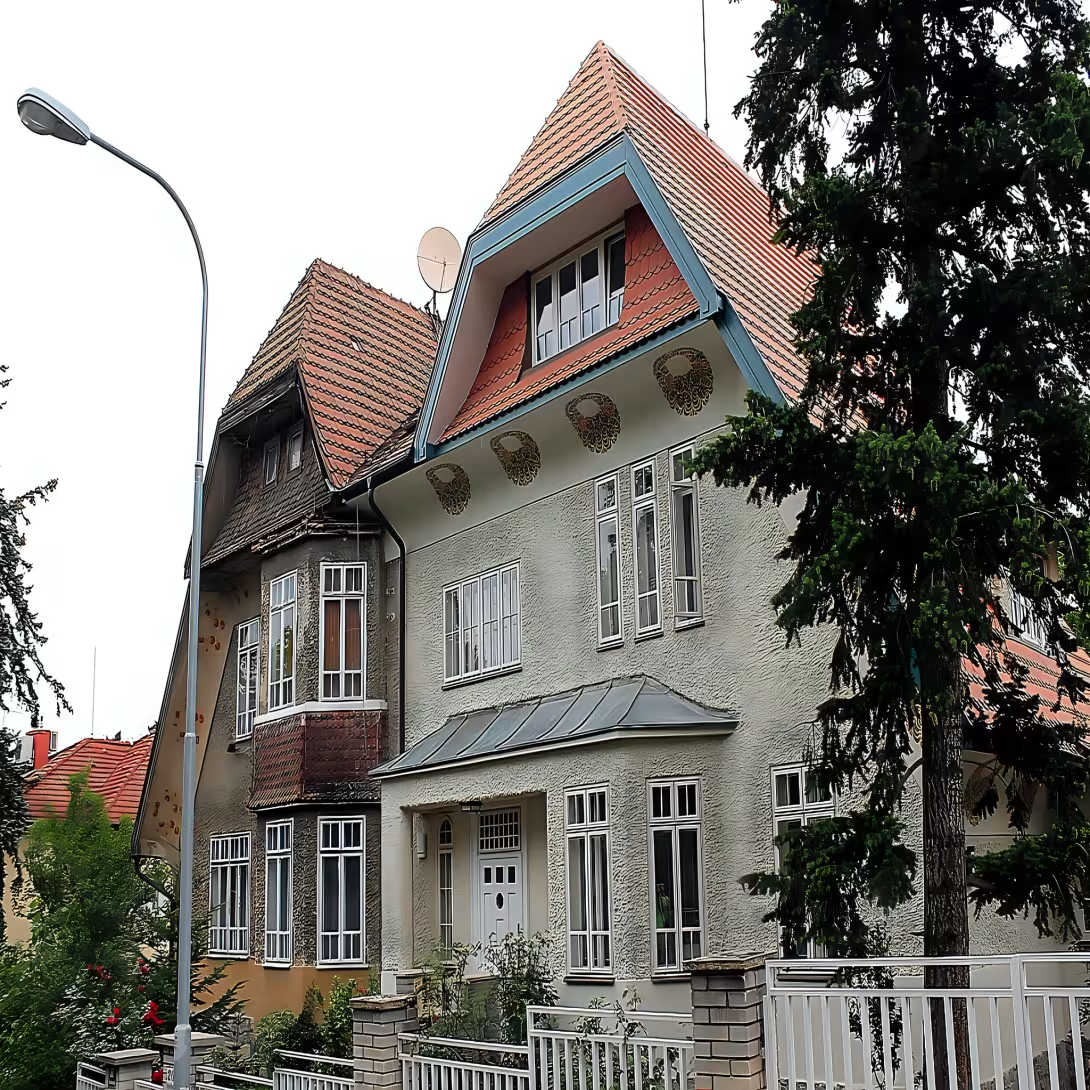
The Dvojvila rodiny Krondlových is a notable villa located in Brno-Žabovřesky. Designed by architect Valentin Hrdlička between 1912 and 1913, it features modern style with Art Nouveau elements. This architectural gem is part of the Czech Civil Servants' Quarter, reflecting early 20th-century residential trends. Its significance lies in both its design and historical context as a representation of urban development during that era.
Constructed for Antonín Krondl, a school inspector and stenographer, along with his family, the villa was built on land acquired from the civil servants' cooperative in May 1912. The area, known as the Czech Civil Servants' Quarter, began forming in 1911. Developed for members of a cooperative established in 1908, it served as a counterpart to the German Civil Servants' Quarter across Kraví hora hill. Architectural inspiration may have come from Jurkovič's nearby villa, built in 1906.
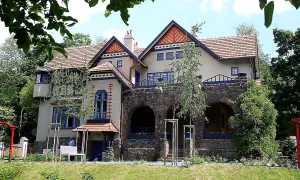
Architecturally, the Dvojvila rodiny Krondlových features two gabled roofs separated by an eaves and topped with pedimental structures. The façade is adorned with decorative friezes that include painted plant motifs, visually connecting both parts of the building. Each part has distinct elements: the higher house (no. 517/20) incorporates arched ground floor extensions, while the lower house (no. 518/22) features an asymmetrical three-sided arch extending across multiple floors. The design includes kastelová windows with subtle geometric divisions.
Originally owned by Antonín and Olga Krondlová in house no. 22, and their neighbors Vladimír and Milena Krondlová in house no. 20, the villa has maintained its historical significance over time. Antonín Krondl was a school inspector and stenographer, while his son Vladimír pursued a teaching career. The precise authorship of the villa's design remains uncertain due to lost plans, though it is attributed to Valentin Hrdlička, with possible contributions from architects like Vladimír Fischer or Gustav Papež.
As of 2023, the Dvojvila rodiny Krondlových is protected as a cultural monument, underscoring its importance in Brno's architectural and historical landscape. The villa's location within the Czech Civil Servants' Quarter places it amidst other residential buildings and green spaces, characterized by hilly terrain and proximity to Císařský les (Emperor's Forest).
Today, the Dvojvila rodiny Krondlových stands as a testament to early 20th-century architectural innovation and urban development. Its preservation ensures that visitors can appreciate its unique design and historical context. For those interested in architecture and history, this villa offers a fascinating glimpse into the past and is well worth a visit.
Then and now
Drag the slider to compare how the landmark may have looked when it was built with the view today.
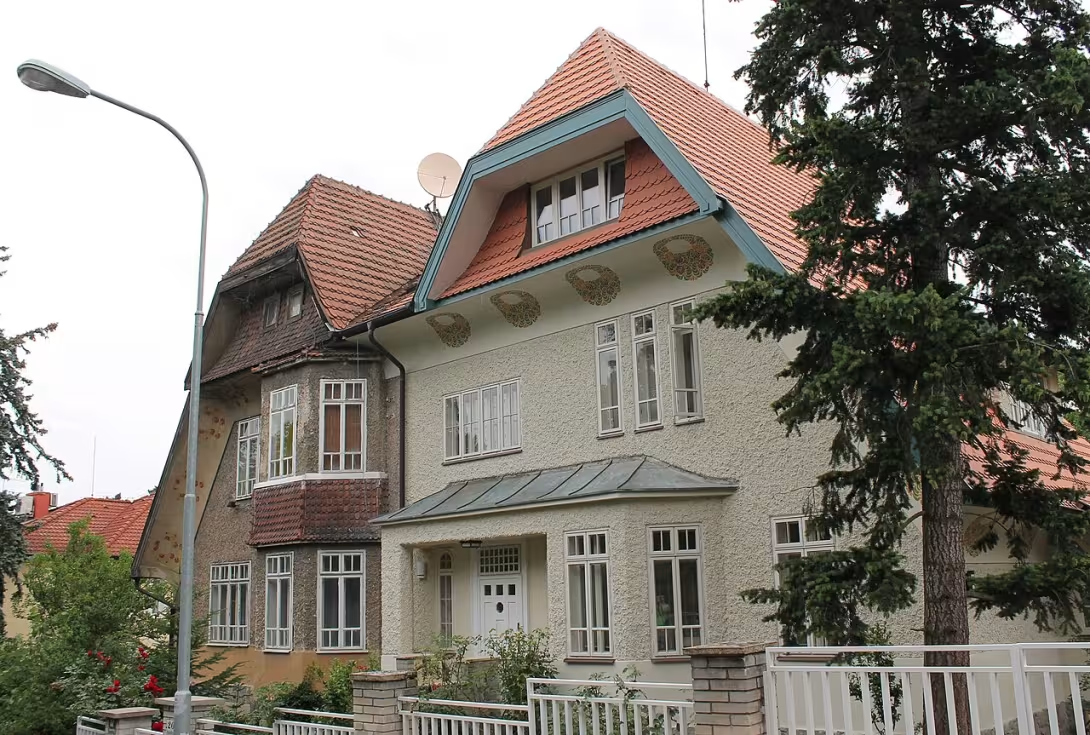

The historical appearance on the left is an AI-generated visualisation and serves as inspiration only.
Historical milestones
- 1912
- The Krondlova family acquired land for construction.
- 2023
- The villa was designated a cultural monument.
Architectural development
The villa features two gabled roofs separated by an eaves and topped with pedimental structures. The façade includes decorative friezes with painted plant motifs that visually connect both parts of the building. Each part has distinct architectural elements, such as arched ground floor extensions and asymmetrical three-sided arches.
Historical events
In May 1912, the Krondlova family acquired land from the civil servants' cooperative to build the villa.
As of 2023, the villa is protected as a cultural monument.
Owners
The villa was originally owned by Antonín and Olga Krondlová (house no. 22) and their neighbors Vladimír and Milena Krondlová (house no. 20).
Points of interest
- The Dvojvila rodiny Krondlových was constructed on land acquired from the civil servants' cooperative in May 1912, highlighting its connection to early 20th-century social housing initiatives aimed at providing residences for public sector employees.
- Architectural inspiration for the villa may have been drawn from Jurkovič's nearby villa, built in 1906, suggesting a local architectural dialogue and influence between prominent architects of that era in Brno.
- Despite its attribution to Valentin Hrdlička, the precise authorship remains uncertain due to lost plans, with possible contributions from other architects like Vladimír Fischer or Gustav Papež, reflecting common practices of collaborative design during the period.
- The villa's two gabled roofs are separated by an eaves and topped with pedimental structures, a distinctive feature that showcases the blend of modern style with Art Nouveau elements prevalent in early 20th-century architecture.
- Originally owned by Antonín and Olga Krondlová in house no. 22, and their neighbors Vladimír and Milena Krondlová in house no. 20, the villa's history is intertwined with the professional lives of its inhabitants, such as Antonín Krondl’s role as a school inspector and stenographer.
Guide
This guide is narrated by a synthetic voice generated by artificial intelligence.
Show guide text
This text was created by artificial intelligence and has not been editorially reviewed. It may contain inaccuracies.
Welcome to the remarkable Dvojvila rodiny Krondlových, a testament to early 20th-century architectural elegance nestled in Brno-Žabovřesky. As you stand before this stunning villa, take a moment to soak in its harmonious blend of modern style with Art Nouveau elements—an architectural gem that has stood the test of time.
This exquisite structure was brought to life between 1912 and 1913 under the skilled hand of architect Valentin Hrdlička. It was commissioned by Antonín Krondl, a school inspector and stenographer, as part of an ambitious project to create a residential area for civil servants in Brno. This initiative not only reflects the social housing movements of that era but also highlights the importance placed on providing dignified living spaces for public sector employees.
As you take in the villa's façade, notice how it seamlessly integrates modernist lines with Art Nouveau flourishes—a style that was revolutionary at the time. The clean, symmetrical design is softened by intricate details that invite closer inspection, capturing the essence of an era when architecture began to embrace new ideas and aesthetics.
The Krondlova family played a pivotal role in this area's history. Antonín Krondl, along with his wife Olga and their children Vladimír and Milena, were integral figures who contributed to the cultural fabric of Brno during their time here. Their lives and stories are woven into the very walls of this villa, making it not just a structure but a living piece of history.
One intriguing aspect of Dvojvila rodiny Krondlových is its origins in land acquired from the civil servants' cooperative in May 1912. This connection to early social housing initiatives highlights the community-oriented vision that shaped Brno's development during this period, offering a glimpse into the societal values and aspirations of the time.
As you continue your exploration, let yourself be drawn into the narrative of this place—its architectural beauty, its historical significance, and the lives it has touched. Whether you're admiring the craftsmanship or imagining the stories that unfolded within these walls, there's always more to discover.
We invite you to delve deeper into the history and architecture of Dvojvila rodiny Krondlových. As you move forward on your journey through Brno-Žabovřesky, carry with you the appreciation for this remarkable piece of heritage that continues to inspire and captivate visitors today. Thank you for joining us in celebrating this cultural monument—a true gem in the heart of Jihomoravský kraj.
Tips for visitors
The best time to visit Dvojvila rodiny Krondlových is during the late spring or early autumn months, when the weather is mild and pleasant for exploring both the villa and its surrounding green spaces. These seasons offer a comfortable climate that enhances your experience of the hilly terrain and nearby Císařský les (Emperor's Forest). During these times, you can enjoy the natural beauty without the discomforts of summer heat or winter cold.
Public transport options are accessible and recommended for reaching Brno-Žabovřesky; however, specific routes should be checked in advance using a transportation search tool. The area's connectivity makes it convenient for visitors who prefer not to drive.
When visiting Dvojvila rodiny Krondlových, consider bringing comfortable walking shoes as you may wish to explore the surrounding green spaces and hilly terrain. A camera is advisable for capturing the villa’s modern style with Art Nouveau elements, especially during the golden hours of early morning or late afternoon when the light is most flattering. Don’t forget a hat and sunscreen if visiting in warmer months.
For families with children, the nearby Císařský les (Emperor's Forest) provides an excellent opportunity for outdoor activities such as walking or picnicking. The forested area offers a safe environment for kids to play while enjoying nature. Additionally, the villa’s architectural beauty can be appreciated by all ages, making it a family-friendly destination.
Within 30 minutes of Dvojvila rodiny Krondlových, visitors can explore other residential buildings and green spaces in the Czech Civil Servants' Quarter. This area offers a glimpse into historical architecture and provides additional leisure opportunities amidst nature.
Frequently asked questions
Can the monument be visited?
This is a residential or farm building, not a museum with opening hours. Please view it from public space and respect the owners' privacy. We have no information about access to the interior.
Where is the monument?
Location: Žabovřesky, Jihomoravský kraj. The map on this page shows the exact spot.
Why is the monument protected?
It is listed in the Central List of Cultural Monuments of the Czech Republic as a cultural monument (register no. 107041).
Businesses nearby
Do you run a restaurant, accommodation, shop, museum, rental, wellness or other visitor service near this monument? Show yourself directly to the people heading to it — this is how they will see you in the app and on the web:
Events nearby


Zdroj akcí: otevřená data měst a obcí ČR (Národní katalog otevřených dat) a kalendář akcí Národního památkového ústavu.
Nearby
Located in the Czech Civil Servants' Quarter, the villa is surrounded by other residential buildings and green spaces. The area is characterized by its hilly terrain and proximity to Císařský les (Emperor's Forest).
Accommodation nearby
Trips and activities nearby
Guided tours, tickets and activities nearby from GetYourGuide
Affiliate link: if you buy from the partner, we may receive a commission. The price for you does not change.
Search tours and activities →Themed route
Thematic Walking Tour: The Krondlovy Villa and Its Surroundings
1. Dvojvila rodiny Krondlových (Krondlovy Villa)
Type: Historic Residence
Why Visit: This exquisite villa, nestled in the Czech Civil Servants' Quarter, offers a glimpse into early 20th-century architecture and design. Its elegant structure and historical significance make it an essential stop for those interested in cultural heritage.
2. Císařský les (Emperor's Forest)
Type: Natural Area
Why Visit: Just a short walk from the villa, this forested area provides a serene escape into nature with its lush greenery and hilly terrain. It is perfect for a leisurely stroll or picnic amidst the tranquility of the woods.
3. Czech Civil Servants' Quarter
Type: Residential Area
Why Visit: Explore the charming streets surrounding the villa, which are lined with beautifully preserved residential buildings. The area reflects the architectural style and lifestyle of early 20th-century civil servants, offering a unique historical context to your visit.
This tour provides an enriching experience that combines cultural history with natural beauty, all within walking distance from each other in the heart of Brno's historic district.
Seasonal recommendations
Spring: Visiting the Krondlových family's double villa during spring offers a unique experience as nature awakens around this historic site. The blooming gardens create a picturesque setting, with vibrant colors and fragrant scents enhancing the atmosphere. This time of year is ideal for photography enthusiasts eager to capture the lush greenery and early blossoms. Visitors should dress in layers, as temperatures can vary throughout the day. While spring generally sees fewer crowds than summer, it's still advisable to arrive early to enjoy a more tranquil exploration.
Summer: The villa shines during the summer months when long days allow for extended visits. The surrounding gardens are at their peak, with full blooms and lush foliage providing an idyllic backdrop for leisurely strolls or picnics. Summer is also the main tourist season, so expect larger crowds, especially on weekends and holidays. To avoid the midday heat and ensure a more comfortable visit, it's best to arrive early in the morning. Lightweight clothing and sun protection are recommended due to increased exposure.
Autumn: Autumn transforms the villa into a warm haven with its golden hues and crisp air. The changing leaves create a stunning visual display that enhances the historic architecture of the site. This season is perfect for those who appreciate a more serene visit, as it's less crowded than summer but still pleasant weather-wise. Visitors should consider bringing a light jacket or sweater to stay comfortable during cooler afternoons. Early morning visits can offer a peaceful experience before any potential increase in visitors.
Winter: The villa offers a unique charm in winter when the landscape is blanketed with snow, providing a magical and serene atmosphere. While some outdoor areas may be less accessible due to weather conditions, the historic architecture takes on a new character under the soft glow of winter lighting. Winter visits typically see fewer tourists, allowing for a more intimate experience. It's essential to dress warmly in layers and wear waterproof footwear.
Visualizations and artistic views


The visualisations are generated by artificial intelligence and serve as inspiration.
Photos from the area
Real photos taken near the monument


Zdroj a licence jsou uvedeny u každého snímku.
Tips from visitors
No tips yet. Be the first!
Log in and add your tip.
Sources and literature
Photos: Harold / CC BY-SA 3.0, rozlišení zvýšeno umělou inteligencí — Wikimedia Commons. The author and licence also appear when you hover over the image.
Faktickým podkladem tohoto textu byl článek na Wikipedii, jehož autory jsou přispěvatelé Wikipedie. Článek je dostupný pod licencí CC BY-SA 4.0.
Location on the map

Příběhy a pověsti
Legendy, pověsti a příběhy spjaté s touto památkou
Fotografie návštěvníků
Zatím žádné fotografie. Buďte první, kdo přidá fotografii z návštěvy!
Log in a přidejte svou fotografii nebo hodnoťte.
Za ověřenou návštěvu v aplikaci získáte víc bodů — poznáme podle GPS, že jste na místě.
Reviews and comments