






Dvůr Oktaviánov Farmstead
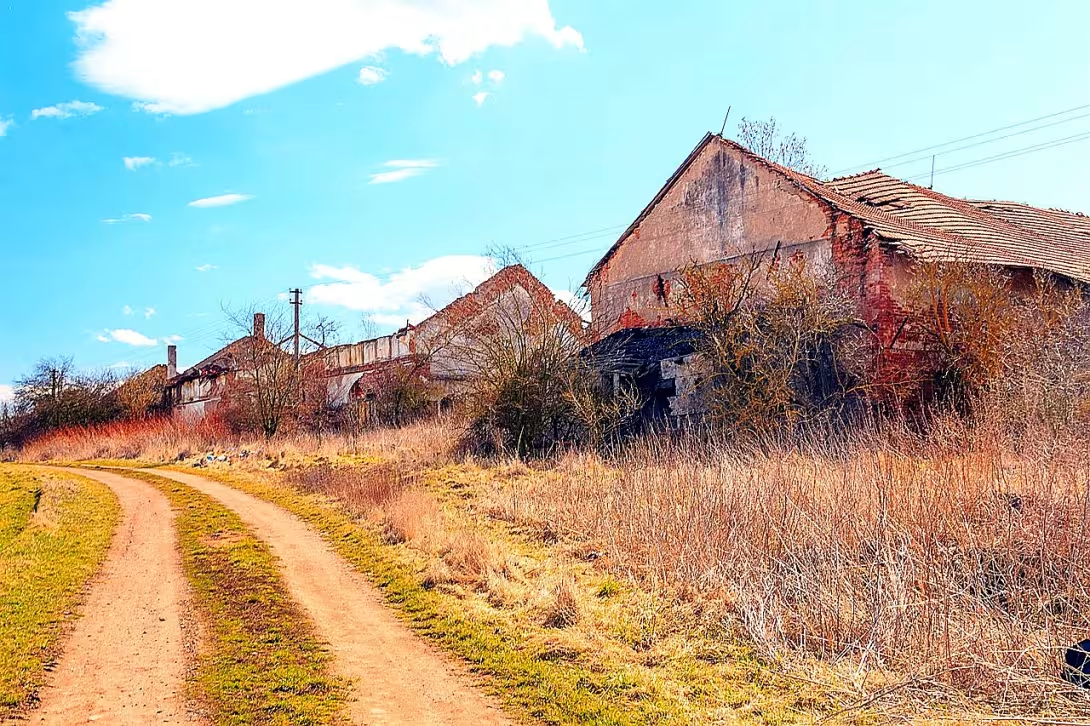
Dvůr Oktaviánov is a historical estate ruin near Písek in the Hradec Králové region of the Czech Republic. Established in the mid-19th century following significant land reforms, it reflects both progress and decline from that era. The site is notable for its connection to the Kinský family and its transformation into a state farm before falling into disrepair after the Velvet Revolution.
The origins of Dvůr Oktaviánov trace back to the 1840s during agricultural expansion in Bohemia. Its establishment was part of efforts to modernize the region, including draining local ponds like Velký Kosický rybník for arable land. This led to creating poplužní dvory, or farmsteads, such as Ostrov and Oktaviánov. The estate was named after its founder, Hrabě Kinský, a key figure in the area's agricultural landscape.
Architecturally, Dvůr Oktaviánov reflects the functional design typical of mid-19th century farmsteads within larger estates. While specific details are not extensively documented, its construction met the needs of an expanding agricultural economy. The estate was vital to the Kinský family until nationalization in 1948, aligning with post-WWII state-run agricultural reforms.
Ownership and administration shifted significantly over time. Initially controlled by Hrabě Kinský, it became part of his extensive landholdings. Post-war changes led to its nationalization in 1948, transforming it into a state farm. This marked a new chapter aligned with broader socio-political shifts within Czechoslovakia.
Key events include its establishment following local pond drainage and nationalization during post-war reforms. These milestones highlight the estate's role in regional agricultural development and adaptation to political changes. After the Velvet Revolution, however, the state farm ceased operations, leading to Dvůr Oktaviánov's decline into its current dilapidated state.
Today, Dvůr Oktaviánov stands as a poignant reminder of historical progress and neglect. The ruins near Písek offer visitors a glimpse into the past amidst a landscape that once supported vibrant agricultural activity. While access may be limited due to its condition, it remains an intriguing destination for those exploring Czech history.
Dvůr Oktaviánov's value lies in its historical significance and ability to evoke reflection on time's passage and socio-political changes' impact. Visitors are invited to explore this site, where remnants of a once-thriving estate offer insights into past generations' aspirations and challenges.
Then and now
Drag the slider to compare how the landmark may have looked when it was built with the view today.
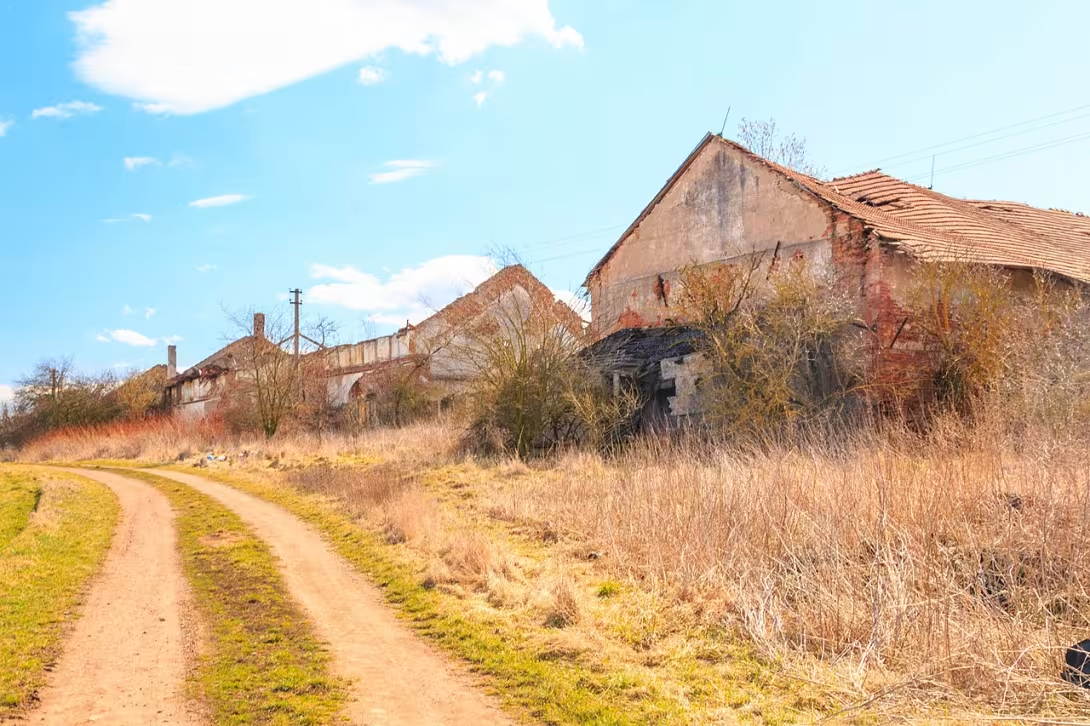

The historical appearance on the left is an AI-generated visualisation and serves as inspiration only.
Historical milestones
- 1840
- Establishment of Dvůr Oktaviánov during agricultural expansion.
- 1948
- Nationalization and transformation into a state farm post-WWII.
- 1989
- Decline after the Velvet Revolution leading to disrepair.
Architectural development
The estate was constructed in the mid-19th century, reflecting agricultural expansion and development. It served as a functional farmstead within the Kinský estate until its nationalization in 1948.
Historical events
Established in the 1840s following the drainage of local ponds.
Nationalized in 1948 as part of post-war land reforms.
Owners
Initially owned by Hrabě Kinský, the estate was part of his extensive holdings. In 1948, it was nationalized and became a state farm. Post-Velvet Revolution, it fell into disrepair.
Guide
This guide is narrated by a synthetic voice generated by artificial intelligence.
Show guide text
This text was created by artificial intelligence and has not been editorially reviewed. It may contain inaccuracies.
The Hospodářský dvůr Oktaviánov lies in ruins today. You can find it about a kilometer to the northeast of the center of the village of Písek in the Hradec Králové district.
Its origin is connected with the transformation of the landscape. In the forties of the nineteenth century, some of the surrounding ponds were drained, including the Velký Kosický rybník. On the newly acquired land, two farm estates then arose, Ostrov and Oktaviánov.
The farm got its name after its founder and owner, Count Kinský. The Kinský large estate was nationalized in nineteen forty-eight, and a state farm then operated on the farm. After the Velvet Revolution, the farm began to deteriorate until it became today's ruins.
Tips for visitors
The best time to visit Dvůr Oktaviánov is during late spring or early autumn when the weather is mild, making it ideal for exploring the ruins comfortably. During these seasons, the surrounding landscape is particularly picturesque, with lush greenery in spring and vibrant colors in autumn. Additionally, visiting outside of peak tourist season ensures a quieter experience, allowing you to fully appreciate the historical ambiance without large crowds.
It's recommended to check current routes and schedules in advance to plan your visit smoothly.
When visiting Dvůr Oktaviánov, it’s advisable to bring comfortable walking shoes as there may be uneven paths around the ruins. A hat, sunscreen, and water are also recommended, especially if you're planning an extended stay to explore the area. Additionally, bringing a camera is worthwhile for capturing the stunning views and architectural details of the estate.
For photography enthusiasts, some of the best spots at Dvůr Oktaviánov include the main entrance where the morning light beautifully illuminates the structure, and the surrounding pond areas which offer serene reflections of the ruins. The golden hour, just after sunrise or before sunset, provides soft lighting that enhances the textures and colors of the estate.
Additionally, the region offers natural beauty with opportunities to visit former pond areas now used for recreation. These spots are perfect for families looking to combine cultural exploration with outdoor activities.
Frequently asked questions
Can the monument be visited?
This is a residential or farm building, not a museum with opening hours. Please view it from public space and respect the owners' privacy. We have no information about access to the interior.
Where is the monument?
Location: Písek, Královéhradecký kraj. The map on this page shows the exact spot.
Businesses nearby
Do you run a restaurant, accommodation, shop, museum, rental, wellness or other visitor service near this monument? Show yourself directly to the people heading to it — this is how they will see you in the app and on the web:
Nearby
The ruins are situated near Písek, surrounded by a landscape that includes former pond areas and agricultural land. The region is known for its historical significance and natural beauty.
Accommodation nearby
Trips and activities nearby
Guided tours, tickets and activities nearby from GetYourGuide
Affiliate link: if you buy from the partner, we may receive a commission. The price for you does not change.
Search tours and activities →Themed route
Tematická výletní trasa: Dvůr Oktaviánov a jeho okolí
1. Dvůr Oktaviánov (statek)
Typ: Historický statek
Proč stojí za návštěvu: Tento barokní statek, nacházející se v obci Písek, je fascinujícím příkladem historické architektury. Jeho elegantní stavba a bohatá historie ho činí nezbytným prozkoumat jak pro milovníky historie, tak pro ty, kteří hledají krásně zachované venkovské prostředí.
2. Bývalé rybníky
Typ: Historická a přírodní lokalita
Proč stojí za návštěvu: Tato oblast, která kdysi sloužila jako rybniční systém, je dnes známá svými pitoreskními krajinami. Procházka kolem bývalých rybníků nabízí pohled na historické zemědělské praktiky a poskytuje klidné místo pro relaxaci ve smyslu přírody.
3. Zemědělská krajina
Typ: Přírodní a kulturní prostor
Proč stojí za návštěvu: Okolní zemědělské pozemky jsou svědky dlouhodobých tradic, které formovaly region. Procházka tímto územím nabízí jedinečný pohled na život venku a umožňuje si užít klidného prostředí, kde můžete ocenit harmonii mezi historií a přírodou.
4. Památkové nádvoří Dvora Oktaviánova
Typ: Historický interiér a exteriér
Proč stojí za návštěvu: Nádvoří stavu je ideálním místem pro pochopení architektonického ducha doby, kdy byl statek postaven. Jeho pečlivě udržovaný vzhled a historické prvky nabízejí cenný vhled do minulosti a poskytují krásnou pozadí pro fotografie.
5. Věž Dvora Oktaviánova
Typ: Historická věž
Proč stojí za návštěvu: Věž stavu je nejen architektonickým zázrakem, ale také poskytuje jedinečnou perspektivu na okolní krajinu. Při vystupování do věže si můžete užít panoramatických pohledů a prohlédnout si historický interiér, který přidává další vrstvu k pochopení dějin tohoto místa.
Seasonal recommendations
Jaro: In the spring season, Dvůr Oktaviánov is enlivened by flowers that bring life to its historic ruins. Sunlight bathes the ancient walls in captivating light, and trees begin to leaf out, adding an intimate atmosphere to the landscape. Visitors can expect moderate crowds as people often seek their first experience of spring's light and warmth. It is advisable to visit in the early afternoon or evening when lighting is ideal for photography and the atmosphere is calm. It is recommended to wear clothing that can be adjusted to mild temperatures, such as sweaters or light jackets.
Léto: In summer, Dvůr Oktaviánov offers stunning sunny experiences with long days and clear lighting that highlights the beauty of the ruins. Nature is in full bloom, bringing vibrant color to surrounding fields and forests. This period is the most popular time for visits, so high crowds are expected. It is advisable to visit early morning or late afternoon to avoid heat and crowds. Wearing light clothing and sunglasses is important for comfort during your visit.
Podzim: A fall visit to Dvůr Oktaviánov offers a unique atmosphere as green leaves turn into fiery hues. Shady and sunny periods alternate, creating dramatic lighting for photographing the ruins. This time of year is less visited than summer, so a more tranquil experience can be expected. It is advisable to come in midday when lighting is optimal for touring and photography. Wearing outerwear, such as jackets or plaid scarves, is useful due to cooler mornings and evenings.
Zima: A winter visit to Dvůr Oktaviánov offers a serene atmosphere with fewer visitors and almost magical lighting, as the sun rises later and sets earlier. Winter flowers and frost patterns on trees give the place unique beauty. Visitors should wear warm clothing, including coats and hats, and bring umbrellas or snow-appropriate boots. Early afternoon is ideal for visiting when lighting becomes calm and romantic.
Visualizations and artistic views


The visualisations are generated by artificial intelligence and serve as inspiration.
Photos from the area
Real photos taken near the monument


Zdroj a licence jsou uvedeny u každého snímku.
Tips from visitors
No tips yet. Be the first!
Log in and add your tip.
Sources and literature
Photos: Petr1888 / CC BY-SA 4.0 — Wikimedia Commons. The author and licence also appear when you hover over the image.
Faktickým podkladem tohoto textu byl článek na Wikipedii, jehož autory jsou přispěvatelé Wikipedie. Článek je dostupný pod licencí CC BY-SA 4.0.
Location on the map

Příběhy a pověsti
Legendy, pověsti a příběhy spjaté s touto památkou
Fotografie návštěvníků
Zatím žádné fotografie. Buďte první, kdo přidá fotografii z návštěvy!
Log in a přidejte svou fotografii nebo hodnoťte.
Za ověřenou návštěvu v aplikaci získáte víc bodů — poznáme podle GPS, že jste na místě.
Reviews and comments