



Egerberk Castle
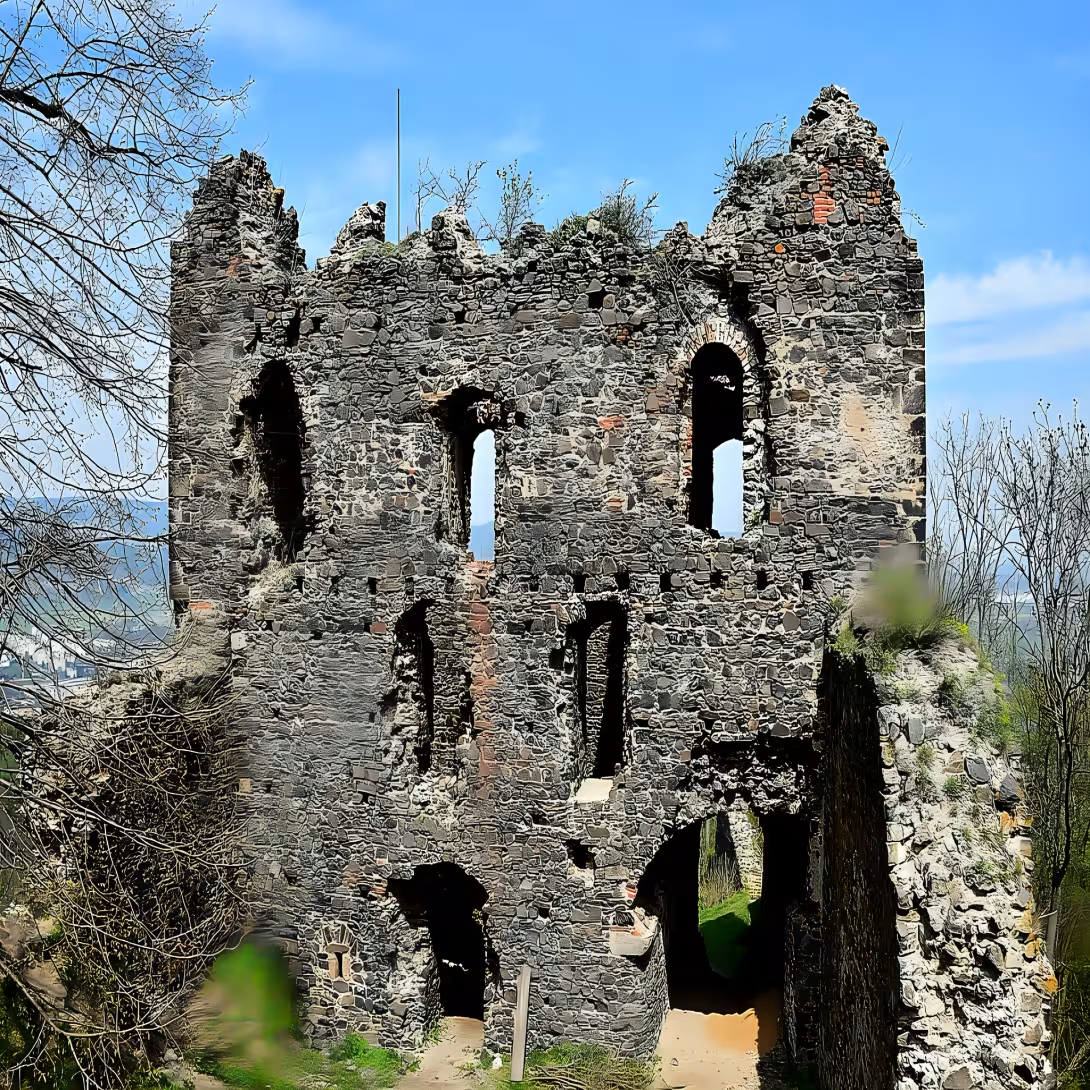
The name Egerberka was derived from the German name of the river Ohře. The exact time of its foundation is not certain - historians usually put it at the beginning of the 14th century, although the findings suggest that it may have been made during the second half of the 13th century. The first written mention dates back to 1317, when Vilém z Chýš a Egerberka stayed here.
The castle changed owners repeatedly. William's son sold it to the masters of Shumburk in 1350, but in 1384 he was bought by Jindřich Šupek of Dubé, the influential councilman of King Wenceslas IV. The schoolhouse had Egerberk significantly rebuilt, selected a type of two-palace layout and extended the fortification to meet the higher requirements of representation and defence. It was his reconstruction that determined the appearance of the castle as we know it from preserved remains.
In 1411 the castle was seized by Mikuláš Augustinův z Prahy, just named highest earth scribe, but already in 1413 he sold it. Since 1422 it was co-owned by the brothers Ota and Wend z Illburka together with their uncle Zhoda. In 1430, King Zikmud confirmed it to them as the royal plains.
After that, they had a power dispute over property. Around 1435, Wend z Illburka got into huge conflicts with William of Šumburk, who seized Egerberk with deceit. He tortured the captured Wendo in the castle with hunger - an act whose consequences lasted decades. Vilém ze Šumburka sold Egerberk in 1443 to Jakoubek from Vrísovice. Although the castle was declared dead in 1454 and won by Jan Calta z Kamenné Hory by King George of Podebrad, the court in 1457 finally ruled in favour of Half of Illburk, who had to buy it back for two thousand kicks.
Since 1460 he owned the castle Boš of Fictum, his descendants of Dětry and Věnek, in 1488 Děřich and his wife Kateřina of Müldorf. In 1557 the castle was purchased by Bohuslav Felix Hasištejnský z Lobkovic, but it moved to the new Felixburg Castle at the end of its life. Egerberk has become the property of his wife Anna of Fictum and his status has changed from a royal lily to a free farm. Since then, only the Castelan has lived here.
When Anna died in 1587, she bequeathed her half to her nephews, one of whom sold it to Linhart Stampach of Stampach. The regulars did not enjoy Egerberk, and the castle gradually fell into decay.
A part of the wall of the half-cylinder tower, the core walls and the fortification of the second courtyard were preserved from the construction form. The castle had a complicated arrangement with a dam that contained a glass water tank, and several courtyard. The entrance was led by a small tower with a foothold, from where the bridge was crossing the moat and entering through two gates in the next tower. The first courtyard contained an economic building with a valentically sealed cellar, the second courtyard separated a complex of two palaces - larger with trapezoidal plan and smaller with semi-circular. The mighty wall connected them and formed a rectangular courtyard with a pavement in the level of the second floor. Today, the courtyard is filled with structural destruction.
Then and now
Drag the slider to compare how the landmark may have looked when it was built with the view today.
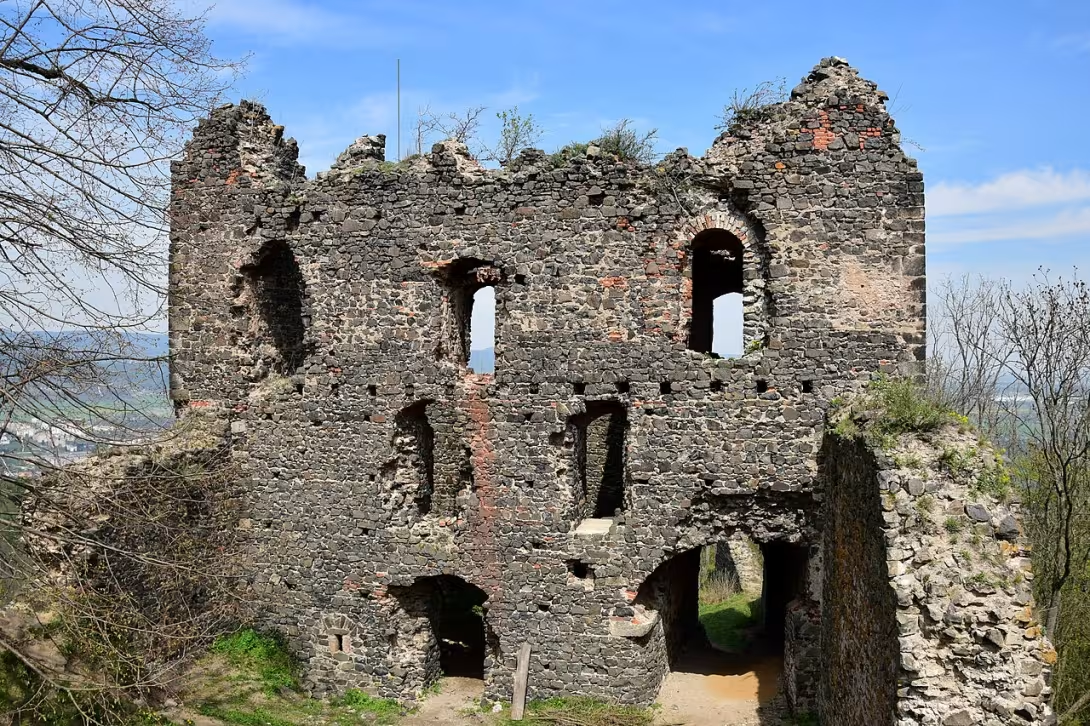

The historical appearance on the left is an AI-generated visualisation and serves as inspiration only.
Historical milestones
- 1317
- First written mention of the castle.
- 1384
- Bought by Henry Schkopek of Dubé and rebuilt.
Architectural development
The original form of the castle is unclear. A part of the wall of the half-cylinder tower, the castle core wall and the fortification of the second courtyard were preserved. Most of the preserved masonry comes from the reconstruction of Henry Škopek from Dubé, who chose the type of two palace layout for the castle and extended the fortification.
Historical events
- 1317
- First written mention of the castle.
- 1350
- Sold to Mr. Shumburk.
- 1384
- Bought by Henry Schkopek of Dubé and rebuilt.
- 1557
- He bought Bohuslav Felix Hasištejnský z Lobkovic.
Owners
- 1317
- Vilém z Chýš a Egerberka
- 1350
- The Shamburk Lords
- 1384
- Jindřich Škopek z Dubé
- 1411
- Mikuláš Augustinův z Prahy
- 1430
- Ota and Wend z Illburka
- 1443
- Jakoubek z Vřesovic
- 1454
- Jan Calta z Kamenné Hory
- 1460
- Bosso z Fictumu
- 1557
- Bohuslav Felix Hasištejnský z Lobkovic
Points of interest
- The name Egerberka was derived from the German name of the river Ohře.
- Historians usually make its foundation at the beginning of the 14th century, although the findings of ceramics suggest its origin in the second half of the 13th century.
- The first written mention of Egerberce dates back to 1317, when Vilém z Chýš a Egerberka stayed here.
- Jindřich Schopek of Dubé in 1384 rebuilt the castle into a two-palace facility with an extension of the fortification for representation and defence, which determined its appearance.
- In 1435, Wend z Illburka was in conflict with William of Šumburk, who tortured him to death with hunger on Egerberk.
Guide
This guide is narrated by a synthetic voice generated by artificial intelligence.
Show guide text
This text was created by artificial intelligence and has not been editorially reviewed. It may contain inaccuracies.
Good day! You are standing in front of the ruins of castle Egerberk, located in district Chomutov. Welcome!
You stand before the mighty castle core, which remains today as a remnant of the past. Look up and notice the four massive baskets that stand up to heaven. These baskets are the remains of a former defense system that protected the castle from attacks.
Egerberk has a history unknown to us. No one today knows exactly who and when built the castle or why it was built. The architects who designed it are also unknown. Because Egerberk is located in a landscape where different cultures were interconnected, we can imagine that there were many historical figures that had an impact on the castle's origin and development.
Notice the details of architecture. The castle has four sides, each with its own characteristics. One side is thick, the other is thin and long. Look at how these parties are related and forming a whole.
Egerberk also has its key stories and personalities. It was a castle where important events took place in the past. Whether it was war or peacetime, Egerberk was always at the center of things.
And now notice what's interesting about this place. The remains of the castle are protected as a cultural monument. Because Egerberk lies in a landscape that was once filled with lives and acts, it is a place that fascinates us.
Good day! If you enjoyed exploring Egerberk, inviting you to further explore this historical monument. See you!
Tips for visitors
The best time to visit Egerberk is in summer, especially in May to September, when the most beautiful views of the surrounding landscape are. A warm sunny day offers ideal conditions for exploring the ruins and understanding its history.
Take your protective shoes with you when you visit, because the terrain around the ruins can be uneven. Fill your inventory with an umbrella and plenty of drinking water, especially in the summer months. Also remember the camera for capturing beautiful views.
The best place for photography is the west side of the castle, where the sun lights up the ruins in a pleasant atmosphere. The best light for photos is usually in the early morning or late afternoon when shadow effects can show up in their best form.
In the vicinity of Egerberk you can visit the natural park of Doupovský Mountains and the historical monastery in Monasterc nad Ohří. These places offer beautiful walks for families with children, where children can discover nature and learn about the history of the region.
Frequently asked questions
Can the monument be visited?
This is a ruin. Such sites are often freely accessible, but some can only be visited with a guide or are closed for safety reasons. We have not verified the current situation – take care and respect any restrictions.
Where is the monument?
Location: Lestkov, Ústecký kraj. The map on this page shows the exact spot.
Why is the monument protected?
It is listed in the Central List of Cultural Monuments of the Czech Republic as a cultural monument (register no. 20475/5-723).
For kids
Imagine going back to when Castle Egerberk was in full force. This is a story about a castle that has cost more than 700 years and had many secrets.
How did it look here? Who lived here? What happened here? Castle Egerberk was one of the most important forts in the Middle Ages. King Premysl Otakar II had the castle built to protect his territory from enemy attacks. In the castle lived kings and their servants who took care of the defence and administration of the estate.
Businesses nearby
Do you run a restaurant, accommodation, shop, museum, rental, wellness or other visitor service near this monument? Show yourself directly to the people heading to it — this is how they will see you in the app and on the web:
Nearby
Egerberk is located near the Doupov Mountains, with a natural park and other historical monuments such as Monasterec nad Ohří.
Accommodation nearby
Trips and activities nearby
Guided tours, tickets and activities nearby from GetYourGuide
Affiliate link: if you buy from the partner, we may receive a commission. The price for you does not change.
Search tours and activities →Themed route
Thematic cruise route around Egerberk
1. Egerberk (ruin) * Type: * Historical ruins Worth a visit for its rich history and impressive panoramic views of the surrounding Doupo Mountains. Egerberk, once the seat of the governor of the Margrave, is a key monument to the region.
2. Doupov Natural Park * Type: * Natural reservation Visit this park for its beautiful forest regions and explore local fauna and flora. It is an ideal place for relaxing in nature, offering various paths for walking.
3. Monasteries over Fire * Type: * Historical urban complex This small town is famous for its history and architecture, especially the Gothic church and ancient houses. The monastery above Ohří offers a view of life in the region since the Middle Ages.
4. Doup Mountains * Type: * Horstata Explore these mountains for their natural beauty and the opportunity to know local geology. They are ideal for various rural activities, including camping and cycling.
5.Lestkov * Type: * Municipal centre Visit Lestkov for its peaceful atmosphere and the opportunity to learn more about the history and culture of the area. Local monuments and picturesque streets give the city a unique character.
This route offers a combination of historical, cultural and natural experiences around Egerberk.
Seasonal recommendations
Spring: In the spring season Egerberk is particularly impressive when warm sunlight is spread on the ruins and nature begins to come to life. Flowers and shrubs in the area offer a lively variety of colours, which gives the atmosphere a mild romanticism. For a visit it is advisable to come at the beginning of the day when there are fewer people and sun rays illuminate ruins in the best light. It is recommended to wear light clothing with a sun protection helmet because temperatures can be relaxing.
Summer: In summer Egerberk is a popular destination for tourists and families. Sunshine days provide ideal lighting, which highlights historical architecture of ruins. Nature is in full bloom, which adds to understanding the ancient environment. Summer is the most visited period, so we recommend to come early in the morning to avoid crowds and enjoy the place in peace. Don't forget the sun protection - bath clothes, a hat and enough drinking connections are necessary.
Autumn: In the autumn period Egerberk becomes melancholic atmosphere when tree leaves turn to vivid colors and fall. The sunny days are beautifully lit, creating an attractive contrast with the blue sky. When visiting, it is advisable to choose the period of noon when the temperature is mild and fewer people meet here. Good shoes are beneficial for walking on thorny paths which this season may be more dangerous due to fallen leaves.
Winter: Winter visit Egerberk offers unique views of the ruins under the snow cover, which gives the place a mysterious and mystical character. The sun's rays create beautiful shadows and the light is projected on the winter landscape. Winter is the least visited season, so you can expect a quiet walk without crowds. It is important to come up with warm clothes and wind protection - it includes fur coats, wool shirts and quality shoes.
Visualizations and artistic views


The visualisations are generated by artificial intelligence and serve as inspiration.
Photos from the area
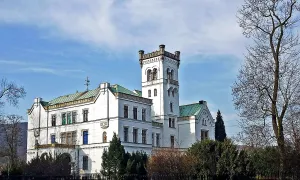
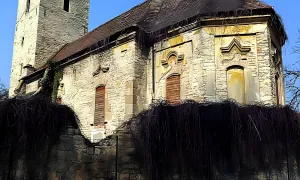
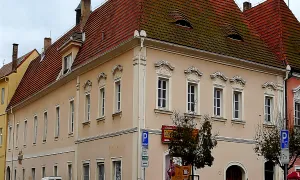
Real photos taken near the monument

Zdroj a licence jsou uvedeny u každého snímku.
Atmosphere of the place
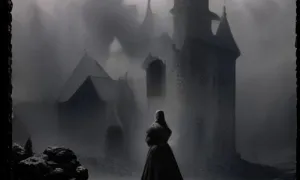
This atmospheric visualisation of the place and period was generated by artificial intelligence. It is not real footage of the location.
Tips from visitors
No tips yet. Be the first!
Log in and add your tip.
Sources and literature
Photos: Petr Kinšt / CC BY-SA 4.0, rozlišení zvýšeno umělou inteligencí — Wikimedia Commons. The author and licence also appear when you hover over the image.
Faktickým podkladem tohoto textu byl článek na Wikipedii, jehož autory jsou přispěvatelé Wikipedie. Článek je dostupný pod licencí CC BY-SA 4.0.
Location on the map

Příběhy a pověsti
Legendy, pověsti a příběhy spjaté s touto památkou
Fotografie návštěvníků
Zatím žádné fotografie. Buďte první, kdo přidá fotografii z návštěvy!
Log in a přidejte svou fotografii nebo hodnoťte.
Za ověřenou návštěvu v aplikaci získáte víc bodů — poznáme podle GPS, že jste na místě.
Reviews and comments