






evangelický hřbitov ve Strašnicích Cemetery
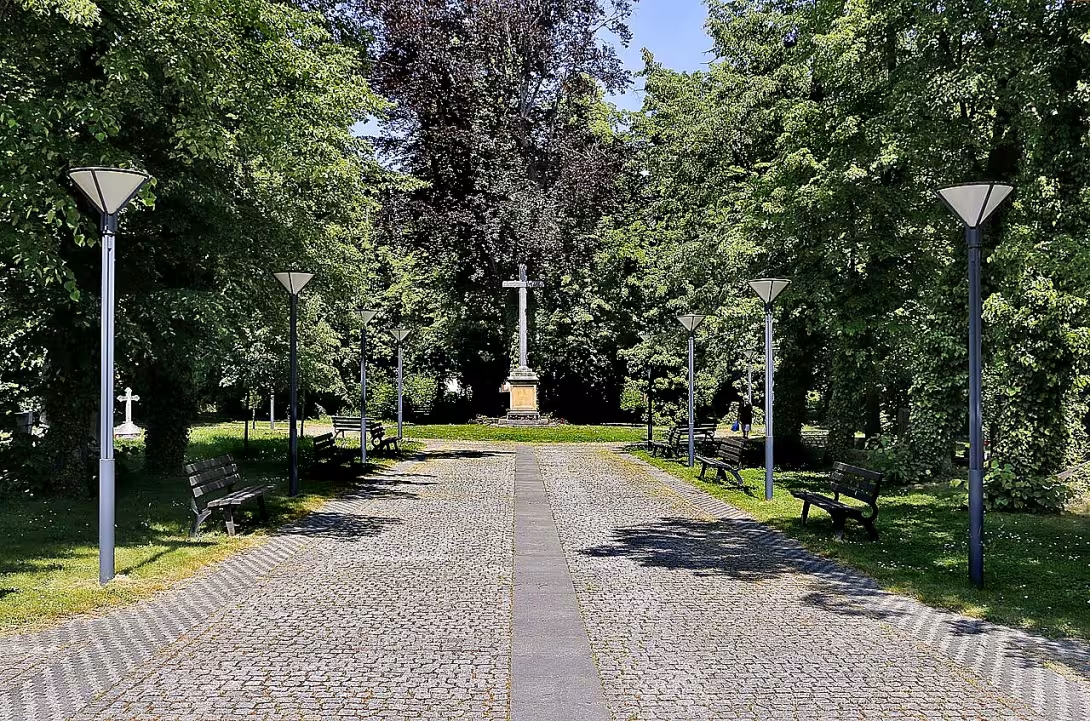
The Evangelical Cemetery in Strašnice, also known as the German Evangelical Cemetery, is a classical burial ground founded in the late 18th century. Located in Prague 10 on Vinohradská street. Since 2002 the complex has been protected as a cultural monument and represents a significant witness to the history of the German-speaking evangelical population in Prague.
The creation of the cemetery dates back to 1795, the period of enlightened reforms of Joseph II. These brought greater religious tolerance to non-Catholic churches in the Habsburg monarchy. Prague then developed dynamically as an industrial and cultural centre and the German-speaking population played a fundamental role in social and economic life.
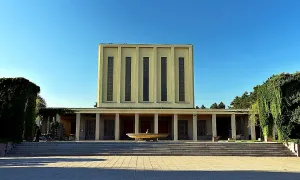
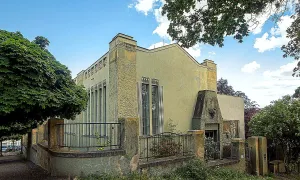
The architectural form of the site consists of 598 graves and 54 tombs. The oldest preserved tombstone with a legible date dates back to 1828. Part of the complex is a cemetery chapel, which has been used since 1955 by the Czechoslovak Hussite Church as a Colombarium.
The original owner was the Evangelical Church, today the site is managed by the contribution organization of the cemetery and funeral services of the capital city of Prague. After World War II, it was a difficult time for the burial grounds. In 1950 it was officially closed by resolution ONV Praha 10 with the approval of the State Office for Religious Affairs. Although it was decided in 1958 to dispose of the cemetery and use the land for recreational and sporting purposes, this step did not take place. Between 1948 and 1993, unofficial storage of Urenas took place. At the turn of the millennium, there was an intention to turn space into the burial ground of the Wehrmacht soldiers, but this project was not implemented for financial reasons and public and landmark resistance.
In the cemetery are buried important personalities associated with Prague's German culture, such as actress Johanna Buska, railway designer Oscar Dolch, opera singer Wilhelm Elsner, businessman and founder of Grebka Moritz Gröbe, music composers Ludwig Grünberger and Julius Morman, doctor Hugo Rex or industrialist Carl Umrath. The strange thing is, in one of the abandoned tombs in the past, there was a lovers' couple of homeless people whose fate was captured by a documentary film Love in the grave.
In October 2015 the cemetery was reopened after the reconstruction, financed by the Funeral Institute of the City of Prague. Currently it is used exclusively for storing and dispersing cremated remains.
This complex is a valuable historical place that keeps the memory on the extinct layer of Prague society. The visit offers the opportunity to look at the history of the German-language community and to see preserved classical tombstones in the quiet environment of the Vinohrad.
Then and now
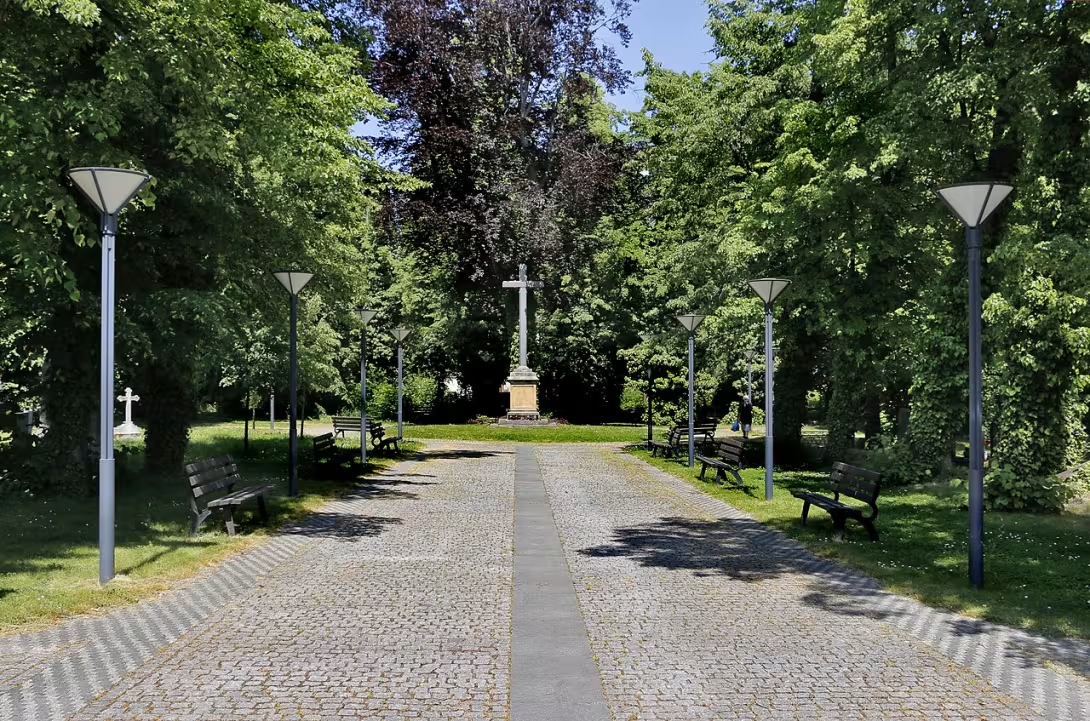
Drag the slider to compare how the landmark may have looked when it was built with the view today.
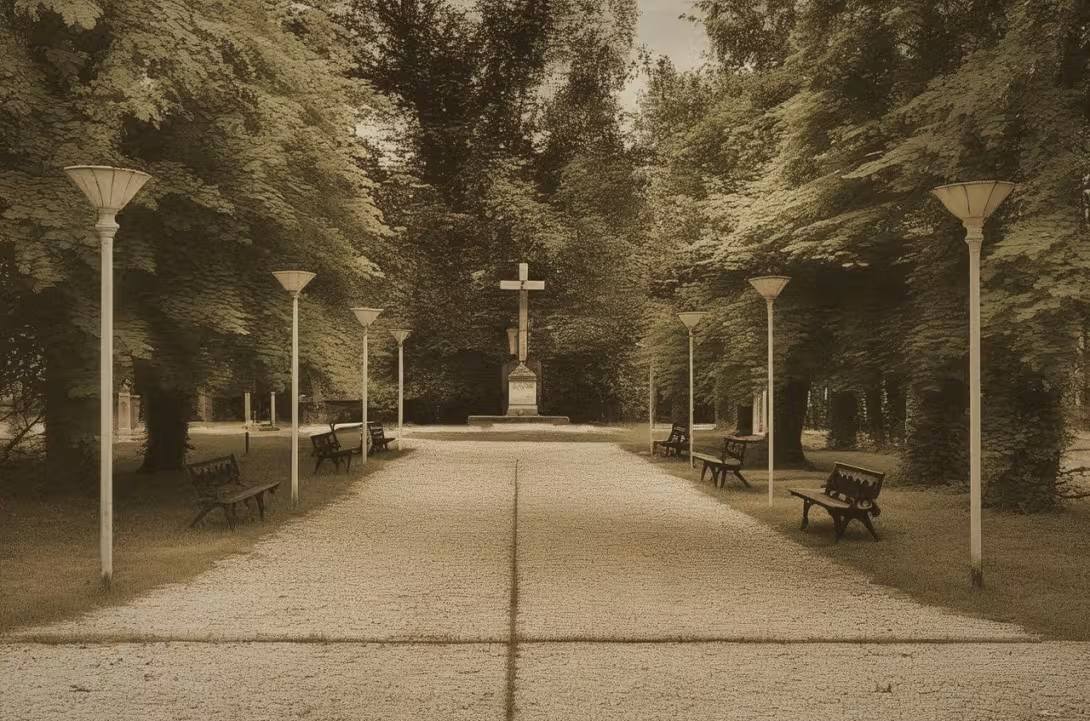
The historical appearance on the left is an AI-generated visualisation and serves as inspiration only.
Historical milestones
- 1795
- Establishment of an evangelical cemetery in Scarecrow.
- 1950
- The official closure of the cemetery with the approval of the State Office for Church Affairs.
- 2002
- The cemetery declared a cultural monument.
- 2015
- Reopening the cemetery after reconstruction financed by the Funeral Institute of the City of Prague.
Architectural development
The cemetery contains 598 graves and 54 tombs, with the oldest preserved tombstone dating back to 1828. Part of the complex is a cemetery chapel which has been used by the Czechoslovak Hussite Church since 1955 as a Colombarium.
Historical events
1795: Establishment of a cemetery. 1950: Official closure of the cemetery by order ONV Praha 10. 2002: Declaration for cultural heritage. 2015: Reopening after general reconstruction.
Owners
Originally evangelical church, now manages the contribution organization of the cemetery and funeral services of the capital city of Prague.
Points of interest
- The cemetery was founded at the end of the eighteenth century during the period of the enlightened reforms of Joseph the other. The area contains five hundred ninety-eight graves and fifty-four tombs. - In one of the abandoned tombs in the past, there lived a homeless lovers' couple, about which a documentary was created. - In nineteen hundred and fifty-eight, the cemetery was decided to be destroyed for sporting purposes, but this did not happen. - Since the year two thousand and two, this place has been protected as a cultural monument.
Guide
Show guide text
This text was created by artificial intelligence and has not been editorially reviewed. It may contain inaccuracies.
Welcome. You have just entered a space that is a silent witness to ancient times and fates. You are standing at the gate of the Evangelical Cemetery in Scarecrow. Even if you are in the busy part of Prague, as soon as you cross this threshold, feel how the surrounding noise of Vinohradská Street begins to move away and retreats the calm that is a natural guest here. Feel this atmosphere. It's a place where history meets the present and where every tiny part of this complex tells its own, silent story.
Let's go back together to when this space began to exist. To understand the importance of this place, we have to look back to the end of the eighteenth century. It is the year of seventy-five, and throughout Europe and in our countries the spirit of enlightenment rules. There is a time of great reform, brought by Lord Joseph the second. It was during this period, in seventy-five, that this evangelical cemetery was founded. But it wasn't just a normal place to rest. This cemetery served mainly the people who lived and worked here and whose native language was German. It was a spiritual and social centre for German-speaking evangelists who created their own unique community in this part of town.
Now pay attention to how this space survived the storm of history. The history of this place wasn't always about peace and quiet. After World War II, the fate of the cemetery seemed uncertain. In a thousand and nine hundred and fifty years, the cemetery was officially closed. The decision to close it was taken with the consent of the then State Office for Religious Affairs. At that time, even plans for his complete destruction appeared. It was meant to cease to exist and its monuments will be removed. Fortunately, this did not happen. This space showed a stronger will to survive.
The break occurred in the year two thousand and two, when the cemetery was declared a cultural monument. This gave him new protection and ensured that his value was not forgotten. After a long time of waiting and gradual renewal, there was a significant milestone in two thousand fifteen. Thanks to the reconstruction financed by the Prague funeral home, the cemetery reopened to people. This renewal has enabled us to go through these paths again today and to perceive the beauty and sadness of this place, which has been driven back into life from the threat of extinction.
When you walk around, look around you now. Although space may seem to be large, its structure is very specific. There are over five hundred ninety-eight graves and fifty-four tombs in this area. Feel how these elements are distributed in space. Each tomb and every grave represent an individual story that was written here in history. Although some parts may seem abandoned, this is precisely their unmistakable character.
Now pay attention to the people who rest here. These places are not just about stone and soil, but especially about the people who left their trail. Those whose names are stored here include Johanna Buska or Oscar Dolch. You will also find names like Wilhelm Elsner, Moritz Gröbe or Ludwig Grünberger. In these tombs rest other personalities such as Angelo Neumann, Julius Morman, Hugo Rex or Carl Umrath. Each of these names belongs to someone who was part of the German-speaking community we talked about. Their lives were linked to the bloom of this place and its subsequent decline.
But now I want to reveal to you one mystery that gives this place an unusual touch. When you walk between the tombs, you can come across the tombs that seem abandoned, almost forgotten. It was in one of these abandoned tombs that there was a story in the past that should not happen, but that is incredibly human. There were lovers who had no other home. This unusual and sad story of people looking for shelter in a place for those who no longer live was so powerful that a documentary film was made about it. It is a reminder that the line between life and death, between home and another place, can sometimes be very thin.
Now let's move on slowly. Let the atmosphere of this place drift. Take a look at the details of the tombs that you can capture with your eyes, and feel the silence that rules here. This cemetery is not just a place of memory of the dead, it is living proof of how we can take care of our past and how we can preserve what is worth, even if it seems lost.
Thank you for taking the time to explore this important piece of Prague history. Continue your tour at your own pace. Let yourself be guided by your feelings and watch carefully what this place wants to reveal to you. We bid you farewell and wish you a peaceful and interesting passage through this historic monument.
Tips for visitors
The most appropriate time for a visit is in the morning or late afternoon, when the sun throws a stint at the historic tombs and shape a calm atmosphere suitable for development.
The site is available via public transport and private car. It is precisely the connection and the possibilities of the parking lot in all of which we recommend overit in the current search for the transport connections.
We recommend to take comfortable shoes suitable for moving in teren and in case of sunny weather head cover. For photographers, it is ideal to use the morning or evening light, which is based on the details of the old stone monument.
You can go to the nearby Grebok Park, the Havlick orchard, which was founded by the businessman Moritz Grobe, only he is despised on this one.
For families with children it is appropriate to take care of the silence of the rust and respect for the pietni character of the place. Prochazka can be an opportunity to discuss the history of the city.
Businesses nearby
Do you run a restaurant, accommodation, shop, museum, rental, wellness or other visitor service near this monument? Show yourself directly to the people heading to it — this is how they will see you in the app and on the web:
Events nearby

Zdroj akcí: otevřená data měst a obcí ČR (Národní katalog otevřených dat) a kalendář akcí Národního památkového ústavu.
Nearby
V blízkosti se nachází park Grébovka (Havlíčkovy sady), který založil zde pohřbený podnikatel Moritz Gröbe.
Accommodation nearby
Trips and activities nearby
Guided tours, tickets and activities nearby from GetYourGuide
Affiliate link: if you buy from the partner, we may receive a commission. The price for you does not change.
Search tours and activities →Seasonal recommendations
Spring: In the spring season evangelický hřbitov ve Strašnicích receives a unique flash when flowers and trees begin to bloom. Green leaves and varied colours add to the atmosphere a touch of renewal and life. This season it is advisable to visit the cemetery in the morning to save the rise of temperature and possible crowds. It is recommended to wear clothes consisting of multiple layers because the weather can be variable.
Summer: Summer is a cemetery full of life energy and sunlight. Flowers are full of pleasure and trees provide natural shade, making it easier to walk through burial sites. Although this is the most visited period, it is recommended to come earlier in the day to avoid large crowds and enjoy a peaceful walk. Remember the sun protection - the hat and the cream protection are necessary.
Autumn: In autumn, the cemetery of melancholic but pagan character takes over. The leaves become colored in a wide palette from gold to red and orange shades. The atmosphere is calm and quiet, which brings ideal conditions for a reflective walk. Due to less visiting times, it is recommended to visit the cemetery at any time of the day, but with warm clothes for variable autumn weather.
Winter: Winter visit to the evangelical cemetery in Strašnice offers a different view - snowy or wet roads that add a sense of peace and quiet to the atmosphere. Trees without leaves reveal the structure of the cemetery and provide a unique view of the monument stones. In this season it is advisable to visit the cemetery in the morning, because opening hours can be shorter and the weather is colder. Hot clothes and moisture protection are essential for a comfortable stay.
Visualizations and artistic views


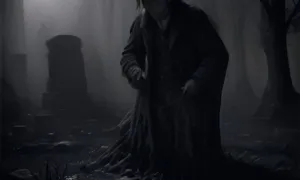
The visualisations are generated by artificial intelligence and serve as inspiration.
Photos from the area
Real photos taken near the monument


Zdroj a licence jsou uvedeny u každého snímku.
Tips from visitors
No tips yet. Be the first!
Log in and add your tip.
Sources and literature
Photos: Pavel Hrdlička (Czech Wikipedia user Packa) / CC BY-SA 4.0 — Wikimedia Commons. The author and licence also appear when you hover over the image.
Faktickým podkladem tohoto textu byl článek na Wikipedii, jehož autory jsou přispěvatelé Wikipedie. Článek je dostupný pod licencí CC BY-SA 4.0.
Location on the map
Příběhy a pověsti
Legendy, pověsti a příběhy spjaté s touto památkou
Fotografie návštěvníků
Zatím žádné fotografie. Buďte první, kdo přidá fotografii z návštěvy!
Log in a přidejte svou fotografii nebo hodnoťte.
Za ověřenou návštěvu v aplikaci získáte víc bodů — poznáme podle GPS, že jste na místě.
Reviews and comments