






Vršovická záložna Savings bank building
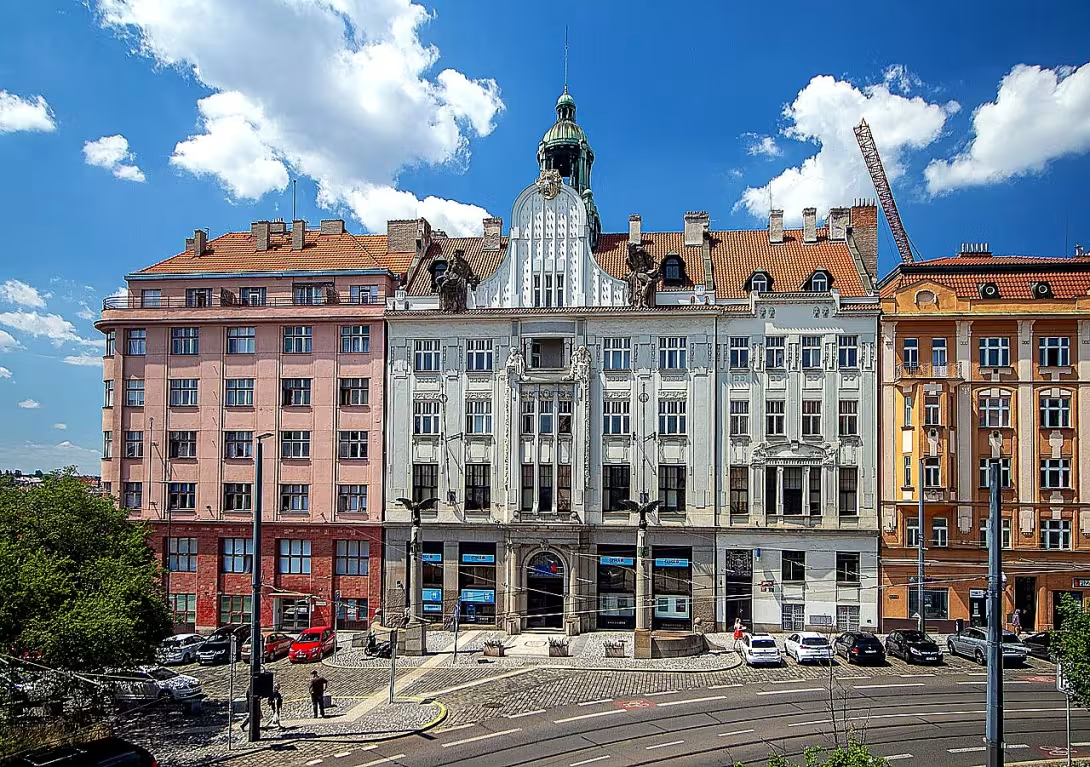
Vršovická záložna is a protected Art Nouveau building built in 1911, located in Prague 10, Vršovice on Moscow Street. It is one of the most important buildings in this part of town. It was designed by architect Antonín Balšánek.
It was built in 1911 within the framework of the extensive reconstruction of Vršovice. At that time modern styles developed and the Art Nouveau responded to former historism.
The construction represents a late Art Nouveau. Interior decorated with ornamental style with geometrical and floral motifs; The public hall has been decorated by demanding mosaics. The facade is richly decorated with sculptures. Ladislav Šaloun created two monumental statues while Josef Pekárek made a clamp above the entrance. There are statues by Antonín Bakárek at the portal of the hall. Another important part is the statue of Přadlena by František Uprka, symbolizing honesty, modesty and diligence.
In 1931, the facade was supplemented by neon company inscriptions. In the 1970s and 1980s, the Czechoslovak State Bank was based here, which resulted in the reconstruction of the continued 1990s. In 1993, the mantle of the building, including the roof, was restored and roof skylights were replaced in 1999.
Today in the building is located the branch of Česká spořitelna, which plans to gradually restore representative premises and hall to its original appearance. In the immediate neighbourhood there is a Vršovický castle known as Rangherka, the Roman Catholic Church of St. Nicholas and the Husova Choir with the Mana Theatre.
The building is a unique example of Art Nouveau architecture and sculpture in Prague. The visit provides a view of the aesthetics of the early 20th century.
Then and now
Drag the slider to compare how the landmark may have looked when it was built with the view today.
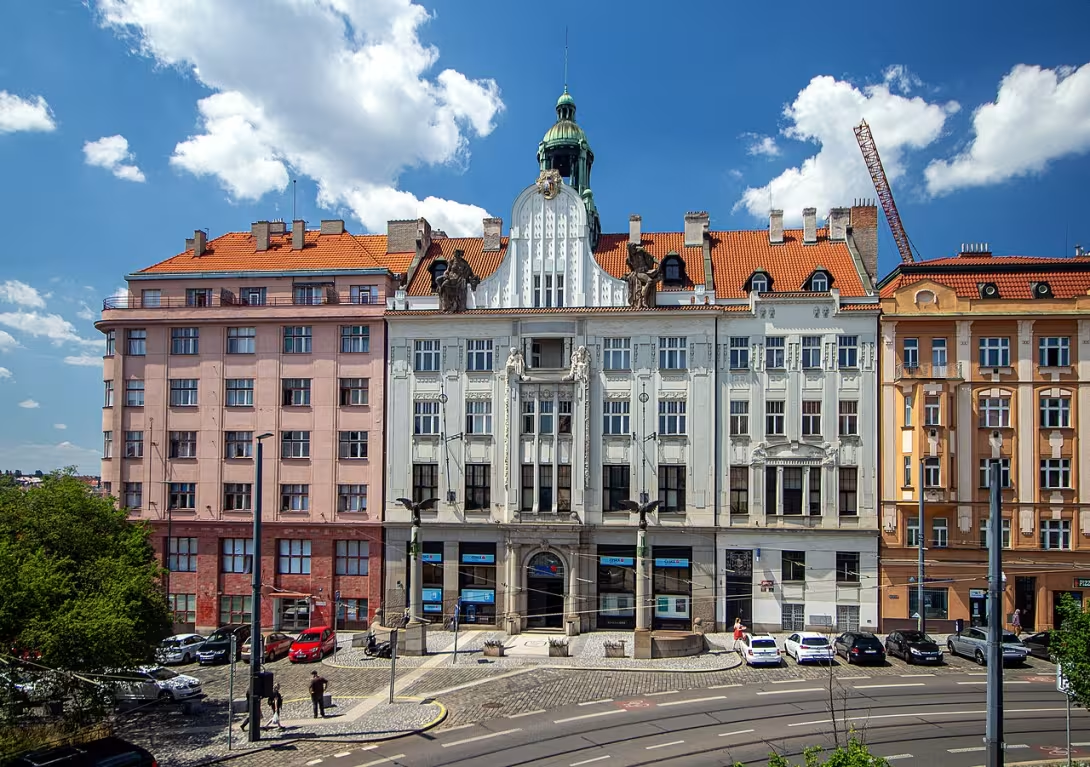
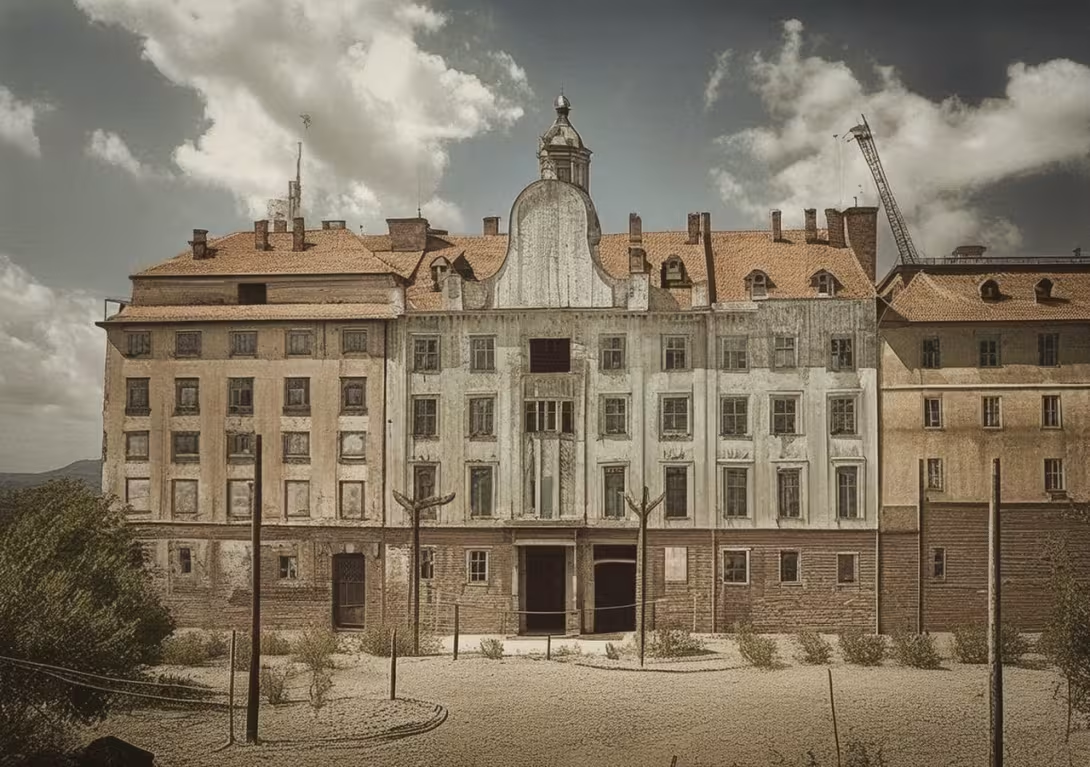
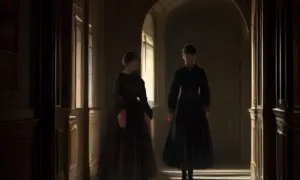
The historical appearance on the left is an AI-generated visualisation and serves as inspiration only.
Historical milestones
- 1911
- Design of the building by architect Antonín Balšanek.
- 1931
- Adding the facade with neon inscriptions.
- 1993
- Reconstruction of the mantle of the building including roof.
- 1999
- Replacing skylights in the lobby.
Architectural development
The construction was part of a larger reconstruction of the territory and is a representative example of a late Art Nouveau. The interior combines geometrical with floral elements, while the facade is decorated with sculpting parts from Ladislav Šaloun and Josef Bakárek.
Historical events
- 1931
- The facade was supplemented by neon company inscriptions.
- 1993
- There was a reconstruction of the building's mantle including the roof.
- 1999
- Replacing skylights in the lobby.
Points of interest
- The building was built in 1911 according to the design of architect Antonín Balšánek. - The interior is decorated with geometrical and floral motifs and the public hall is decorated with demanding mosaics. - The facade contains sculptures, including the statue of Přadlena symbolizing honesty, modesty and diligence. - In 1931, the facade was supplemented by neon company inscriptions. - In the 1970s and 1980s, the Czechoslovak State Bank was based here.
Guide
Show guide text
This text was created by artificial intelligence and has not been editorially reviewed. It may contain inaccuracies.
Welcome to Prague 10, in the heart of beautiful Vršovice. Stop for a moment, take a breath and fully sense the space around you. Right now, you're facing one of the most important architectural pearls in this neighborhood. In front of you is the Vršovická reserve building, which is now also known as Vršovická savings bank. It is a building which, by its very presence, emits stability, dignity and a certain amount of optimism back then. When you look at it, you are probably interested in its representative appearance, which carries the spirit of the time when Prague was modernising and Vršovice was changing from a peripheral area in a prosperous urban district.
Let us now return together in time more than a century ago. It's 1911. At this time Prague was in full bloom and the need for modern financial institutions grew. It was this year that this object was designed by the famous architect Antonín Balšanek. Balšanek was not just a simple builder, he was a master of his craft, who understood how to express the importance of the institution that resides in it. Vršovická záložna was not only meant as a place to store money, but was meant to be part of a larger reconstruction of the entire territory. It was to be a symbol of the progress, safety and development of the local community. Imagine how this building excelled among the houses at the time in 1911 and how the first visitors perceived this new, modern space.
Now please pay attention to the architecture itself. If you look at the overall style, you will see beautiful elements of the Art Nouveau. Secese was the peak of modern taste at the time, trying to combine art with everyday life. Note how the building combines various approaches to decorating. If you look closely at the details, you will see a fascinating rotation of geometric shapes and floral elements. Flower motifs bring ease and nature into the building, while strict geometric lines give the building a sense of order and strength, which was absolutely crucial for the savings bank. Customers should feel that their savings are safe and that the institution is managed with precision.
Now look at the front of the building. Here you will find one of the most beautiful parts of the whole work. Note the sculptures that decorate the facade. Among them stands one very symbolic figure, namely the statue of Flatlen. Stop by and think about what this character is telling us. It's not just an ornament, it's an embodiment of values that were crucial to the backup and its clients. It symbolizes honesty, modesty and, above all, diligence. At the time of the building, this symbolism was very strong. She told people that wealth and security are not the result of chance, but the fruit of patient and honest work. It is a beautiful reminder that every success is driven by effort and integrity.
While you are standing outside, allow me to briefly guide you through what lies inside. The interior of the building is a continuation of the same aesthetic line you see on the facade. It is richly decorated with ornamental style of late Art Nouveau. Imagine the space where geometry meets nature in every detail. The biggest jewel is the public hall. This spatial dominance has been decorated with a very demanding mosaic that gives the interior a luxurious and noble character. Mosaic is a technique that requires great patience and precision, which again refers to the values of the workmanship that we saw at the statue of Flatlena outside.
The history of the building did not stop in 1911. The building lived and evolved along with the city. Let's move two decades forward to 1931. At that time, fashion came to new technologies and modern lighting. It was this year that the facade was supplemented with neon inscriptions. Imagine what the building looked like in the 1930s. Classic Art Nouveau architecture with its fine lines was suddenly intertwined with modern, bright neon light. It was a bold step that showed that Vršovická záložna was watching the times and not just a monument to the past, but a living part of the modern city.
But time also brings wear and wear, which is why the building was carefully renovated in later years to preserve its beauty for future generations. In 1993, a large reconstruction of the mantle of the building was carried out, which included repair of the roof. It was important for the original details to be preserved and for the building to regain its representative appearance. A few years later, in 1999, there was another important modification, namely the exchange of skylights in the hall. These skylights are key to getting enough natural light into the inner space that lights up the mosaics and ornaments we talked about beautifully.
Today, when you're standing in front of this building, think of it as a book in which different generations of Pražani have written. From the visionary design of Antonín Balšánek, to the neon era in the interwar period, to the modern care of the monument fund in the late twentieth century. This building is proof of how architecture can tell the story of values, ambition and love for detail.
Now try to look around again. Note how the building fits into the surroundings of Vršovice and how the feeling of stability still persists. It's fascinating to think how many people have come here over the years, how many dreams and plans have been discussed in these walls, and how many people have been looking at the Statue of Paddles with hope in their hearts.
I'm saying goodbye now. I hope this short trip to history has helped you to see the Vršovická reserve not only as a beautiful building, but as a place with a soul and deep meaning. I invite you to continue your walk through Vršovice, discover other hidden corners of this neighborhood and perceive the beauty of Prague architecture in every detail. I wish you a pleasant rest of the day and many other inspiring experiences in discovering our city. Goodbye.
Tips for visitors
The best time to visit is during the morning or in the evening, when the sun hits the Art Nouveau facade at an angle that highlights architectural details and plastic decoration designed by Antonín Balšanek.
The building is located in densely built urban area, so we recommend using public transport. Find the current connection in travel applications. Parking in the area is limited and follows the rules for pay-stand zones.
Take a high-quality camera with a wide-angle lens to capture the entire representative front. The best light for exterior images is when the sun doesn't throw sharp shadows directly at the main entrance.
In the immediate vicinity you can visit Vršovice castle known as Rangherka, Roman Catholic church of St. Nicholas or Hus Choir with Mana Theatre. For families with children, the surroundings are suitable for easy walking through the history of Vršovice.
Is the entrance to the building charged?
Information about the entrance fee may change, so we recommend checking the current conditions on the official site or on site.
What's the opening hours for the public?
The opening hours are not fixed for the general public, we recommend to find out in advance the current operating condition of the building.
How do I get to the building by public transport?
The location is well accessible by public transport, specific lines and stops please check the current connection search.
Businesses nearby
Do you run a restaurant, accommodation, shop, museum, rental, wellness or other visitor service near this monument? Show yourself directly to the people heading to it — this is how they will see you in the app and on the web:
Events nearby

Zdroj akcí: otevřená data měst a obcí ČR (Národní katalog otevřených dat) a kalendář akcí Národního památkového ústavu.
Nearby
V sousedství se nachází Vršovický zámeček (Rangherka), římskokatolický kostel svatého Mikuláše a Husův sbor s divadlem Mana.
Accommodation nearby
Trips and activities nearby
Guided tours, tickets and activities nearby from GetYourGuide
Affiliate link: if you buy from the partner, we may receive a commission. The price for you does not change.
Search tours and activities →Themed route
Vršovická záložna Type: Historical building of the savings bank Why is it worth a visit: This monument represents a rare example of the architecture of savings banks from the beginning of the twentieth century. Its facade and interior elements illustrate the development of urban development and financial culture in this part of Prague.
Vršovice castle (Rangherka) Type: Historical estate Why is worth a visit: It is located in the immediate vicinity of the main goal and offers a view of a different form of historical development of the area. The castle with its garden forms a peaceful contrast to the urban environment and resembles the noble roots of this territory.
St. Nicholas Church Type: Roman Catholic Temple Why is it worth a visit: This sacral object is an important dominant of the district and serves as a spiritual centre for the local community. Its architecture and history complement the picture of the cultural heritage Vršovice about the religious dimension.
Hus Choir with Mana Theater Type: Cultural and Religious Center Why is it worth visiting: The combination of choir and theatre creates unique space for cultural life. Visitors can experience theatre performances here or become acquainted with the history of the Czechoslovak choir movement in this particular environment.
The route is designed to allow a smooth exploration of cultural and architectural monuments in a close neighbourhood. It starts at the main destination, which is the most architectural, and then progresses to neighbouring historical buildings. Each point of the route is only a short walk away from the previous one, which allows convenient examination without the need for transport. In this way the visitor will get a comprehensive picture of the history of Vršovice, from the financial institution to the noble estate to the religious and cultural centre. The whole route is located in one compact area, which is easily accessible and offers a rich program for lovers of history and architecture.
Seasonal recommendations
Seasonal recommendation for visiting the historical monument. Memorial: Vršovická záložna (savings bank building), Praha 10, Status: preserved
Spring: In spring the surrounding area of the building wakes up and the sunlight is fine, which highlights the shapes of the building beautifully. Vršovická streets start to green and the air is fresh. I recommend a visit in the morning when there is the most light and not so many people. Dress well, because the morning cold can be surprising, even though it's getting warmer.
Summer: The summer season brings the most life to the quarter and the sharp sun hits the historic shapes. The atmosphere is very lively and hot. It is best to arrive early in the morning to enjoy your peace and avoid the greatest heat. Wear light clothes and have water with you.
Autumn: Autumn offers a magical mood thanks to golden leaves and fog, which sometimes covers Prague streets. Lighting is soft at this time and very suitable for photography. It's good to have a waterproof jacket with you because the weather can be variable. The best time for a walk is in the afternoon when the colors of nature shine most.
Winter: Zimą is much calmer around and the days are short, which creates a bit of a serious feeling. Light is weak and gray, which gives the memory an important look. Since it's freezing, don't forget to wear very warm clothes and shoes. There may be more people around in advent time, so plan a visit rather during the day.
Visualizations and artistic views


The visualisations are generated by artificial intelligence and serve as inspiration.
Photos from the area
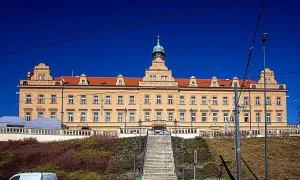
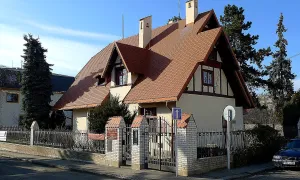
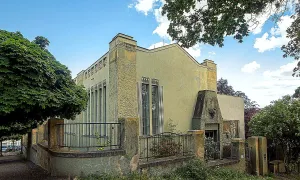
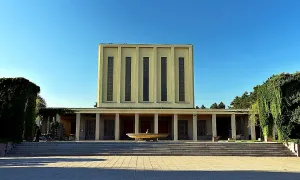
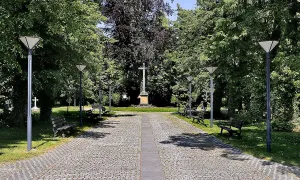
Real photos taken near the monument


Zdroj a licence jsou uvedeny u každého snímku.
Tips from visitors
No tips yet. Be the first!
Log in and add your tip.
Sources and literature
Photos: VitVit / CC BY-SA 4.0 — Wikimedia Commons. The author and licence also appear when you hover over the image.
Faktickým podkladem tohoto textu byl článek na Wikipedii, jehož autory jsou přispěvatelé Wikipedie. Článek je dostupný pod licencí CC BY-SA 4.0.
Location on the map
Příběhy a pověsti
Legendy, pověsti a příběhy spjaté s touto památkou
Fotografie návštěvníků
Zatím žádné fotografie. Buďte první, kdo přidá fotografii z návštěvy!
Log in a přidejte svou fotografii nebo hodnoťte.
Za ověřenou návštěvu v aplikaci získáte víc bodů — poznáme podle GPS, že jste na místě.
Reviews and comments