






evangelický kostel (Hranice) Church
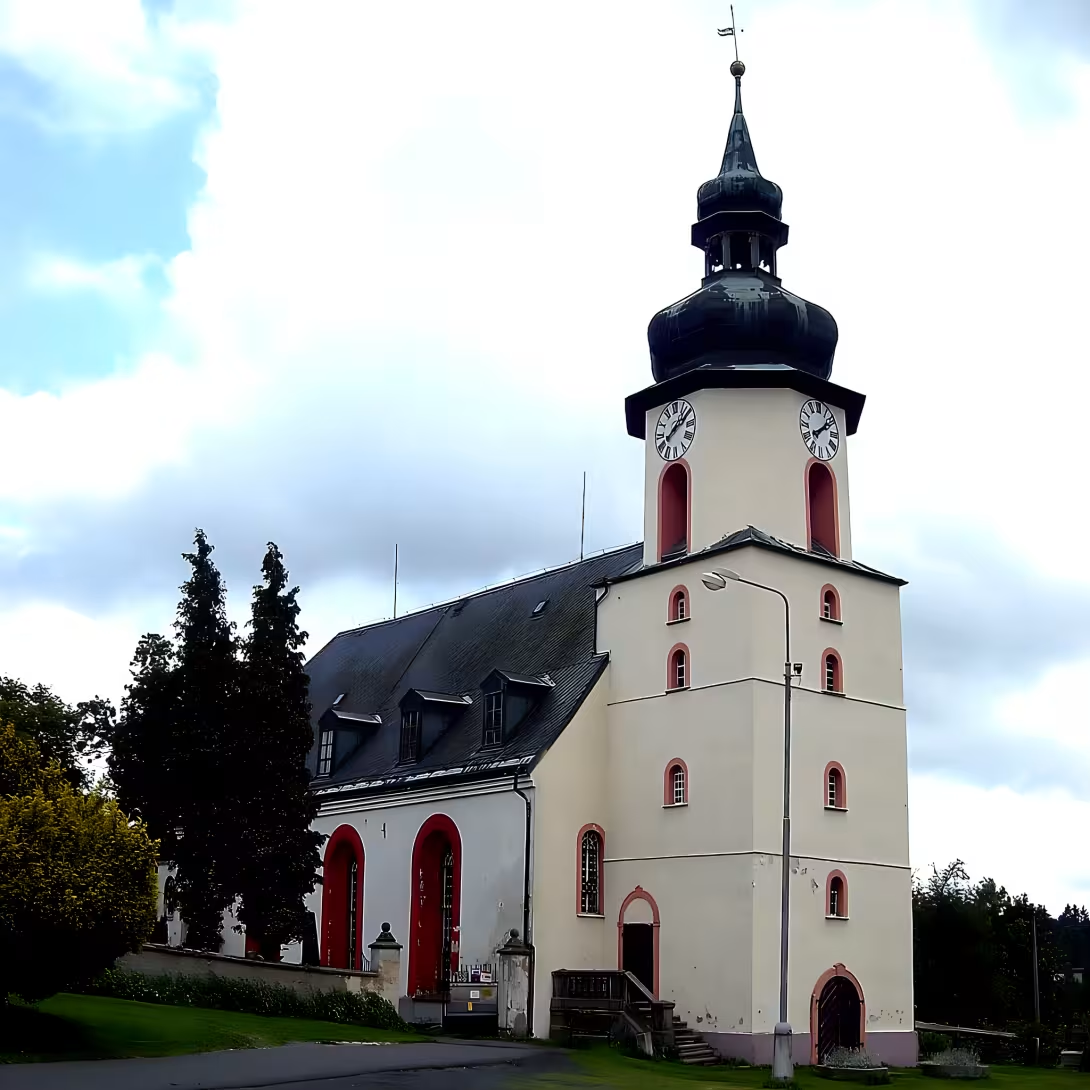
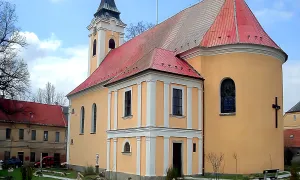
The Evangelical Church in Hranice is a significant historical monument within the town, located in the Karlovarský kraj region of the Czech Republic. Originally built as a Catholic chapel dedicated to Saint Martin at the end of the 14th century, it was transformed into an evangelical church by the late 17th century. This change reflects centuries of religious evolution and architectural adaptation, making it a notable landmark in Hranice.
The church's origins date back to its establishment as a Catholic chapel around the end of the 14th century. Historical records indicate that Hussites or their supporters desecrated the site, leading to its reconsecration by Bishop Gerhard von Salomünster in 1432. By 1502, it had become an independent parish, marking a significant shift in its religious and administrative status. The church's history includes periods of re-Catholicization; following Ferdinand II’s policies in 1629, evangelical pastors were expelled until they returned under the Peace of Westphalia in 1649.
Architecturally, the Evangelical Church underwent substantial changes over time. In 1719, its nave was expanded and rebuilt in a Romanesque style to accommodate more worshippers while retaining its Baroque tower. This tower shares architectural features with other local structures, including a square base that tapers upwards, an octagonal spire, and a bulbous dome. These elements highlight the church's historical past and its adaptation over centuries.
Throughout its history, the church has been influenced by various religious and political shifts. The late 17th century, when significant reconstruction occurred, was a period of change in Bohemia following the Peace of Westphalia in 1648. This treaty allowed for greater religious freedoms across Europe, impacting the church's development.
The church also holds several intriguing historical anecdotes. In 1679, a local citizen donated a silver chalice to the church, which was nearly requisitioned in 1806 but was 'redeemed' by community fundraising efforts. Additionally, all pastors since the 15th century maintained a chronicle of the city's history, providing detailed records that help map Hranice’s historical narrative.
Today, the Evangelical Church is under the administration of the Farní sbor Českobratrské církve evangelické Aš and is currently undergoing reconstruction efforts. Its proximity to a city cemetery adds to its historic atmosphere. The church remains an important site for both historical study and religious practice, offering visitors insight into centuries of cultural and architectural evolution.
Visitors to Hranice are encouraged to explore this remarkable monument, which not only serves as a testament to the town's rich history but also stands as a symbol of resilience and community spirit through changing times. Its storied past and ongoing preservation efforts make it a must-see destination for those interested in religious architecture and Czech history.
Then and now
Drag the slider to compare how the landmark may have looked when it was built with the view today.
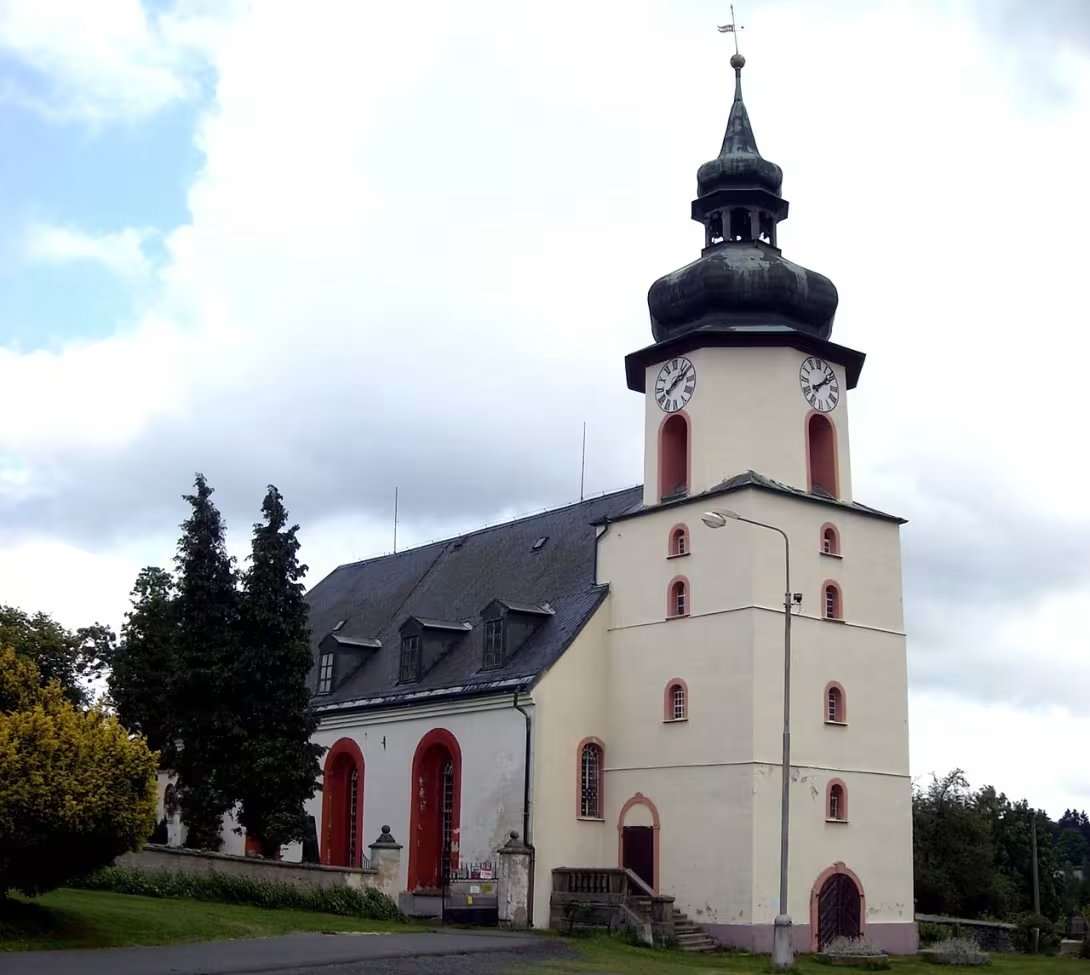

The historical appearance on the left is an AI-generated visualisation and serves as inspiration only.
Historical milestones
- 1432
- The church was reconsecrated due to desecration by Hussites or their supporters.
- 1502
- The church became an independent parish.
- 1719
- The nave of the church was expanded and rebuilt in a Romanesque style.
- 1916
- Both church bells were confiscated during World War I to be melted down for ammunition.
Architectural development
The church underwent significant changes over time. In 1719, its nave was expanded and rebuilt in a Romanesque style to accommodate more worshippers, while retaining its Baroque tower. The tower shares architectural features with other local structures, including a square base that tapers upwards, an octagonal spire, and a bulbous dome.
Historical events
The chapel was likely established as a Catholic site by the end of the 14th century.
In 1432, it was reconsecrated due to desecration by Hussites or their supporters.
By 1502, the church became an independent parish.
Following the re-Catholicization in 1629, evangelical pastors were expelled until they returned in 1649 under the Peace of Westphalia.
Points of interest
- The Evangelical Church in Hranice was originally a Catholic chapel dedicated to Saint Martin and underwent a significant transformation into an evangelical church by the late 17th century, reflecting broader religious shifts of that era.
- In 1432, after being desecrated by Hussites or their supporters, the site was reconsecrated by Bishop Gerhard von Salomünster, highlighting its turbulent history during periods of religious conflict.
- A silver chalice donated to the church in 1679 almost fell into requisition in 1806 but was saved through community fundraising efforts, demonstrating local dedication to preserving their historical artifacts.
- Since the 15th century, pastors have maintained a chronicle documenting Hranice's history, providing invaluable insights and detailed records that contribute significantly to understanding the town’s past.
- The church's architectural evolution includes an expanded nave in Romanesque style completed in 1719, while retaining its Baroque tower, showcasing a blend of historical styles over centuries.
Guide
This guide is narrated by a synthetic voice generated by artificial intelligence.
Show guide text
This text was created by artificial intelligence and has not been editorially reviewed. It may contain inaccuracies.
Welcome to the historic Evangelical Church in Hranice, a remarkable testament to centuries of religious evolution and architectural adaptation. As you stand here, take a moment to absorb your surroundings. The church exudes an air of serene history, with its Romanesque nave leading your eyes towards the striking Baroque tower that punctuates the skyline.
The origins of this sacred site trace back to a Catholic chapel dedicated to Saint Martin. Over time, it underwent significant transformations reflecting broader religious shifts. By the late 17th century, it was reconsecrated as an evangelical church, marking its transition from one faith tradition to another—a narrative mirrored in many European locales during that era.
As you explore further, notice the architectural details around you. The Romanesque style of the nave is particularly noteworthy, a result of expansions and rebuilds completed by 1719. This style is characterized by robust, sturdy structures with semi-circular arches—an aesthetic that lends itself to both strength and beauty. Adjacent to the church lies a city cemetery, adding layers of historical context and a sense of continuity.
The history of this church is rich with stories and pivotal moments. In 1432, it faced desecration by Hussites or their supporters, leading to its reconsecration—a testament to resilience in times of religious turmoil. By 1502, the church had become an independent parish, signifying its growing importance within the community.
However, not all chapters are filled with triumphs. In 1916, during World War I, both church bells were confiscated and melted down for ammunition, a poignant reminder of how global conflicts can reach into local communities and alter their landscapes forever.
An intriguing aspect of this site is its transformation from a Catholic chapel to an evangelical church—a reflection of the shifting religious currents that swept through Europe. Such transformations are not merely architectural but deeply spiritual, marking shifts in belief systems and community identities.
As you continue your exploration, let yourself be drawn into the layers of history encapsulated within these walls. Notice how each stone seems to whisper stories from centuries past, inviting you to ponder the lives and beliefs of those who came before us.
Thank you for joining me on this journey through time at the Evangelical Church in Hranice. I encourage you to delve deeper into its history, perhaps by visiting the adjacent cemetery or simply sitting quietly within the church's embrace, reflecting on the passage of time. Until next time, may your explorations be filled with discovery and wonder.
Frequently asked questions
Can the monument be visited?
Religious buildings are usually open mainly during services; at other times a visit is normally arranged with the parish or the operator. We have not verified specific times.
Where is the monument?
Location: Hranice, Karlovarský kraj. The map on this page shows the exact spot.
Why is the monument protected?
It is listed in the Central List of Cultural Monuments of the Czech Republic as a cultural monument (register no. 37623/4-20).
Businesses nearby
Do you run a restaurant, accommodation, shop, museum, rental, wellness or other visitor service near this monument? Show yourself directly to the people heading to it — this is how they will see you in the app and on the web:
Accommodation nearby
Themed route
Thematic Walking Tour: Hranice and Its Environs
1. Evangelický kostel (Hranice) - Church Begin your tour at the Evangelical Church in Hranice, a stunning example of Baroque architecture that stands as a testament to the town's rich history and cultural heritage. This church is not only a place of worship but also an architectural marvel with intricate designs and historical significance.
2. Municipal Office (Hranice) - Civic Building A short walk from the Evangelical Church, visit the Municipal Office in Hranice. This building serves as the administrative heart of the town and offers insights into local governance and community life. Its architecture complements the historic character of the area.
3. Local Market Square (Hranice) - Public Space Continue to the Local Market Square, a vibrant hub that has been central to Hranice's social and economic activities for centuries. The square is surrounded by charming buildings and provides an excellent opportunity to experience local life and perhaps enjoy some regional delicacies from nearby vendors.
4. Historic Town Hall (Hranice) - Civic Building Nearby, explore the Historic Town Hall, a building that reflects the architectural styles of different eras. It serves as a reminder of Hranice's development over time and offers a glimpse into its administrative past with preserved interiors and historical artifacts.
5. Cemetery (Hranice) - Historical Site Conclude your tour at the local cemetery, which is not only a resting place for residents but also an important cultural site. The cemetery contains graves of notable figures from Hranice's history, providing a reflective end to your journey through this historic town.
This walking tour offers a comprehensive look into Hranice’s historical and cultural landscape, focusing on key civic and architectural sites that tell the story of this charming Karlovarský kraj locality.
Seasonal recommendations
Spring: Visiting the Evangelical Church in Hranice during spring offers a serene experience as nature awakens around this historic site. The blooming flowers and fresh greenery create a picturesque setting, enhancing the church's architectural beauty with natural light filtering through stained glass windows. Springtime brings milder temperatures, making it comfortable for outdoor exploration before entering the church. Visitors should dress in layers to accommodate changing weather conditions throughout the day. While crowds are generally lighter compared to summer, arriving early can ensure a peaceful visit and ample time to appreciate both the interior and exterior surroundings.
Summer: The Evangelical Church in Hranice is particularly inviting during the summer months when longer daylight hours allow for extended exploration of its historic architecture. Summer's warm weather provides an ideal backdrop for outdoor activities before or after your church visit, such as walking through nearby parks or along scenic trails. However, this is also the peak tourist season, so expect larger crowds and consider visiting early in the morning to avoid congestion. Light, breathable clothing is recommended, along with sun protection like hats and sunscreen to ensure a comfortable experience.
Autumn: Autumn transforms the landscape around the Evangelical Church in Hranice into a vibrant tapestry of reds, oranges, and yellows, offering a stunning backdrop for visitors. The cooler temperatures make it an ideal time for leisurely walks through the surrounding area while enjoying the colorful foliage. This season often sees fewer tourists compared to summer, allowing for a more tranquil visit. Dressing in layers is advisable as the weather can vary significantly throughout the day. Don't forget to bring a camera to capture the breathtaking autumnal scenes.
Winter: The Evangelical Church in Hranice takes on a magical quality during winter when snow blankets the surrounding landscape and transforms it into a picturesque scene reminiscent of a postcard. The shorter daylight hours mean that visits are best planned for earlier in the day, while natural light enhances the church's interior beauty. Winter weather necessitates warm clothing, including coats, hats, gloves, and boots to ensure comfort during your visit. Keep in mind that opening times may be reduced due to seasonal conditions, so checking ahead is recommended. Despite potentially harsher weather, the serene atmosphere makes it a unique time to experience this historic site.
Visualizations and artistic views


The visualisations are generated by artificial intelligence and serve as inspiration.
Photos from the area
Real photos taken near the monument


Zdroj a licence jsou uvedeny u každého snímku.
Atmosphere of the place
This atmospheric visualisation of the place and period was generated by artificial intelligence. It is not real footage of the location.
Tips from visitors
No tips yet. Be the first!
Log in and add your tip.
Sources and literature
Photos: Zipacna1 / CC BY 3.0, rozlišení zvýšeno umělou inteligencí — Wikimedia Commons. The author and licence also appear when you hover over the image.
Faktickým podkladem tohoto textu byl článek na Wikipedii, jehož autory jsou přispěvatelé Wikipedie. Článek je dostupný pod licencí CC BY-SA 4.0.
Location on the map
Příběhy a pověsti
Legendy, pověsti a příběhy spjaté s touto památkou

Fotografie návštěvníků
Zatím žádné fotografie. Buďte první, kdo přidá fotografii z návštěvy!
Log in a přidejte svou fotografii nebo hodnoťte.
Za ověřenou návštěvu v aplikaci získáte víc bodů — poznáme podle GPS, že jste na místě.
Reviews and comments