



evangelický kostel v Krakovanech Church
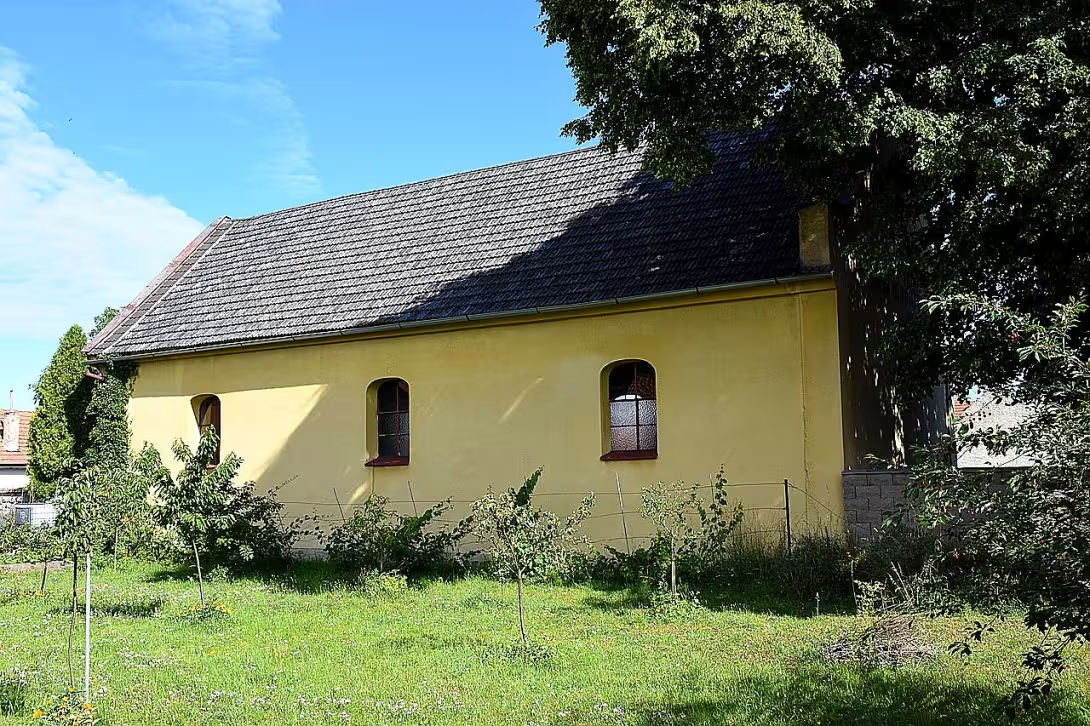
The Evangelical Church in Krakany is an important monument of the Czech Republic and belongs to the first objects built after the issue of the tolerance patent. This building of the Czech-brotherly Church of the Evangelical Church stands at the evangelical cemetery in the central part of the village and since 27 April 1999 it is protected as a real cultural monument.
The history of the church is related to the period after the issue of the tolerance patent, which enabled the creation of evangelical prayers and significantly influenced the religious map of Czech countries. The original wooden building was built in 1784. In 1805 the church was newly built as a brick building and in 1840 it was extended.
The architecture of the object corresponds to the principles of tolerance style. The prayer room has a rectangular floor plan without the stressed presbytery and is oriented towards the west. The construction is finished with a saddle roof with an undivided facade. The eastern entrance facade is closed by a one-time detached triangular shield, on which is placed the distinctive inscription House of Prayer. Above the top window at the top of the shield there is the motive of the chalice. The wooden entrance door is anchored in a segmentally arched area, which is lined with simple champagne. Above them are two window openings; one has larger dimensions and the compressed arch is enamelled, the other is encapsulated in semi-circular. There are three pairs of windows in the north and south walls of the ship with compressed wedges, while the west wall is blind. The interior is designed simply, the walls are equipped with biblical quotes.
The evangelical cemetery is situated north of the prayer house, which is entered through the pillar gate.
The church represents a quiet place for prayer within the evangelical tradition. It documents the development of religious freedoms in the region as an important historical element. Visiting the building offers an opportunity to get acquainted with the history of tolerance architecture.
Then and now
Drag the slider to compare how the landmark may have looked when it was built with the view today.
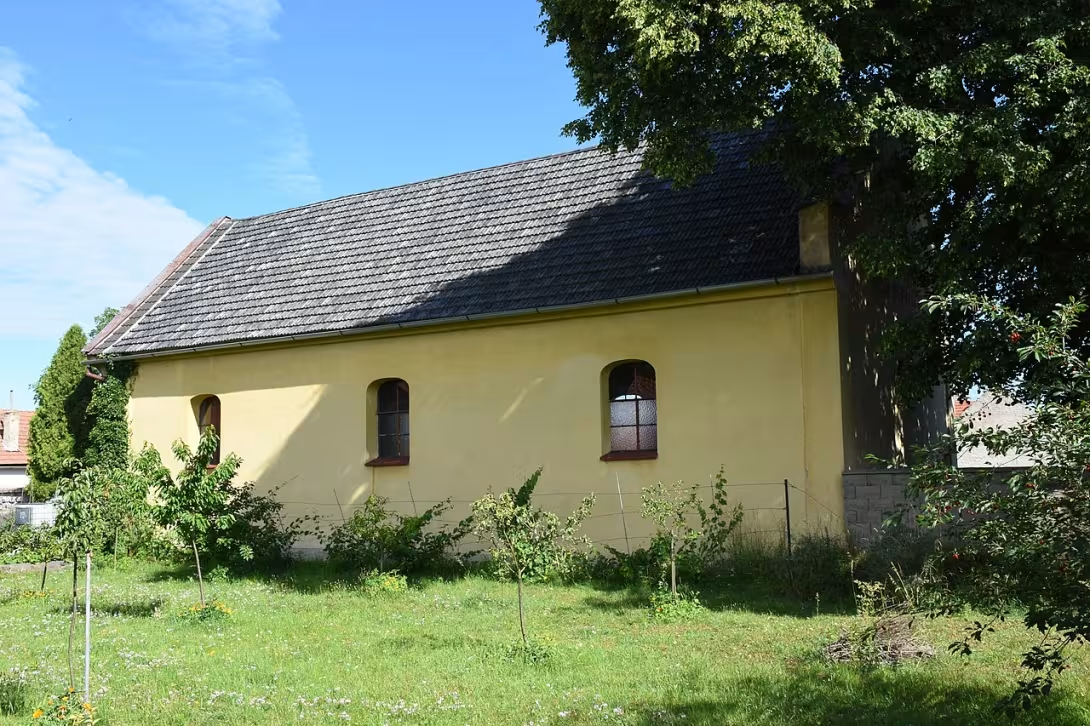
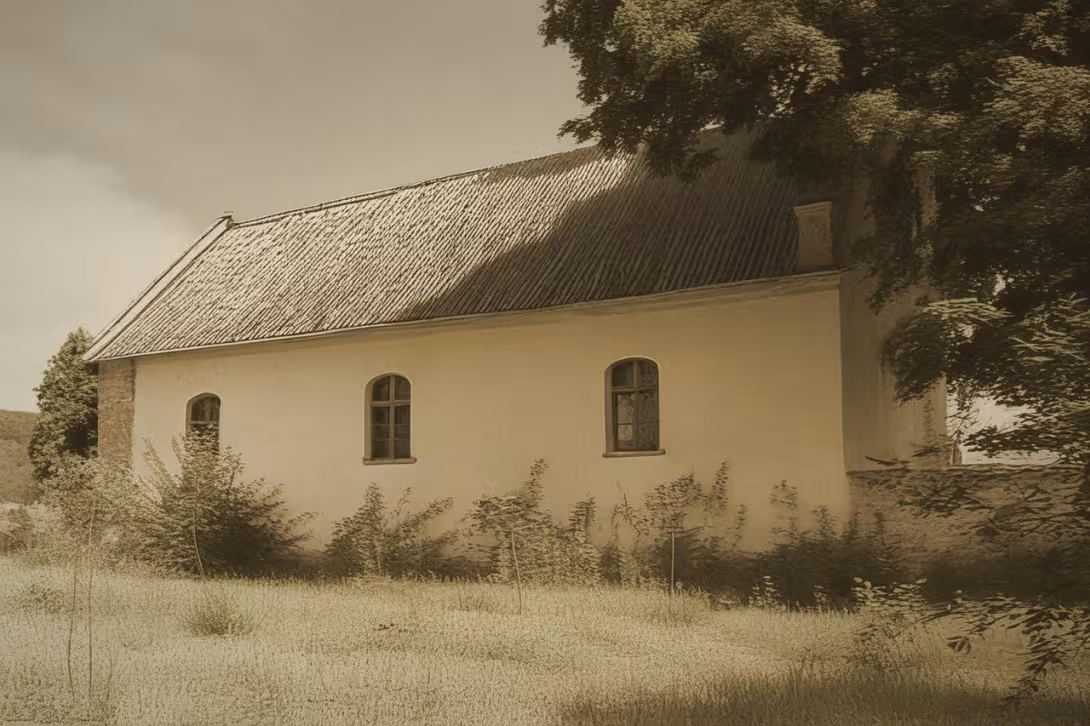
The historical appearance on the left is an AI-generated visualisation and serves as inspiration only.
Historical milestones
- 1784
- The origin of the original wooden structure
- 1805
- Newly exposed contemporary church
- 1840
- Church extension
- 1999
- Protection as a real cultural monument
Architectural development
The building underwent development from the original wooden building from 1784 to the new brick church in 1805. In 1840 the building was further modified as an extension.
Historical events
The original wooden building was built in 1784. In 1805 the church was newly built. In 1840 it was extended. Since 27 April 1999, the building has been protected as a cultural monument.
Points of interest
- Evangelical church in Krakany is an important monument of the Czech Republic and belongs to the first objects built after the issue of the tolerance patent. - This building of the Czech-brotherly Church of Evangelical stands at the evangelical cemetery in the central part of the village and since 27 April 1999 is protected as a real cultural monument. - The original wooden building was built in 1784, it was newly built as a brick building in 1805 and was extended in 1840. - The architecture corresponds to the principles of tolerance style with a rectangular plan, oriented towards the west, ending with a saddle roof and an eastern front with a shield with the inscription "House of Prayer." - The interior is designed simply, the walls are equipped with biblical quotes.
Guide
Show guide text
This text was created by artificial intelligence and has not been editorially reviewed. It may contain inaccuracies.
Welcome to the Krakans. You are standing in front of one of the most important places in this village, the Evangelical Church, which will be able to reveal its hidden history and depth for you in the next few minutes. Before you take the next step and start looking more closely, stop for a moment and feel the atmosphere that exists here. You are in a quiet part of the village, right at the place where the evangelical cemetery is also located. This space around the church carries a special kind of silence and a breath of the past, which will immediately separate you from the daily rush. Before your eyes is a building that is not only a brick object, but a living symbol of a certain era in our history, an era of seeking freedom and finding its place in the world.
Let us now move further into the past together to understand why this church is standing right here and why it has such a form. To understand its existence, we must return to the end of the eighteenth century, at a time when fundamental laws concerning faith and human rights have begun to change in our countries. It all started in 1784. At that time, there was not yet this walled-up structure, which you see now, but there was the original wooden structure. It was a fragile building, perhaps temporary, but extremely valuable to the community at the time. It was created in a period when the issue of a tolerance patent started to open the door to greater religious freedom. This patent was a turning point that allowed people to practice their faith with greater openness. It is this church that is one of the first buildings to be built after this crucial decision and is therefore considered an important representative of so-called tolerance architecture.
But with time, people's needs changed, and their faith required something more durable than wood. So in 1805, this current brick object was exposed. Feel the effort for stability and for this place to be here for generations to come. This building was no longer just a temporary refuge, but an expression of the permanent presence of the community in the landscape. Later, in 1840, space needed to be extended, which led to an extension of the church in order to accommodate more and more believers. Each change, every year since 1784, added another layer of importance to this monument and reminds us of how this community evolved and how much it appreciated its home for prayer.
Now pay attention to the architecture itself and to what you're seeing right now. Look at the overall shape of the building. Its shape is very clear and straightforward - it is a simple rectangular plan. There is no complexity hidden in this simplicity, but it is within it its greatest power. This building does not seek ostensiveness. It is oriented towards the west, which is very important for such structures and determines how light moves within space during the day. Feel the harmony between the simplicity of the external appearance and the importance of the task that this building performs.
If you decide to enter, you would encounter an interior that is deliberately moderate. Within the evangelical tradition, the wealth of ornaments or precious materials is not important, but the purity of thought and the strength of words. The inner space is decorated with quotes from the Bible that serve as a spiritual guide for anyone who comes here to seek peace or pray. These words on the walls are not just an ornament, they are pillars on which the spiritual life of this place stands. The whole space is designed so that one can find silence and space for inner contemplation, away from the noise of the outside world.
Although we have not been able to find in the historical records the names of the particular architects who designed this space, we can imagine them. They were not just builders, but people who believed in building something lasting for their children and for the centuries to come. Every brick in this brick building from 1805 bears the trail of the community, its efforts and its hopes. Even though their names remain unknown in history, their legacy is still alive here in the form of this building that resists time.
You may be interested in one very important thing that underlines the importance of this place. This church is not only a local home for prayer, but is recognised as an important monument to the whole Czech Republic. Its value was so high that since 27 April 1999 this real-estate cultural monument has been under strict protection. This means that its appearance and its essence must remain preserved exactly as it is passed on from its ancestors so that the authentic atmosphere that you are currently seeing is not lost. It's a commitment that we all have when we visit this place.
Now that you've learned more about history, architecture and the importance of this place, I suggest you continue your tour of the area. Perhaps you will stop at the cemetery, and in silence you will perceive the history of those who lived here, or you will just look at the surrounding landscape that surrounds this church so beautifully. Thank you for spending this moment with us and for paying attention to this history. We wish you a beautiful and peaceful journey.
Tips for visitors
The best time to visit is during bright days when the light best highlights the details of the wall construction. For the best photos we recommend focusing on the appearance of the church and use natural light.
For convenience we recommend taking drinking water and comfortable shoes for walking around.
For families with children, the place is suitable for a quiet walk around the monument and cemetery.
As part of the visit, you can explore the evangelical cemetery, which lies directly north of the church.
Frequently asked questions
Can the monument be visited?
Religious buildings are usually open mainly during services; at other times a visit is normally arranged with the parish or the operator. We have not verified specific times.
Where is the monument?
Location: Středočeský kraj. The map on this page shows the exact spot.
Why is the monument protected?
It is listed in the Central List of Cultural Monuments of the Czech Republic as a cultural monument (register no. 1000122794).
Businesses nearby
Do you run a restaurant, accommodation, shop, museum, rental, wellness or other visitor service near this monument? Show yourself directly to the people heading to it — this is how they will see you in the app and on the web:
Nearby
Severně od kostela se nachází evangelický hřbitov.
Accommodation nearby
Trips and activities nearby
Guided tours, tickets and activities nearby from GetYourGuide
Affiliate link: if you buy from the partner, we may receive a commission. The price for you does not change.
Search tours and activities →Themed route
1. Evangelical church in Krakany, religious building. Check the interior space and architecture. 2. Cave by the church, immediate area. This short trip around the building will lead you to another part of the route. 3. Evangelical cemetery, burial place. Located north of the church and offers a quiet atmosphere.
Seasonal recommendations
Spring: In the spring season evangelický kostel v Krakovanech will become a haven full of life and light. When the sun starts to tear out the clouds, the woods around the church take on the first green color, which gives the place unique lighting. Flowers pop out of the ground and attract butterflies, creating a harmonious atmosphere. For a visit it is advisable to come at the beginning of the day when the temperature is moderate and the crowds are still few. On your clothes you will choose a light dress or hooded jackets to protect against cold morning.
Summer: In the summer months, the church becomes a popular destination for tourists looking for shelter before sun fire. The woods around it take on a full shiny green shade and provide shade places to relax. The atmosphere is warm and lively, which attracts families and groups of friends. It is recommended to arrive early in the morning or in the afternoon when the sun is not at the peak of its light effect. Don't forget to wear a protective head and enough drinking because temperatures can be high.
Autumn: In autumn the church is transformed into a place with melancholy beauty. The leaves of the forest color with a shade of yellow, orange and red colours, which gives the place magic and quiet atmosphere. It is a good time for long walks around the church when the temperature is pleasant and the sun hides behind the clouds before other times of the year. To visit, you will choose clothes with layered layers to respond to temperature changes during the day. Visit the church also at dusk, when the lighting is most beautiful.
Winter: Winter visit to the evangelical church in Krakany offers a completely different beauty. The church stands in quiet, covered with snow and lighting is special thanks to the moonlight. The atmosphere is quiet and calm, which allows you to grasp the feeling of solitude and reflection. When visiting you choose warm clothes with waterproof elements to protect against snow and frost. The winter visit offers a unique view of the church in its quietest period.
Visualizations and artistic views


The visualisations are generated by artificial intelligence and serve as inspiration.
Photos from the area
Real photos taken near the monument


Zdroj a licence jsou uvedeny u každého snímku.
Tips from visitors
No tips yet. Be the first!
Log in and add your tip.
Sources and literature
Photos: Ben Skála, Benfoto / CC BY-SA 4.0 — Wikimedia Commons. The author and licence also appear when you hover over the image.
Faktickým podkladem tohoto textu byl článek na Wikipedii, jehož autory jsou přispěvatelé Wikipedie. Článek je dostupný pod licencí CC BY-SA 4.0.
Location on the map





Příběhy a pověsti
Legendy, pověsti a příběhy spjaté s touto památkou
Fotografie návštěvníků
Zatím žádné fotografie. Buďte první, kdo přidá fotografii z návštěvy!
Log in a přidejte svou fotografii nebo hodnoťte.
Za ověřenou návštěvu v aplikaci získáte víc bodů — poznáme podle GPS, že jste na místě.
Reviews and comments