



Fara (Janov) Parish house
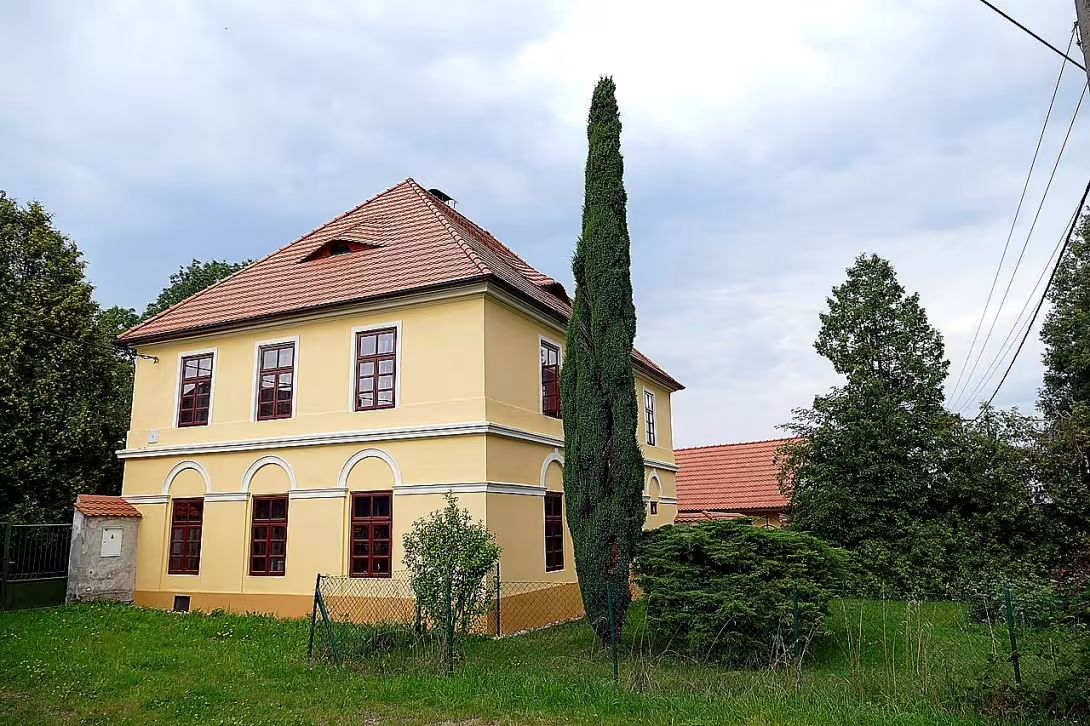
The rectory in Genoa, with descriptive number 2, is a classicist building built in the late 18th and early 19th century. Located near the village village and since 1963 it has been protected as a cultural monument. This rectory represents an important architectural monument which retains classical elements typical of the rural construction of the time.
The formation of the rectory dates back to 1832. In this period, a period of classicism, characterised by a return to ancient ideals and symmetry, took place in Central Europe. Classicist architecture in Bohemia highlighted balance, simplicity and harmony. Fara Genoa is an example of this style with preserved classical elements such as ceilings, vaults, windows, doors and facades.
Architecturally, the rectory is characterized by a rectangular plan and a valb roof. The preservation of classical elements contributes to its historical significance. The premises also include economic facilities with two buildings, which form a traditional rural estate.
The history of the parish is associated with the formation of the parish office in the village of Genov in 1858. This event reflected the trend of centralization of religious and secular institutions. In 1963, the rectory was classified as cultural monuments, which highlighted its historical and architectural value.
Today the rectory is accessible to visitors. Visit her not only because of her historical and architectural values, but also as part of the knowledge of the local cultural context. The preserved classicist elements offer a view of the past.
Fara in Genoa is not only a monument to architecture, but also a witness to the history of the local community. Its conservation and protection are important for understanding the cultural development of the area and provide a valuable contribution to understanding regional history. Visit her to learn her beauty and understand her importance to the local heritage.
Historical milestones
- 1832
- The birth of the rectory in Genoa.
- 1858
- Establishment of a parish office in Genoa.
- 1963
- Fara was included as a cultural monument.
Architectural development
Fara was built in 1832 and is an example of classical rural construction. The original classical elements are preserved, making it an important cultural monument.
Historical events
- 1832
- Built in Genoa.
- 1858
- Established parish office in the village.
Points of interest
- The rectory in Genoa is a classicist building built in the late 18th and early 19th century. - Located near the village and since 1963 it has been protected as a cultural monument. - The formation of the rectory dates back to 1832, which corresponds to the period of classicism in Central Europe. - The architecture of the rectory highlights classical elements such as ceilings, vaults, windows, doors and facades. - The premises include economic facilities with two buildings forming a traditional rural estate.
Guide
Show guide text
This text was created by artificial intelligence and has not been editorially reviewed. It may contain inaccuracies.
Welcome to this historic place where we are today in front of the rectory in Genoa. You are standing at a classic building that attracts the attention of every visitor with its elegant design and rural location. Look up at the valb roof and notice the classic elements that have been preserved for centuries.
The rectory in Genoa was built at the end of the 18th and early 19th century, which corresponds to the period of classicism, when architecture focused on symmetry and harmony. In 1832 this rectory was created as an important building element for the local community. Subsequently, in 1858, the parish office was established here, which highlighted its central role in the spiritual life of the people.
The architecture of the rectory is a great example of classical style. Look at the facade and notice the symmetrical arrangement of windows, doors and vaults. These elements not only decorate the building, but also contribute to its stable and elegant appearance. The interior of the rectory is equally captivating, with classical ceilings and vaults that give space some dignity.
Although particular historical figures associated with this parish are not known, its importance to the local community cannot be underestimated. Fara was not only a place of religious service, but also a centre of social life.
The interesting thing is that the rectory in Genoa was recognised as a cultural monument as early as 1963. This status highlights its historical and architectural value and ensures its protection for future generations.
Now that you've looked at the classicist elements, you might also notice the surrounding environment. The farm is surrounded by traditional rural facilities with two economic buildings that form a typical estate.
I suggest you explore the surrounding area and enjoy the quiet atmosphere. I hope your visiting day at the parish place was full of discoveries. If you want to learn more about the history and architecture of Genoa, do not hesitate to visit the local museum or library. Goodbye and thank you for your attention!
Tips for visitors
The best time to visit the rectory in Genoa is autumn or spring, when the weather is quiet and warm, allowing you to enjoy the beautiful architecture of the building. Classicist elements are particularly charming in these months.
When visiting, take with you clothes suitable for current weather, shoes for walking and perhaps even a warm coat if necessary. The photos of the building are the best in natural light, so you can take the camera.
Photography of the rectory offers several views from the surrounding streets and from the side of the village. The best light is in the early morning or evening when the sun is not directly above the building.
In the vicinity of the rectory you can visit the historical place on the village village, which offers beautiful views and the opportunity to explore other architectural elements. For families with children it is a suitable local amusement park or playground.
Frequently asked questions
Can the monument be visited?
This is a residential or farm building, not a museum with opening hours. Please view it from public space and respect the owners' privacy. We have no information about access to the interior.
Where is the monument?
Location: Jihočeský kraj. The map on this page shows the exact spot.
Why is the monument protected?
It is listed in the Central List of Cultural Monuments of the Czech Republic as a cultural monument (register no. 1000136728).
Businesses nearby
Do you run a restaurant, accommodation, shop, museum, rental, wellness or other visitor service near this monument? Show yourself directly to the people heading to it — this is how they will see you in the app and on the web:
Nearby
🏰 Historic sites (96)
- Sv. Jan Nepomucký 0.0 km
- Památce legionářů 3.1 km
- Obětem 1. světové války 3.2 km
- Otakar Ostrčil 4.1 km
- Hrad Soběslav 4.5 km
- Blatské muzeum - Smrčkův dům 4.6 km
- Slovanské Hradiště Svákov 4.6 km
- sv. Jan Nepomucký 4.6 km
- sv. Josef 4.6 km
- Mariánský sloup 4.6 km
- sv. Florián 4.7 km
- Blatské muzeum - Rožmberský dům 4.7 km
- Galerie/Kostel sv. Marka 4.8 km
- zámek Strkov 5.0 km
- Obětem první světové války 5.2 km
- Bedřich Všemír Berchtold 5.5 km
- Karel Ančerl 5.5 km
- sv. Jan Nepomucký 5.5 km
- Zámek Tučapy 5.7 km
- Pomník obětem 1. světové války 6.0 km
🍽️ Restaurants and dining (184)
- Sportclub 0.9 km
- U Rumcajse 2.5 km +420 602 893 821 web
- Motorest 2.6 km
- U Trech Kytar 3.1 km
- Pivnice U mrtvoly 4.5 km
- Národ 4.5 km
- Bistro U Jakuba 4.5 km
- Asijské Bistro 4.6 km
- Mlíčňák 4.7 km
- U Lípy 4.8 km
- Hvížďalka 4.8 km
- Zrnko Cafe 4.8 km tř. Dr. Edvarda Beneše 287/3 +420777874727
- Paluba 5.2 km
- Horác 5.3 km
- TJ Spartak 5.5 km
- Lucky Pit 5.6 km
- Restaurace Maxim 5.8 km
- Občerstvení U Zastávky 6.1 km
- KD Želeč 6.3 km
- Hospoda na Chmelnici 6.8 km
🏨 Accommodation (59)
- Dětský tábor Orion 1.3 km
- Autocamp Pohoda 1.7 km
- penzion Nikola 4.4 km
- Tábořiště Svákov 4.7 km
- Chata EVA - Svět mezi SVĚTY 5.4 km V Zahájí ev.164 web
- Chata OLIVA - Svět mezi SVĚTY 5.4 km V Zahájí ev.213 web
- Hotel Lužnice 6.1 km ČSLA 41 web
- Penzion U Štěrbů 6.9 km
- Kravánky 7.8 km
- Kemp Fousek 8.0 km Dráchov 130 +420724347866 web
- Hotel Sloup 8.1 km Řípec 122 web
- penzion Ve Mlejně 8.2 km web
- Tábořiště Soukeník 8.7 km
- Tábořiště Soukeník 8.7 km
- Mas 8.8 km web
- kemp 8.9 km
- Bílý Měsíc - 3. oddíl Junáka Sezimovo Ústí 9.3 km web
- Na Mýtě 9.3 km web
- Hubert 9.8 km Šafaříkova 1073 +420 381 263 348 web
- Penzion Bartoň 10.0 km Husovo náměstí 70 +420 602 617 580 web
🚲 Rentals and sport (33)
- broková střelnice 2.7 km
- Cyklosport Švec 4.4 km web
- TJ Spartak 5.1 km
- Sokolovna 5.5 km ČSLA 244 web
- BSP 6.2 km
- Sportovní hala 8.9 km +420381275760 web
- Koupaliště Pohoda 9.3 km
- Tenisová hala U Cíchů 9.5 km +420774727129 web
- WallClub 10.1 km web
- Sportisimo 10.1 km Soběslavská 3073
- Decathlon 10.2 km Soběslavská 3191 +420 380 425 810 web
- Dětské centrum 10.6 km +420 774 929 897 web
- Střelnice 10.6 km
- Jump aréna Tábor 10.8 km Soběslavská +420 739 919 668 web
- Sportovní areál Komora 11.0 km
- Cyklo Suchý 12.0 km třída Československé armády 162 web
- lanový park Vávrovka 12.9 km
- Bazén Chýnov 13.0 km
- ČD Bike 13.1 km
- Nord Blanc 13.1 km
🥾 Hiking and nature (52)
- Kozlov 4.4 km
- rozhledna Svákov 4.5 km
- Na Měchůře 4.8 km
- studánka Na Svákově 4.8 km
- Čermákův vrch 4.9 km
- Park U sv. Marka 4.9 km
- Rozhledna Krátošice 4.9 km
- Holeček 5.5 km
- Gregor 6.2 km
- Vrchy 6.5 km
- Prostřední vrch 7.3 km
- Za Lumhárkem 7.6 km
- Jitra 7.6 km
- Na Průhonech 8.4 km
- Kutiny 9.2 km
- Budislavská hora 9.3 km
- Choustník 9.6 km
- Benešova vila 9.7 km
- Vršky 9.8 km
- Choustník 9.9 km
Accommodation nearby
Themed route
Thematic cruise route: Fara (Janov)
1.Fara (Janov) - Type: Religious construction - Why is it worth a visit: This parish is a historical monument that attracts its architecturally interesting appearance and rich history. It's the perfect place for those interested in the history of local religious life.
2. St. John Nepomuk Church - Type: Religious construction - Why is it worth a visit: This church is famous for its historical significance and beautiful interior. It is suitable for those who want to know more about local traditions and architecture.
3. Local Park - Type: Green - Why it is worth a visit: The park offers a quiet place to relax and a beautiful opportunity to explore the local flora. It is an ideal place for families with children or for those looking for relaxation in nature.
4. Municipal Office - Type: Administrative building - Why is it worth a visit: If you visit the municipal office, you can learn more about the history and current functioning of the local authority. It's interesting for those who want to understand the administration of the village.
5. Local Market - Type: Business location - Why is worth a visit: Market offers a wide range of local products and food, which is a great way to immerse yourself in local culture and support local traders.
This route allows you to explore not only the rectory in Genoa, but also other interesting places in the village.
Seasonal recommendations
Spring brings to the surroundings of the Yanov rectory the awakening nature, which gradually comes to life after winter sleep. The light is softer in this period and longer days allow to explore the memory even in later afternoon hours, when the shadows of the trees create a calm atmosphere. For visitors, spring time is ideal because there are still no large groups of tourists that are typical of summer months. It is recommended to wear layered clothes because spring weather can be variable and temperatures vary significantly in the morning and evening from daily values. The most suitable time for visiting is weeks after Easter, when the weather is already more stable and the surrounding landscape is green, but still not so densely grown as to cover the views of historical construction.
Summer offers the longest days and brightest light, which reveals all architectural details of the rectory and its surroundings. The atmosphere is lively and temperatures are pleasant for longer walks, but this is when the monument is most visited. To avoid crowds that may interfere with the peaceful study of history, it is best to come as early as possible in the morning, just after opening, or late in the afternoon, when the main groups of visitors are already breaking up. Clothes should be light and breathable, suitable for higher temperatures, and sun protection is essential, especially if you plan to stay out longer. It is also more common in the summer months, so it is advisable to bring a repellent if you stay close to the green.
Autumn brings a beautiful variety of colours to the landscape around the rectory, when tree leaves change their shade into golden and red tones. Light is lower and warmer in this period, which creates a romantic and thoughtful atmosphere, ideal for photographic images. Visitors fall significantly compared to summer, so you can explore the memory in peace and without rush. Practical advice is to put on warmer layers because autumn mornings and evenings are cold and wet, and often there is fog that can reduce visibility. The best time to visit is October, when nature is at the top of its beauty, but before the first strong frost, which can make the movement more pleasant on unpaved roads.
Winter wraps the rectory and its surroundings into a white veil of snow, creating a quiet and peaceful atmosphere that contrasts with the living summer. The light is short and gray, so it is advisable to plan a visit to the middle of the day, when the hottest and the best visibility is. Clothes must be very warm, waterproof and with good shoes because frozen terrain and snow can be slippery. The winter visit is ideal for those who seek escape from the crowds and want to experience historical memory in its quietest form, surrounded by the silence of the snow landscape.
Visualizations and artistic views

The visualisations are generated by artificial intelligence and serve as inspiration.
Photos from the area
Real photos taken near the monument


Zdroj a licence jsou uvedeny u každého snímku.
Tips from visitors
No tips yet. Be the first!
Log in and add your tip.
Sources and literature
Photos: Donald Judge / CC BY 2.0 — Wikimedia Commons. The author and licence also appear when you hover over the image.
Faktickým podkladem tohoto textu byl článek na Wikipedii, jehož autory jsou přispěvatelé Wikipedie. Článek je dostupný pod licencí CC BY-SA 4.0.
Location on the map




Příběhy a pověsti
Legendy, pověsti a příběhy spjaté s touto památkou
Fotografie návštěvníků
Zatím žádné fotografie. Buďte první, kdo přidá fotografii z návštěvy!
Log in a přidejte svou fotografii nebo hodnoťte.
Za ověřenou návštěvu v aplikaci získáte víc bodů — poznáme podle GPS, že jste na místě.
Reviews and comments