



Fara (Libáň) Parish house
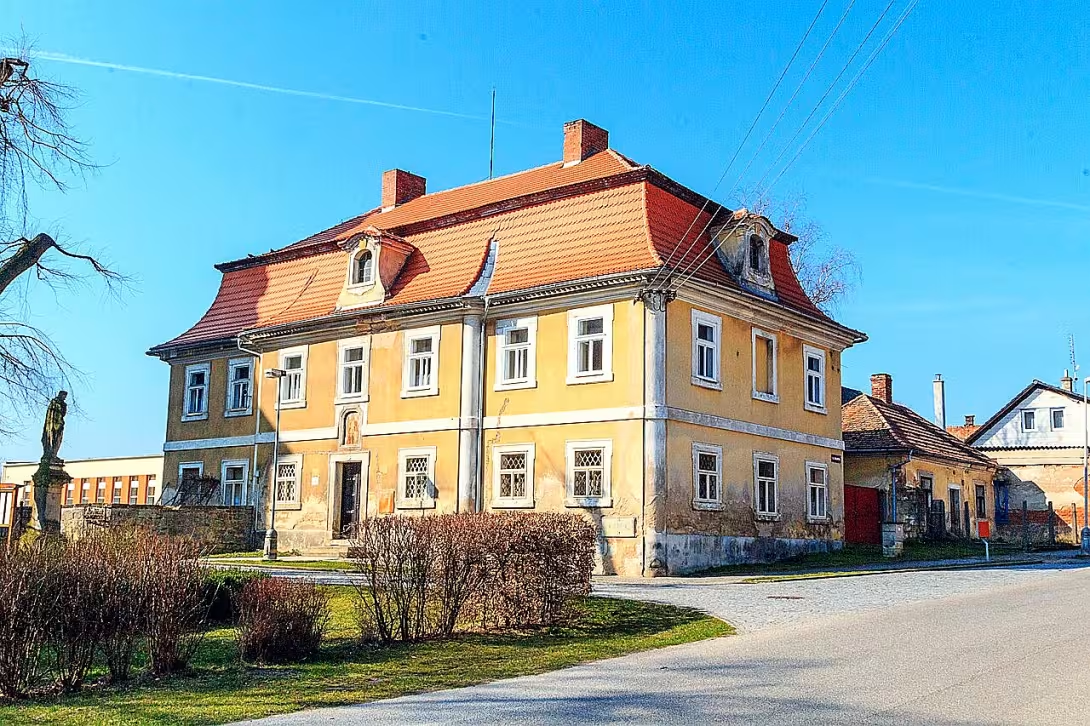
The rectory in Lebanon is a baroque building with a descriptive number 1, situated in close proximity to the Church of the Holy Spirit in the village Libáň in Jičinsko in the Králové Hradec region. This monument-protected object represents an important example of baroque architecture, which was closely related in Czech countries to the recatonization and restoration of church administration after the Thirty Years War.
The creation of the building falls within the period after the 30-year war, when a number of representative parish houses were built. The purpose of these structures was to stress the importance of church administration in the municipalities. There are few direct reports about specific dates of construction or project authors, but the very appearance of the building clearly refers to the Baroque style.
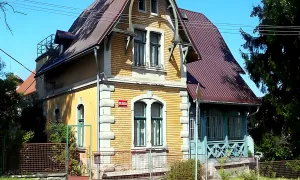
The building consists of a two-storey rectangular structure whose facade is divided by seven window axes and central risalites. The roof is made up of a double mansard with branded skylights, covered with burnt bags of the type of bobcat. The rectangular windows are set in stone lining decorated with pockets and a rail. The ground floor has until today preserved the original bars made of looped rods.
The object is owned by the Roman Catholic parish - the dean Libáň. The building is listed on the list of real cultural monuments of the Czech Republic, which confirms its historical and architectural value.
Interesting details include a niche above the entrance. In this space, the painting of St. Wenceslas painted on the sheet is secondary. This small decoration completes the appearance of the facade and refers to traditional religious iconography.
The rectory in Lebanon remains a part of the church complex at the Holy Spirit church. For those interested in Baroque architecture and history of the church administration, it is a valuable proof of the building culture of its time. Visiting Lebanon offers the opportunity to see this monument in its authentic historical environment.
Historical milestones
- 1648
- End of the tricetilet of the wolf and the cots of the wave baroque exhibition far in the Czech lands
- around 1700
- Estimated exposition of baroque farm building in Libani
- 20th century
- Registration of the building on the list of real estate cultural memories of the Czech Republic
Architectural development
The building was built in a Baroque style. The facade is decorated with stone-lined windows, which are equipped with pockets and a rail. On the ground floor, the original grates were preserved from grated rods.
Owners
Roman Catholic parish - the dean's office Libáň.
Points of interest
- The building has a descriptive number one and is located in close proximity to the Church of the Holy Spirit. - The building is a two-storey rectangular building whose facade has seven window axes and central risalites. - The roof is made up of a double mansard with plastered windscreens and is covered with burnt bags of the bobcat type. - On the ground floor, the original bars are preserved, which are made of looped rods. - There is a niche above the entrance, in which the picture of St. Wenceslas painted on sheet metal is secondary.
Guide
Show guide text
This text was created by artificial intelligence and has not been editorially reviewed. It may contain inaccuracies.
Welcome to this historic place where today we will look at a rectory in Lebanon, a beautiful Baroque building with a descriptive number one. You're standing in front of an object located close to the Church of the Holy Spirit. When looking at the facade of the building you will notice its rectangular structure with seven window axes and a central risalite, which is a typical feature of baroque architecture. The building boasts a double Mansard roof, which is covered with burnt bags of beaver and decorated with decorated skylights.
This rectory has its roots in the 17th century, namely around 1700, when after the 30-year war the Baroque architecture also spread to Czech countries. Although her exact architect remains unknown, it is clear that it was built at a time when new stability and beauty in construction were sought after the war.
Look up at the facade with its broken windows and risalite. These elements not only add elegance to the building, but also reflect a baroque interest in symmetry and harmony. The interior of the rectory, although not detailed in this description, is probably as interesting as the external structure.
Although particular historical figures associated with this parish are not known, its position near the Holy Spirit Church suggests importance to the local community. This building has been an important centre of religious and social life in Lebanon for centuries.
The interesting thing is that this rectory will draw attention to its carefully maintained structure and historical significance. It is registered as a real-estate cultural monument of the Czech Republic, which underlines its importance for the cultural heritage of the region.
Now that you have taken the impression of this beautiful Baroque building, I can invite you to immerse yourself in its atmosphere and explore other historical monuments of Lebanon. I hope your visiting day was full of discoveries and inspiration. Goodbye and thank you for your attention!
Tips for visitors
The best time to visit is during the sunny morning hours, when the sun illuminates the baroque facade and the central risalite of the building beautifully, allowing you to take detailed pictures without disturbing shadows. Take with you comfortable shoes to move around the monument and a camera that best captures architecture from the Holy Spirit church. In the immediate vicinity of the rectory there is a church of the Holy Spirit, which forms with the rectory one historical whole and is definitely worth a tour. The location is suitable for families with children thanks to the quiet environment and the possibility of walking around the church where children can safely discover the Baroque details of the building.
Frequently asked questions
Can the monument be visited?
This is a residential or farm building, not a museum with opening hours. Please view it from public space and respect the owners' privacy. We have no information about access to the interior.
Where is the monument?
Location: Libáň, Královéhradecký kraj. The map on this page shows the exact spot.
Why is the monument protected?
It is listed in the Central List of Cultural Monuments of the Czech Republic as a cultural monument (register no. 1000147102).
Businesses nearby
Do you run a restaurant, accommodation, shop, museum, rental, wellness or other visitor service near this monument? Show yourself directly to the people heading to it — this is how they will see you in the app and on the web:
Nearby
Kostel svatého Ducha v Libáni.
Accommodation nearby
Themed route
Thematic cruise route from Lebanon
1.Fara (Libáň) - Type: Church - Why is it worth visiting: This historical church is the oldest and most important monument building in Lebanon. Its architecture and spiritual atmosphere attract visitors who are interested in history and art.
2. Church of the Holy Spirit - Type: Church - Why is it worth visiting: This church is another important religious and historical centre in Lebanon. Its location near Fara offers the possibility to compare architectural styles and sounds of two churches.
3. Libáň Square - Type: Square - Why is it worth a visit: Central Square in Lebanon, where Fara and the Church of the Holy Spirit are located. It is an ideal place to relax and explore the village, with the opportunity to enjoy a quiet moment in the centre of the historical centre.
4. Libáň Park - Type: Park - Why is it worth a visit: A beautifully wooded area that offers peace and opportunity for short walks. It is an ideal place to relax after a church tour.
5. Libáň Library - Type: Culture - Why is it worth a visit: A place where visitors can explore local history and literature. It offers a peaceful space to read and study in an atmosphere full of local spirit.
This route offers a compact view of the cultural and historical aspects of Lebanon, focusing mainly on its religious monuments.
Seasonal recommendations
Spring: In spring, the rectory in Lebanon is strangely dazzling because of the sunlight that breaks through the newly blooming bushes and trees. The atmosphere is full of hope and renewal, creating ideal conditions for the knowledge of the historical jewels of this monument. Visitors are advised to wear clothes suitable for mild temperatures and bring a protective head because the sun can be strong. The best time to visit is in the early afternoon to avoid unexpected rain and while the crowd is not too large.
Summer: In summer, the rectory in Lebanon offers an escape to peace with a bright blue sky that is ideal for photography. The pharmacy and green meadows around the sights provide a pleasant shade where you can relax in the warmth. Visitors should arrive early in the morning or later in the evening to avoid noon hot hours and crowd loads. It is important to bring enough drinking water and wear light clothes.
Autumn: In the autumn period, the rectory in Lebanon is charming because of the golden and red colours of leafy trees that make a beautiful background for the historical object. The atmosphere is colder and quieter, providing an opportunity for deep integration into history without disturbing crowd sounds. Visitors are advised to wear warmer clothes and perhaps an umbrella because autumn weather can be irregular. The best times to visit are a convenient morning or later in the evening.
Winter: In winter, the rectory in Lebanon offers a unique view when surrounded by snow and ice, adding a romantic atmosphere to the historical object. Visitors are advised to wear warm clothes and protective shoes for the snow corridor. The best time to visit is convenient prehistoric, when the sun is higher in the air and shines long until afternoon.
Visualizations and artistic views

The visualisations are generated by artificial intelligence and serve as inspiration.
Photos from the area
Real photos taken near the monument


Zdroj a licence jsou uvedeny u každého snímku.
Tips from visitors
No tips yet. Be the first!
Log in and add your tip.
Sources and literature
Photos: Petr1888 / CC BY-SA 4.0 — Wikimedia Commons. The author and licence also appear when you hover over the image.
Faktickým podkladem tohoto textu byl článek na Wikipedii, jehož autory jsou přispěvatelé Wikipedie. Článek je dostupný pod licencí CC BY-SA 4.0.
Location on the map


Příběhy a pověsti
Legendy, pověsti a příběhy spjaté s touto památkou
Fotografie návštěvníků
Zatím žádné fotografie. Buďte první, kdo přidá fotografii z návštěvy!
Log in a přidejte svou fotografii nebo hodnoťte.
Za ověřenou návštěvu v aplikaci získáte víc bodů — poznáme podle GPS, že jste na místě.
Reviews and comments