



Kostel svatého Ducha (Libáň) Church
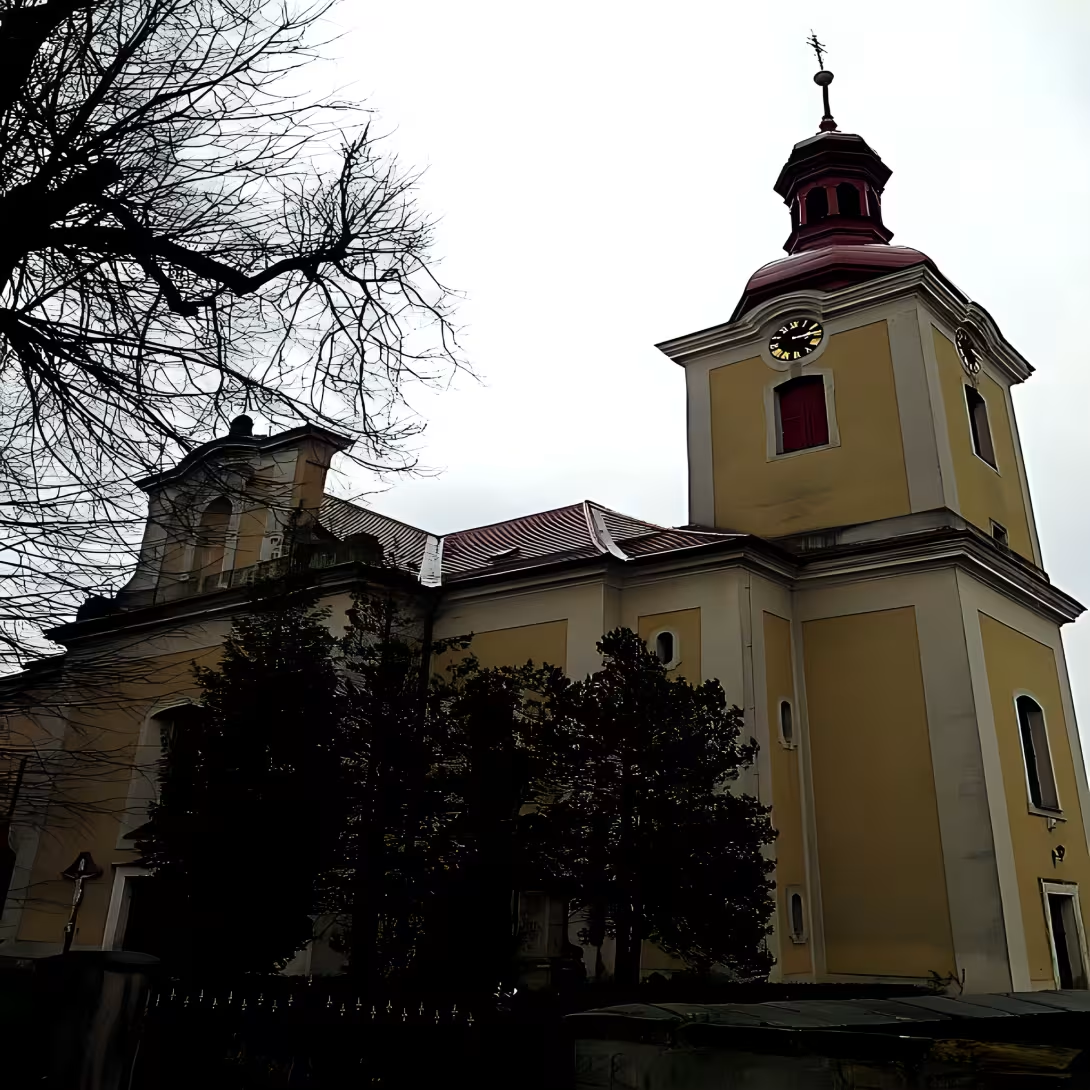
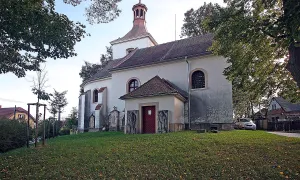
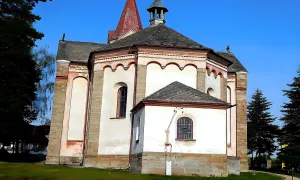
The Church of the Holy Spirit stands in the northern part of Libáň. Since 1964, it has been protected as a cultural monument.
The original Gothic church came from the 14th century. The new Baroque church was built in 1753; its construction is attributed to F. I. Prée or I. Palliardim.
The construction is designed almost on a cross plan. The extended rectangular central section is supplemented on both sides by transverse rectangular spaces of the ship. On the east side there is added a rectangular space of the presbytery; in the west a hall in the undertower. There's a tower above the west front. The northern and southern facades are modified as a facade and culminated with Baroque shields with statues. In the northern shield are the Savior and two bishops, in the south is the statue of the Virgin Mary between the statues of St. John Nepomuk and St. Wenceslas.
The interior is characteristic of the dome area above the middle part. The other rooms are glued with flaps separated by thick belts. The walls decorated with frescoes signed "Jos. Haager Pict. et Arch. 1755" which were restored by H. A. Jouklem in 1906.
The Baroque equipment dates back to the construction period, after 1755. The painting on the main altar is artistic. On the side altars are paintings of a new date, on the other two baroque paintings.
The church is surrounded by statues. On the high pedestal stands Baroque sandstone statues of St. Joseph from 1740 and St. John Nepomucký. Near is the statue of Ecce Homo from 1819, which is the work of regional sculptor Ferdinand Kofránek from Vojic. In the street headed southeast to Zlivu, the column with the statue of the Virgin Mary Immaculata from 1738 stands.
The Church of the Holy Spirit is an important monument to Baroque sacral architecture. His visit offers the opportunity to become acquainted with the architectural and artistic values of the 18th century.
Then and now
Drag the slider to compare how the landmark may have looked when it was built with the view today.
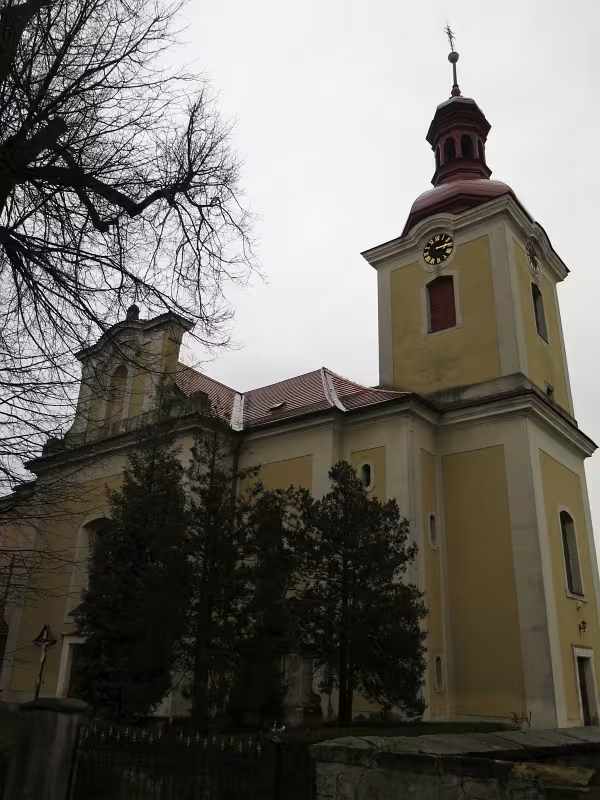
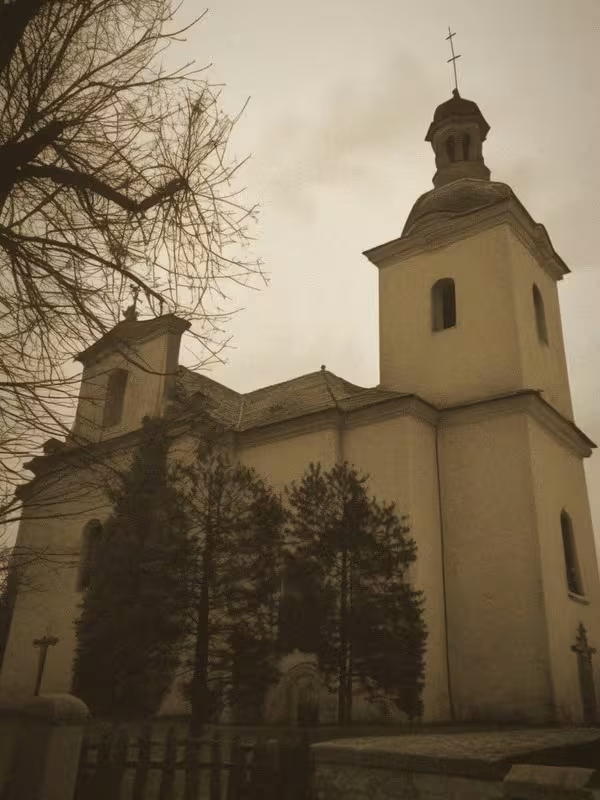
The historical appearance on the left is an AI-generated visualisation and serves as inspiration only.
Historical milestones
- 14th Century
- The creation of the original Gothic Church of the Holy Spirit.
- 1753
- The founding of the Baroque Church of the Holy Spirit, probably according to the designs of F. I. Prée or I. Palliardi.
- 1755
- Creation of frescoes in the interior of the church by the painter Jos. Hague.
- 1964
- Writing the church into a list of cultural monuments.
Architectural development
The original Gothic church from the 14th century was replaced by a Baroque building in 1753. The church is situated on an almost cross plan with an enlarged central part and transverse spaces. The facades are divided by shields with baroque statues, the interior is glass dome and patties. The interior decoration includes frescoes and Baroque altar equipment from the construction period.
Historical events
The destruction of the original Gothic church and the construction of the Baroque church in 1753.
Restoration of frescoes in 1906 under the guidance of H.A. Joukla.
Owners
Parish Libáň
Points of interest
The Church of the Holy Spirit has been protected as a cultural monument since 1964.
- The original Gothic church dates from the 14th century, the current Baroque building was built in 1753.
- The church has almost a cross plan with an enlarged middle part and cross-section on both sides.
- The interior is decorated with frescoes from the painter Josef Hague from 1755, which were restored in 1906.
- Around the church stands Baroque statues of St. Joseph from 1740 and St. John Nepomuk.
Guide
This guide is narrated by a synthetic voice generated by artificial intelligence.
Show guide text
This text was created by artificial intelligence and has not been editorially reviewed. It may contain inaccuracies.
The Roman Catholic Parish Church of the Holy Spirit is a Baroque structure located in the northern part of the town of Libáň. Since nineteen sixty-four, it has been protected as a cultural monument.
A Gothic church from the fourteenth century originally stood on this site. The new Baroque church was built in seventeen fifty-three. Its construction is usually attributed to Préet or Palliardimy.
The church has an almost cross-shaped ground plan. Its core is an expanded rectangular central section, to which rectangular transverse nave spaces are attached on both sides. A presbytery connects to the east, and a vestibule under a portico connects to the west. A tower rises above the western façade. The northern and southern façades are arranged as fronts and are topped with gables bearing Baroque sculptures from the time of the church's construction. In the northern gable are sculptures of the Saviour and two bishops. In the southern gable stands the Virgin Mary between Saint John Nepomucene and Saint Václav.
Inside, the central section is vaulted with a flat dome. The other spaces have a coffered ceiling separated by powerful bands. The church is decorated with frescoes which the painter Haager signed and dated to seventeen fifty-five. They were restored in nineteen zero-six by Joukl.
The Baroque furnishings date from after the completion of the construction, thus after seventeen fifty-five. The painting on the high altar is artistically significant. The paintings on two side altars are more recent. The paintings on two other altars are Baroque, but not as well executed.
The church is complemented by several sculptures. Standing on a high pedestal next to it are Baroque sandstone sculptures of Saint Joseph from seventeen forty and Saint John Nepomucene. Nearby is a sculpture of Ecce Homo from eighteen nineteen. It was created by the regional sculptor Ferdinand Kofránek from Vojic. In the street that leads southeast to Zliv stands a column with a sculpture of the Virgin Mary Immaculate from seventeen thirty-eight.
Tips for visitors
The best time to visit the Holy Spirit Church is in the morning
00 and 11:00. In this period there is a quiet environment that allows you to fully enjoy architecture and interior without disturbing crowd visitors. In addition, at this time there is a pleasant light which shows details of facade and internal elements. If you prefer fewer people, avoid weekends and holidays when the church is often visited by larger groups.
If you arrive by public transport, the stop is close to the church, but check the current connection in the traffic search engine. The stop is well marked and from there the church is accessible by foot in a few minutes.
When visiting the church, wear comfortable clothes and shoes, as there are often stairs and stone floors in the interior. In the summer months it is advisable to carry a light umbrella or sunglasses, because the church is located in a rural environment. Next, prepare your mobile phone with sufficient charge, because there is not always any Wi-Fi available in the church. If you are planning a visit with children, bring some activity to entertain them, such as a small laptop or toys.
For photography is the best time early in the morning or late in the afternoon when the light is softer and shows details of the facade and interior. The best places for photography are the main facade of the church and the inner space, especially the altar part. When shooting the interior, avoid flashing the lightning to avoid damaging sensitive surfaces. The Baroque statues of St. Joseph and St. John Nepomuk, located around the church, also offer a great opportunity for quality photographs.
In the vicinity of the Church of the Holy Spirit is worth visiting the Baroque statue of St. Joseph and St. John of Nepomuk, which are located about 50 metres from the church. Another interesting place is the column with the statue of the Virgin Mary Immaculata, located in the direction of the church. Both of these objects are part of the cultural heritage and offer an opportunity to walk through the historical centre of Lebanon. If you have time, you can also visit other places in the area that are within 30 minutes' drive, for example the historical centre of Hradec Králové.
For families with children, a visit to the Holy Spirit Church is interesting thanks to its historic atmosphere and the possibility to explore the surrounding statues. Children can see the Baroque statues and learn more about their history. For fun, you can take a walk to the peripheral statues where children can tell stories associated with individual characters. It is also recommended to visit the church at a time when there are religious services or concerts that children can take up and bring them closer to history and culture.
Frequently asked questions
Can the monument be visited?
Religious buildings are usually open mainly during services; at other times a visit is normally arranged with the parish or the operator. We have not verified specific times.
Where is the monument?
Location: Libáň, Královéhradecký kraj. The map on this page shows the exact spot.
Why is the monument protected?
It is listed in the Central List of Cultural Monuments of the Czech Republic as a cultural monument (register no. 18113/6-1235).
For kids
Imagine coming back 676 years, until the Church of the Holy Spirit was still young and full of life in Lebanon. That was the time when people lived in harmony with nature and when you heard the sound of knocking horns or honking, you knew that there was a near holiday or an important event.
At that time, the Church of the Holy Spirit stood on a mild hill, surrounded by forests and polems. People lived near the church, they lived on agriculture and pastures. They were people who loved nature and tried to live in harmony with it.
Businesses nearby
Do you run a restaurant, accommodation, shop, museum, rental, wellness or other visitor service near this monument? Show yourself directly to the people heading to it — this is how they will see you in the app and on the web:
Nearby
- Baroque sandstone sculptures from the middle of the 18th century located around the church.
- The Baroque column from 1738 with the statue of the Virgin Mary, located in the direction of the southeast to Zlivu.
- The church is located in the northern part of Lebanon, overlooking the surrounding forests and field zemia, typical of the region Jičínska.
Accommodation nearby
Themed route
1. Church of the Holy Spirit (church) - Main destination of the trip and dominant village Libáň. 2. Statues of St. Joseph and St. John Nepomuk (statues) - Baroque sandstone works from the middle of the 18th century located close to the church. 3. Column with statue of Virgin Mary Immaculata (column) - A Baroque monument from 1738, located approximately one kilometre south-east to Zlivu. 4. Natural landscape (nature) - The environment in which the church stands and which offers a pleasant framework for the whole walk.
Seasonal recommendations
Spring The Church of the Holy Spirit in Lebanon awakens to life after winter peace. The sun's rays penetrate through glass windows of stained glass, which in spring light are projected into golden shades. The church is surrounded by primrose flowers and spring flowers, while the forests in the area grow green. The atmosphere is full of silence and calm, interrupted only by the sound of birds and the rustling of leaves. In this period the church is an ideal place for meditation or a short prayer while walking through nature. I recommend visiting the church early in the morning when it is still cold, but the sun begins to warm up. It is advisable to dress light but warm clothes because the morning temperatures can be cold while the afternoon is already warming. Avoid the main working days when more visitors can gather in the church.
Summer In the summer months the Church of the Holy Spirit offers a unique atmosphere thanks to the long days and sun rays that illuminate its interior. The warm summer afternoon creates a pleasant and refreshing atmosphere where visitors can walk around the church and enjoy nature. The surrounding area is green and full of life, with flowering trees and flowers that add to the environment of color and smell. However, a larger number of tourists must be expected during this period, especially in the main summer season. I recommend visiting the church early in the morning or late in the afternoon to avoid crowds. It is convenient to dress light but comfortable clothes and not forget the sunglasses and sunscreen. It's cold in the church interior, so bring a light sweater.
Autumn The autumn season brings a unique atmosphere to the Church of the Holy Spirit, where sun rays and rain showers are alternated. Leaves on trees are colored in yellow, orange and red shades, creating a picturesque background for the church. The interior of the church is lit with a lighter light, which gives the place a calm and reflexive mood. The atmosphere is full of silence and reflection, ideal for those who seek peace and rest. During this period the church is often visited by fewer people, which allows a peaceful visit. I recommend wearing warmer clothes because autumn temperatures can be variable. Visiting the church is best on quiet days when there are no rain showers and avoid cold and windy days.
Winter The winter season brings a magical atmosphere to the Church of the Holy Spirit where snowflakes fall on its roof shingles and create a quiet and quiet environment. The inside of the church is lit by lamps and candlesticks, which provide the place with warmth and comfort. The surrounding area is covered with white snow, which gives the landscape a peaceful and mysterious atmosphere. During this period the church is often visited by fewer people, which allows a quiet and private visit. I recommend visiting the church at a time when it is open because winter months often mean shorter opening times. It is appropriate to wear warm clothes, including warm jackets, gloves and hats to avoid cold. Visiting the church is best on quiet days when there are no strong winds and snowstorms.
Visualizations and artistic views


The visualisations are generated by artificial intelligence and serve as inspiration.
Photos from the area
Real photos taken near the monument


Zdroj a licence jsou uvedeny u každého snímku.
Atmosphere of the place
This atmospheric visualisation of the place and period was generated by artificial intelligence. It is not real footage of the location.
Tips from visitors
No tips yet. Be the first!
Log in and add your tip.
Sources and literature
Photos: Sovicka169 / CC BY-SA 4.0, rozlišení zvýšeno umělou inteligencí — Wikimedia Commons. The author and licence also appear when you hover over the image.
Faktickým podkladem tohoto textu byl článek na Wikipedii, jehož autory jsou přispěvatelé Wikipedie. Článek je dostupný pod licencí CC BY-SA 4.0.
Location on the map
Příběhy a pověsti
Legendy, pověsti a příběhy spjaté s touto památkou
Fotografie návštěvníků
Zatím žádné fotografie. Buďte první, kdo přidá fotografii z návštěvy!
Log in a přidejte svou fotografii nebo hodnoťte.
Za ověřenou návštěvu v aplikaci získáte víc bodů — poznáme podle GPS, že jste na místě.
Reviews and comments