



Fara (Zlaté Hory) Parish house
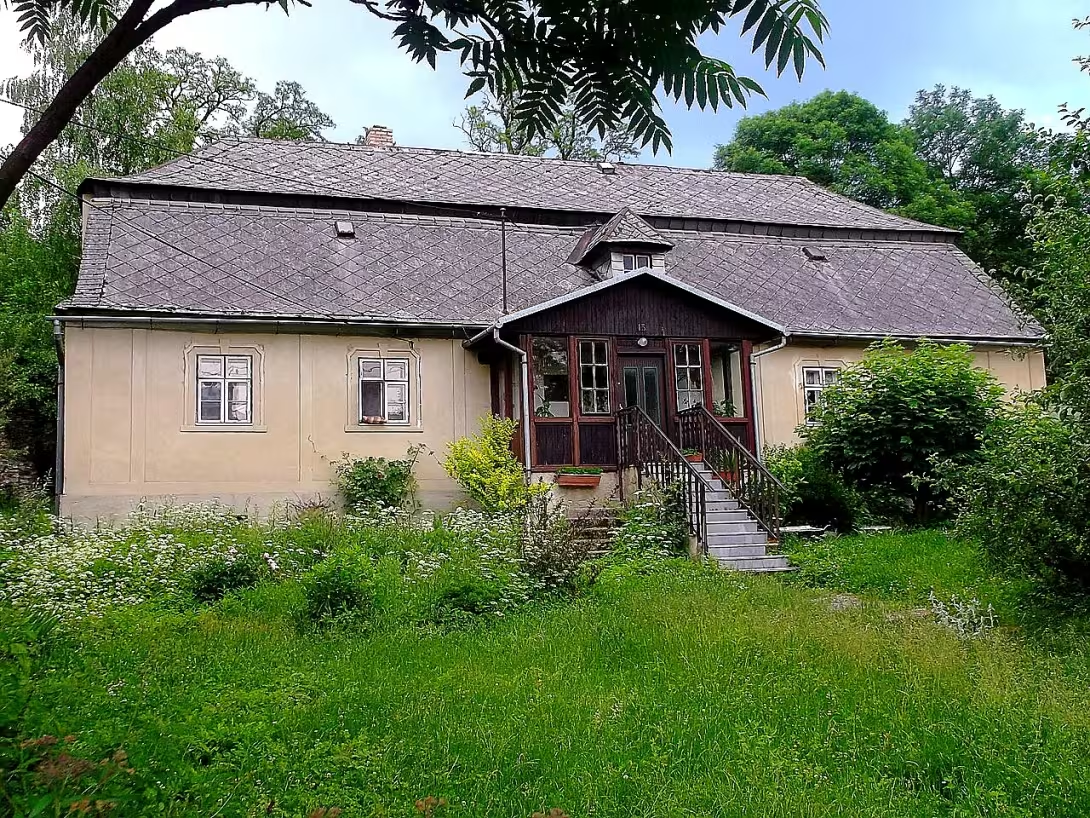
Fara in Zlaté Hora is a Baroque monument from the end of the 17th century, located on Kostelní street in the district of Jeseník. The building is located on the medieval core and is part of the city monument zone and list of cultural monuments of the Czech Republic.
Zlaté Hory, formerly Cukmantel, experienced the greatest boom in the 16th century thanks to profitable gold mining. In the following centuries, the city has hit the devastation of the Thirty Years' War, witch trials, fires, floods and epidemics. It was the fire of 1699 that led to a significant reconstruction of the rectory, which was created in this form at a time when the Baroque dominated European architecture with an emphasis on representativeness and dynamics.
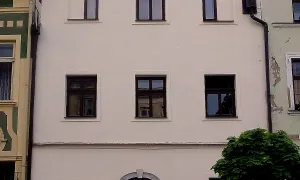
The building is a free-standing brick storey building with underpane and rectangular plan. The building is dominated by a Mansard roof. The facade with smooth plaster is decorated with litenas and regularly placed windows, which are placed in the shambrans ending with a jeweler. In the attic was preserved the original dynamist.
The interior layout of the house was modified in the middle of the 19th century, which was triggered by a change in the heating system. The facade was subsequently restored in the second half of the 20th century.
The monument includes the garden and the remains of the 15th century wall, which originally fortified the Church of the Assumption of the Virgin Mary. This wall of defense is built from a local quarry stone. The construction combines black offal and slate with white quartz boulders from Sand Mountain, which performed both static and aesthetic functions.
In 2004 the rectory was officially declared a cultural monument of the Czech Republic. Today they form an important part of the historical heart of the city, along with the surrounding houses on the streets of Kostelní, Palacký and Polish.
The monument represents an authentic testimony about the architectural development and resilience of the city of Zlaté Hory. It is a suitable goal for anyone who is interested in Baroque architecture and remains of medieval fortification.
Historical milestones
- 1699
- House reconstruction after fire
- 2004
- Declaration for the cultural monument of the Czech Republic
Architectural development
The construction was built on the medieval core and was rebuilt in Baroque style in the late 17th century. In the middle of the 19th century the internal layout was modified in connection with the change of heating. The facade was restored in the second half of the 20th century.
Historical events
1699 - house reconstruction after fire; 2004 - declaration for cultural monument of the Czech Republic.
Points of interest
- The Golden Mountain rectory is a Baroque monument from the late 17th century. - It was the fire of 1699 that led to a significant reconstruction of the rectory that was created in this form. - The monument includes the remains of a 15th century wall built from a local quarry stone. - In 2004 the rectory was officially declared a cultural monument of the Czech Republic. - The monument represents an authentic testimony about the architectural development and resilience of the city of Zlaté Hory.
Guide
Show guide text
This text was created by artificial intelligence and has not been editorially reviewed. It may contain inaccuracies.
Welcome to the Golden Mountains, a place where history is inscribed in every stone and where air smells of ancient stories. Right now, you're standing in front of a building that is a silent witness to many generations, a baroque parish. Stop for a moment, take a breath and just feel the space around you. In front of you stands a brick storey building that gives this place a sense of stability and peace. The first one that is likely to attract your attention is its characteristic rectangular plan and a very distinctive Mansard roof, which gives the building the typical look of the Baroque era. Take a look at its overall silhouette, which harmoniously fits into the surroundings of the urban monument zone. It's a house that tells about change, about rebirth, and about the courage to rebuild, even if everything threatened to be lost.
When we look at these walls today, we see baroque elegance, but beneath them lies much older secrets. This rectory was not created in an empty place. It is built on the medieval core, which means that in the foundation of this building, the memory of knights and the first settlers in these mountains is asleep. But the history of this place is not only about time, but also about rapid breakdowns. Imagine the year six hundred ninety-nine of the seventeenth century. It was a period when fire, one of the most destructive forces of the time, K absorbed a large part of the surroundings. It was this devastating fire of a thousand six hundred ninety-nine that led to a significant reconstruction of the rectory. What you see before you is the result of the time when a new, baroque form of a house was born from the ashes, which basically lasted until our days.
Now pay attention to the architecture itself. Note that this is a walled-up structure that radiates safety through its massive mass. Patre design and the mentioned Mansard roof are not only aesthetic detail but a reflection of the then taste and functionality. The Mansard roof, with its characteristic fracture, made it possible to use the space below it more efficiently, which was a very modern and practical solution at the time. Go through the whole facade and perceive the simplicity and dignity of this object. We do not need to find excessive ornaments here, because the strength of this monument lies in its balance and in how faithfully it represents its epoch. It is an architecture that was supposed to serve as a centre of spiritual leadership and governance, which is why it seems so solid and balanced.
Although we will not find in the archives the names of the particular architects who designed this project, or the lists of all the personalities who lived here over the centuries, the building itself speaks for them. Imagine all the parishioners who spent their evenings here studying books, in the silence of their chambers, while the golden mountain landscapes spread behind the windows. Every step in these areas was part of the daily rhythm of the community where the parish served as a bridge between the church and the inhabitants of the city. It's a place where responsibilities, faith, and concern for the people who lived and worked in these mountains intersect.
Now let's go a little further and focus on something that you could easily overlook, but what is absolutely fascinating in history. The garden and very rare remnants of the wall are included in the house. Look carefully at these stone remains. It's not just an ordinary wall, it's a 15-century fortification fragment. Imagine what this place looked like over five styles ago. At that time the world was not as safe as it is today and the Church of the Assumption of the Virgin Mary, which is nearby, had to be protected. This wall, built from a local quarry stone, was intended to provide refuge and protection in troubled times. It's fascinating to realize the contrast you see here. On one side there is a Baroque rectory, a symbol of a newer arrangement and peace, and next to it are the remains of the medieval wall, which resembles the period of defence and danger. The quarry stone that forms the wall comes directly from the surrounding area, making the building and its surrounding area an organic part of the country.
This combination of Baroque house and medieval fortifications creates a unique atmosphere that often gives visitors a sense of mystery. Who's been through here? What threats did this wall stop? And how did the city's face change after the big fires? It is this stringency of history that makes the rectory of the Golden Mountains a special place. It's like a book where each layer of masonry represents a different chapter. From the medieval core to the 15th storehouse wall to the Baroque reconstruction from the end of the seventeenth century.
In the year two thousand and four, this rectory was officially declared a cultural monument of the Czech Republic. This is not only a formal recognition, but a promise that this place will be protected for future generations. It's recognition of her value not only as a building, but as a symbol of the identity of the entire city. When you look at this building today, you see more than walls and roofs. You see the courage of people who, after the disaster of the year six hundred and ninety-nine, did not freeze, but built something new and beautiful.
Now that you've learned the story of this baroque pearl and its medieval roots, I suggest you remain in this space for a while. Walk around the garden, touch the rough surface of the quarry stone in the remains of the wall and let your thoughts wander in time. Feel the silence that exists here, and imagine how the epoch changed here. The Golden Mountain rectory proves that history is not only in the books, but that we can see it and feel it right in front of us.
Thank you for spending a moment with us at this beautiful monument. We hope you're interested in her story and that you've found some peace and inspiration in it. We now invite you to further explore the Golden Hors. Discover other hidden corners, perceive the beauty of the surrounding nature and be guided by curiosity. We wish you a pleasant continuing journey and remember that every journey begins with one step, and every stone in this city has its own, unrepeatable story that waits for its unveiling. See you in other parts of our guide.
Tips for visitors
For the best experience we recommend a visit on clear days, when the Baroque elements and the Mansard roof are the most distinctive. The best light for scanning details of the building is during morning or late afternoon hours.
Transport to the site is also possible by car through public transport.
When visiting, it is recommended to carry drinking water and, if necessary, small items for comfort. For photography it is ideal to look for angles that capture the total rectangular ground plan and the history of the construction.
You can visit the historical centre of Zlatých Hor or visit the Church of the Assumption of the Virgin Mary. It is good for families with children to prepare simple stories about how the building was built on the medieval core and how it was restored after the fire.
Frequently asked questions
Can the monument be visited?
This is a residential or farm building, not a museum with opening hours. Please view it from public space and respect the owners' privacy. We have no information about access to the interior.
Where is the monument?
Location: Zlaté Hory. The map on this page shows the exact spot.
Why is the monument protected?
It is listed in the Central List of Cultural Monuments of the Czech Republic as a cultural monument (register no. 1897285036).
Businesses nearby
Do you run a restaurant, accommodation, shop, museum, rental, wellness or other visitor service near this monument? Show yourself directly to the people heading to it — this is how they will see you in the app and on the web:
Nearby
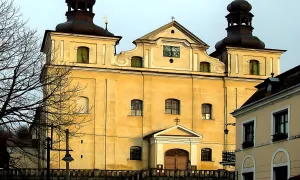
Kostel Nanebevzetí Panny Marie, historické centrum Zlatých Hor.
Accommodation nearby
Themed route
Thematic cruise route Zlaté Hory
1.Fara (Zlaté Hory) - Type: Religious monument, rectory. - Why is it worth visiting: This parish is the centre of the spiritual life of the village and represents an important architectural structure with a rich history. It is advisable to explore its interior, which often contains works of art and historical elements.
2. Church of the Assumption of the Virgin Mary - Type: Church. - Why is it worth visiting: This church is a key part of the cultural and spiritual life of Golden Hor. Its architecture and interior offer a view of the historical artistic styles of the region.
3. Historical Center of Golden Hor - Type: City monument, historical area. - Why is it worth a visit: Walk on the streets of the historic centre offers a view of the ancient architecture and atmosphere of the city. It is an ideal place for those interested in the history and culture of the region.
4. The surrounding street of the historical centre - Type: City landmark. - Why is it worth visiting: Every street in the historical center has its unique character and story. It is advisable to explore local shops, cafés and restaurants that add another layer to the experience of visiting Golden Hors.
5. Public area at the church - Type: Public area. - Why it is worth a visit: This space is ideal for relaxation and reflection after exploring the sights. There is also a suitable place to photograph the church and its surroundings.
This route offers a comprehensive view of the cultural and spiritual wealth of Zlaté Hor, mainly focused on key monuments of the village.
Seasonal recommendations
In spring, the surroundings of the rectory awaken to life, and the landscape around the Golden Mountain begins to green. The light is soft and the air is fresh, which creates a feeling of a new beginning. I recommend moisture-resistant shoes, because roads can be muddy after melting snow. An ideal visit in the morning is when nature is the most lively.
The summer season brings bright sun and rich green trees that provide a pleasant shade. The atmosphere is full of energy, but in the high season there are more people at the sights. It is advisable to come first thing in the morning to avoid the biggest groups of visitors. Dress light and breathable substances to protect you from heat.
The autumn turns the surroundings into a sea of colors, and morning fog gives the place a mysterious touch. Lighting is golden and calmer, which is ideal for reflection. I recommend layered clothing because temperatures can drop sharply. The best time to visit is late afternoon when the sun paints the walls of the building into warm tones.
In winter, the rectory is surrounded by snow and there is deep silence. The atmosphere is dreamy and calm, although the frost can be very sensitive. Don't forget the warm shoes and warm clothes to make you comfortable. In this period the opening times are shorter, so I recommend planning the way forward and come earlier.
Visualizations and artistic views

The visualisations are generated by artificial intelligence and serve as inspiration.
Photos from the area
Real photos taken near the monument


Zdroj a licence jsou uvedeny u každého snímku.
Tips from visitors
No tips yet. Be the first!
Log in and add your tip.
Sources and literature
Photos: JiriMatejicek / CC BY-SA 3.0 — Wikimedia Commons. The author and licence also appear when you hover over the image.
Faktickým podkladem tohoto textu byl článek na Wikipedii, jehož autory jsou přispěvatelé Wikipedie. Článek je dostupný pod licencí CC BY-SA 4.0.
Location on the map

Příběhy a pověsti
Legendy, pověsti a příběhy spjaté s touto památkou
Fotografie návštěvníků
Zatím žádné fotografie. Buďte první, kdo přidá fotografii z návštěvy!
Log in a přidejte svou fotografii nebo hodnoťte.
Za ověřenou návštěvu v aplikaci získáte víc bodů — poznáme podle GPS, že jste na místě.
Reviews and comments