






Freudenštejn Ruin
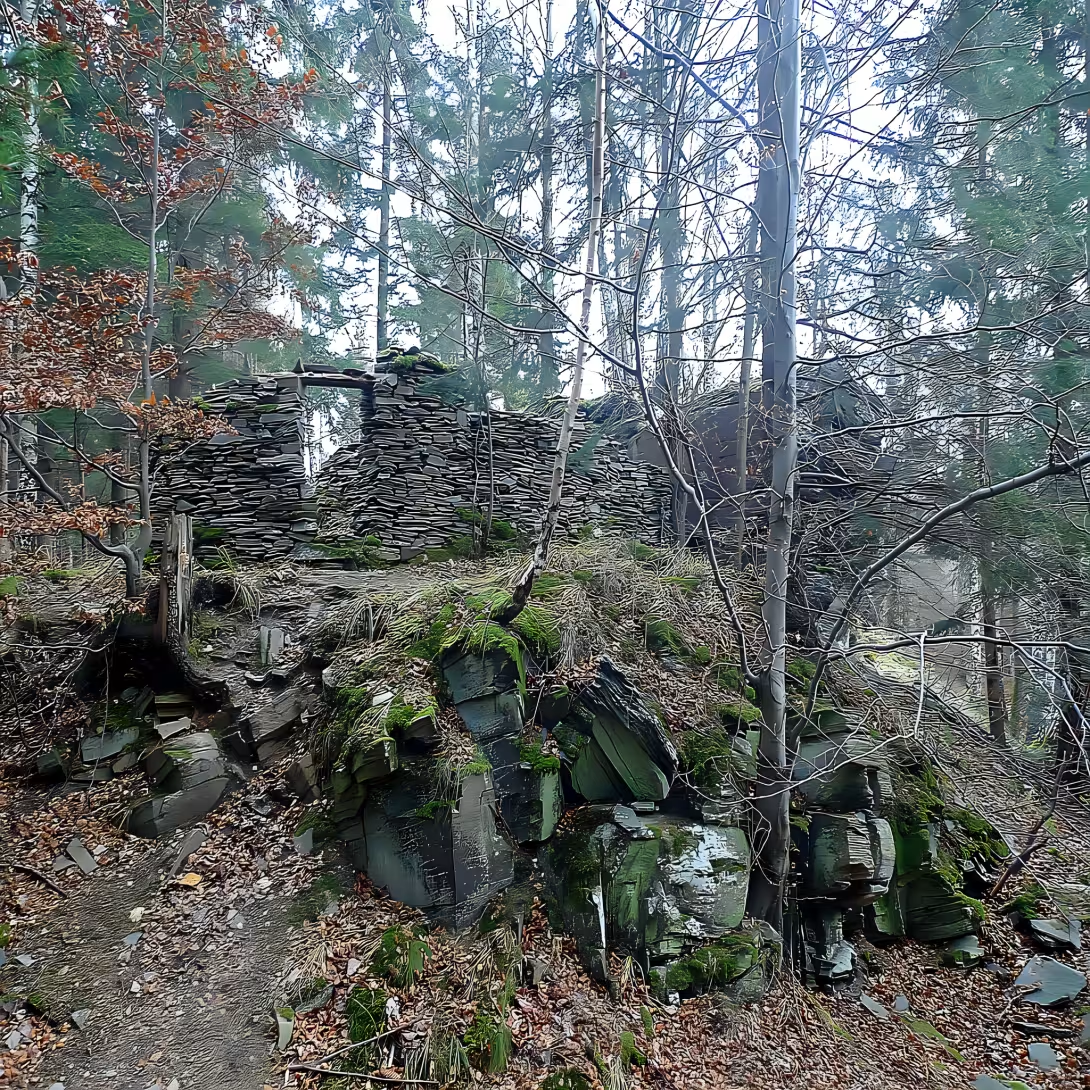
Freudenštejn, also known as Friedenstein, Old Fürstenwald or Karlovický castle, was a Silesian castle situated in the City of Vrbno pod Pradědem, about two kilometres southwest of Karlovice. Today it remained a ruin, protected as a cultural monument of the Czech Republic since 1958. The castle was built by the Czech king or moravský markrabě on a narrow rock falling into the valley to guard the border with Silesia, which was part of Poland.
The purpose of the castle was more: it is assumed that it protected the mining of precious metals in the surrounding mountains, guarded an important journey from Moravia through Karlovice and Vrbno to Poland and thus protected Bruntál from the attacks from Poland. The exact time of origin remains uncertain. Historians agree that the castle was established in the first stage of fortifying the Earth's paths on Jesenick, probably in the first half of the 13th century or later. It is assumed that it was founded by the Royal Order by the Bruntal fojt Bertold, which in 1267 also founded the Light Mountain (now the Light Mountain). The landscape administration was also provided by Mikuláš I. Opavský, illegitimate son of King Přemysl Otakar II. Archaeological findings come mainly from the years 1250 to 1300 and indicate the duration of the castle for approximately seventy years, roughly until the end of the first third of the fourteenth century. The castle was destroyed peacefully, by simple abandonment. The first written mention dates back to 1579, when the castle appears as desolate on the map of the Bruntal estate. The original name is probably based on the German word friede (protection, peace), not from freude (joys).
The castle was not ambitious. It was built on a rocky ridge with an entrance from the west, a protected tower gate. The road led through the moat to the courtyard, where stood about a storey palace approximately 15 times 12 meters. His perimeter walls were about two meters thick. The three sides of the castle were guarded by moats and walls reinforced by stone-covered ploughing. The core was protected by a wall of carefully folded stones with modest mortar. There were only operational wooden structures nearby. Archaeological findings including ceramic shards, crossbow arrows, horseshoe and hatchet appear to have come from various stages of exploitation. In the valley near the castle there are visible traces of mining of precious metals, which suggests a connection to the mining settlement.
Today the visitor meets only modest remnants of castle walls and moats. Some modern buildings from the 20th century are not part of the original castle. Freudenštejn remains a witness to the uncertain beginning of Czech border fortification and reminds of the modest scale of medieval defense on this strategically important border.
Then and now
Drag the slider to compare how the landmark may have looked when it was built with the view today.
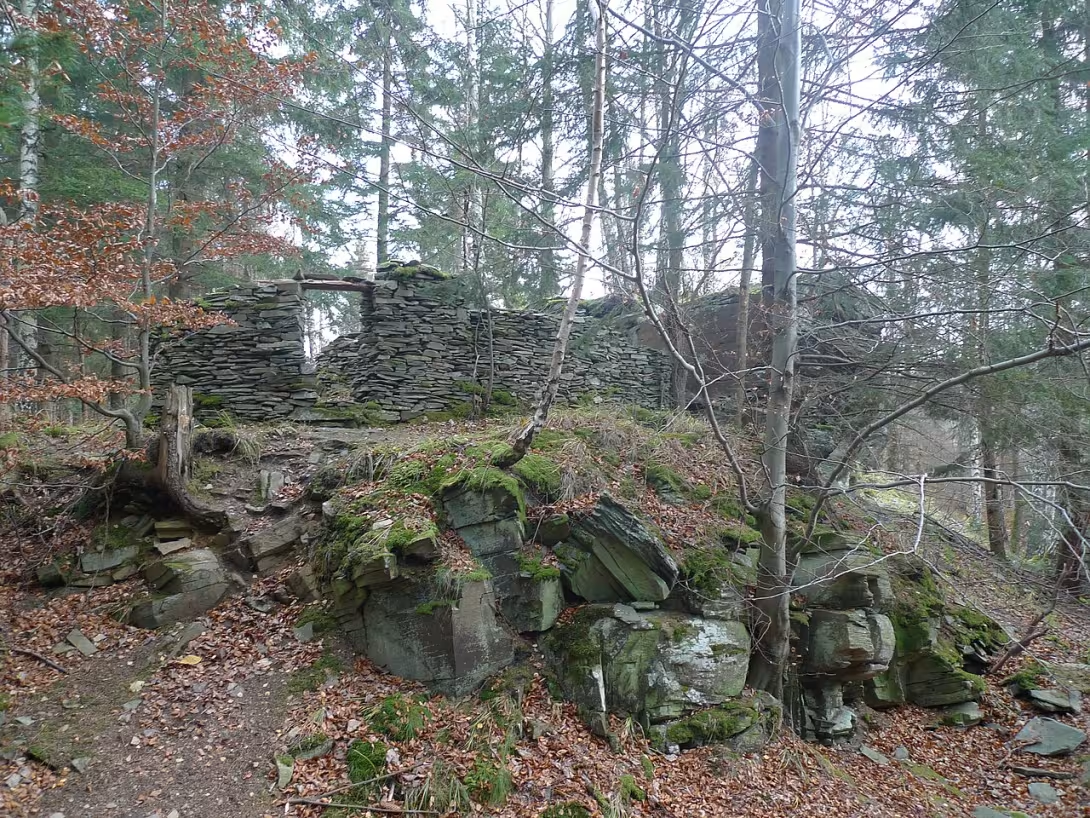

The historical appearance on the left is an AI-generated visualisation and serves as inspiration only.
Historical milestones
- 1579
- The castle is captured as desolate on the map of the Bruntal estate.
Architectural development
The castle was built on the narrow end of a rocky ridge and had an access path protected by the gate. The castle core contained about a storey palace with thick walls, while the perimeter was protected by a moat and a wall. Nowadays modern objects without historical relation to the original castle are also in place.
Historical events
- 1253
- The destruction of Mongola in the campaign.
- 1267
- Possible foundation of the castle by Bertoldem, a Bruntal fojt.
Points of interest
- Freudenštejn was a castle built to protect the border with Silesia, which was part of Poland.
- The castle was designed to protect the mining of precious metals in the surrounding mountains and guarded an important journey from Moravia through Karlovice and Vrbno to Poland.
- It is believed that the castle was built in the first half of the 13th century or later on a royal command by the Bruntal fojt Bertoldo.
- The castle was destroyed peacefully, by simple abandonment and the first written mention dates back to 1579, when it appeared as desolate on the map of the Bruntal estate.
- The original name of the castle is based on the German word "friend" (protection, peace), not "freude" (merriment).
Guide
This guide is narrated by a synthetic voice generated by artificial intelligence.
Show guide text
This text was created by artificial intelligence and has not been editorially reviewed. It may contain inaccuracies.
Welcome to the ruins of Freudenštejn, also known as Old Fürstenwald or the Hollow Castle. You are standing in front of the historical landmark of Vrbno pod Pradědem, in the Moravian-Silesian Region. The castle was built near the Czech-Polish border to protect the road from Moravia to Poland and control the border. Here, precious metals were extracted in the surrounding mountains, and Freudenštejn guarded an important journey from Moravia through Karlovice and Vrbno to Poland.
Let's move on to history. The castle is first mentioned in 1579 as desolate on the map of the Bruntal estate. The architects who built it are known only from historical records, but their name has not been preserved. The castle was important for the then border protection and mining of precious metals.
Notice how you see the ruins of the castle. Look at the facade, which is now a modest remnant of the original structure. The atmosphere here is calm and quiet, as if time had stopped. Imagine being here when the castle was fully operational and fulfilling its role as a border fort.
Let's go back to the past. King Czech and moravský markrabě Bertold could apply for Freudenštejn, as well as Mikuláš I. Opavský, who was the ruler of Opavska at the time. The castle was an important point in the region and its domination could have had a major impact on the political balance in the region.
The interesting thing is that Freudenštejn was built to protect the border with Silesia, which was part of Poland. The castle thus performed an important role in the protection of borders and the guarding of mining precious metals in the surrounding mountains.
Let's go back to the present. You're standing in front of a historical monument that has a rich history and full of mysteries. Look at the ruins and think about what happened here in the past. Freudenštejn is a really special place to explore. Let his history and atmosphere interest you and invite you to explore again.
Tips for visitors
The best time to visit Freudenštejna is in the spring or autumn season when vegetation is less dense and the ruin is presented in the most beautiful light. This time also offers pleasant temperatures for long walks.
For those travelling by public transport, it is appropriate to inform about the available connections from Vrbno pod Pradad before visiting.
When planning your trip, remember to bring shoes suitable for walking on uneven terrain, sun protection and plenty of drinking. Don't forget the beauty camera for the ruins.
The best place for photography is the height of the castle remains, from which a stunning view of the surrounding woodland is opened. The best lighting conditions offer a period from morning to noon in the spring and autumn periods.
In the vicinity of Freudenštejna you can visit the historical park Pradad, located about 30 minutes walk away. The park offers a beautiful opportunity to relax and explore local flora and fauna.
Frequently asked questions
Can the monument be visited?
This is a ruin. Such sites are often freely accessible, but some can only be visited with a guide or are closed for safety reasons. We have not verified the current situation – take care and respect any restrictions.
Where is the monument?
Location: Vrbno pod Pradědem, Moravskoslezský kraj. The map on this page shows the exact spot.
Why is the monument protected?
It is listed in the Central List of Cultural Monuments of the Czech Republic as a cultural monument (register no. 44811/8-209).
For kids
Imagine going back to a time when there were still no major wars and castles in the north of Bohemia. But one of them was standing back then - Freudenštejn!
Here in the deep forest, where the small villages now reside and the trees are as tall as houses, there was once a big castle. Whether it was built by the Crusaders or the local masters, it is certain that it had the true royal residence.
Businesses nearby
Do you run a restaurant, accommodation, shop, museum, rental, wellness or other visitor service near this monument? Show yourself directly to the people heading to it — this is how they will see you in the app and on the web:
Nearby
In the vicinity of the castle there is a nature reservation and other historical monuments.
Accommodation nearby
Themed route
Come out of Vrbna pod Pradad and go south, along the road towards Silesian Pradad.
1. Silesian Pradad (ruins of the castle) - is worth a visit due to its unique position on top of the hill and round plan. 2. Silesian Pradad (view of surroundings) - is worth a visit due to the view of the surrounding landscape. 3. Freudenštejn (ruins of the castle) - is worth visiting due to its unique location on the rock cliff and preserved remains of the buildings.
Seasonal recommendations
Spring
In spring season Freudenštejn is surrounded by green nature, flowering trees and flowers. The atmosphere is calm and calm, suitable for relaxation and relaxation. Lighting is natural, sunlight lights up the ruins and surroundings.
Practical Advice: In spring months the visit to Freudenštejna is relatively quiet, therefore suitable for families with children. Remember to wear warm clothes because the weather can be cold. The best time to visit is from April to May, when the weather is the most peaceful and warmer.
Summer
In the summer season Freudenštejn is surrounded by green nature and flowering flowers. The atmosphere is full of life and energy, suitable for active holidays. Lighting is sunlight that illuminates the ruins and surroundings.
Practical Advice: In the summer months Freudenštejn is very popular, therefore it is recommended to come early to avoid crowds. Remember to wear warm clothes and comfortable shoes because you will probably walk on the forest trail.
Autumn
In the autumn season Freudenštejn is surrounded by the colors of autumn nature, the forests are covered with coloured leaves. The atmosphere is calm and relaxing, suitable for relaxation and relaxation. Lighting is natural, sunlight lights up the ruins and surroundings.
Practical Advice: In autumn months the visit to Freudenštejna is quiet, therefore suitable for families with children. Remember to wear warm clothes because the weather can be cold. The best time to visit is from September to October, when the weather is the quietest and hottest.
Winter
In winter season Freudenštejn is surrounded by snow and freezing atmosphere. The atmosphere is calm and calm, suitable for relaxation and relaxation. The lighting is artificial because sunlight is unavailable.
Remember to wear warm clothes and suitable shoes for snow conditions.
Visualizations and artistic views


The visualisations are generated by artificial intelligence and serve as inspiration.
Photos from the area
Real photos taken near the monument

Zdroj a licence jsou uvedeny u každého snímku.
Atmosphere of the place
This atmospheric visualisation of the place and period was generated by artificial intelligence. It is not real footage of the location.
Tips from visitors
No tips yet. Be the first!
Log in and add your tip.
Sources and literature
Photos: Ladin / CC BY-SA 4.0, rozlišení zvýšeno umělou inteligencí — Wikimedia Commons. The author and licence also appear when you hover over the image.
Faktickým podkladem tohoto textu byl článek na Wikipedii, jehož autory jsou přispěvatelé Wikipedie. Článek je dostupný pod licencí CC BY-SA 4.0.
Location on the map


Příběhy a pověsti
Legendy, pověsti a příběhy spjaté s touto památkou

Fotografie návštěvníků
Zatím žádné fotografie. Buďte první, kdo přidá fotografii z návštěvy!
Log in a přidejte svou fotografii nebo hodnoťte.
Za ověřenou návštěvu v aplikaci získáte víc bodů — poznáme podle GPS, že jste na místě.
Reviews and comments