






Textilní továrna Weiss a Rössler Textile factory
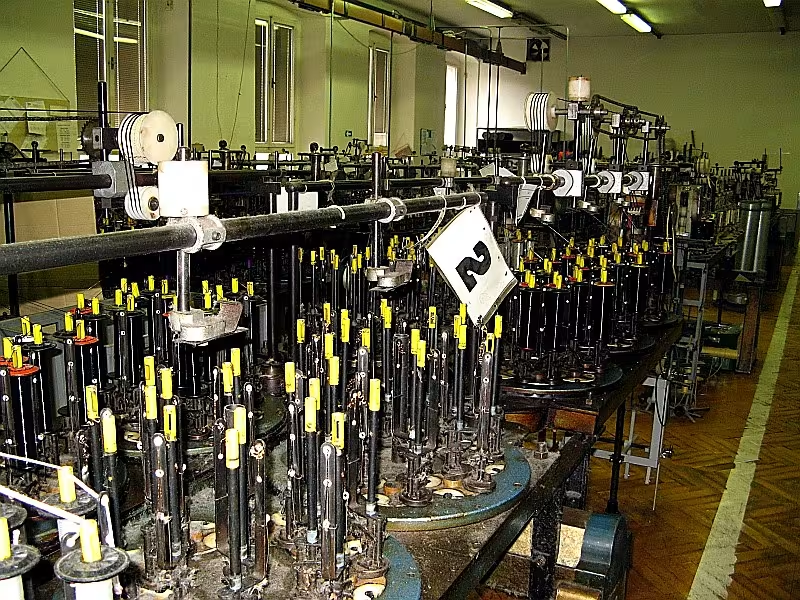
The Weiss and Rössler textile factory in Vrbno pod Pradědem testifies to the region's long tradition of thread production. Situated in the Bruntál district, this industrial monument dates back to the turn of the 19th century. Originally established as a bleachery by Josef Adolf Weiss and Ferdinand Rössler, it later evolved into a significant mechanical factory. In 2003, the site was declared a cultural monument of the Czech Republic.
The factory was founded in 1799 when Josef Adolf Weiss partnered with Ferdinand Rössler to start industrial thread production. This collaboration began a lasting legacy in the region's industrial history, coinciding with Europe's early Industrial Revolution. This era was characterized by a shift from manual artisanal work to mechanized production, particularly in textiles. By 1800, Weiss und Rössler Würbenthal was established, receiving official recognition a year later.
The oldest building, constructed between 1800 and 1801, is a three-story masonry structure on a stone foundation. The main facade features ten axes, while the side wall has three, both framed by a cornice and parapet between the second and third floors. A shingle-covered hipped roof with sheet metal topping crowns the building. A clock tower, likely added in 1881, further enhances its historical value. Inside, wooden columns support the structure, varying from hexagonal with capitals on lower floors to round ones on the top floor.
Ownership changed several times over the years. Initially managed by Weiss und Rössler, it became Weiss, Röessler & Co. in 1817 after Josef Grohmann joined the partnership. By 1821, following Ferdinand Rössler's departure, Grohmann took full control, renaming the company Weiss und Grohmann in 1846. To counter increasing competition, a mechanical thread factory was established in 1847. The Grohmann family managed the enterprise until its nationalization in 1945, following World War II. By 1991, Odetka, a.s. became the owner.
Pivotal moments include the 1847 transition to a mechanized factory to remain competitive and the 1945 nationalization. These shifts reflect the broader industrial trends and political changes of the era. The 2003 designation of the original building as a cultural monument highlights its historical importance and the efforts to preserve it.
Today, the Weiss and Rössler textile factory is a fascinating site for those interested in industrial history and architecture. Its preserved structure provides insight into early industrial practices and period architectural styles. As a recognized cultural monument, it serves as both a reminder of the region's industrial past and a point of interest for those studying the evolution of manufacturing.
Visiting this site offers a connection to the Czech Republic's rich industrial heritage. Its significance lies not only in its architectural features but also in its role within the wider narrative of industrialization and preservation. The Weiss and Rössler textile factory invites exploration, offering a glimpse into a pivotal era of innovation.
Historical milestones
- 1799
- Partnership formed between Josef Adolf Weiss and Ferdinand Rössler, initiating industrial thread production.
- 1800
- Foundation of the company Weiss und Rössler Würbenthal.
- 1847
- Establishment of a mechanical thread factory.
- 1945
- Forced administration and nationalization of the factory.
Architectural development
The oldest production building was constructed between 1800 and 1801 as a three-story masonry structure on a stone foundation with a ten-axis main facade. It features a hipped roof and a clock tower likely added in 1881. The interior is supported by wooden columns, which are hexagonal with capitals on the first and second floors and round on the third floor.
Historical events
1847: Establishment of a mechanical thread factory to combat competition. 1945: The factory was placed under forced administration and subsequently nationalized. 2003: The original building was declared a cultural monument of the Czech Republic.
Owners
Weiss und Rössler (1800), Weiss, Röessler & Co. (1817), Josef Grohmann (1821), Weiss und Grohmann (1846), Grohmann & Co. (1883), Nationalized state enterprise (1945), Odetka, a.s. (1991)
Points of interest
– Founded in 1799 by Josef Adolf Weiss and Ferdinand Rössler, the site began as a bleachery before evolving into a mechanical factory. – The oldest building, constructed between 1800 and 1801, is a three-story masonry structure with a clock tower likely added in 1881. – The interior features wooden columns that are hexagonal with capitals on the lower floors and round on the top floor. – In 1847, the facility transitioned to a mechanized thread factory to remain competitive. – The site was declared a cultural monument of the Czech Republic in 2003.
Guide
Show guide text
This text was created by artificial intelligence and has not been editorially reviewed. It may contain inaccuracies.
Welcome to Vrbno pod Pradědem. As you stand here before this imposing complex, take a moment to truly absorb the atmosphere of the place. You are looking at more than just a collection of old buildings; you are standing in the presence of a significant industrial monument that once served as the beating heart of this region’s textile tradition. The scale of the structures before you tells a story of ambition, of the transition from manual labor to the rhythmic power of the machine age, and of a legacy that has shaped the very identity of this area for centuries. Feel the weight of the history surrounding you, and let your eyes wander over the masonry that has witnessed the rise and fall of industrial eras.
To understand why this site is so important, we must travel back in time to the very end of the 18th century. Imagine this landscape not as it is now, but as it was at the turn of the 19th century, a time of immense social and technological transformation. The story of this place begins in 1799, when a partnership was formed between two visionary men, Josef Adolf Weiss and Ferdinand Rössler. Their collaboration was not merely a business arrangement; it was the spark that ignited a long-standing tradition of thread production in this part of the world. In 1800, they officially founded the company known as Weiss und Rössler Würbenthal.
In those earliest days, the site did not look like the massive mechanical factory you see today. It actually began much more simply, functioning as a bleachery. Back then, the processes were slower, more reliant on natural elements and manual care. However, the ambition of Weiss and Rössler was far greater than a simple bleachery. They saw the potential for something much larger. As the decades passed, the site underwent a profound evolution, transforming from those early, traditional beginnings into a large-scale mechanical factory. By 1847, the establishment of a mechanical thread factory marked a turning point, bringing the roar of machinery and the precision of industrial technology to Vrbno pod Pradědem. This was the era when the site truly became an industrial powerhouse, moving away from the old ways and embracing the future of mechanical production.
Now, I invite you to turn your attention to the architecture of the complex itself. While the original architects remain unknown to history, the buildings speak volumes about the era in which they were constructed. Notice the central, three-story masonry building. This structure serves as the very foundation of the entire complex, the anchor around which all subsequent expansions were built. It is a testament to the durability and the serious, functional purpose of industrial design. If you look closely at the proportions and the solid nature of the walls, you can sense the strength required to house the heavy machinery that once operated within.
As you scan the skyline of the factory, look upward. You will see a clock tower that stands as a prominent feature of the site. While the main masonry structure dates back to the very beginning, between 1800 and 1801, the clock tower was likely a later addition, appearing around 1881. In the industrial age, time was everything. The clock tower was not just a decorative element; it was a vital tool for the factory, regulating the lives of the workers and the rhythm of the production lines. It symbolized the shift from the natural cycles of the sun to the disciplined, mechanical time of the factory floor. Even as you look at the exterior, try to imagine the interior spaces, where the strength of the masonry met the warmth of wooden elements, creating a workspace that was both rugged and functional.
The history of this site is inextricably linked to the lives of the people who built and managed it. The names Josef Adolf Weiss and Ferdinand Rössler are etched into the history of this region. They were the architects of an industrial legacy, men who saw opportunity in the landscape and had the courage to build something that would last. Their partnership laid the groundwork for generations of workers and families. We also find the name Josef Grohmann associated with this history, a figure who played a role in the complex narrative of the factory's existence. These individuals were more than just names on a ledger; they were the driving forces behind the technological leaps that allowed this factory to evolve from a simple bleachery into a mechanical marvel.
However, history is rarely a straight line of progress. Every great institution eventually faces moments of profound change. For the Weiss and Rössler factory, that moment arrived in 1945. Following the end of the Second World War, the factory underwent a period of forced administration and was eventually nationalized. This marked the end of the era of private enterprise that had defined the site since 1799. The transition from a family-founded company to a state-controlled entity changed the character of the work and the management of the site, reflecting the massive political shifts occurring across Europe at that time.
As you stand here in the quiet of the present day, there is a certain mystery to be found in the silence. If you close your eyes for a moment, can you almost hear it? The phantom echoes of the mechanical thread factory—the rhythmic clatter of looms, the hiss of steam, and the constant, industrious hum of hundreds of machines working in unison. There is a fascinating contrast between the stillness you experience now and the intense, vibrating energy that once filled these halls. The site has transitioned from a place of constant motion and noise to a silent monument of reflection. It serves as a reminder of how much the world has changed, and how the structures we build to serve our industry eventually become the landmarks that tell our story.
As you continue your walk through Vrbno pod Pradědem, I encourage you to keep looking for these traces of the past. The Weiss and Rössler factory is a vital piece of the puzzle that explains how this region became what it is today. Thank you for taking this moment to listen and to learn. Please, continue your exploration of the area, and as you move forward, let the history of this remarkable industrial site stay with you. Enjoy the rest of your visit.
Tips for visitors
The best time to visit the Weiss and Rössler textile factory is during late spring or early autumn. During these seasons, the weather is typically mild, making it comfortable for exploring both indoors and outdoors. The natural surroundings are lush in spring and vibrant with changing colors in autumn, providing a picturesque backdrop that enhances your experience of this historical site.
Parking and transport options around Vrbno pod Pradědem include local parking facilities within the village. Public transportation is also available; however, it's advisable to check current routes and schedules via an online search or local information center to ensure smooth travel plans. The factory itself may have limited parking due to its historical nature, so planning your visit with transport options in mind can be beneficial.
When visiting the textile factory, consider bringing comfortable walking shoes as you might explore various areas around the site. A camera is recommended for capturing the unique architecture and scenic views of the surrounding foothills of Praděd mountain. Additionally, carrying a light jacket or sweater could be useful due to variable weather conditions in the region.
For photography enthusiasts, some of the best spots include the factory's exterior where you can capture its historical architecture against the backdrop of the natural landscape. The lighting is particularly favorable during early morning or late afternoon when the sun casts soft shadows and highlights the textures of the building. Nearby Praděd mountain offers stunning panoramic views that are perfect for wide-angle shots, especially at sunrise or sunset.
In terms of nearby attractions within a 30-minute drive, visitors can explore other historical sites in the Bruntál district or enjoy nature trails around Vrbno pod Pradědem. These areas offer opportunities to learn more about local history and culture while enjoying outdoor activities such as hiking or picnicking.
Businesses nearby
Do you run a restaurant, accommodation, shop, museum, rental, wellness or other visitor service near this monument? Show yourself directly to the people heading to it — this is how they will see you in the app and on the web:
Nearby
Located in the village of Vrbno pod Pradědem in the Bruntál district, situated in the foothills of the Praděd mountain.
Accommodation nearby
Themed route
1. Textilní továrna Weiss a Rössler Type: Industrial heritage site This factory is the main highlight, showcasing the historical textile industry that once thrived in the region.
2. Vrbno pod Pradědem Type: Village Explore the village to see the local surroundings and the environment where the factory was located.
3. Praděd mountain foothills Type: Natural landscape The route concludes with the scenic views of the mountain foothills, offering a peaceful natural setting.
Seasonal recommendations
Spring: Visiting the Textilní továrna Weiss a Rössler during spring offers a unique experience as nature begins to awaken around Vrbno pod Pradědem. The landscape is painted with blooming flowers and fresh greenery, creating a picturesque backdrop for exploring this historical site. Soft morning light enhances the textures of the old factory buildings, making it an ideal time for photography. Spring can bring unpredictable weather, so visitors should dress in layers to accommodate sudden changes from sunshine to rain showers. Early mornings are recommended to avoid larger crowds and enjoy the tranquility before the day fully warms up.
Summer: Summer is a vibrant season for visiting Textilní továrna Weiss a Rössler, with long daylight hours providing ample time to explore. The lush surroundings of Vrbno pod Pradědem are at their peak, offering beautiful trails and greenery that complement the historical architecture. This is also the busiest time of year, so it's wise to arrive early in the morning or later in the afternoon when visitor numbers dwindle. Light, breathable clothing is recommended due to warmer temperatures, along with sun protection such as hats and sunscreen.
Autumn: Autumn transforms Textilní továrna Weiss a Rössler into a stunning canvas of warm colors, making it an ideal time for those who appreciate the beauty of fall foliage. The cooler weather enhances the atmosphere, allowing visitors to comfortably stroll around the site without the summer heat. This is also a quieter period compared to summer, offering a more serene experience. Layered clothing is advisable as temperatures can vary significantly throughout the day, and carrying an umbrella might be wise due to potential rain showers.
Winter: The winter season brings a quiet charm to Textilní továrna Weiss a Rössler, with snow-covered landscapes creating a magical atmosphere around Vrbno pod Pradědem. Shorter days mean that visits should ideally start early in the morning to make the most of daylight hours. Winter can be particularly cold, so visitors are encouraged to wear warm clothing and sturdy boots for comfort and safety. The site may have reduced opening hours during this season, so checking ahead is recommended. Despite potentially fewer crowds, it's important to stay mindful of weather conditions that could affect accessibility.
Visualizations and artistic views


The visualisations are generated by artificial intelligence and serve as inspiration.
Photos from the area
Real photos taken near the monument


Zdroj a licence jsou uvedeny u každého snímku.
Tips from visitors
No tips yet. Be the first!
Log in and add your tip.
Sources and literature
Fotografie: Sovicka169 / CC BY-SA 3.0 — Wikimedia Commons. The author and licence also appear when you hover over the image.
Faktickým podkladem tohoto textu byl článek na Wikipedii, jehož autory jsou přispěvatelé Wikipedie. Článek je dostupný pod licencí CC BY-SA 4.0.
Location on the map
More monuments – Vrbno pod Pradědem
Show all in the municipality

Příběhy a pověsti
Legendy, pověsti a příběhy spjaté s touto památkou
Fotografie návštěvníků
Zatím žádné fotografie. Buďte první, kdo přidá fotografii z návštěvy!
Přihlaste se a přidejte svou fotografii nebo hodnoťte.
Za ověřenou návštěvu v aplikaci získáte víc bodů — poznáme podle GPS, že jste na místě.
Reviews and comments