






Frýdlant (Frýdlant) Castle
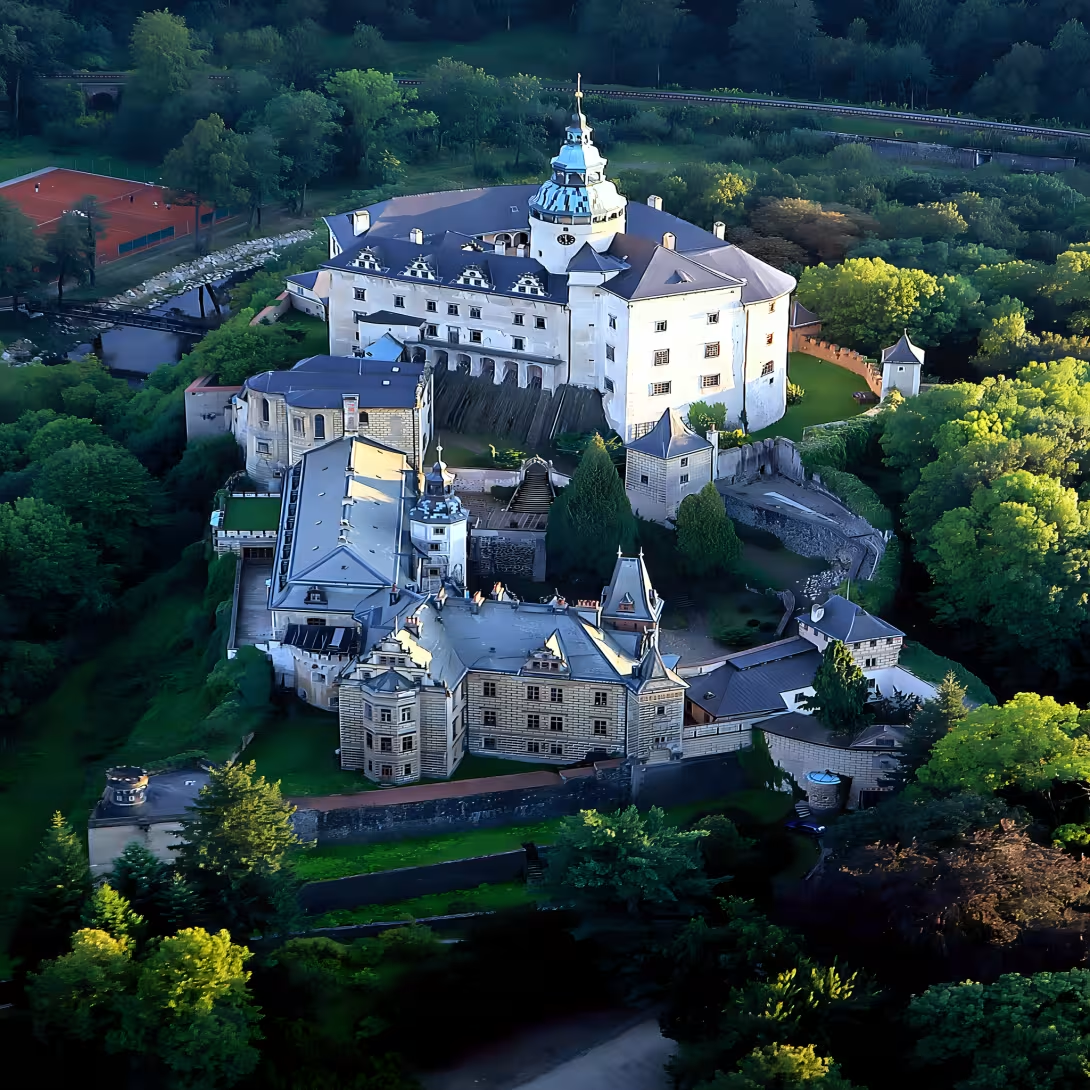
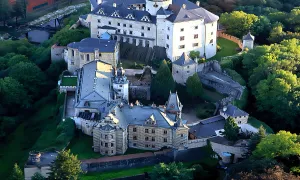
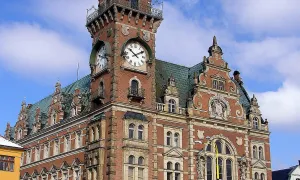
Frýdlant is a state castle and a castle on a massive basalt rock above the River Shift in the Jizera Mountains. The complex consisting of a medieval castle and a Renaissance castle is one of the most important memories in the Czech Republic, and in its exposition are preserved collections of medieval armour, pipe, castle furniture and gallery.
The beginning of the castle dates back to about the first half of the 13th century. At that time, this mountain area, which was visited by trade routes to Zitava and Zřelka, was called Zahvodí and the estate was held by Ronovci. According to the legend, a massive tower called India formed the core of the castle at the time, which had allegedly served as a beacon for traders with lit fire at the top in 1014. Ronovec Častolov used the addition from Frýdlant already in 1257, which would have been the origin of the castle around 1241, when the Czech countries were threatened by the Tatars and new castles were built.
The first written mention of the castle dates back to 1278, when the Czech king Přemysl Otakar II took away the estate of Ronovci and sold it for 800 talents of silver to the warrior Rudolf "Rulk" from Biberstejn. The Biberstejns then built their Czech residence for about 300 years and gradually expanded it and fortified it. The base of the castle was a high tower of a circular plan with up to four meters thick walls, called bergfrit, to which a rectangular fortified palace on the northwest side was connected. During the 14th and 15th centuries, it was extended by bastions, the entrance tower on the south side and the tower with the gate on the cевере. In the 16th century, they completed the fortifications for defence using artillery. The city of Frýdlant gradually developed, was surrounded by walls and had its own school, making it the most important place in the estate.
During the Hussite wars, the Biberstejns opposed the Hussites. The Hussite against Frýdlant was pulled several times - in 1427, in November 1428, when they burned down the city, and again in 1430 and 1432. According to preserved springs, the castle itself was not conquered during these campaigns.
The castle was opened to the public in 1801, making it the first castle museum in Central Europe. Today it is owned by the state and its administration is provided by the National Monument Institute, which allows visitors to look at rich collections and learn the story of one of the most important Czech monuments.
Then and now
Drag the slider to compare how the landmark may have looked when it was built with the view today.
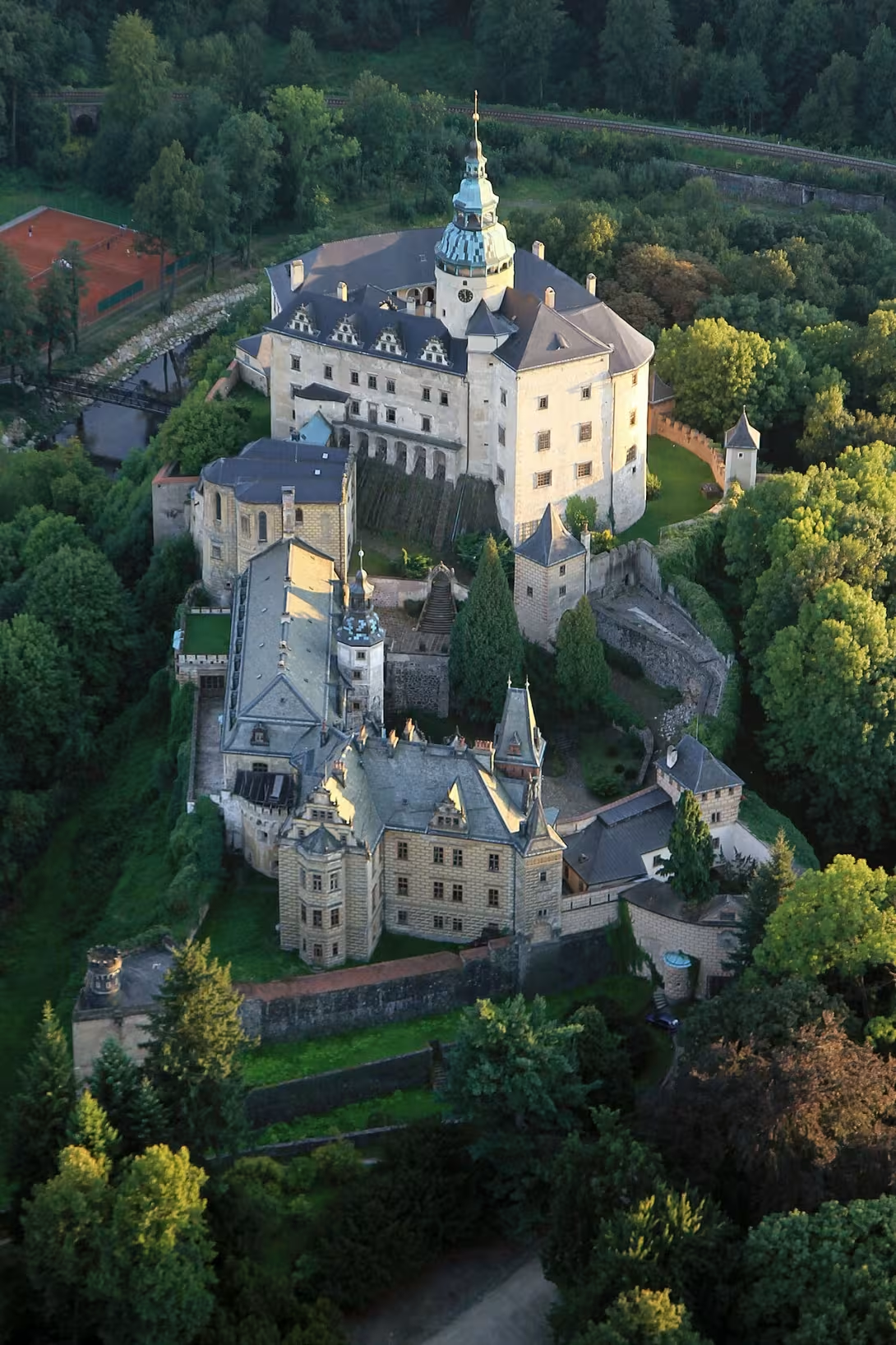

The historical appearance on the left is an AI-generated visualisation and serves as inspiration only.
Historical milestones
- 1014
- The Indian, the mighty castle tower, supposedly served the buyers as a beacon.
- 1278
- First written mention of the castle.
- 1801
- The castle was opened to the public and became the first castle museum in Central Europe.
Architectural development
The original early Gothic castle based on the top of the basalt rock was expanded in the 16th century with a Renaissance castle.
Historical events
Year 1014: According to legend, there was a massive tower called Indica in the castle.
Year 1278: First written mention of the castle.
Year 1801: The castle was opened to the public and became the first castle museum in Central Europe.
Owners
Ronovci
Bibersteine
Clam-Gallas
Points of interest
- Frýdlant is a state castle and a castle on a massive basalt rock above the River Shift in the Jizera Mountains. - The castle was opened to the public in 1801, making it the first castle museum in Central Europe. - The city of Frýdlant gradually developed, was surrounded by walls and had its own school. - The castle was opened to the public in 1801, making it the first castle museum in Central Europe. - The castle contains collections of medieval armour, pipe, castle furniture and gallery.
Guide
This guide is narrated by a synthetic voice generated by artificial intelligence.
Show guide text
This text was created by artificial intelligence and has not been editorially reviewed. It may contain inaccuracies.
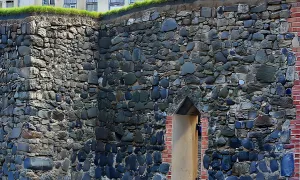
Welcome to Frýdlant. Stop for a moment, take a breath and look around you. Right now, you're standing in front of one of the most important memory units in our entire state. In front of you is a castle and a castle that dominates the whole area with its silhouette. Feel the atmosphere where nature connects to human history. Look up and see how the whole building turns off on a massive basalt rock. It was this natural base, the hard and relentless volcanic rock, that determined the fate of this place centuries ago. The castle is not only a building on the ground, but is basically an organic part of this rock that protects it and also gives it a menacing and noble look. Beneath you, in the valley, there is a river of Cleaver, whose noise accompanies the history of this estate from its beginnings in the Jizera Mountains.
Now that you're looking at the castle wall, you might wonder when it all started. The history of this place goes far into the past, far deeper than you might have expected. Although the first official written mention of the castle dates back to 1278, there are clues that lead us even further. Let's go back to 1014 in our minds. At that time, there was already an Indian, a massive castle tower, which, at that time, performed a completely different function than we know from later times. Imagine dark nights in the deep forest of the Izera, when the merchants were trying to find their way through the inhospitable terrain. At times like this, India served as a beacon. The light from this tower showed the way to the passengers and merchants who went on their far journey. It was basically a navigation in a rock, a symbol of safety and a landmark in the wilderness.
Now pay attention to the overall layout of the monument. The castle, as you see it today, is the result of a long development. Although we do not know the names of the particular architects who designed it, it is clear that every other builder had to count on the challenging terrain of the basalt rock. The exploration of the castle is basically a study of how people adapted to nature. Notice how the castle surrounds the space and how strategically it is located to keep track of the entire city and surrounding valley. It is this position that has made it an inconclusive centre of power and governance in this region.
The town of Frýdlant gradually developed under it while the castle was guarding the surroundings. It's fascinating to imagine how this place changed. The city was mineral at random, but it evolved into a narrow symbiosis with the castle. Over time, it was surrounded by walls that protected it, and it became a centre of education and culture, as demonstrated by the creation of its own school. The city and the castle thus formed one inseparable whole where the daily work of craftsmen with the administrative and military life of the castle yard was mixed.
Now, if we move on to what the castle is hiding inside, we're getting to one of the great pride of this place. Frýdlant is not just an ordinary castle, it is a place that broke the tradition of the closure of noble settlements in 1801. It was this year that the castle was opened to the public. Imagine what an incredible step it was at that time. Frýdlant became the first castle museum in Central Europe. At a time when castles and castles were exclusively the domain of aristocracy, doors opened to ordinary people to see history and art.
This tradition of museums continues today, and the castle retains incredibly rich collections, which are a valuable testimony of the past for us today. If you enter, I suggest you pay special attention to the collection of medieval weapons. There is a sense of rigour and danger of times when the castle served primarily as a fortress. But the castle offers even more delicate views. Look at the collection of pipes that reveal a more private aspect of the lives of the people who lived here. Or short for castle furniture, which tells about luxury, comfort and social life of the past century. And don't forget the valuable paintings that decorate the walls and bring colors and emotions to the castle space long past.
There's something fascinating about all this, isn't there? The castle, which began as a strategic point with a lighthouse for buyers, turned into a massive fortress and finally into a place where memory is kept for all. This transformation from military object to cultural institution is perhaps the greatest story of this place. It's a story about how power turns into knowledge and how enclosed space becomes an open museum.
Now that you know the basic lines of the history of this place, it's time for you to explore the castle yourself. Let yourself be guided by quiet passages, feel the cold of stone walls and imagine how many generations of people have passed the same paths as you have today. Follow the details, note the stone textures and think about what secrets the castle chambers still hide.
The castle and the castle are now open in front of you. I invite you to enter and personally meet with all the collections we talked about. Go through the halls, admire weapons, furniture and paintings, and be consumed by the atmosphere of the first central European castle museum. Remember, every stone here has a story, and every room is like a page from a vast history book.
That concludes the introductory part of our guide. Now there's a word for you and your senses. Enjoy your stay in Frýdlant, explore every corner of this basalt rock and be inspired by the history that surrounds you right now. I wish you a pleasant and discovering walk. I bid you farewell and leave you in the care of history.
Tips for visitors
For the best experience we recommend a visit in the period when the weather is stable, which allows you to take full advantage of the outdoor parts of the castle and the castle. You can reach the monument by car and public transport; check the current traffic connections and parking possibilities in advance in the transport applications or on the official website.
Until the tour we recommend to take comfortable shoes suitable for historical surfaces and possibly own drinks. For lovers of photography are the best places near the castle walls and on views, especially at sunset, when the light highlights the architecture of the castle standing on the basalt rock.
If you travel with your family, the castle offers a rich history that can impress younger visitors with its extensive and interesting spaces. For other activities in the surroundings you can use the Jizera Mountains, which offer beautiful nature and the possibility of moving in the fresh air.
Before the visit itself, it is advisable to check the actual availability of individual routes to make your tour as comfortable as possible. Always follow current on-site information.
Frequently asked questions
Is Frýdlant (Frýdlant) open to the public?
Yes, the castle and the castle are open for visitors. For specific information on availability visit the official site of the sights.
How do I get to the place by car / public transport?
Frýdlant is easily accessible by car and public transport. Parking is available near the castle and castle. For current bus connections, consult local route search engines.
How much is the entrance fee and is it paid on the spot?
Admission is paid directly to the castle. Current prices can be found on the official Frýdlant website.
Is the tour suitable for children and seniors?
Yes, the tour is also accessible to families with children and seniors. The castle and castle offer various educational programs suitable for all ages.
How long does the tour take?
A tour of the castle and castle usually takes about 2-3 hours, including time to explore the interiors and outdoor areas.
What are the opening times and booking is required?
Opening hours may vary depending on the season. We recommend checking the current opening hours on the official website and making sure booking is required.
What's interesting in the immediate vicinity?
In the vicinity of Frýdlant there is a natural park Jizera Mountains, which offers beautiful views and possibilities for various activities on nature. The River Shift is also an ideal place for relaxation or picnic.
For kids
About 726 years ago, when rumors of a mad knight with a lightning sword and a mysterious blood-thirsty princess reached the Czech Republic, Frýdlant Castle was built high on the rock. It was like building the best castle in the whole kingdom, where medieval and magic intertwined into one wild battle.
Businesses nearby
Do you run a restaurant, accommodation, shop, museum, rental, wellness or other visitor service near this monument? Show yourself directly to the people heading to it — this is how they will see you in the app and on the web:
Natáčelo se zde
- Rumplcimprcampr (1997) film
- Jak si nevzít princeznu (2021) film
Zdroj: Wikidata (vlastnost „místo natáčení“) · Všechna filmová místa
Events nearby
Zdroj akcí: otevřená data měst a obcí ČR (Národní katalog otevřených dat) a kalendář akcí Národního památkového ústavu.
Nearby
Jizera Mountains
Accommodation nearby
Trips and activities nearby
Guided tours, tickets and activities nearby from GetYourGuide
Affiliate link: if you buy from the partner, we may receive a commission. The price for you does not change.
Search tours and activities →Themed route
Thematic cruise route to Frýdlant and surroundings
1. Frýdlant (castle) * Type: * Castle * Why is it worth visiting: * Frýdlant Castle is one of the oldest and best preserved forts in Bohemia. Its history dates back to the 13th century, when it was built as a residence of the Hrabisice family. Visit the castle area with its nice park and see the exhibition about the history of the walls and the Schwarzenberg family.
2. Jizera Mountains * Type: * Landscape * Why is it worth a visit: * Jizera Mountains offer a beautiful natural landscape with views of the surrounding area. Ideal for tourists who like to spend time on walks or cycling. From Frýdlant you can go to mountain valleys and discover local natural beauty.
3. Frýdlant ponds * Type: * Fishing area * Why is it worth a visit: * This area is famous for its quiet and stupid landscape, which is ideal for relaxation and swimming. Frýdlant ponds are a popular place for recreational activities such as swimming or boat riding.
4. Frýdlant Park * Type: * Park * Why is it worth a visit: * Frýdlant Park is a beautiful green haven with a long tradition, located right by the castle. It is an ideal place for comfort and relaxation in nature, where you can walk on your travels, enjoy peace or visit the park garden.
5.Frýdlant (urban area) * Type: * City * Why is it worth a visit: * Frýdlant is a small town with rich history and cultural heritage. Visit the centre where the ancient houses and protected buildings are located and visit the local museum or visiting area with exhibitions about the history of Frýdlant.
This route offers passengers the opportunity to become acquainted with the history and nature of the Frýdlant surroundings while enjoying the beautiful landscape of the Jizera Mountains.
Seasonal recommendations
Spring: Frýdlant turns into a green shelter in the spring, where flowering shrubs and trees celebrate the arrival of warm days. The sun's rays illuminate historic castle walls in a beautiful light, giving the monument a unique atmosphere of recovery and hope. Visitors can enjoy the mild weather, which is ideal for long walks around the castle. It is recommended to visit early mornings or later in the evening to avoid midday warm hours and potential increases in crowds.
Summer: Summer is Frýdlant full of life with bright summer days that illuminate the castle in the best colors. The atmosphere is charged with heat and joy from long days, making this time ideal for family trips. Visitors should come earlier to avoid the biggest crowds during Wednesday hours and choose comfortable clothes suitable for warm weather. When planning a visit, it is good to keep in mind the possibility of rainfall which is not quite unusual during the summer period.
Autumn: In autumn, Frýdlant turns into silver and golden beauty when leaves of falling trees form a colorful carpet. The sun rays this season illuminate the castle in a beautiful light, giving the atmosphere a melancholy and calm touch. Mild temperatures are ideal for long tours, but it is recommended to wear top linens for morning cooling or evening cooling. A visit on Sunday can be avoided due to possible crowds.
Winter: Winter Frýdlant offers a breathtaking atmosphere, where the castle is lit with a wonderful light of the ice sun. Not due to the cold and shorter opening times of the monument, it is recommended to visit at noon to use the maximum amount of daylight. Hot clothes are essential for a comfortable visit and the possible slowdown of services that are typical of the winter season should be considered when planning. This time of year offers a quieter visit without large crowds and with a unique view of the castle in a snowy environment.
Visualizations and artistic views


The visualisations are generated by artificial intelligence and serve as inspiration.
Photos from the area
Real photos taken near the monument


Zdroj a licence jsou uvedeny u každého snímku.
Tips from visitors
No tips yet. Be the first!
Log in and add your tip.
Sources and literature
Photos: Zdeněk Fiedler / CC BY-SA 4.0, rozlišení zvýšeno umělou inteligencí — Wikimedia Commons. The author and licence also appear when you hover over the image.
Faktickým podkladem tohoto textu byl článek na Wikipedii, jehož autory jsou přispěvatelé Wikipedie. Článek je dostupný pod licencí CC BY-SA 4.0.
Location on the map
Příběhy a pověsti
Legendy, pověsti a příběhy spjaté s touto památkou
Fotografie návštěvníků
Zatím žádné fotografie. Buďte první, kdo přidá fotografii z návštěvy!
Log in a přidejte svou fotografii nebo hodnoťte.
Za ověřenou návštěvu v aplikaci získáte víc bodů — poznáme podle GPS, že jste na místě.
Reviews and comments