






městské opevnění ve Frýdlantu Town walls
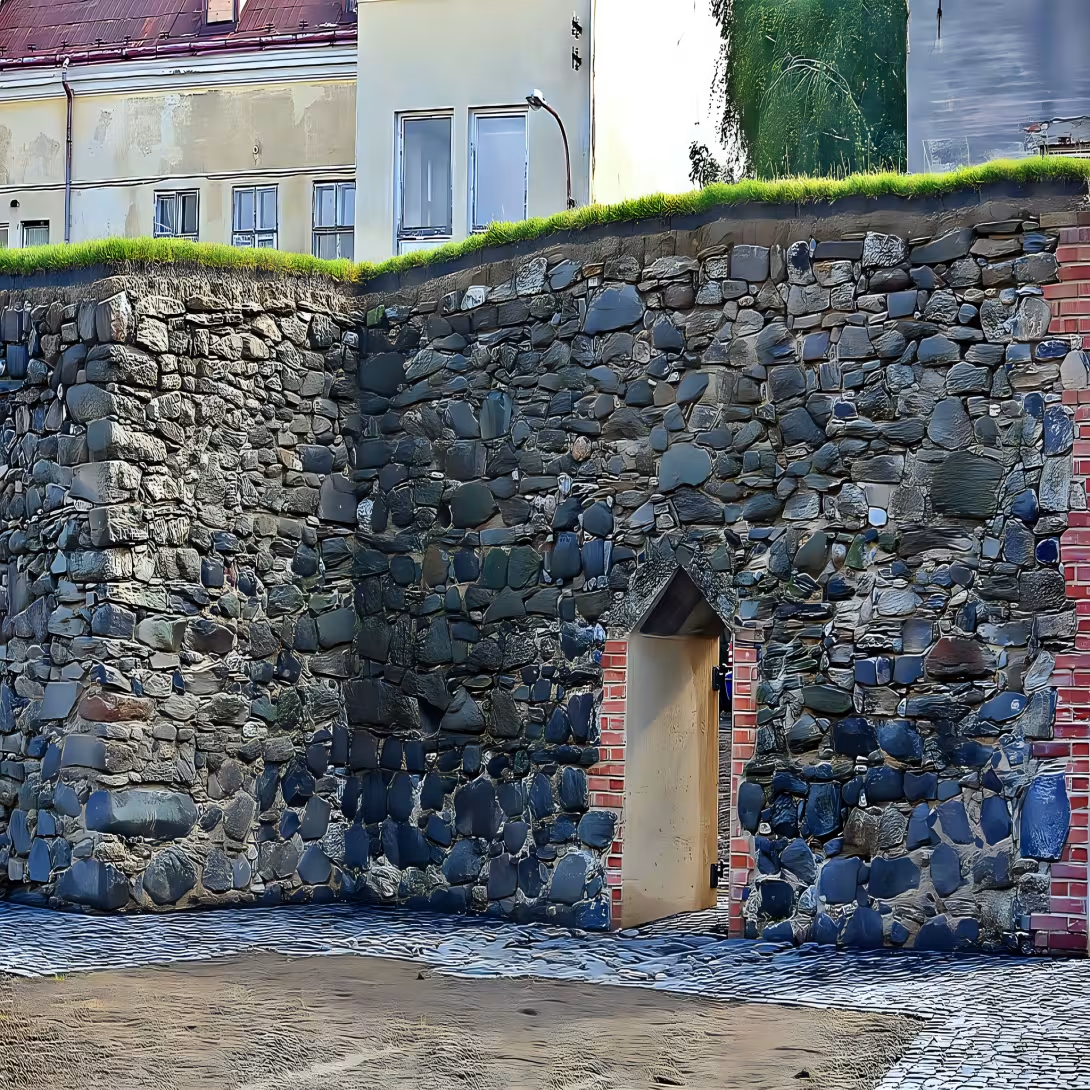
The city fortifications in Frýdlant on Liberec form a historic defence system that has protected the city's core under the local castle since the 14th century. These walls are listed in the central list of real cultural monuments. Today they are particularly visible in the ground plan Circular Street and in the form of preserved masonry remains, which are integrated into newer buildings.
The area around the River Mladé has been inhabited since the 6th century, but the exact time of the creation of the town is unknown. The original settlement was protected only by ground walls and palisades. The wall fortification replaced this line in the 14th century, during the development of the town under the management of the House of Biberstejn. The first written mention of the walls comes from the urban authority of 1381; The building design of the towers suggests that the construction took place in the middle of the 14th century.
The construction of the walls was made of basalt stones of polygonal shapes that are typical of this volcanic region. The masonry was originally plastered and the system included towers, bastions and parks. The fortifications included three gates: Lower, Upper and later New Gate. The course of the walls was copied by today's Circular Street and the Church of the Holy Cross was protected by fortification from both south and north side.
Since 1278 Biberstejns have owned Frýdlant with castle and city, followed by other noble families. The fortifications underwent reconstruction at the turn of the 16th and 17th centuries and were maintained in good condition until the 2nd half of the 18th century. The display of the walls captures, for example, the Globec map from 1660. After 1774, there was a decline, when part of the walls were sold and the trenches were buried. The gradual destruction of fortifications and gates took place during the 19th century.
The history of the city was accompanied by numerous events that influenced its defence. In a big fire in 1634, 246 houses, including City Hall, were destroyed. The city also struck Swedish raids during the Thirty Years War, the events of the Seven Years War and the passage of Napoleon's troops in 1813. The interesting thing is that the New Gate was restored in 1792 in the Empire style, but its last remains were removed only in 1947.
Today the historical core of Frýdlant is part of the urban monument zone announced in 1992. Although only fragments survived from the original fortifications, their route still faithfully depicts the medieval plan of the city. The visit to Frýdlant offers the opportunity to see the urban development of the headquarters, which has been shaped by a significant shopping trail and castle administration for centuries.
Then and now
Drag the slider to compare how the landmark may have looked when it was built with the view today.
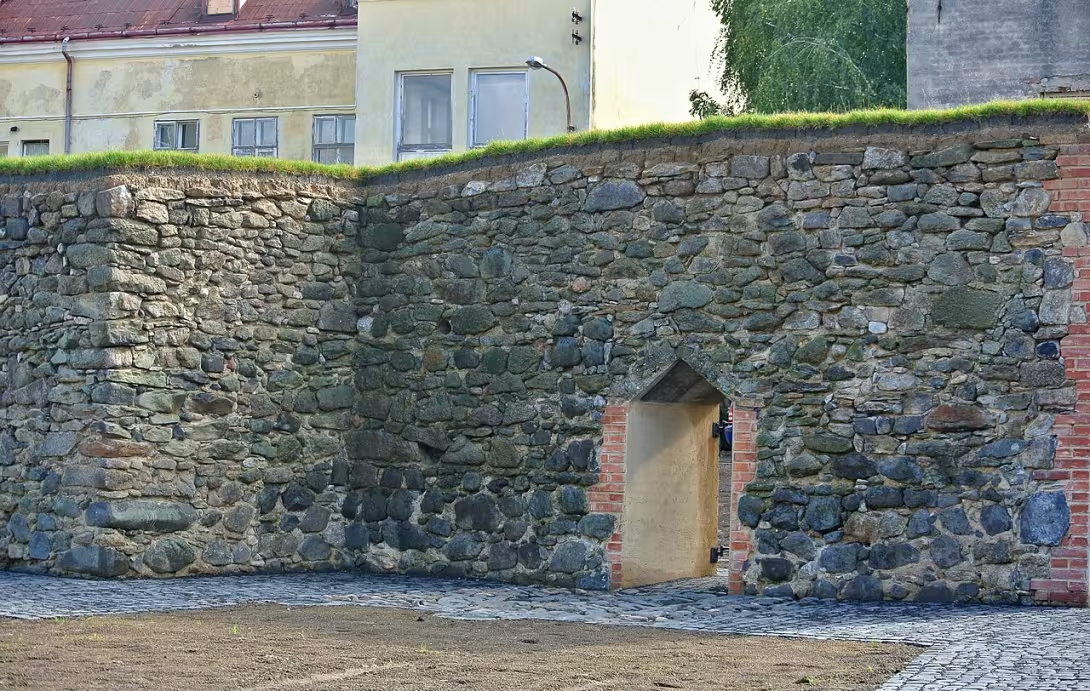
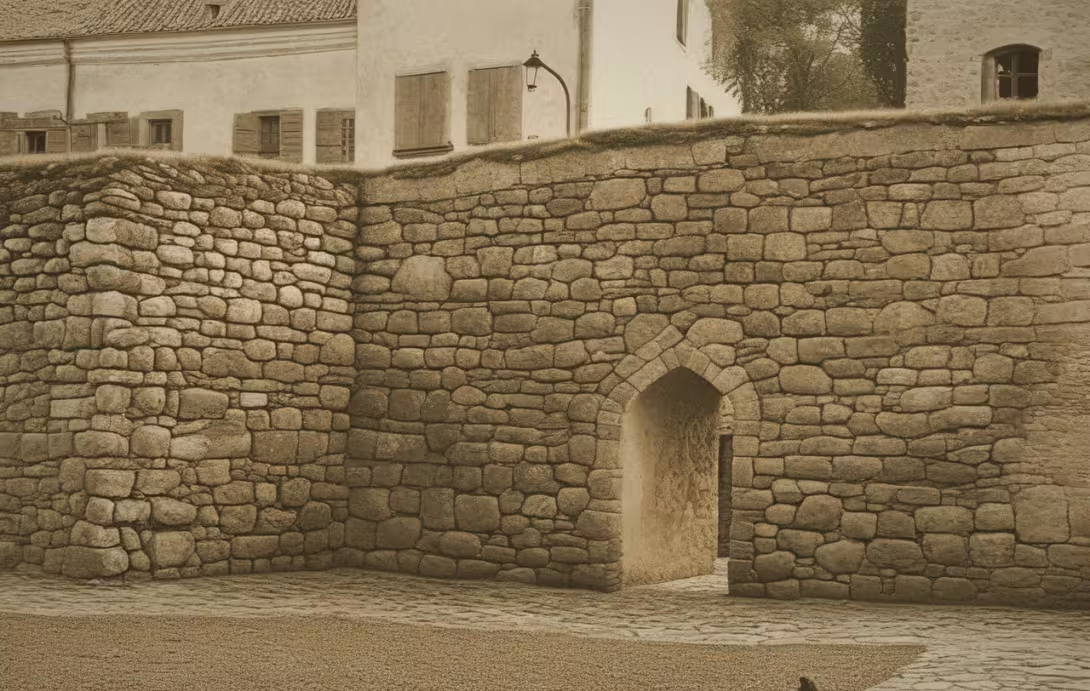
The historical appearance on the left is an AI-generated visualisation and serves as inspiration only.
Historical milestones
- 1381
- The first written mention of city walls in the town hall.
- 1660
- Display the walls on the Globec map Frýdlantska.
- 1792
- Restoring the New Gate in the Empire style.
- 1992
- Announcement of the city monument zone Frýdlant in Bohemia.
Architectural development
The original medieval fortification was built from polygonal basalt stones and plastered. At the turn of the 16th and 17th centuries, the reconstruction took place, which maintained its functionality until the 18th century. In 1792, the new gate was restored in the Empire style, but it was finally removed in 1947.
Historical events
The first written mention of the walls in the urban town hall from 1381. The destruction of 246 houses and city hall in a major fire in 1634. The gradual destruction of fortifications and gates during the 19th century.
Owners
The Frýdlant manor with castle and city was owned by Biberstejn since 1278, later by other noble families.
Points of interest
- The walls were built from the masonry of basalt stones, which have polygonal shapes typical of this volcanic region. - The original fortifications of the city consisted only of ground walls and wooden stakes, which were replaced in the 14th century by a walled building. - The defense system included three gates called the Lower, Upper and New Gate. - The new gate was restored in the year seventeen hundred ninety-two in the Empire style, but its last remains were removed in nineteen-seven. - The first written mention of these walls is contained in the inventory of the thirteen hundred and eighty-one assets.
Guide
Show guide text
This text was created by artificial intelligence and has not been editorially reviewed. It may contain inaccuracies.
Welcome to Frýdlant, a place where history touches every stone and where air still carries echoes of ancient centuries. You are standing in front of the remains of the city fortification, which once formed an impenetrable ring around the heart of this city. If you look around now, you may see only fragments of walls or remnants of walls, but let's try to go back in time together. Imagine that this place was not just a line between the city and the outside world, but a complex defense system that was designed to protect the people, the property and the power of the local masters from any attack.
To understand why these walls are so important, we need to go back deep into the past. Originally Frýdlant was not protected by stone. In the early days of their existence, there were only earthly forests and wooden palisades, which are stake-in-the-ground. It was functional, but fragile. But the situation changed in the 14th century. The city grew, gained meaning, and with it came the need for much stronger protection. It was at this time, under the rule of the Biberstejn family, that there was a great deal of development. Earth sprinkles were replaced by massive brick structures. The first written mention of these walls appeared already in the year three hundred and eighty-one in the so-called urbarian, which was a file on possession and duties. That tells us that by then, fortification was a key part of urban life.
Now pay attention to the material from which the walls are built. If you approach the surface of the stones, notice their strange form. They're not ordinary river or quarry stones. It's a basalt, typical of this volcanic region. The basalt stones often have polygonal shapes, giving them a very specific look. This hard, dark rock was the ideal choice for the construction of defences because it provided enormous resistance and stability. Look how these stones fit together and how powerful they emit. The whole system wasn't just a simple wall. It included strategically located towers and bastions that allowed armed guards to better overlook the surroundings and prevent access to the city.
When we think about the people who worked here, we can't forget important personalities. Rudolf z Biberštejna played a major role in the development of the city and its fortification, which left a deep mark in the region. The Biberstejns were visionaries who made Frýdlant a powerful center. It is important, however, to remember that the foundations of power and stability in these regions have already been laid by monarchs like Přemysl Otakar the second. It is thanks to their activities that the conditions for later flowering and construction of such demanding fortifications have been created in the region.
Now, let's think about how the city got in. The entire defense system was closed by three city gates. The gates were the most sensitive points of fortification, but also symbols of power and wealth. One of the most important was the New Gate. If you look at it, you'll see in it a reflection of later times. In the year seven hundred and ninety-two, the New Gate was restored and acquired an empirical style. This style, characterized by the purity of the lines and the return to ancient patterns, brought into the medieval city a touch of elegance and modernity in the late eighteenth century. It's fascinating to see the raw medieval defense of basalt stones intermingled in one place with the fineness of Empire architecture.
If we wanted to see what walls looked like in full glory, we'd have to look at old maps. A very valuable resource is, for example, a map of Frýdlantsk from the year six hundred sixty drawn up by Globice. On this map, urban fortifications are depicted as a closed, carefully thought-out system that defined the city's space. At that time, the walls were still fully operational and performed their function. They were a proud symbol of safety.
However, time is the most powerful enemy even of the toughest stones. From the end of the eighteenth century, the role of the walls began to recede. Military technology has changed, the cannons have become more powerful, and the old masonry has no longer been able to provide such protection as before. What was once an impenetrable barrier became a gradually impediment to urban development. The walls began to disappear, parts of the masonry were dismantled and the land around them was gradually sold. The city began to spread beyond its original borders, so the walls slowly became part of the landscape, rather than an active element of defense.
Perhaps you'll find one interesting thing that makes these walls more than just a pile of stones. It's the transition from wood to stone. Imagine the contrast. At first, there were only stakes and graves that required constant maintenance because the wood was rotting and the soil was spilling. Then came the age of the basalt. The transfer of such a lot of heavy volcanic stone required enormous effort, thousands of hours of work and precise planning. The fact that we are able to see these remains today is proof of the craftsmanship of the 14th century people who built for eternity.
Today, the walls are no longer protecting the city from enemy troops, but they are protecting something else, and that is the memory of our region. In the year one thousand nine hundred ninety-two, the Frýdlant City Monument Zone was declared in Bohemia, which ensured that these valuable remnants of history would not be forgotten or destroyed. So you're standing in an area recognized as a national treasure.
Now, let's invite you to take a slow and peaceful look. Try to imagine how the guards used to move these streets, how they would return the gates at night and how the city felt safe behind their basalt walls. Feel the atmosphere of this place, where the force of nature is combined in the form of volcanic stone with the human will and ambition of families like the Biberstejns.
But your Frýdlant journey does not end here. The fortification was just the beginning of this town's story. We ask you to continue to explore the surrounding streets, to look for further clues of history and to be inspired by the spirit of this unique place. We hope this short trip to the past has helped you better understand what you are seeing in front of you. Thank you for your attention and we wish you a pleasant continuation in discovering the beauty of Frýdlant. Goodbye.
Tips for visitors
A tour of the walls we recommend planning for morning hours, when the sun lights up the basalt wall and allows better capture of the structure of the stone on the photographs. The city is available by train and bus, for the current connection use a search engine for transport connections, parking is possible on reserved areas in the city centre. Take with you fixed shoes, as the terrain around the fortification can be uneven and less viable due to the poor state of the monument. The best pictures can be taken from elevated places near the River Mladý, where the entire line of the historical system stands out. For families with children, the location is interesting as an outdoor history lesson, but we recommend increased caution due to damaged wall construction.
Businesses nearby
Do you run a restaurant, accommodation, shop, museum, rental, wellness or other visitor service near this monument? Show yourself directly to the people heading to it — this is how they will see you in the app and on the web:
Events nearby
Zdroj akcí: otevřená data měst a obcí ČR (Národní katalog otevřených dat) a kalendář akcí Národního památkového ústavu.
Nearby
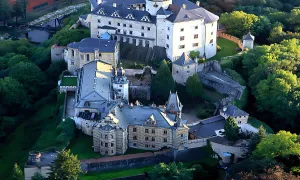
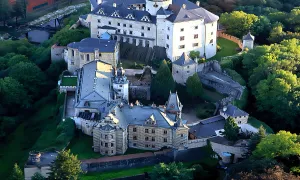
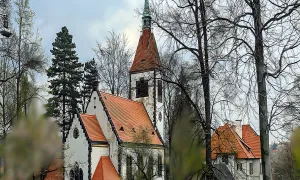
Hrad Frýdlant, řeka Smědá, kostel Nalezení svatého Kříže.
Accommodation nearby
Trips and activities nearby
Guided tours, tickets and activities nearby from GetYourGuide
Affiliate link: if you buy from the partner, we may receive a commission. The price for you does not change.
Search tours and activities →Themed route
Thematic cruise route in Frýdlant
1. City fortification in Frýdlant (walls) - historical monument We'll start with our main goal, the city walls in Frýdlant. These ancient defense structures remind us of the history and architecture of the past century. Keeping an eye on their construction is a fascinating experience that points to the technique and art of builders from the time.
2. Castle Frýdlant - historical castle We can reach Castle Frýdlant, which is not only a beautiful monument, but also a key element of the history of the region. Its views and architectural elements allow us to imagine the lifestyle of the nobles of the past.
3. River Currency - natural element After exploring the walls and the castle, we will look at the River Mladá, which flowed around the surrounding landscape of the millennium. Its peaceful flow is the ideal place to relax and think about the history of this area. The view of water gives us a sense of connection to nature, which has witnessed many changes.
4. Church Finding the Holy Cross - sacral monument Our route ends with a visit to the Church of the Holy Cross, which is not only the spiritual centre of the village, but also architectural pearls. Its history and artistic decoration are a reminder of the rich cultural tradition of Frýdlant.
This route offers us a view of the different aspects of the region, from history to nature, and shows us why Frýdlant is a place full of attractions.
Seasonal recommendations
Spring: In the spring period, městské opevnění ve Frýdlantu is transformed into a flowering garden where a diverse flora appears on the walls and surroundings. The sunny dawn brings warm colors and illuminates the ancient stone surface of the wall, creating a charming atmosphere for visitors. Practical advice includes a visit in the morning or in the evening when you avoid the crowd and you can enjoy a quiet moment. It is advisable to resist warm modifications - short gloves and light coats are sufficient to protect against early spring winds.
Summer: For years, urban fortifications become the center of attention when the sun illuminates every cliff and stone path. The atmosphere is full of life and activity, especially in the high summer season when crowds cannot be avoided. The best time to visit is early morning or late evening to avoid long fronts and warm sun. It is recommended to wear light clothes, drinking water boxes and sun protection devices.
Autumn: In autumn, castles of a unique shiny tone are acquired when leaves of falling trees create a coloured and textured wallpaper. The sun's rays shine through the bright leaf canopy, which gives the place a quiet and reflective atmosphere. It is advisable to choose the middle time of the day when you avoid the crowd and enjoy the colour picture. It is good to wear warmer clothes - long gloves, shirts and perhaps even blankets to protect against cold winds.
Winter: Winter visit to the city fortifications is a strange experience when ancient castles are transformed into snow sheets. The atmosphere is quiet and calm, lit only by weak light or lights from nearby buildings. Opening can be limited to a short period of the day, so it is good to leave early in the morning. It is important to have warm clothes - leather shoes, long gloves and tightly wrap your head to enjoy a cool time without discomfort.
Visualizations and artistic views


The visualisations are generated by artificial intelligence and serve as inspiration.
Photos from the area
Real photos taken near the monument


Zdroj a licence jsou uvedeny u každého snímku.
Tips from visitors
No tips yet. Be the first!
Log in and add your tip.
Sources and literature
Photos: Koprovka / CC BY-SA 4.0, rozlišení zvýšeno umělou inteligencí — Wikimedia Commons. The author and licence also appear when you hover over the image.
Faktickým podkladem tohoto textu byl článek na Wikipedii, jehož autory jsou přispěvatelé Wikipedie. Článek je dostupný pod licencí CC BY-SA 4.0.
Location on the map
Příběhy a pověsti
Legendy, pověsti a příběhy spjaté s touto památkou
Fotografie návštěvníků
Zatím žádné fotografie. Buďte první, kdo přidá fotografii z návštěvy!
Log in a přidejte svou fotografii nebo hodnoťte.
Za ověřenou návštěvu v aplikaci získáte víc bodů — poznáme podle GPS, že jste na místě.
Reviews and comments