



Horní Jelení Castle
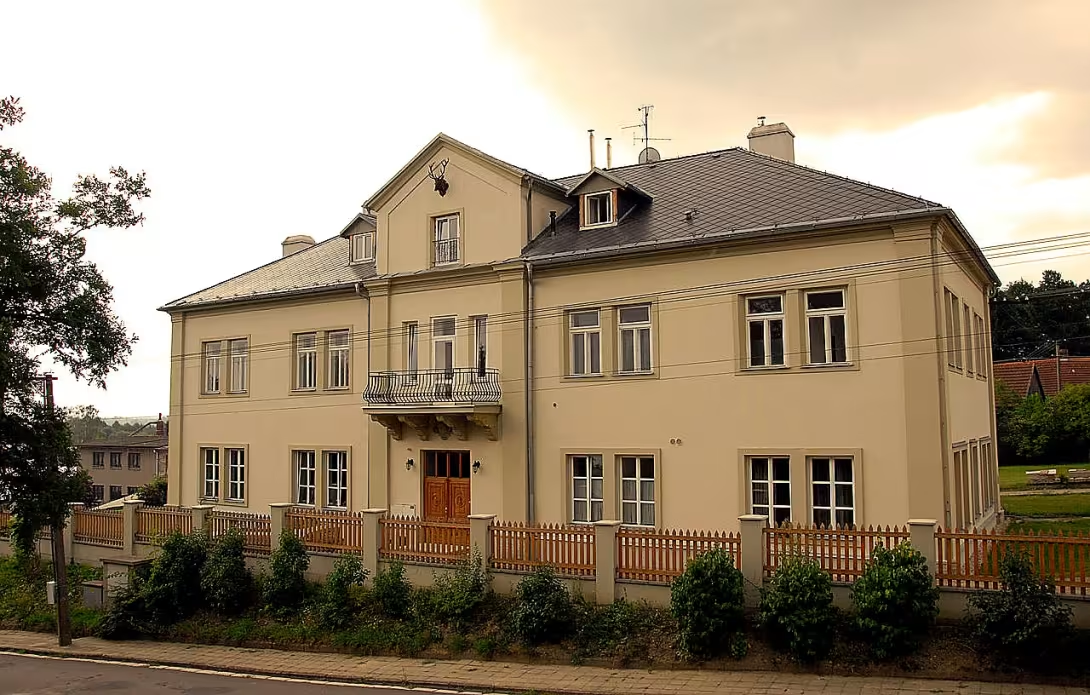
Nestled in Horní Jelení, within the Pardubice District of the Czech Republic, lies Zámek Horní Jelení. This modest yet historically significant structure was built in 1865. Primarily serving as an administrative center for local estates, it features a simple architectural style typical of the Historicism period. Despite not being a traditional castle, its historical importance stems from its association with the Bubnů family lineage since 1573.
The origins of Zámek Horní Jelení trace back to when the area was part of the Litice estate under Jiří z Poděbrad. In 1573, Heřman z Bubna a na Skášově acquired the estate, marking its long-standing connection with the Bubnů family. Over time, significant changes occurred; notably, a wooden fortress on the site was demolished in 1817 due to disrepair. The current structure, completed in 1865 by the Bubnůs, reflects mid-19th century architectural trends characterized by simplicity and functionality.
Architecturally, Zámek Horní Jelení is unassuming, featuring a small balcony and a gable adorned with a deer's head sculpture. While it lacks significant historical or artistic value, its continuous ownership by the Bubnů family makes it an integral part of local heritage. After nationalization post-1948, it was returned to the family in 1994, underscoring its enduring legacy.
Throughout its history, Zámek Horní Jelení has experienced various administrative and ownership changes but remains a stable fixture in the region. Its association with prominent families like the Bubnůs highlights its role as an important local landmark rather than a site of dramatic historical events or battles.
Today, Zámek Horní Jelení stands as a testament to the region's history and architectural evolution. Although not listed as a cultural monument, its proximity to the notable Church of Nejsvětější Trojice adds to its local significance. Visitors can appreciate the building's historical context and its role in the administrative landscape of Horní Jelení.
Zámek Horní Jelení offers a unique glimpse into the past, reflecting both architectural trends of its time and the enduring legacy of the Bubnů family. Its understated elegance and historical continuity make it a worthwhile visit for those interested in exploring Czech history.
Then and now
Drag the slider to compare how the landmark may have looked when it was built with the view today.
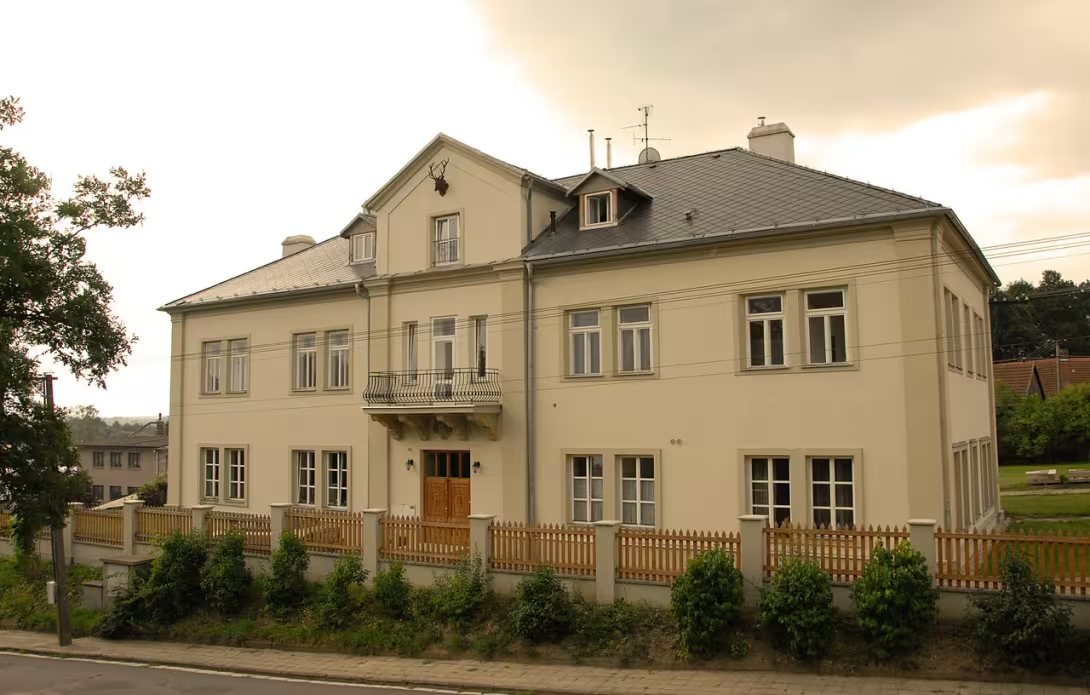
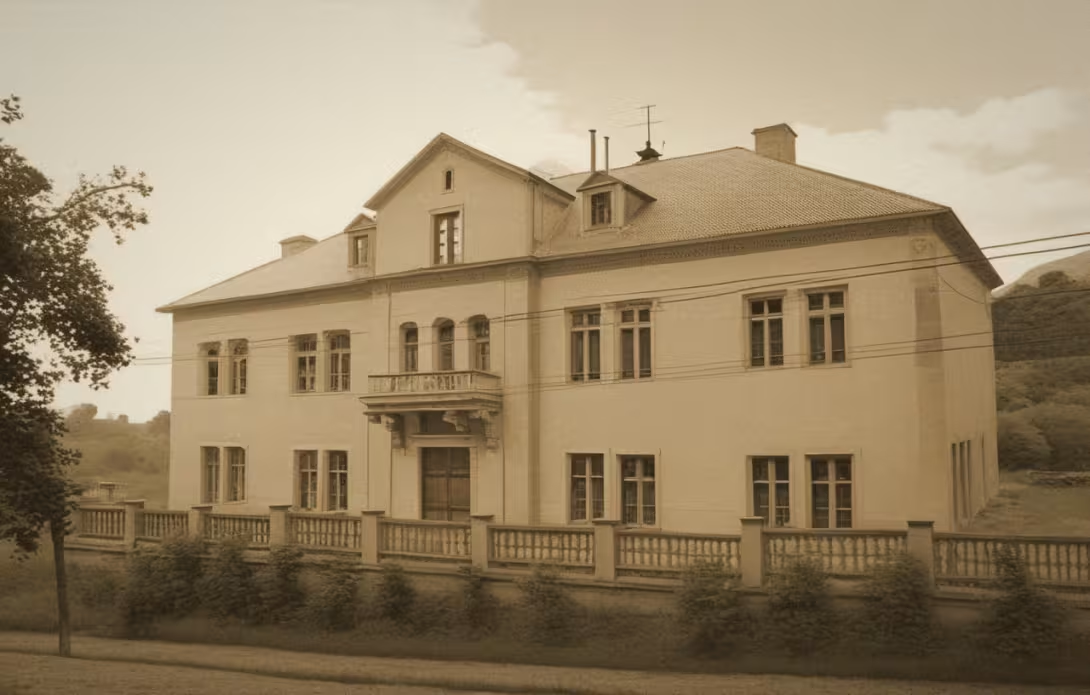
The historical appearance on the left is an AI-generated visualisation and serves as inspiration only.
Historical milestones
- 1573
- The estate came under the ownership of Heřman z Bubna a na Skášově.
- 1817
- A wooden fortress on the site was demolished due to disrepair.
- 1865
- Construction of the current building, known as Zámek Horní Jelení, was completed.
Architectural development
The original stronghold and castle from the 10th century were replaced over time. A wooden fortress existed until its demolition in 1817 due to disrepair. The current structure, built in 1865, reflects a simple architectural style without significant historical or artistic value.
Historical events
1573: The estate came under the ownership of Heřman z Bubna a na Skášově, marking the beginning of its association with the Bubnů family.
1817: A wooden fortress on the site was demolished due to disrepair.
1865: Construction of the current building, known as Zámek Horní Jelení, was completed by the Bubnůs.
Owners
The estate was initially associated with Jiří z Poděbrad. In 1573, it came under the ownership of Heřman z Bubna a na Skášově and has since remained with the Bubnů family lineage. The property was nationalized after 1948 but was returned to the Bubnůs in 1994.
Points of interest
- Despite its modest appearance, Zámek Horní Jelení is one of the few structures that has remained continuously owned by a single family—the Bubnůs—since 1573, highlighting a unique lineage continuity in Czech history.
- The site originally housed a wooden fortress before it was demolished in 1817 due to disrepair. This transition from a medieval structure to the current mid-19th century building reflects broader architectural and societal changes of that era.
- Although not listed as a cultural monument, Zámek Horní Jelení is architecturally significant for its simplicity and functionality, embodying the Historicism period's trends with features like the deer head sculpture on its gable—a subtle nod to local symbolism.
- After nationalization in 1948, the castle was returned to the Bubnů family in 1994. This restitution underscores not only the resilience of private ownership but also the broader post-communist restoration of properties to their original owners in Czech history.
- The castle's proximity to the Church of Nejsvětější Trojice adds a layer of local religious and cultural significance, even though Zámek Horní Jelení itself lacks major historical events or battles associated with it. This juxtaposition enriches its role as part of the region’s heritage landscape.
Guide
This guide is narrated by a synthetic voice generated by artificial intelligence.
Show guide text
This text was created by artificial intelligence and has not been editorially reviewed. It may contain inaccuracies.
In Horní Jelení, you can trace the remnants of a noble residence that no longer stands, and a building that is called a castle, even though it never was one in the usual sense.
On the northern edge of today's town square stood perhaps as early as the 10th century a fortress and later a castle. This is recalled by the stone cellars of the houses that still stand in this place today. Jiří z Poděbrad is considered the first known holder of the Jelení estate.
In 1573, the knight Heřman z Bubna a na Skášově acquired the estate. From that time on, it belonged to the Bubnů z Litic family. Under Heřman z Bubna, a wooden fortress was built, but over time it became so dilapidated that it was demolished in 1817.
In 1865, the Bubnů family had a simple one-story building erected in the area called na Sádkách, which became known as a castle. It served primarily as the administrative center for the Jelení estates. It may also have been used as a hunting lodge. However, it was never the residence of the count's family – that was the castle Doudleby. After 1948, the Bubnů properties were confiscated. In the restitution in 1994, the family was returned the building in Horní Jelení.
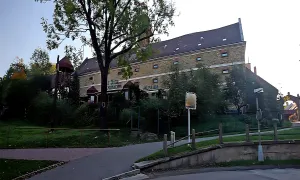
The so-called castle lies east of the city center. It is a rectangular two-story building that faces the street with its main northern façade. On the rear, southern side, it has a short central wing. Above the main entrance, there is a balcony on the upper floor. An inconspicuous central risalit with a window at roof level is crowned by a triangular gable, and within it is a sculpture of a deer's head, which is a reference to the name of the town.
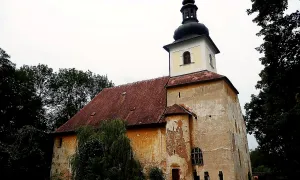
From a historical and artistic perspective, the building is unremarkable and is not listed among cultural monuments. More noteworthy is the building on the other side of May 5th Street. It is a protected church, the Church of the Most Holy Trinity, a simple neo-Gothic structure built between 1864 and 1866. It was thus created at almost the same time as the castle.
Frequently asked questions
Can the monument be visited?
Some buildings of this kind are open for guided tours, others serve another purpose or are privately owned. We have not verified whether and when this monument is open – please ask the operator.
What are the opening hours and admission?
We have not verified the opening hours or admission. Current information is published by the operator.
Where is the monument?
Location: Horní Jelení, Pardubický kraj. The map on this page shows the exact spot.
Businesses nearby
Do you run a restaurant, accommodation, shop, museum, rental, wellness or other visitor service near this monument? Show yourself directly to the people heading to it — this is how they will see you in the app and on the web:
Nearby
Nearby, across the street, stands the more notable and protected church of Nejsvětější Trojice, an unpretentious Neo-Gothic structure built between 1864 and 1866.
Accommodation nearby
Themed route
Thematic Walking Tour: Horní Jelení
1. Horní Jelení Castle - Type: Historical Castle - Why Visit: Begin your journey at the majestic Horní Jelení Castle, a quintessential example of Renaissance architecture in the Pardubický kraj region. Explore its rich history and architectural beauty, which has been preserved over centuries.
2. Church of Nejsvětější Trojice - Type: Neo-Gothic Church - Why Visit: Just a short walk across the street from the castle lies the charming Church of Nejsvětější Trojice. Built between 1864 and 1866, this unpretentious yet elegant Neo-Gothic structure offers insight into local religious history and architectural style.
3. Castle Gardens - Type: Historical Garden - Why Visit: Adjacent to the castle grounds are meticulously maintained gardens that reflect traditional landscaping techniques of the era. These serene spaces provide a peaceful retreat, perfect for appreciating nature's beauty intertwined with historical design.
This tour offers a concise yet enriching experience, focusing on the cultural and architectural heritage surrounding Horní Jelení Castle.
Seasonal recommendations
Spring: Visiting Horní Jelení Castle during spring offers a breathtaking display of blooming flora, with the surrounding meadows and forests bursting into vibrant colors. The soft morning light enhances the picturesque beauty of the castle's architecture, creating an enchanting atmosphere ideal for photography. Visitors should be prepared for occasional showers, so waterproof footwear is recommended to comfortably explore the grounds. This time of year sees moderate visitor numbers, allowing for a more tranquil experience; however, arriving early in the day can help avoid any unexpected crowds and ensure ample time to enjoy the natural splendor.
Summer: The summer months at Horní Jelení Castle are characterized by long daylight hours that illuminate the castle's historic features, offering an ideal setting for guided tours or leisurely strolls. The lush greenery of the surrounding landscape is in full bloom, providing a refreshing backdrop to your visit. Due to the peak tourist season, it's advisable to arrive early to beat the crowds and secure good spots for viewing or photography. Dressing in light, breathable clothing will enhance comfort as you explore, and carrying water can help stay hydrated under the sun.
Autumn: Autumn at Horní Jelení Castle is a feast for the senses, with the foliage transforming into rich hues of red, orange, and gold. The cooler temperatures make it an ideal time to wander through the castle's grounds without the summer heat. The soft light filtering through the colorful leaves creates a magical atmosphere perfect for capturing memorable photos. While visitor numbers are generally lower than in summer, some days can still be busy; therefore, planning your visit on weekdays and arriving early is recommended. Layered clothing will keep you comfortable as temperatures fluctuate.
Winter: The winter months envelop Horní Jelení Castle in a serene blanket of snow, offering a unique perspective on its historic architecture against the stark beauty of the snowy landscape. The castle's grounds can be quite different during this season, with certain areas possibly inaccessible due to snow coverage. Visitors should dress warmly in layers and wear sturdy boots for walking over potentially icy paths. Due to shorter daylight hours and potential closures or reduced hours of some facilities, checking opening times in advance is crucial. Despite the cold, winter provides a peaceful setting for those looking to enjoy the castle's quiet charm away from summer crowds.
Visualizations and artistic views


The visualisations are generated by artificial intelligence and serve as inspiration.
Photos from the area
Real photos taken near the monument


Zdroj a licence jsou uvedeny u každého snímku.
Tips from visitors
No tips yet. Be the first!
Log in and add your tip.
Sources and literature
Photos: Matyas.bubna / CC BY-SA 4.0 — Wikimedia Commons. The author and licence also appear when you hover over the image.
Faktickým podkladem tohoto textu byl článek na Wikipedii, jehož autory jsou přispěvatelé Wikipedie. Článek je dostupný pod licencí CC BY-SA 4.0.
Location on the map
More monuments – Horní Jelení
Show all in the municipality

Příběhy a pověsti
Legendy, pověsti a příběhy spjaté s touto památkou
Příběh: Horní Jelení
Bylo to v pondělí ráno, kdy Martin zjistil, že květiny na severním balkonu začínají kvést nespočetných očí červeně a modře. Nikdo jiný nebyl uvnitř hradního …
Číst příběh
Pověst: Horní Jelení
Staří obyvatelé Horního Jelení vyprávějí, že kamenné sklepy tamních domů poblíž náměstí pamatují časy, kdy tu stával hrad starý jako sama česká země. Hluboko…
Číst příběhFotografie návštěvníků
Zatím žádné fotografie. Buďte první, kdo přidá fotografii z návštěvy!
Log in a přidejte svou fotografii nebo hodnoťte.
Za ověřenou návštěvu v aplikaci získáte víc bodů — poznáme podle GPS, že jste na místě.
Reviews and comments