



hrad Týnec nad Sázavou Castle
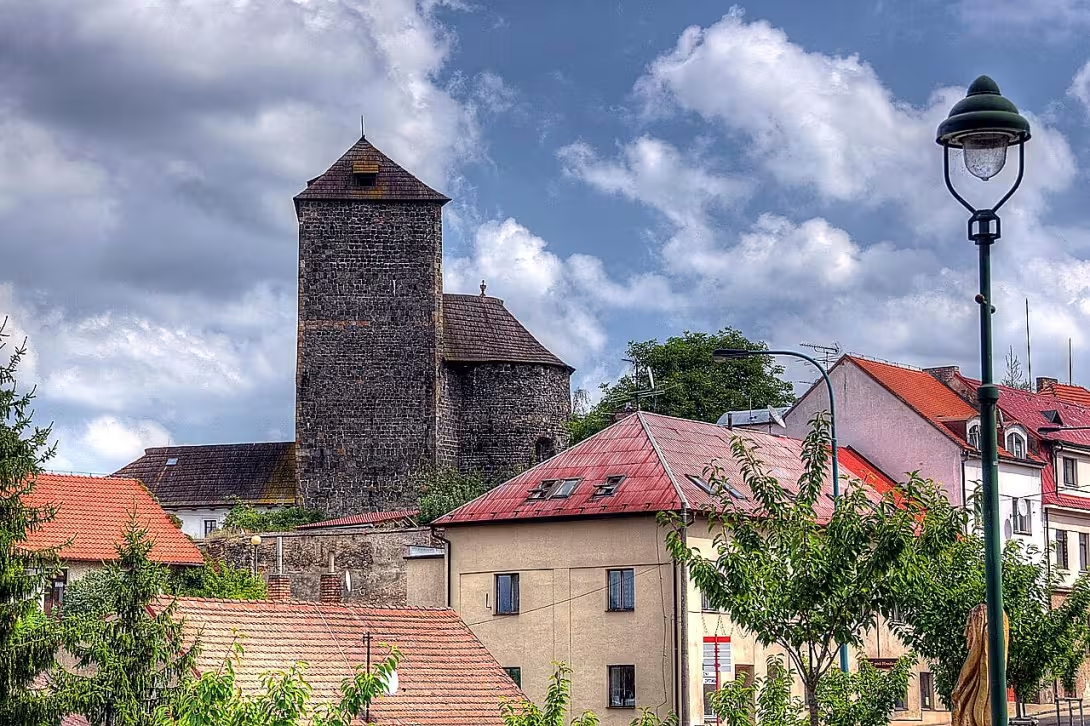
The castle Týnec nad Sázavou stands on the hill, which naturally protected it from one side through a deep breach, from the other through the Janovická stream. This favourable location had a considerable strategic purpose in the past. Originally, the castle served as a guard fort designed to protect traders who passed through here. Since 1965 the castle has been protected as a cultural monument.
Aropological findings from the turn of the 1970s and 1980s confirmed that the fort had been established in the 11th century, although the first written mention dates back to the early 14th century. The oldest structure is the Romanesque Rotunda of St. Wenceslas, which later became the castle chapel and remained the oldest preserved monument in Týnka. There was originally only a wooden building; it was only later that a stone castle with this French rotunda was established.
There was no information about the first owners. The first known owner was Oldřich of Týnek, listed in 1318, who became the ancestor of the Meddek of Valdek. This family owned the castle until the 15th century and its members included Zdeněk z Valdeka, Zdeněk Medek and Protiva z Valdeka. After Medce, the castle was changed by several owners: in 1498 it was acquired by Litvín z Kinštejna, subsequently owned by Hodějovští z Hodějova (they joined the Týnek estate and Konopiště), then Albrecht z Valdštejna, and finally Pavel Michna z Vacínova.
Since the beginning of the 17th century the castle no longer met the new requirements of its owners and gradually began to lose its way. In the early 18th century it was bought by the earls of Vrtba together with Konopiste, but Tynecký Castle continued to decline. The vomit occurred in the middle of the 18th century when Marie Anna O'Kelly began to manage it and returned it to the habitable form. After 1918, the residential parts were rented as apartments. The owner was František Xaver Jiřík, director of the Museum of Arts in Prague. Finally, the Church of Czechoslovak Hussite bought the castle.
From an architectural point of view, the Romanesque Rotunda, in which the chapel is located, has been preserved until now, where the worship of the Czechoslovak Hussite Church is held today. An important element is the prism tower, whose top floor serves as a lookout tower overlooking the city and its surroundings. The premises of the former palace now occupy the city museum. The tower also serves as a gallery with regular exhibitions. The interesting thing is, there's a big bat in the tower that's moving in for the summer.
There is a natural monument of Tynecka Rotunda, which protects the nest of bats. The castle is now a living center of cultural and social events. A number of events are held here regularly: exhibitions of artists, concerts of musical associations, performances of art schools, jarmarks, Celtic programmes and theatre performances. They're doing weddings here too. During Christmas and Easter holidays, thematic exhibitions are held. Particularly interesting is the permanent exhibition dedicated to Týnecké ceramics - a reminder of the stone factory, which worked here as one of the first of its kind in Bohemia.
Then and now
Drag the slider to compare how the landmark may have looked when it was built with the view today.
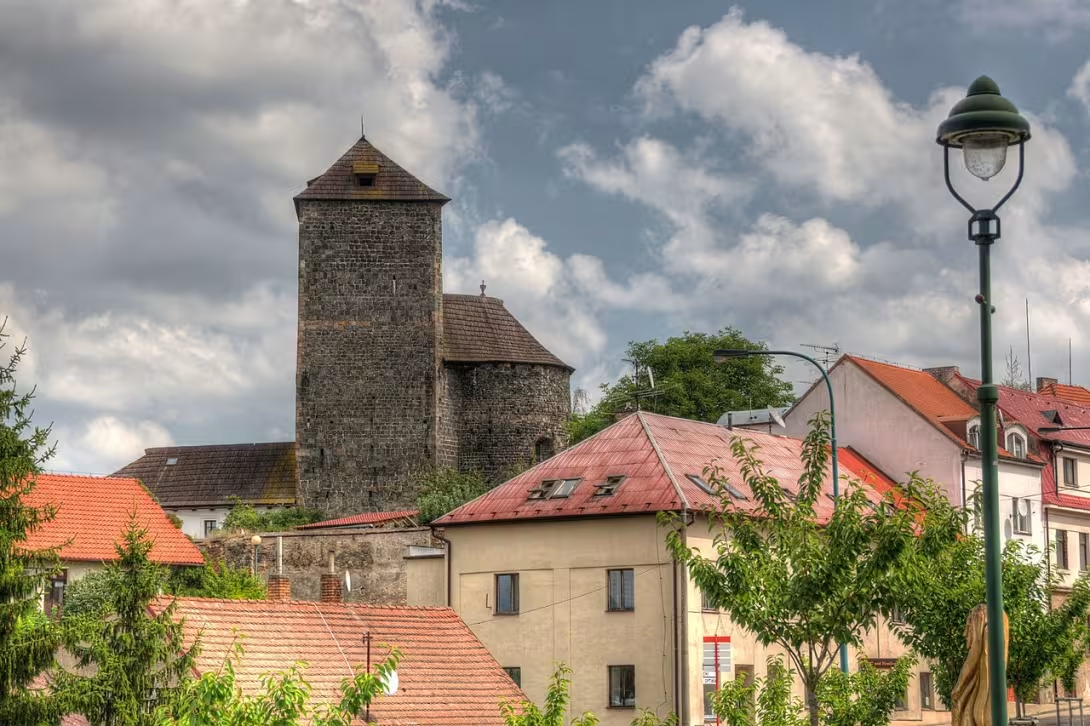

The historical appearance on the left is an AI-generated visualisation and serves as inspiration only.
Historical milestones
- The castle has been protected as a cultural monument since 1965.
- The castle area is declared a natural monument for the nest of bats.
Architectural development
The castle Týnec nad Sázavou originally had a wooden shape, which was later replaced by a stone castle with Romanesque rotunda. Rotunda is the oldest preserved monument in Týnka nad Sázavou. Over the years the castle has undergone several reconstructions and modifications, especially during the 18th century, when it was returned to the habitable form of Marie Anna O'Kelly.
Points of interest
- The castle Týnec nad Sázavou stands on a hill protected by a breach and Janovická creek. - Areopological findings showed that the fortress was established in the 11th century, the oldest structure is the Romanesque rotunda of St. Wenceslas. - The first known owner was Oldřich from Týnce, listed in 1318, the ancestor of Medek from Valdek. - Since the beginning of the 17th century the castle gradually decayed until the period of administration of Marie Anna O'Kelly in the middle of the 18th century. - An important element of the castle is the prism tower, which serves as a lookout tower overlooking the city and its surroundings.
Guide
This guide is narrated by a synthetic voice generated by artificial intelligence.
Show guide text
This text was created by artificial intelligence and has not been editorially reviewed. It may contain inaccuracies.
Týnec Castle is the dominant feature of the town of Týnec nad Sázavou and stands on the left bank of the Sázava River. From the originally Romanesque castle, a prismatic tower and an older rotunda of Saint Wenceslaus have been preserved, which later became the castle chapel. Since 1965, the castle has been protected as a cultural monument.
Written records of the castle date back to the early fourteenth century. However, archaeological finds from the turn of the nineteen seventies and eighties showed that the castle stood here already in the eleventh century. Initially it was a wooden castle, and the stone castle with the Romanesque rotunda was built later. The rotunda is the oldest preserved monument in Týnec nad Sázavou. The castle had an advantageous position on a hilltop and was protected by a deep ravine and the Janovický Stream. It originally served as a guard castle that protected passing merchants.
Nothing has been preserved about the first owners, perhaps it was one of the Czech rulers. The first known owner was Oldřich z Týnce, mentioned in thirteen eighteen. His descendants, the Medkové z Valdeka, held the castle until the fifteenth century. After that the owners changed frequently. In fourteen ninety-eight the castle was acquired by Litvín z Kinštejna, followed by the Hodějovští z Hodějova, who united the estates of Týnec and Konopiště. After the confiscation of their property, it fell to Albrecht z Valdštejna, and from him the estate was bought by Pavel Michna z Vacínova.
From the beginning of the seventeenth century, the castle no longer met its lords' requirements and began to decay. This was not stopped even by the counts from Vrtby, who bought it together with Konopiště at the beginning of the eighteenth century. The castle was returned to a habitable state only by Marie Anna O'Kelly, who managed the castle from the middle of the eighteenth century. After nineteen eighteen, the habitable sections served as apartments. For some time the castle was owned by František Xaver Jiřík, director of the Museum of Decorative Arts in Prague. Eventually the castle was bought by the Czechoslovak Hussite Church.
Today in the rotunda there is a chapel where services of this church are held. The highest floor of the tower serves as a viewing platform over Týnec and its surroundings, and exhibitions are held in the tower. In the tower during the summer there also lives a noctule bat. Because of the bat nesting site, a nature reserve called Týnecká rotunda has been declared in the area. In the former palace spaces, the town museum is located. Part of it is a permanent exhibition of Týnec Pottery. The small pottery factory here was among the first factories of its kind in Bohemia.
The castle hosts exhibitions, concerts, theatrical performances, fairs, and weddings. At Christmas and Easter, the exhibitions focus on the traditions of these holidays.
Tips for visitors
The best time to visit the castle Týnec nad Sázavou is in the spring or autumn period, when vegetation is full of blood and sunlight gives historical medieval buildings a special atmosphere. These months offer a peaceful visit without overfilling, which allows better inspection and photography.
Parking can be found near the castle. Transport to Týnek nad Sázavou is available both by car and public transport. For the latest information about connections, we recommend using online route search engines.
When visiting the castle, take with you sun protection glasses, shoes suitable for walking on uneven terrain and in case of colder weather warm clothes. Don't forget the drinking water supply, especially during the summer months.
Photography of the castle offers various possibilities. The best light for photos can be found in the morning and evening when the sun is lower in the sky. Rotunda and the prism tower are ideal places to capture historical architecture. An interesting view of the overall complex also offers a remarkable view from the surrounding terraces.
In the vicinity of the castle you can visit the river Sazavou, which provides opportunities for relaxation and beautiful views. For families with children, the local surroundings also offer the opportunity to explore the natural environment and relax on walking along the river.
Frequently asked questions
Can the monument be visited?
Yes. We verified the opening hours or admission on the official website (6. 10. 2026); you will find them in the visitor information on this page. Please double-check with the operator before you travel.
What are the opening hours and admission?
Details verified on the official website (6. 10. 2026) are listed in the visitor information on this page. Official website: https://www.hradtynec.cz/
Where is the monument?
Location: Týnec nad Sázavou, Středočeský kraj. The map on this page shows the exact spot.
Why is the monument protected?
It is listed in the Central List of Cultural Monuments of the Czech Republic as a cultural monument (register no. 20720/2-202).
For kids
About 726 years ago, something very special began to be built on one of the most beautiful places in Bohemia. The builders and their workers were expecting mountains of work, but also great enthusiasm for the new castle - Castle Týnec nad Sázavou. It was like starting a new adventure book with a secret on every corner and a hero called Architecture.
Businesses nearby
Do you run a restaurant, accommodation, shop, museum, rental, wellness or other visitor service near this monument? Show yourself directly to the people heading to it — this is how they will see you in the app and on the web:
Events nearby

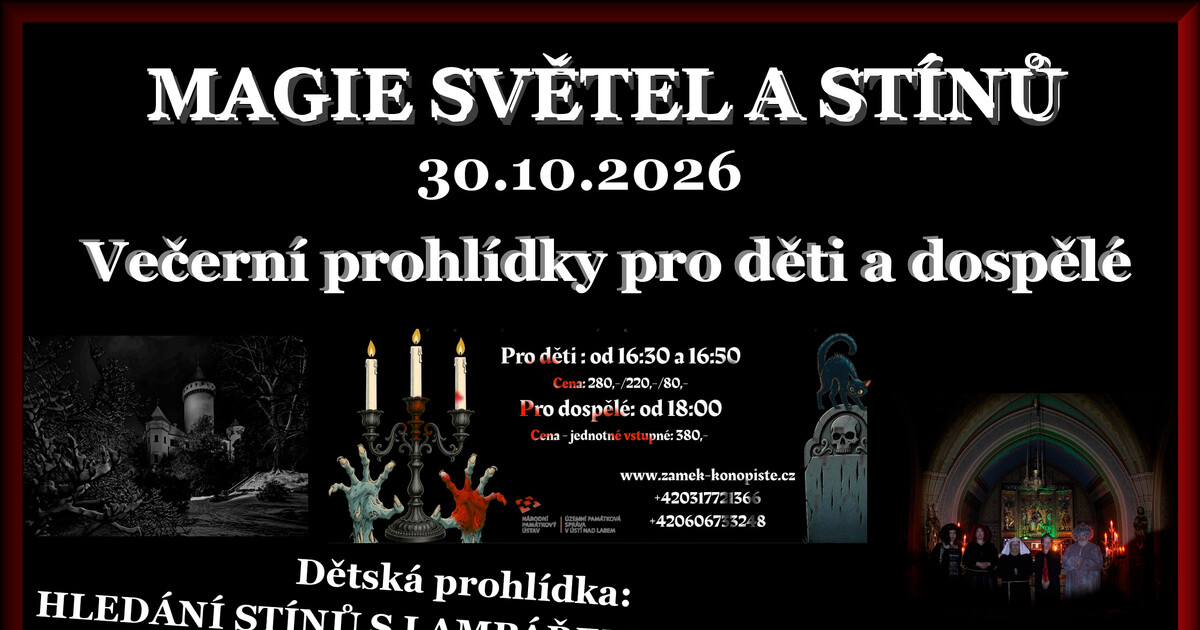


Zdroj akcí: otevřená data měst a obcí ČR (Národní katalog otevřených dat) a kalendář akcí Národního památkového ústavu.
Nearby
The castle is located on a hill with natural defences such as deep cracks and Janovická stream.
Outside the castle is the river Sazava.
Accommodation nearby
Themed route
Thematic cruise route: Castle Týnec nad Sázavou
1. Castle Týnec nad Sázavou (Castle) Type: Historical castle Why is it worth a visit: Located on a hill with natural defences such as deep cracks and the Janovická stream, hrad Týnec nad Sázavou offers a view of the past. Its architecture and history will lead you to the Middle Ages, where it could be a strategic point for protecting the area.
2. Sazava River (natural show) Type: Natural space Why is it worth a visit: Outside the castle is the river Sazava, which provides a beautiful view and quiet moments for relaxation. It is an ideal place to admire the natural beauties and enjoy a moment on the banks of the river.
3. Janovice stream (natural survey) Type: Natural body Why is worth a visit: The Janovický stream, which protects the castle on one side, offers an opportunity to explore the local flora and fauna. Its deep cracks give the landscape a romantic character and are evidence of the natural defensive mechanisms that the castle used.
This route offers a combination of history and nature, enabling a deeper understanding of the cultural and natural heritage of the area around the walls of Týnec nad Sázavou.
Seasonal recommendations
Spring: The Týnec nad Sázavou Castle offers unique experiences in spring, when the colors of nature change and the garden flowers begin to bloom. The sun illuminates the castle terraces and treetops in fine light, creating a magical atmosphere for visitors. Winter clouds are receding, but a short rainy season may occur, so it is advisable to bring a protective coat or coat cover for shoes. Spring is often milder in attendance, which allows you to discover the memory without undue delay.
Summer: In summer, hrad Týnec nad Sázavou becomes a popular destination for tourists who enjoy warm sunny weather and the natural beauty of surrounding forests and the Sazava River. The atmosphere is full of life, with loud singing of birds and fragrant flower perfume. Due to the high attendance, it is recommended to arrive early in the morning or later in the day to avoid long fronts and enjoy a place in peace. Don't forget your sunglasses and enough drinking.
Autumn: Autumn brings hrad Týnec nad Sázavou into the golden and red shades, when tree leaves form views full of poetry. Sundays are beautifully bright and warm, which is the perfect time for photography and walking on the castle terrain. The end of summer can still be challenging in terms of weather, so we recommend bringing warm clothes and a hat. Visitors are beginning to decline, allowing a more relaxed tour without many people.
Winter: Winter visit to Castle Týnec nad Sázavou offers different views, where everything is covered by snow or highlighted by ice shapes. The atmosphere is quieter and less humane, which allows you to enjoy the castle space in a mild silence. Due to the cold and shorter hours of the day, it is recommended to come up with warm clothes, glass glasses and perhaps even winter shoes. Opening hours can be limited, so it is good to check the current information before visiting.
Visualizations and artistic views


The visualisations are generated by artificial intelligence and serve as inspiration.
Photos from the area
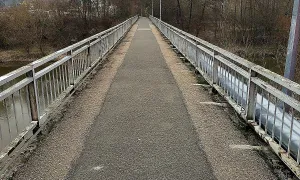
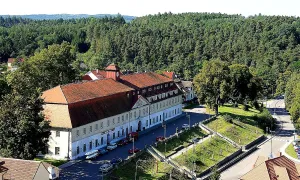
Real photos taken near the monument

Zdroj a licence jsou uvedeny u každého snímku.
Atmosphere of the place
This atmospheric visualisation of the place and period was generated by artificial intelligence. It is not real footage of the location.
Tips from visitors
No tips yet. Be the first!
Log in and add your tip.
Sources and literature
Photos: Lukáš Kalista / CC BY-SA 4.0 — Wikimedia Commons. The author and licence also appear when you hover over the image.
Faktickým podkladem tohoto textu byl článek na Wikipedii, jehož autory jsou přispěvatelé Wikipedie. Článek je dostupný pod licencí CC BY-SA 4.0.
Location on the map




Příběhy a pověsti
Legendy, pověsti a příběhy spjaté s touto památkou
Fotografie návštěvníků
Zatím žádné fotografie. Buďte první, kdo přidá fotografii z návštěvy!
Log in a přidejte svou fotografii nebo hodnoťte.
Za ověřenou návštěvu v aplikaci získáte víc bodů — poznáme podle GPS, že jste na místě.
Reviews and comments