






Hradčanská Other
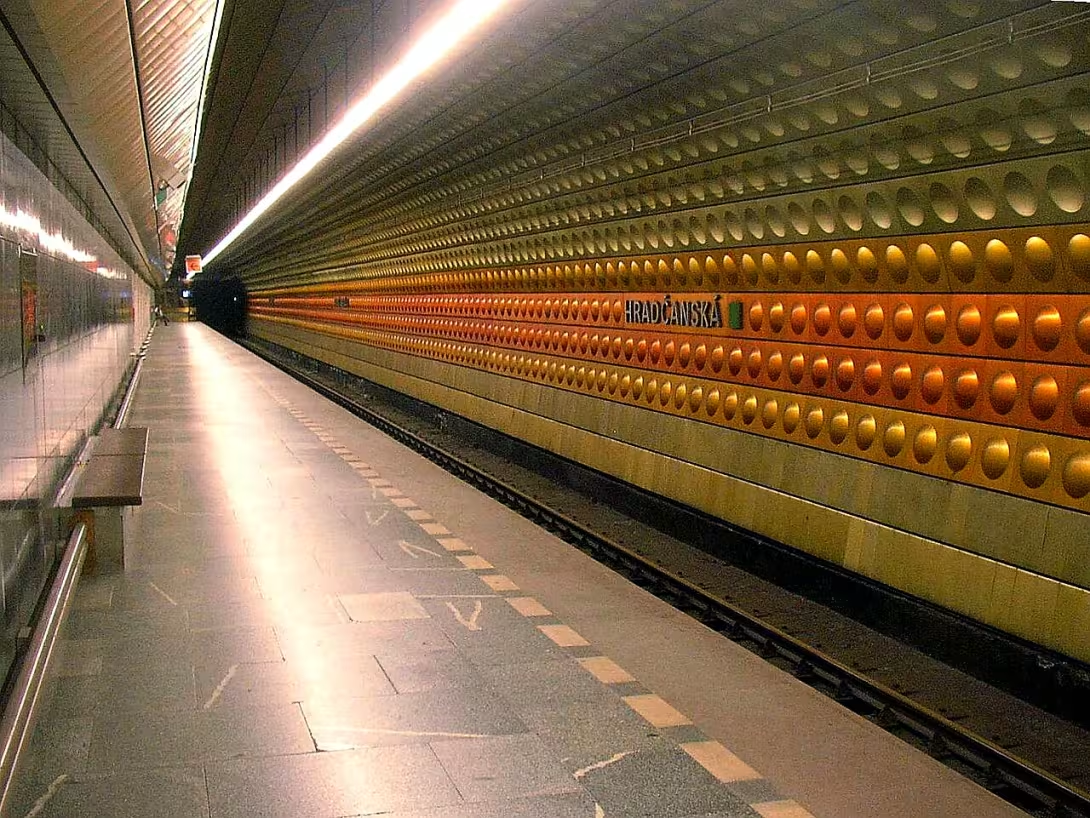
Hradčanská is a notable Prague Metro station located in the district of Hradčany, part of Prague 6. It opened on August 12, 1978, serving as an essential link between Dejvická and Malostranská stations on Line A. The station's importance extends beyond its role in public transportation; it also features distinctive architectural elements that reflect historical and cultural narratives.
The construction of Hradčanská was part of a broader initiative during the late 1970s to modernize Prague under communist rule, with significant investments aimed at enhancing urban infrastructure. It opened as part of Line A's inaugural section from Leninova to Náměstí Míru. This era marked extensive development in public transportation across Czechoslovakia, aiming to improve city connectivity and accessibility.
Architecturally, Hradčanská stands out with its modern design elements and materials. The station has a shortened central hall with nine pairs of passageways leading to the platform, located 43 meters below ground level. Its interior features aluminum panels that transition from orange to gold, reflecting the architectural style typical for this metro line section. Additionally, the vestibule is lined with yellow sandstone relief panels created by artists Petr Honzátko, Slavoj Nejdl, and Jiří Prádler. These panels depict significant events in Czech history, such as the coronation of Vratislav II, adding cultural depth to the station's design.
Initially named Obránců Míru after Milada Horáková, the station was later renamed Hradčanská to better reflect its geographical location near Prague Castle. The vestibule features a Czech lion carved into yellow stone and an inscription that reads "Veškerá moc v ČSSR patří pracujícímu lidu" ("All power in the CSSR belongs to the working people"), reflecting the political climate of the time.
Since its opening, Hradčanská has undergone several changes. Originally, it had a single exit toward Milady Horákové street but now features multiple exits on each side of the tram tracks and an additional exit directly onto Dejvická street. A planned second exit towards Dejvická street was considered but never realized.
Today, Hradčanská remains a vital part of Prague's public transportation network, conveniently located near a tram stop and bus station to facilitate easy transfers. Its proximity to cultural landmarks such as Prague Castle and the National Museum makes it an attractive point for both locals and tourists. The station’s unique architectural features and historical significance contribute to its appeal, offering visitors a glimpse into Czech history while serving as a functional transit hub.
Hradčanská is more than just a metro station; it is a testament to the cultural and historical narratives of Prague. Its distinctive design elements and strategic location make it a worthwhile visit for anyone exploring the city's rich heritage. Whether navigating through Prague or simply appreciating its architectural beauty, Hradčanská offers a unique experience that connects the past with the present.
Historical milestones
- 1978
- The station was opened to the public.
Architectural development
Constructed between 1973 and 1978, Hradčanská station features a modern design with aluminum cladding. The station's architecture includes a vestibule adorned with yellow sandstone relief panels depicting Czech history, created by artists Petr Honzátko, Slavoj Nejdl, and Jiří Prádler.
Historical events
The station opened on August 12, 1978, as part of the A Line extension in Prague.
Initially named Obránců Míru after Milada Horáková, it was later renamed Hradčanská.
Points of interest
- The station's design includes relief panels by artists Petr Honzátko, Slavoj Nejdl, and Jiří Prádler that depict significant events in Czech history, such as the coronation of Vratislav II, adding a layer of cultural storytelling to its architecture.
- Originally named Obránců Míru after Milada Horáková, Hradčanská was renamed to better reflect its geographical proximity to Prague Castle, highlighting the importance of location in naming conventions during that era.
- The station features an inscription "Veškerá moc v ČSSR patří pracujícímu lidu" ("All power in the CSSR belongs to the working people") carved into yellow stone, reflecting the political ideology prevalent at the time of its construction under communist rule.
- Although plans were made for a second exit towards Dejvická street, it was never realized. This incomplete project reflects the challenges and changes that can occur during urban development projects.
- The station's interior is adorned with aluminum panels transitioning from orange to gold, showcasing a distinctive architectural style typical of Line A in Prague’s metro system, which emphasizes modern design elements within public transportation infrastructure.
Guide
This guide is narrated by a synthetic voice generated by artificial intelligence.
Show guide text
This text was created by artificial intelligence and has not been editorially reviewed. It may contain inaccuracies.
Hradčanská is a station on the Prague metro line A, on the section designated as one A. It was opened on August 12, 1978. In the project, it was named Obránců míru according to the then name of Milady Horákové street. The option of Dejvická was also considered.
It is an excavated three-aisle station with a shortened central aisle. Nine pairs of passages lead to the platform, and the platform itself lies 43 meters below the surface. The station has one exit, an escalator tunnel with three-armed deep escalators. It leads to a tram stop of the same name and to a bus station. From here, you can also transfer to the Prague-Dejvice railway station.
The vestibule extends under the tram stop and the escalator tunnel enters it directly in the center. The platform is lined with aluminum anodized castings. They transition smoothly from orange to a golden shade, which is typical for this entire section of the line. Construction took place from 1973 to 1978 and cost 369 million Czechoslovak crowns.
The station's construction allows for a second vestibule to be added in the direction of Dejvická street. According to a plan from 1987, it was to be built around 1992, but after 1989 the project was cancelled. The second exit began to be considered again in connection with the fast rail to Prague airport. Hradčanská could indeed become an important transfer point between the metro and this rail.
The vestibule is lined with yellow tufa with reliefs depicting scenes from the history of the Czech state. Their creators are Petr Honzátko, Slavoj Nejdl, and Jiří Prádler.
One wall commemorates the coronation of Vratislaus the Second, the first Czech king. Nejdl's relief on it depicts an initial from the Vyšehrad Codex and the year of coronation 1085 written in Roman numerals. It is complemented by a historical coat of arms with a Czech lion and the Latin inscription In die ordinationis regis, meaning on the day of the king's coronation. In the same wall is also a stone ventilation grill by Prádler with a relief of a crown.
The second wall belongs to more recent history. On it is the Czech lion from the then new coat of arms on a shield, intertwined hands in a revolutionary gesture, and the inscription All power in Czechoslovakia belongs to the working people.
Tips for visitors
The best time to visit Hradčanská station and its surrounding area is during the late spring or early fall when the weather is pleasant, allowing you to comfortably explore Prague Castle and the National Museum without the summer crowds. Visiting in these months also offers a chance to see the gardens around Prague Castle in full bloom, providing a beautiful backdrop for your visit.
Transportation to Hradčanská station is convenient by both public transport and car. The station itself is well-connected through trams and buses, making it easy to reach from various parts of the city.
When planning your visit, consider bringing comfortable walking shoes as you'll likely be exploring on foot once at Hradčanská station and its vicinity. A camera or smartphone is also recommended for capturing the stunning architecture of Prague Castle and the intricate details of the National Museum. Don't forget to bring a water bottle and some snacks if you plan to spend several hours exploring.
For photography enthusiasts, the area around Hradčanská station offers numerous spots with excellent lighting, especially during the golden hour in the early morning or late afternoon. The view from the top of Prague Castle provides breathtaking panoramas of the city, making it a must-visit spot for capturing memorable photos.
Within a 30-minute walk from Hradčanská station, visitors can explore several cultural landmarks including Prague Castle and the National Museum. These sites offer a deep dive into Czech history and art, with Prague Castle's stunning architecture and the museum's extensive collections being highlights.
Frequently asked questions
Can the monument be visited?
We have not verified whether this monument is accessible. Please ask the owner or operator, or the local municipal office.
Where is the monument?
Location: Praha 6, Hlavní město Praha. The map on this page shows the exact spot.
Why is the monument protected?
It is listed in the Central List of Cultural Monuments of the Czech Republic as a cultural monument (register no. 2000007058).
Businesses nearby
Do you run a restaurant, accommodation, shop, museum, rental, wellness or other visitor service near this monument? Show yourself directly to the people heading to it — this is how they will see you in the app and on the web:
Events nearby

Zdroj akcí: otevřená data měst a obcí ČR (Národní katalog otevřených dat) a kalendář akcí Národního památkového ústavu.
Nearby
Hradčanská station is conveniently located near a tram stop and bus station, facilitating easy transfers. The area around the station includes cultural landmarks such as Prague Castle and the National Museum.
Accommodation nearby
Trips and activities nearby
Guided tours, tickets and activities nearby from GetYourGuide
Affiliate link: if you buy from the partner, we may receive a commission. The price for you does not change.
Search tours and activities →Themed route
Thematic Walking Tour: Hradčanská and Surroundings
1. Prague Castle (Pražský hrad) - Historical Landmark Begin your journey at the iconic Prague Castle, a UNESCO World Heritage site that has been a symbol of Czech statehood for over a millennium. Explore its stunning architecture, including St. Vitus Cathedral and the Royal Palace, which offer insights into the history and culture of Bohemia.
2. National Museum (Národní muzeum) - Cultural Institution A short walk from Prague Castle, the National Museum is one of the largest museums in Europe. It houses an extensive collection that covers natural sciences, history, art, and technology, providing a comprehensive view of Czech heritage and beyond.
3. Hradčanská Station - Transportation Hub Conclude your tour at Hradčanská station, conveniently located near both tram and bus stops. This transportation hub is not only practical for getting around but also offers views of the surrounding area, including glimpses of Prague Castle from its platforms.
This thematic route offers a blend of history, culture, and convenience, allowing you to immerse yourself in the rich tapestry of Prague's past while enjoying easy access to other parts of the city.
Seasonal recommendations
Spring: As spring arrives, Hradčanská's historic sites bask in the soft glow of longer days and gentle sunlight that accentuates their architectural details. The surrounding gardens begin to bloom with vibrant colors, creating a picturesque backdrop for visitors. This season often sees moderate crowds as people take advantage of the pleasant weather for outdoor activities. To make the most of your visit, wear comfortable walking shoes and light layers, as temperatures can vary throughout the day. Arriving early in the morning is advisable to enjoy a quieter experience before the midday influx.
Summer: Summer at Hradčanská offers long daylight hours that enhance the beauty of its historic structures with warm lighting, while lush greenery provides a refreshing contrast to the stonework. This is the peak tourist season, so expect larger crowds and plan accordingly. To avoid the heat and the busiest times, consider visiting in the early morning or late afternoon. Dress in light, breathable clothing, and don't forget sunscreen and a hat for sun protection. Staying hydrated is essential as you explore.
Autumn: Autumn brings a magical transformation to Hradčanská with its warm hues of reds, oranges, and yellows adorning the landscape. The cooler temperatures make it an ideal time for leisurely strolls through the historic grounds without the summer crowds. As daylight begins to wane earlier in the day, ensure you have adequate lighting if planning a late visit. Layered clothing is recommended to adjust comfortably to changing weather conditions throughout your exploration.
Winter: Winter cloaks Hradčanská in a serene blanket of snow, offering a unique and enchanting atmosphere that transforms its historic landmarks into picturesque winter scenes. The shorter days mean earlier closures, so plan your visit during daylight hours for the best experience. Expect fewer crowds compared to other seasons, providing a more intimate encounter with the sites. Dress warmly in layers, including a waterproof coat, gloves, and a hat, to stay comfortable while exploring the chilly beauty of Hradčanská in winter.
Visualizations and artistic views


The visualisations are generated by artificial intelligence and serve as inspiration.
Photos from the area
Real photos taken near the monument

Zdroj a licence jsou uvedeny u každého snímku.
Tips from visitors
No tips yet. Be the first!
Log in and add your tip.
Sources and literature
Photos: neuveden / CC BY-SA 3.0 — Wikimedia Commons. The author and licence also appear when you hover over the image.
Faktickým podkladem tohoto textu byl článek na Wikipedii, jehož autory jsou přispěvatelé Wikipedie. Článek je dostupný pod licencí CC BY-SA 4.0.
Location on the map
Příběhy a pověsti
Legendy, pověsti a příběhy spjaté s touto památkou
Fotografie návštěvníků
Zatím žádné fotografie. Buďte první, kdo přidá fotografii z návštěvy!
Log in a přidejte svou fotografii nebo hodnoťte.
Za ověřenou návštěvu v aplikaci získáte víc bodů — poznáme podle GPS, že jste na místě.
Reviews and comments