






Poliklinika v Břevnově Building
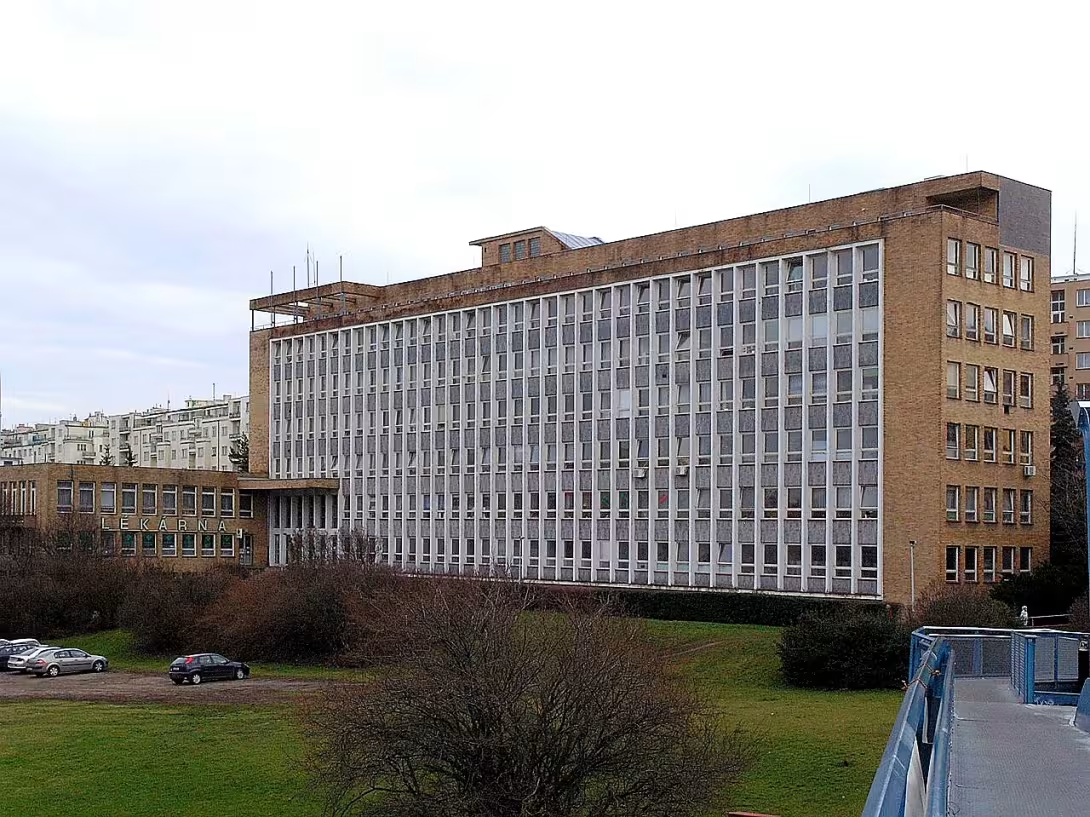
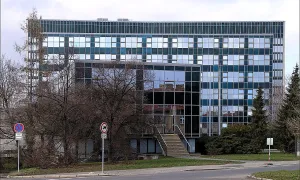
Poliklinika v Břevnově, located at the address Pod Marjánka 1906 / 12 in Prague 6-Břevnov, is a historical building built between 1961 and 1963. Its architecture combines late functional style with elements of socialist realism, which was typical of the post-World War II period in Central Europe. This building is a key part of local infrastructure and served as a health facility for the inhabitants of Prague 6.
The emergence of the clinic dates back to 1959-1960, when it was designed by Czech architect Richard Ferdinand Podzemný. The construction took place in the following years and was characterised by the style of socialist realism. This period was excellent for Czechoslovakia as the country was under the influence of the Soviet bloc, which also affected the architecture of the period.
Architecturally, the clinic is marked by its extensive and distinctive nature. The total floor area exceeds 6,800 m ², allowing 56 medical centres to operate. The building is made up of a monolithic iron concrete skeleton and compounded into a narrow terrain, which led to two floors and two off-level entrances. The main part of the building is five storey and optically dominates the low ground area. The facade is designed with distinctive interwindow pillars and risalites that give the construction a unique view character.
Some changes have taken place in recent decades. In 2008, the building was transferred free of charge from the State to the Ministry of Health of the Czech Republic on condition of operation of the medical facility until 2033. It was originally managed by a private company "Podríčinika Pod Marjánka," but was taken back in 2016 by the Ministry of Industry of the Czech Republic, which now manages it through SNEO.
Among the key events are the putting into service of the fifth grader in 1964. This circulatory elevator was manufactured by the mill machines factory and is part of the historical internal facility of the polio clinic. On the front facade of the building there is a ceramic mosaic from Lubor Těhnik and Anna Underground-Suchard, while above the entrance there is a sculpture of children with a ball from Vera Lamb-Duchy. These elements add cultural and artistic value to the building.
Today the clinic is in the process of reconstruction, which includes demolition of the low part of the existing building and the position of the new building. This renovation is necessary due to the poor technical condition of the original structure, which does not allow repairs to be carried out in operation. The planned reconstruction aims to improve and expand the offer of the clinic, including new services such as rehabilitation, pharmacy and laboratory.
Poliklinika v Břevnově is not only an important health facility for local residents, but also an architectural monument that reflects the history and cultural development of the region. Its unique construction and artistic elements make it an interesting destination for visitors to Prague 6. Visiting the clinic is an opportunity to become familiar with the architectural history and current development of local health.
Historical milestones
- 1964
- Setting up a fifth grader.
Architectural development
The liquor was designed between 1959 and 1960 by architect Richard Ferdinand Grounder. Its construction took place between 1961 and 1963, with the facade characterized by significant interwindow pillars and risalite. The interior contains a 1964 fifth-noster.
Historical events
- 1964
- Setting up a fifth grader.
- 2008
- Free transfer of the object from the state to the Ministry of Culture Praha 6.
- 2016
- Taking the clinic back to the Ministry of Health.
Owners
In 2008, the clinic was transferred free of charge from the State to the Ministry of Health of the Czech Republic, subject to the operation of the medical establishment until 2033. It was managed by a private company in 2010, but was recovered in 2016 by the Ministry of Finance of the Czech Republic.
Points of interest
- Poliklinika v Břevnově was built between 1961 and 1963. - Architecture combines late functional style with elements of socialist realism, which was typical of the period after World War II in Central Europe. - Total floor area exceeds 6,800 m ² and allows 56 medical centres to operate. - On the front facade of the building there is a ceramic mosaic from Lubor Těhnik and Anna Underground-Suchard, while above the entrance there is a sculpture of children with a ball from Vera Lamb-Duchy. - The operation of the fifth storehouse in 1964 was made by the mills of mill machines and is part of the historical internal facility of the clinic.
Guide
Show guide text
This text was created by artificial intelligence and has not been editorially reviewed. It may contain inaccuracies.
Welcome, distinguished visitors. Please stop for a moment and take a deep breath. You are standing in front of the building of the clinic in Břevnov, in the heart of Prague six. Maybe the first time you look at this building, you'll feel a sense of moderation and practicality. It's a building that doesn't scream with its beauty, but speaks the language of purpose and order. Look at its overall form. You see an object in front of you that was designed to serve thousands of people, to make it clear and that everyone could find a way to help. It's a place where architecture meets health care, and that's where the real value lies.
Now let's go back a few decades together to understand why this building looks just like this. Poliklinika v Břevnově was built between 1961 and 1963. Imagine that time. The world was slowly changing, Central Europe was recovering from the wounds of World War II, and a new type of urban planning began in Prague. At that time, it was a priority to create an accessible infrastructure for citizens so that they did not have to travel far beyond basic services. This is why this clinic was created as a key health facility for people living in this part of Prague. The author of this project was architect Richard Ferdinand Podzemný. His mission was not to create a memorial for the chosen but functional space for all. The Grounder has inserted his vision of modern health care into this project, where the patient's journey to the doctor is as short as possible and the environment is as clean as possible.
Now pay attention to the architecture itself. If you look at the facade and the overall composition of the building, you will notice that it is dominated by a late functional style. Functionalism, as the name suggests, says that the form must follow the function. This means that the building has no unnecessary ornaments that would simply waste material or time. Everything you see has a practical reason. At the same time, you will find elements of socialist realism in the details and overall radiation of the building. This direction was very typical in the period after World War II in Central Europe. It combined the desire for modernity with a certain monumentality and emphasis on collective benefit. Feel this combination. It is a fascinating conflict of two approaches, where a barren functional approach meets the period aesthetics of state architecture. Look at the line of the building, its rhythm and the way it stretches in space. It is an architecture that was supposed to create a sense of stability, reliability and state care for a citizen.
Although we do not know the specific names of the famous personalities who would practice here, it is important to note that the real heroes of this place are the thousands of inhabitants of Prague six and hundreds of doctors and nurses who have worked here for decades. This building is not just the rest of the concrete cast, but a living organism. Imagine how many human destinies have intersected here. How many parents came here with hope with their children, how many seniors found relief from pain and how many young people received the first medical advice. The alcohol has become an inseparable part of the commune community. It's a place that unifies generations. When you look at the building, don't just remember it as a 1961 building, but as a silent witness to everyday life in Prague.
Now, I want to take you to something that's really special for this building and what you may not see at first sight, but that carries some charm and secrets. Let's talk about the technique of that time. In 1964, shortly after the construction was completed, the so-called paternoster was put into service in the clinic. If you've never had the pleasure of meeting him, imagine an elevator that doesn't have a door and its cabins don't just move up and down, but they move in a constant, infinite circle. It is a machine that never sleeps, continuously rotates, and offers a path between floors in a rhythm that is now almost forgotten. The paternoster is basically the mechanical heart of the building. At the time of its introduction, it was the peak of efficiency and modernity. For many visitors to the clinic, this lift was a small adventure, and for employees it was a daily routine. It's a fascinating element that gives the building dynamism and reminds us of how space movement was approached in the 1960s.
When you realize the scale of this building, you'll find that its size is really impressive. The total floor area exceeds six thousand eight hundred square meters. This is a huge space that has been carefully arranged so that up to fifty-six different medical workplaces can be operated. Imagine the complexity. One building focused on care from many different fields, which made the clinic a real health center for the whole neighborhood. Everything was designed so that the patient could deal with most of his needs within one building, which at that time represented a great deal of progress in the organisation of health care.
Now that you know the story of this building, its architect Richard Ferdinand Underground and its technical attractions, I suggest you walk around the building slowly. Feel her atmosphere and try to imagine what the street looked like in 1963 when the clinic first opened. Look at how the building fits into the vicinity of Brevnov and how it survived decades of changes in our state and society. Even though there are more modern clinics today with the latest technology, this building contains the truth about its time and about the people who built it with love and responsibility.
Thank you for your attention and for spending these moments with me at the Břevnov Medical Center. I hope you are interested in this short journey into history and that you are now looking at this building with different eyes. It is proof that even in simplicity and functionality you can find beauty and meaning. There's nothing limiting you now. You can continue to explore the beautiful corners of Prague six, maybe stop in the nearby area or go further to the other architectural gems of our city. I wish you a pleasant walk and a beautiful day. Goodbye.
Tips for visitors
The best time to visit is in the morning or late afternoon, when the most favourable light falls on the facade of the building, which will highlight its architectural details.
The building is available by car and public transport; We recommend checking the current connection and parking possibilities in the area.
When visiting, we recommend taking a photographic machine and comfortable shoes to walk around the building.
For the best pictures, focus on elements of late functional style and details of socialist realism that are typical of the period of construction.
For families with children, the place is suitable as a short stop when getting to know the architecture of the last century. There are no other recommended sites listed in the available supporting documents.
Businesses nearby
Do you run a restaurant, accommodation, shop, museum, rental, wellness or other visitor service near this monument? Show yourself directly to the people heading to it — this is how they will see you in the app and on the web:
Events nearby

Zdroj akcí: otevřená data měst a obcí ČR (Národní katalog otevřených dat) a kalendář akcí Národního památkového ústavu.
Nearby
🏰 Historic sites (1691)
- Josef Škvorecký 0.3 km
- Josef Škvorecký 0.4 km
- Jan Patočka 0.4 km
- Popmuseum 0.4 km +420 603 419 198 web
- Hynečkovi 0.6 km
- Wilhelm Halpern 0.7 km
- Břevnovský klášter 0.7 km +420 220 406 111 web
- Rothmayerova vila 0.7 km +420 224 312 012 web
- Galerie Entrance 0.8 km web
- svatý Jan Nepomucký 0.8 km
- sv. František z Assisi 0.9 km
- vlk z Gubbia 0.9 km
- Malovanka 1.0 km
- sovětský vojín; neznámý vojín; Jan Krasanovský; František Šaparatka; Josef Lesák 1.1 km
- Jan Žižka 1.1 km
- Alois Kříž; Jaroslav Mračno 1.1 km
- František Běhounek 1.1 km
- Müllerova vila 1.2 km Nad hradním vodojemem 642/14 +420 224 312 012 web
- Skalka 1.3 km
- Judr. Josef Kocman 1.4 km
🍽️ Restaurants and dining (5383)
- Valcha Restaurant 0.1 km web
- U Slávisty 0.1 km Bělohorská 1688/122
- Hasu Sushi 0.1 km Bělohorská 221/13
- China & Sushi Restaurant 0.2 km
- KLUB 66 "Radost" 0.2 km Břevnovská 1088/5 +420 727 977 880 web
- Pivnice a bar u koně 0.2 km
- Pizza Raketou 0.2 km web
- Kebab Břevnov 0.2 km Bělohorská 240/81
- Pizza Pazza 0.2 km
- U Bílého Lva 0.2 km Bělohorská 241/79 +420739014040 web
- IPPA Café 0.3 km Bělohorská 724/134 web
- TASTY Döner Kebab like in Istanbul 0.3 km Konecchlumského 672/9 +420 775 352 122 web
- Tandoor 0.3 km Konecchlumského 672/9 +420 233 313 000;+420 775 325 766 web
- Pho Nam Nam 0.3 km Konecchlumského +420728494739;+420790662081 web
- U Malého slona 0.3 km web
- Aluha 0.3 km web
- New Peking 0.3 km Radimova 28 +420606530938
- Na Markétě 0.3 km Radimova 40 +420 272 653 169 web
- Restaurace Břevnovka 0.3 km Patočkova 57 +420 725 438 393 web
- Hostinec Drinopol 0.4 km Bělohorská 493/63 +420 245 006 126 web
🏨 Accommodation (803)
- Hotel Valcha 0.1 km Bělohorská 224/107
- Hotel U Sládků 0.2 km
- Hotel Hormeda 0.4 km +420220513604 web
- DownTown Suites 0.7 km Bělohorská 1390/50 web
- Adalbert 0.7 km +420 220 406 170 web
- Spiritka 0.8 km +420 233 337 628
- Penzion Chaloupka 0.9 km Nad hradním vodojemem 794/83 +420 220 511 761 web
- Pyramida 1.0 km Bělohorská 24 +420 233 102 111 web
- Fairy-Tale Prague From Lev i Sova 1.0 km web
- U Staré cesty 1.1 km Nad hradním vodojemem 11/29 +420 602 250 044 web
- Discounts Prague Hotel 1.1 km Cukrovarnická 64 +420 212 241 943 web
- HC Hvězda Praha 1.2 km Na Rozdílu 1
- Hotel Avion 1.4 km KLADENSKÁ 115 +420220188800 web
- Avion 1.4 km
- Hotel Coubertin Garni 1.5 km
- Residence Jana 1.5 km
- Lindner Hotel Prague Castle 1.5 km Strahovská 128 +420 222 539 539 web
- Hotel Savoy 1.6 km Keplerova 6
- Hotel Monastery 1.7 km Strahovské nádvoří 13
- Kavalír 1.7 km
🚲 Rentals and sport (526)
- Fitness 0.2 km
- Bike tunel 0.6 km Bělohorská 261/37 +420 233 354 555 web
- T.J. Sokol Břevnov-Hradčany 0.8 km
- TJ Tatran Střešovice 0.9 km +420 603 448 250 web
- InlineCentrum 1.0 km +420 601 584 223 web
- Stadion Markéta 1.1 km
- Rugby Club Tatra Smíchov 1.1 km
- Sportovní klub Čechie Smíchov 1.1 km
- Sportovní klub Střešovice 1911 1.2 km web
- Paintballgame 1.2 km
- Blitz Flitz 1.2 km
- JB Sport 1.2 km Na Rozdílu 1 +420 739 095 312 web
- Beach Praha Arena 1.2 km Chodecká 1230 +420 233 109 306 web
- Koupaliště Petynka 1.2 km
- Cordeus 1.3 km Na Dlouhém lánu 11
- FK Sparta Košíře 1.3 km
- Sportovní klub Hradčany 1.4 km Diskařská 294/1
- Bike Gallery 1.4 km Kladenská 19
- Bikestar 1.6 km web
- Cyklo Elbi 1.7 km
🥾 Hiking and nature (471)
- Park Josefa Škvoreckého 0.3 km
- Klášterní zahrada 0.7 km web
- Vojtěška 0.8 km web
- Rozhledna Šiška 0.9 km
- jídelní tramvaj T3 1.3 km
- Skalka 1.3 km
- Strouhalák 1.6 km
- Nicholase Wintona 1.8 km
- Velká strahovská zahrada 1.8 km
- Loretánská zvonohra 1.9 km
- Červený vrch 1.9 km
- Horní Lumbeho zahrada 1.9 km
- Petřínská rozhledna 2.0 km web
- Petřín 2.0 km
- Medvědárium 2.1 km
- Černá hora 2.1 km
- Masarykova vyhlídka 2.2 km
- Petřínka 2.3 km
- Plečnikova Pyramida 2.3 km
- U Stožáru 2.4 km web
Accommodation nearby
Trips and activities nearby
Guided tours, tickets and activities nearby from GetYourGuide
Affiliate link: if you buy from the partner, we may receive a commission. The price for you does not change.
Search tours and activities →Themed route
Thematic cruise route "History and architecture of Břevnova"
1. Poliklinika v Břevnově (building) - Type: Historical building - Why is it worth visiting: This building is an example of modern use of historical structures. Originally it was part of the monastery complex and today it serves as a medical object, which shows the transformation of urban architecture over the years.
2. Břevnov Monastery - Type: Historical monastery complex - Why is it worth a visit: The monastery is the oldest in Prague and has a rich history dating back to the 10th century. Its garden and ancient buildings offer a view of the life of monks in the past and are an important cultural monument.
3. March courtyard - Type: Historical courtyard - Why is it worth a visit: The reservoir is the central point of the monastery area and offers a beautiful view of Gothic architecture. It is a place where cultural events and festivals take place today.
4. March Tower - Type: Historical tower - Why is it worth visiting: The tower is one of the oldest elements of the monastery complex and provides a view of the surrounding Prague. It's an ideal place for those who like history and architecture.
5. Monastic Garden - Type: Historical garden - Why is it worth a visit: The garden is an example of the monastery gardening and offers quiet rooms to relax. It's a place where you can relax and appreciate the beauty of nature in a historical context.
This route allows you to discover the history and architecture of Břevnova and its surroundings.
Seasonal recommendations
Spring: In the spring period Poliklinika v Břevnově is bright because of the sunlight, which decorate its historical architecture with vivid colours. Flowers around the building begin to grow and add landscape beauty. At this time, the atmosphere is calm, because the crowd is not as much as in the summer months. We recommend visiting this monument in the afternoon, when the sun illuminates the building most beautifully. It is advisable to prepare light clothes with a warm coat for cooling spring winds.
Summer: In the summer months Poliklinika v Břevnově is a popular destination thanks to long sunny days and warm weather. The personality of this season is the experience of walking around the park in the presence of flowering trees and bushes. During the main summer season more visitors may appear, so it is good to visit the memory early in the morning or later in the evening. We recommend sunflower and tie for sun protection.
Autumn: In the autumn period, Poliklinika v Břevnově offers a different experience when tree leaves begin to fall and create a colorful carpet on the ground. Solar lighting is less intense, which adds a calm atmosphere. At this time the crowd is decreasing, allowing a more relaxed walk. We recommend wearing warm clothes and perhaps an umbrella because it can be cold and sometimes rainy.
Winter: During winter Poliklinika v Břevnově is covered with snow, which adds a magical atmosphere. The sunlight is weaker and the days are shorter, so it is advisable to visit the memory during the sunny season. Opening hours may be limited due to winter conditions. We recommend to wear warm clothes, including fur and hat, and prepare for shorter tours thanks to smaller daily hours.
Visualizations and artistic views

The visualisations are generated by artificial intelligence and serve as inspiration.
Photos from the area
Real photos taken near the monument


Zdroj a licence jsou uvedeny u každého snímku.
Tips from visitors
No tips yet. Be the first!
Log in and add your tip.
Sources and literature
Photos: Matěj Baťha / CC BY-SA 2.5 — Wikimedia Commons. The author and licence also appear when you hover over the image.
Faktickým podkladem tohoto textu byl článek na Wikipedii, jehož autory jsou přispěvatelé Wikipedie. Článek je dostupný pod licencí CC BY-SA 4.0.
Location on the map

Příběhy a pověsti
Legendy, pověsti a příběhy spjaté s touto památkou
Fotografie návštěvníků
Zatím žádné fotografie. Buďte první, kdo přidá fotografii z návštěvy!
Log in a přidejte svou fotografii nebo hodnoťte.
Za ověřenou návštěvu v aplikaci získáte víc bodů — poznáme podle GPS, že jste na místě.
Reviews and comments