






Ladronka Homestead
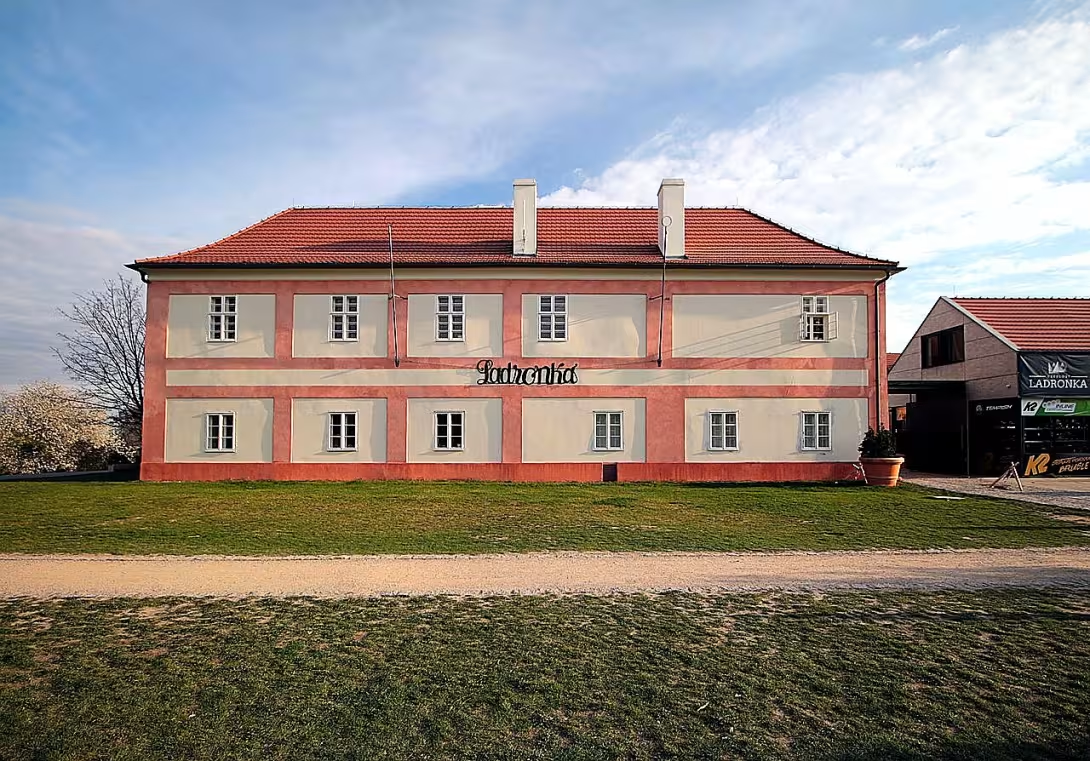
Ladronka, one of the most famous Prague settlements, is located in the city area Praha 6. It is remarkable by a rich history dating back to the 14th century. Originally there was a vineyard press founded by Charles IV, which made the place an important point in the late Middle Ages. Later, the estate was named after Count Philip Ferdinand de la Crone, who purchased land here in 1688 from Baron Švihovský. The name may also be associated with the Italian word "ladrone," meaning robbers. Ladronka has gone through several stages of use - from a tourist inn to modest flats - and today it serves as a cultural and social centre.
The origin of the estate is closely linked to the historical context of the late Middle Ages in Czech countries. The original building, the vineyard press founded by Charles IV, reflected the importance of wine-growing and wine-growing traditions. Later, in the Baroque era, the estate became part of a vast estate belonging to Count Philip Ferdinand de la Crone, who named it after his nickname. This historical context shows the variable nature of the property and its different functions over time.
From an architectural point of view Ladronka has undergone several transformations. After the destruction of the original vineyard press, a touring inn was built on the grounds, which served until the second half of the 19th century. Over the years, the estate has been decaying, resulting in its use as a warehouse and later as a housing complex for a poor colony. The complex reconstruction carried out in 2004-2005 turned the building into a modern cultural-social centre offering diverse cultural and leisure activities.
The property of the estate has undergone many changes. After her purchase by Count Filip Ferdinand de la Crone in 1688, she was later purchased by the Grand Prior of the Order of Maltese Knights, Count Volf Pötting of Persing. This family is closely associated with the history of the nearby estate of Petynka. After 1922, Ladronka transferred to the capital of Prague, reflecting changes in the political and social environment. In 1993 the estate was occupied by squatters who sought to create an Autonomous Cultural and Social Centre.
The key events include the sale of the land to Count Filip Ferdinand de la Crone in 1688 and the use of the surrounding area for burial of the victims of the plague in 1713. An important event was also the occupation of squatters in 1993, who wanted to establish a non-commercial cultural centre. This initiative led to the subsequent violent eviction of squatters in 2000 and the subsequent comprehensive reconstruction of the estate, which was completed in 2005.
Today Ladronka works as a cultural and social center with a large park, which is a popular place for skaters and other leisure activities. The area was extended with new inline tracks and barrier-free underpasses, which increased its attractiveness. Ladronka is also home to the unconventional steel view tower Šiska, which attracts visitors with its unique architecture.
Ladronka is worth visiting not only because of its history and cultural activities, but also because of its importance as a place for leisure activities. This is an example of the successful reconstruction and revitalization of the historical building, which serves both community and tourists. This monument is not only a witness of the past, but also a living centre of the present, where various generations and cultural scenes can meet.
Then and now
Drag the slider to compare how the landmark may have looked when it was built with the view today.
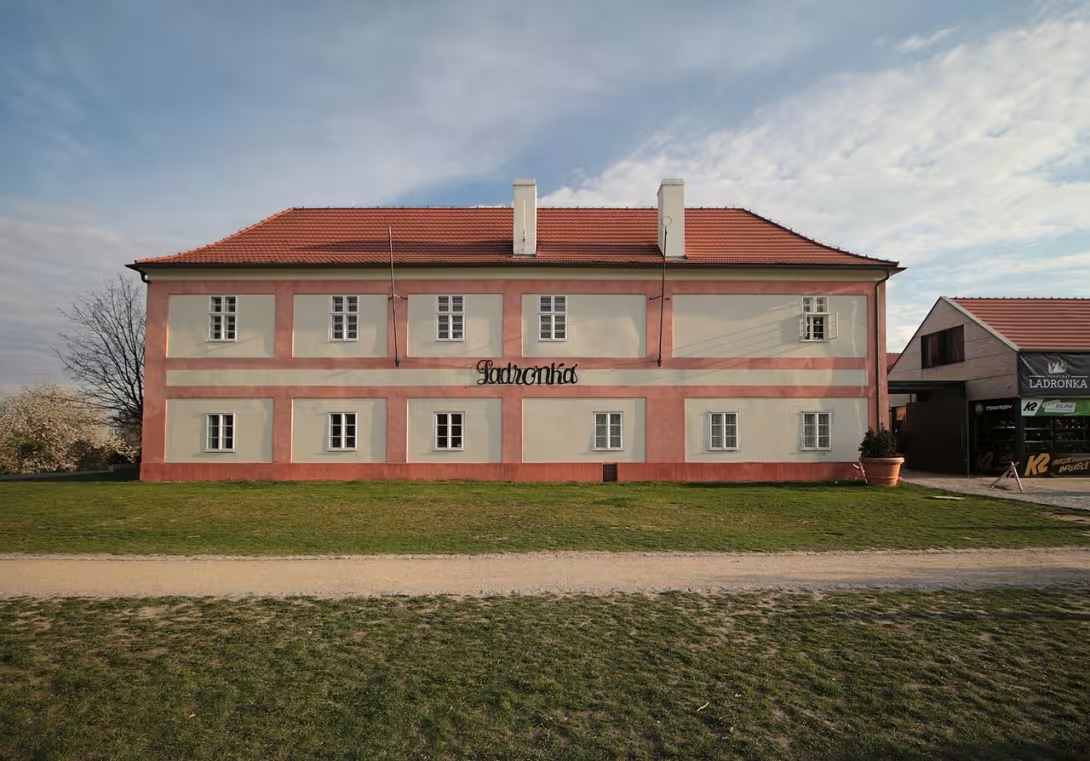
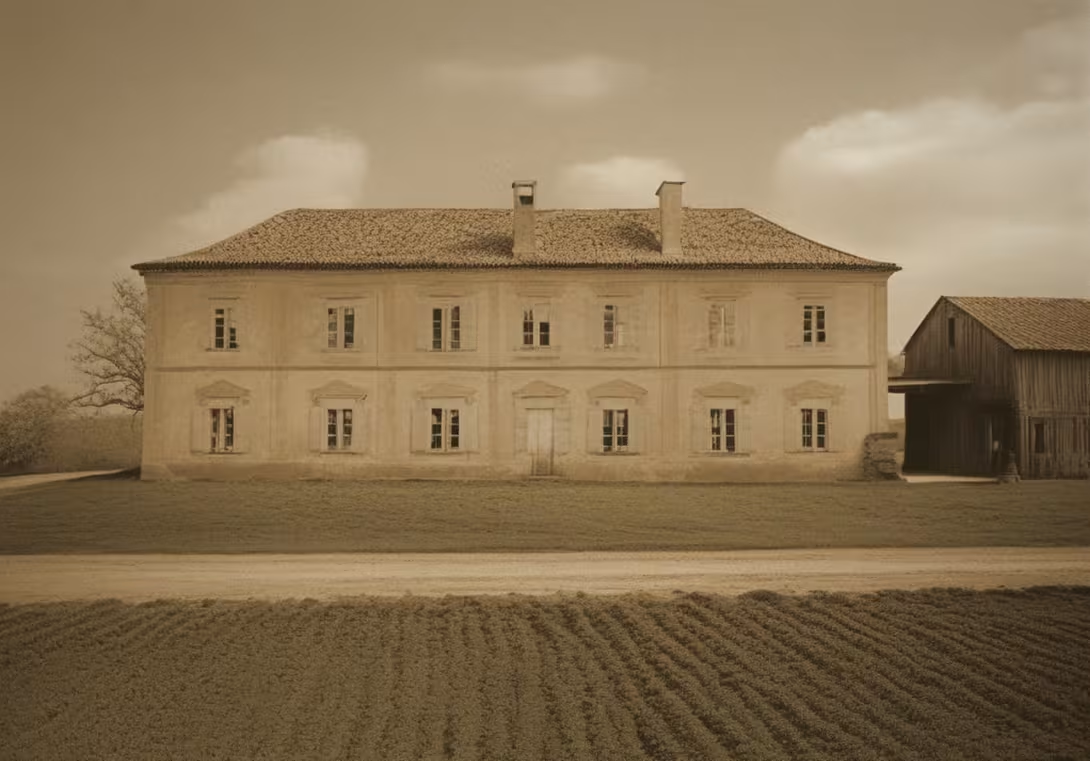
The historical appearance on the left is an AI-generated visualisation and serves as inspiration only.
Historical milestones
- 1688
- Sale of land to Count Philip Ferdinand de la Crone.
- 1713
- The use of the neighborhood of the estate for burial victims of the plague.
- 1922
- Transfer of the estate from the hands of the order of Maltese knights to the property of the capital of Prague.
- 1964
- Declaration of the estate a cultural monument.
- 1993
- Occupation of squatters and establishment of the Autonomous Cultural Social Centre.
- 2005
- Opening of a newly renovated cultural-social centre.
Architectural development
The wine press originally stood at the site of the 14th century. Later, a traveling inn was built. After the period of decaying and use as a warehouse, the estate underwent a comprehensive reconstruction into the cultural centre between 2004 and 2005.
Historical events
1688: sale of land to Count Filip Ferdinand de la Crone; 1713: use of the surrounding area for burial of the victims of the plague; 1993: occupying the squater object; 2005: opening of a new cultural centre.
Owners
Baron Švihovský (until 1688), Count Filip Ferdinand de la Crone (since 1688), Order of Maltese Knights (from the beginning of the 18th century to 1922), Capital Prague (from 1922).
Points of interest
- Originally here in the 14th century was a vineyard press founded by Charles IV. - The name of the estate may be associated with the Italian word for robbers or with Count Filip Ferdinand de la Crone. In 1713, the area was used to bury the victims of the plague. - In 1993 the estate was occupied by squatters who sought to create a non-commercial cultural centre. - There is an unusual steel view tower called Šiska.
Guide
Show guide text
This text was created by artificial intelligence and has not been editorially reviewed. It may contain inaccuracies.
Welcome to Ladronce, one of the most distinctive monuments in Prague 6, which you have just discovered. You're standing in front of a vast complex surrounded by a park where history intersects with modern life. The Ladronka estate is home to a cultural-social centre that offers many possibilities for meetings and inspiration.
Ladronka has a rich history dating back to the 14th century, when the vineyard press Charles IV was founded there. This first building act laid the foundations for a long series of transformations and purposes served by the estate. In 1688 the land was sold to Count Filip Ferdinand de la Crone, which brought new chapters in its history. Remarkable that in 1713 the vicinity of Ladrona became a place to bury the victims of the plague, adding a deep layer of the past to the premises.
Architecturally, Ladronka is not associated with a particular architect, but its facade and overall design are indicative of long-term use and modifications. Look up at the windows and doors that tell stories of past generations, and the perception of the atmosphere of this place is extremely rich.
The key personalities in Ladronka's history are of course Karel IV., which laid the foundations for future land use, and Filip Ferdinand de la Crone, whose name is associated with the name of the estate. In 1922 the complex was transferred from the hands of the Order of Maltese Knights to the property of the capital of Prague, which was an important moment in the history of Ladronka. In 1964 the estate was declared a cultural monument and in 1993 it became the centre of activism, when squatters occupied the premises and established the Autonomous Cultural Social Centre. This act has brought a new life to Ladrona, which continues to this day.
An interesting feature is the name of the estate, which can be linked either to the Italian word for the robber or to Count Filip Ferdinand de la Crone. This mystery adds another layer of mystery and attraction to Ladronce.
Now that you have approached this fascinating monument, we invite you to explore its interiors and its outer space. Ladronka offers many possibilities for meetings and inspiration, from artistic events to social gatherings. Look around, notice the details and let the history and atmosphere of this unique place influence you.
Thank you for your visit to Ladrone. We hope you have found inspiration and new experiences during your walk. Let this area reach you on the exact path, or you will return to us with new questions and curiosity. Goodbye!
Tips for visitors
For the best experience we recommend a visit in late afternoon hours, when the sun illuminates the historical architecture beautifully and the surrounding atmosphere is quiet. It is ideal to visit a place during spring or autumn when nature is the most colorful in the park.
You can reach the place by car or use public transport. Check current connections and transfers in the Internet search engine or in the mobile application of the transport company. Parking nearby is possible, but we recommend looking for reserved places near the park.
For comfortable movement around the area, wear comfortable shoes and remember to bring drinking water. If you are taking photos, the best pictures will be taken near the estate itself or in the park, where you will use the natural light of the historic facades.
In the surrounding area you can visit the park Ladronka, Vypich or explore Břevnovská villa building. For families with children, the place is ideal thanks to large green areas in the park that offer space for free movement and relaxation in nature.
Businesses nearby
Events nearby

Zdroj akcí: otevřená data měst a obcí ČR (Národní katalog otevřených dat) a kalendář akcí Národního památkového ústavu.
Nearby
Břevnov residential building, park Ladronka, Vypich.
Accommodation nearby
Trips and activities nearby
Guided tours, tickets and activities nearby from GetYourGuide
Affiliate link: if you buy from the partner, we may receive a commission. The price for you does not change.
Search tours and activities →Themed route
1. Vypich, locality: Great start of walking in this part of Prague. 2. Břevnovská villa building , architecture: A tour of interesting buildings that make up the typical appearance of the surroundings. 3. Park Ladronka, green area: Ideal place to relax in a pleasant environment. 4. Ladronka, homestead: Main destination trip, historical monument.
Seasonal recommendations
In spring Ladronka September new greenery and flowering gardens. Soft morning light highlights the facade details and creates a fresh, optimistic atmosphere. We recommend visiting the monument in the morning, when the park is quiet and the air is the cleanest. Due to the variable weather, it is preferable to choose layered clothes.
The summer season brings a radiant sun and a deep shadow of old trees that provide relief from heat. The atmosphere is full of life and bright colors. In order to avoid the biggest crowds and the highest temperatures, it is best to come at the opening. Remember light, breathable clothes and plenty of fluids.
The autumn of Ladronku covers the golden and red shades of leaves, giving the whole place a nostalgic and romantic touch. A fog wound creates a mysterious mood that matches the history of the estate. Practical recommendations are waterproof shoes and warm shawl, the best time for walking is late afternoon.
In winter, the monument works calmly and sharply, especially if it is covered by a layer of snow. The contrast of the white landscape and carefully maintained buildings creates a unique visual experience. In advent time, the atmosphere is cosy, but don't forget to wear very warm clothes and thermobrush. Pay attention to the shorter opening times that apply during this period.
Visualizations and artistic views


The visualisations are generated by artificial intelligence and serve as inspiration.
Photos from the area
Real photos taken near the monument


Zdroj a licence jsou uvedeny u každého snímku.
Tips from visitors
No tips yet. Be the first!
Log in and add your tip.
Sources and literature
Fotografie: VitVit / CC BY-SA 4.0 — Wikimedia Commons. The author and licence also appear when you hover over the image.
Faktickým podkladem tohoto textu byl článek na Wikipedii, jehož autory jsou přispěvatelé Wikipedie. Článek je dostupný pod licencí CC BY-SA 4.0.
Location on the map
More monuments – Praha 6
Show all in the municipality

Příběhy a pověsti
Legendy, pověsti a příběhy spjaté s touto památkou

Fotografie návštěvníků
Zatím žádné fotografie. Buďte první, kdo přidá fotografii z návštěvy!
Přihlaste se a přidejte svou fotografii nebo hodnoťte.
Za ověřenou návštěvu v aplikaci získáte víc bodů — poznáme podle GPS, že jste na místě.
Reviews and comments