






Hradecká brána (Opava) Gate
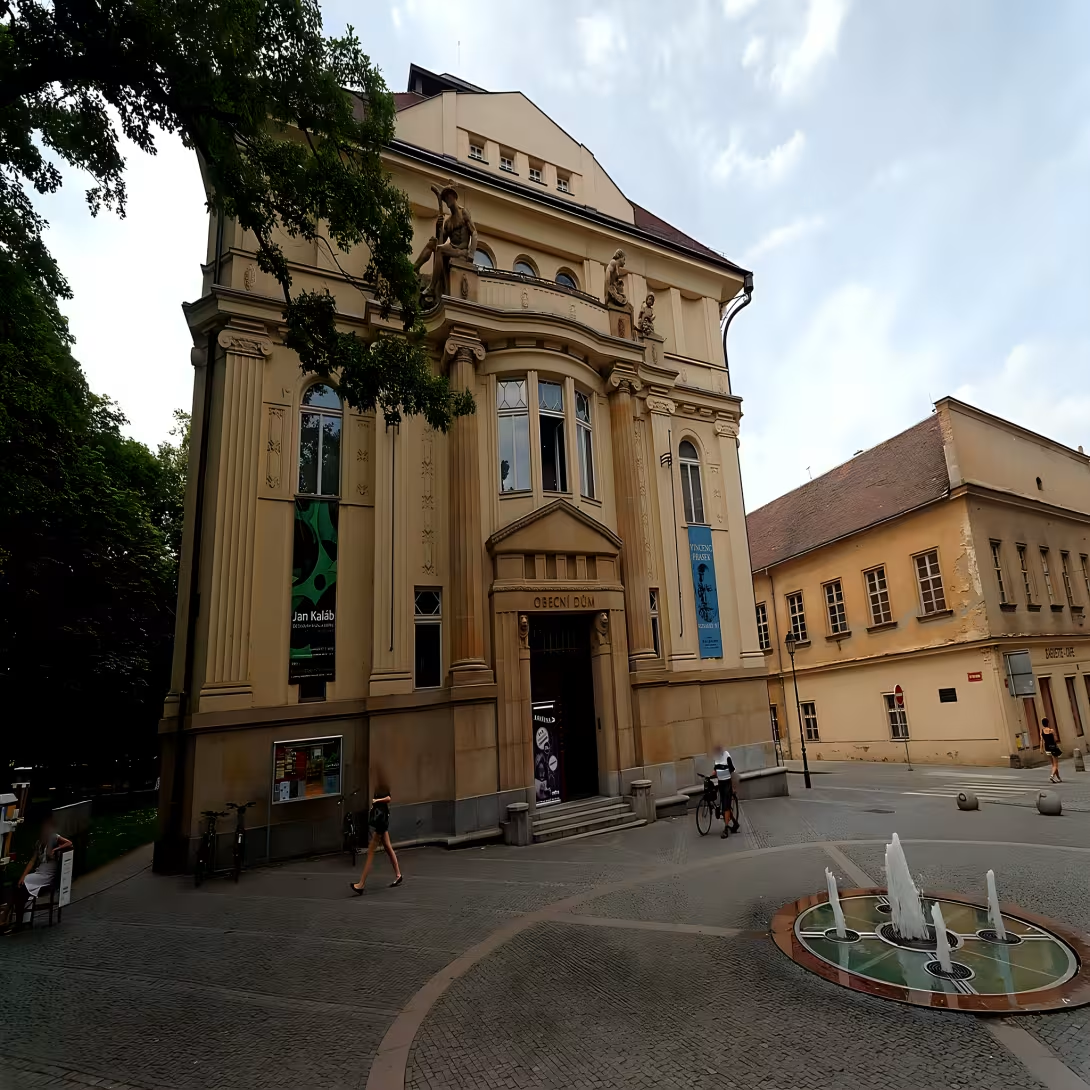
Objekt se nedochoval — na místě dnes nestojí. Následující text popisuje jeho historii, ne současnou návštěvu.
Hradecká brána, originally known as Hvozdnická brána, was a key feature of Opava's medieval fortifications. Situated where Ostrožná Street meets Svobody Gardens, it served as an access point to the city from the southwest. Constructed in the latter half of the 13th or early 14th century, it played a crucial role in Opava's defense and urban development. Although now demolished, remnants like Schinzelův dům offer insights into its historical significance.
The origins of Hradecká brána are linked to the expansion of Opava's southern city center during the late medieval period. This era saw increased fortification efforts across Central Europe as regional powers sought to consolidate territories and protect against internal conflicts and external threats. The gate likely emerged later than other city gates, reflecting strategic urban planning that included Ostrožná Street, providing access from the southwest to Horní náměstí.
Architecturally, Hradecká brána was notable for its two towers. The older one is documented before 1372 as part of the main city wall. The second tower was constructed in the late 14th century as part of a parkan wall system, enhancing defensive capabilities. In the 16th century, further fortifications were added, including a barbican with a third tower and fortified bridge, reflecting evolving military architecture. By 1626-1627, bastion fortifications had been integrated into the structure, marking its final phase of development.
Throughout its history, Hradecká brána underwent modifications to adapt to changing defensive needs. Initially serving as a critical entry point, it was enhanced with structures like the barbican and bastions to bolster protection. Despite these enhancements, by the 17th century, maintenance ceased, leading to gradual neglect and eventual demolition starting in 1829.
Today, the site of Hradecká brána is part of Svobody Gardens in Opava, a city celebrated for its historical architecture and cultural heritage. While the gate itself no longer stands, its legacy endures through structures like Schinzelův dům. Visitors to Opava can explore this area to appreciate the historical context and architectural evolution that once defined Hradecká brána.
Hradecká brána's story is a testament to the dynamic history of medieval fortifications in Central Europe. Its remnants invite modern visitors to reflect on the past while enjoying the cultural richness of Opava. For those interested in history and architecture, exploring this site offers valuable insights into the region's historical development.
Then and now
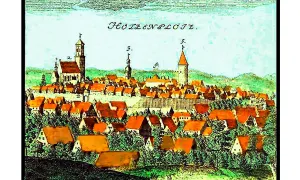
Drag the slider to compare how the landmark may have looked when it was built with the view today.
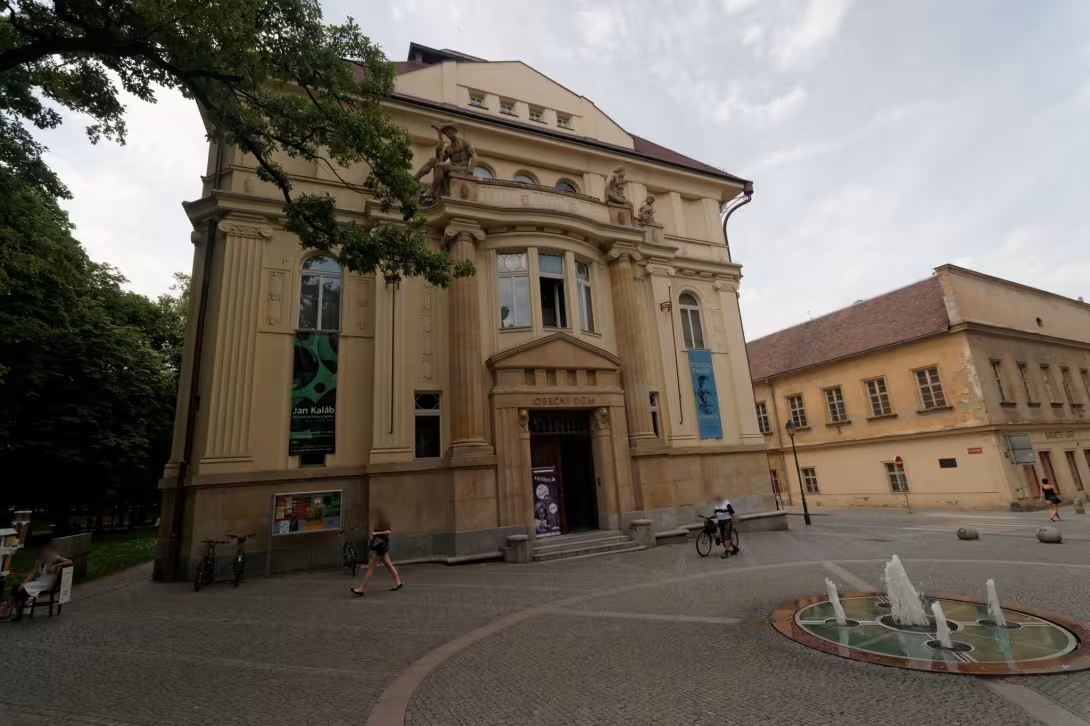
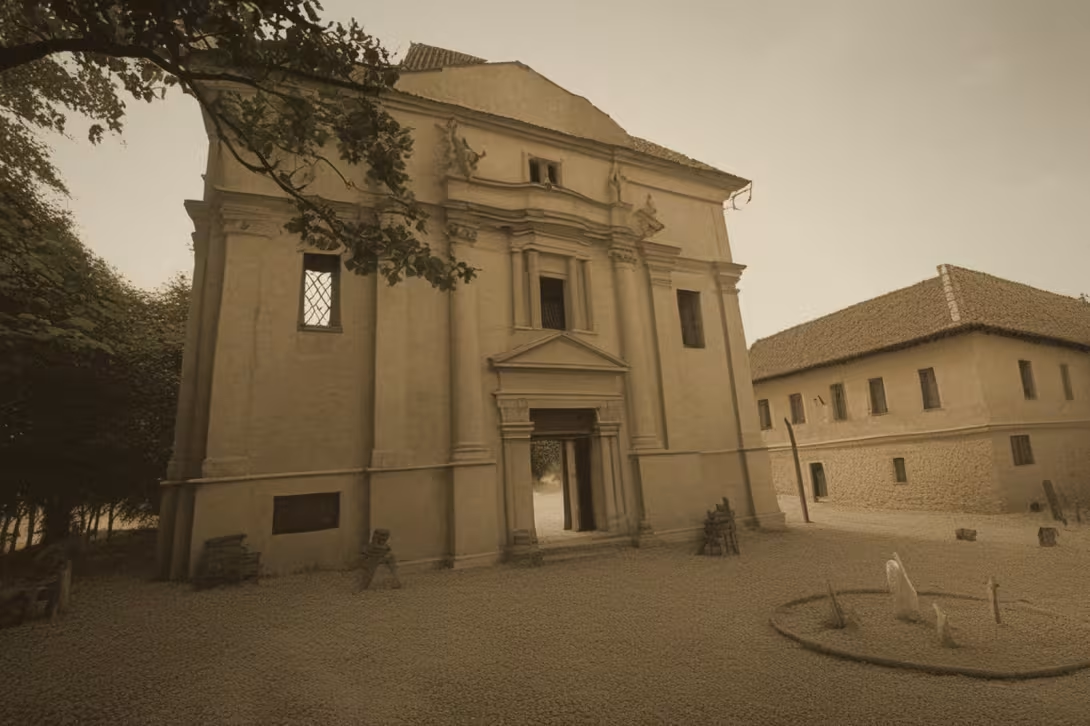
The historical appearance on the left is an AI-generated visualisation and serves as inspiration only.
Historical milestones
- 1372
- The older tower was first mentioned in documents.
- late 14th century
- Construction of the second tower as part of a parkan wall system.
- 16th century
- Addition of a barbican with a third tower and fortified bridge.
- 1626-1627
- Bastion fortifications were added.
Architectural development
Hradecká brána's construction likely occurred in the latter half of the 13th or early 14th century. It initially featured two towers, with the older one predating 1372. The second tower was part of a parkan wall built at the end of the 14th century. In the 16th century, a barbican and additional defensive structures were added, culminating in bastion fortifications by 1626-1627.
Historical events
The older tower was mentioned in documents before 1372 and formed part of the main city wall.
In the late 14th century, a second tower was built as part of a parkan wall system.
Between 1626-1627, bastion fortifications were added.
Points of interest
– Despite its strategic importance, Hradecká brána was demolished starting in 1829, a surprising turn given the era's trend of preserving historical structures. This reflects shifting priorities and urban development needs at that time.
– The gate’s architectural evolution included a barbican with a third tower and fortified bridge by the 16th century, showcasing an advanced understanding of military architecture that was ahead of its time in Europe.
– Hradecká brána's later construction compared to other city gates indicates strategic urban planning focused on controlling access from the southwest, highlighting Opava’s adaptive defense strategies during medieval expansion.
– The remnants of Schinzelův dům provide a unique glimpse into Hradecká brána's past, as it is one of the few structures that survived and offers insights into its historical significance despite the gate's demolition.
– By integrating bastion fortifications between 1626-1627, Hradecká brána adapted to contemporary military advancements, reflecting a broader trend in Central Europe where cities continuously updated their defenses against evolving threats.
Guide
This guide is narrated by a synthetic voice generated by artificial intelligence.
Show guide text
This text was created by artificial intelligence and has not been editorially reviewed. It may contain inaccuracies.
Welcome to the site of Hradecká brána, once a majestic gateway in Opava's medieval fortifications. As you stand here where Ostrožná Street meets Svobody Gardens, imagine the historical grandeur that once stood at this very spot. Though now only remnants remain, the spirit of its past lingers in the air.
Let's delve into its origins and historical context. The older tower was first documented in 1372, marking it as a significant structure from the late medieval period. By the end of the 14th century, construction expanded with a second tower forming part of an elaborate parkan wall system. This development highlights the strategic importance of this gateway, serving as Opava's access point from the southwest.
The architecture of Hradecká brána evolved over time to enhance its defensive capabilities. In the 16th century, a barbican was added, featuring a third tower and a fortified bridge. Later, between 1626 and 1627, bastion fortifications were introduced, further strengthening this critical entry point into the city.
While there are no specific architects or historical figures tied to its construction documented here, the gate's strategic significance is undeniable. It stood as a testament to the architectural ingenuity of its time, adapting over centuries to meet changing defensive needs.
Now, let me share an intriguing twist in its story. Despite its historical importance, Hradecká brána was demolished starting in 1829. This decision reflects a surprising shift from the era's trend of preserving such structures, influenced by evolving urban development priorities.
As you reflect on this site, take a moment to appreciate the layers of history that have unfolded here. Though much has changed, the legacy of Hradecká brána endures in the stories and remnants it left behind.
I invite you to explore further and immerse yourself in Opava's rich historical tapestry. Thank you for joining me on this journey through time, and I hope your visit leaves you with a deeper appreciation for this fascinating chapter in history.
Businesses nearby
Do you run a restaurant, accommodation, shop, museum, rental, wellness or other visitor service near this monument? Show yourself directly to the people heading to it — this is how they will see you in the app and on the web:
Events nearby
Zdroj akcí: otevřená data měst a obcí ČR (Národní katalog otevřených dat) a kalendář akcí Národního památkového ústavu.
Nearby
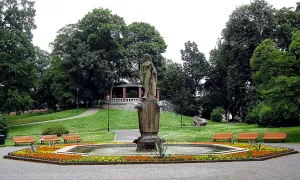
The site where Hradecká brána once stood is now part of the Svobody Gardens in Opava, a city known for its historical architecture and cultural heritage.
Visualizations and artistic views


The visualisations are generated by artificial intelligence and serve as inspiration.
Photos from the area
Real photos taken near the monument


Zdroj a licence jsou uvedeny u každého snímku.
Atmosphere of the place
This atmospheric visualisation of the place and period was generated by artificial intelligence. It is not real footage of the location.
Tips from visitors
No tips yet. Be the first!
Log in and add your tip.
Location on the map

Příběhy a pověsti
Legendy, pověsti a příběhy spjaté s touto památkou

Fotografie návštěvníků
Zatím žádné fotografie. Buďte první, kdo přidá fotografii z návštěvy!
Log in a přidejte svou fotografii nebo hodnoťte.
Za ověřenou návštěvu v aplikaci získáte víc bodů — poznáme podle GPS, že jste na místě.
Reviews and comments